结构改革

Search documents
日本自民党与维新会正式就联合执政达成一致
Xin Hua She· 2025-10-20 12:10
Core Points - The ruling Liberal Democratic Party (LDP) of Japan and the Japan Innovation Party (JIP) have reached an agreement for a coalition government, with JIP confirming support for LDP candidate Sanae Takaichi in the upcoming prime ministerial election [1] - The agreement includes commitments to swiftly implement economic measures and structural reforms, as well as a proposal to reduce the number of seats in the House of Representatives by approximately 10% [1] - A mechanism for discussions on abolishing political donations from corporations and organizations will be established, aiming for consensus during Takaichi's tenure as LDP president [1] Political Dynamics - JIP will participate in the coalition as an "outside cooperation," meaning its members will not join the cabinet, despite LDP's desire for JIP to send cabinet members [1] - JIP's decision to support Takaichi indicates a high likelihood of her winning the prime ministerial election, potentially making her Japan's first female prime minister [1] - The prime ministerial election will take place in the National Diet, where a candidate must secure a majority in the first round of voting to win [1]
中国股票策略:在政府干预报道后,A 股情绪降温-China Equity Strategy_ A-Share Sentiment Cooled Down Amid Reports of Government Intervention
2025-09-08 06:23
Summary of Key Points from the Conference Call Industry Overview - The report focuses on the **A-share market** in China, highlighting recent trends in investor sentiment and market performance amid potential government interventions and economic indicators. Core Insights and Arguments 1. **Investor Sentiment Decline**: A-share investor sentiment has decreased significantly, with the weighted MSASI dropping by **32 percentage points** to **126%** and the simple MSASI to **121%** compared to the previous cutoff date of August 28 [2][6][11]. 2. **Market Correction**: Reports of government measures to cool market sentiment have led to a notable market correction, with the Shanghai Composite Index down **1.3%**, CSI 300 Index down **2.1%**, and ChiNext index down **4.2%** on September 4 [4][11]. 3. **Turnover Trends**: Daily turnover for ChiNext, A-shares, and Northbound fell by **26%** (to **RMB 658 billion**), **25%** (to **RMB 2,366 billion**), and **17%** (to **RMB 166 billion**), respectively, indicating reduced trading activity [2][11]. 4. **Net Inflows**: Southbound trading recorded net inflows of **US$ 2.3 billion** from August 28 to September 3, with year-to-date and month-to-date net inflows reaching **US$ 128.1 billion** and **US$ 3.4 billion**, respectively [3][11]. 5. **Earnings Misses**: The A-share market has seen a moderate miss in earnings, with a slight deterioration compared to Q1 results, indicating potential challenges in corporate fundamentals [11][12]. Additional Important Insights 1. **PMI Indicators**: August PMIs showed a continued growth slowdown, with construction PMI dropping to a record low of **49.1** and manufacturing PMI for consumer goods at **49.2**, reflecting weakening economic conditions [11]. 2. **Government Policy Impact**: The upcoming **15th Five-Year Plan** to be announced in mid-October is expected to be a critical checkpoint for assessing the need for structural reforms to support economic stability [11]. 3. **Monitoring Signposts**: Investors are advised to monitor key indicators such as onshore bond yields, policy catalysts focusing on consumption and social benefits, earnings trajectories, and potential government interventions to stabilize the market [11]. Conclusion - The A-share market is currently facing challenges due to declining investor sentiment, market corrections, and economic indicators suggesting a slowdown. The effectiveness of government interventions and upcoming policy announcements will be crucial in determining the market's trajectory in the near future.
IMF:各国应增强韧性,促进中期增长
news flash· 2025-07-18 14:38
Core Viewpoint - The IMF emphasizes the need for policymakers to focus on addressing trade tensions and implementing macroeconomic policies to tackle potential domestic imbalances in the face of ongoing downside risks and high uncertainty [1] Group 1: Policy Recommendations - Policymakers should restore fiscal space and ensure that debt remains at sustainable levels to maintain economic stability [1] - Monetary policy must be carefully adjusted according to each country's specific circumstances, with clear and consistent communication [1] - The independence of central banks must be protected to ensure effective monetary policy [1] Group 2: Structural Reforms - Structural reforms are crucial for enhancing productivity, supporting job creation, and leveraging new technologies to promote medium-term growth [1] - These reforms are also essential for offsetting demographic changes [1]
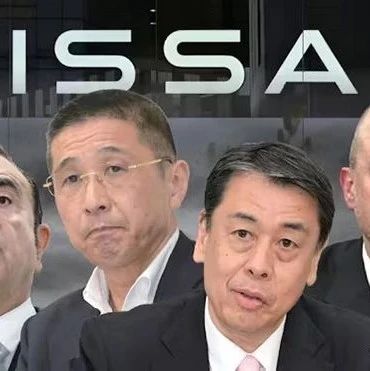
日产2024财年最终亏损7500亿日元,历史最大
日经中文网· 2025-04-25 04:27
Core Viewpoint - Nissan is facing significant financial challenges, with projected losses for the fiscal year 2024 reaching up to 750 billion yen, marking the highest loss in its history due to declining sales, particularly in North America, and the impact of U.S. tariff policies [1][2]. Financial Performance - For the fiscal year 2024, Nissan anticipates a consolidated loss of 700 to 750 billion yen, a stark contrast to the previous year's profit of 426.6 billion yen [1]. - The company's operating profit is expected to be 85 billion yen, a decrease of 85% year-on-year, and lower than previous forecasts by 35 billion yen [2]. - Global sales for fiscal year 2024 are projected to be 3.35 million units, a 3% decline compared to the previous year, falling short of the initial target by 50,000 units [1]. Structural Reforms - Nissan is undergoing fundamental structural reforms, including a plan to reduce production capacity by 20% (1 million units) and lay off 9,000 employees [2]. - The company plans to cut 2,500 jobs in global management and 6,500 in factories, along with the closure of three global plants [2][3]. Leadership Changes - The new CEO, Ivan Espinosa, who took office in April, emphasized the need for asset reassessment and the impact of restructuring costs on the company's financials [2][3]. - The previous president, Makoto Uchida, resigned in March due to poor performance and failed merger talks with Honda [3].