
结构改革

Search documents
全球治理体系改革应重视的几个问题
Xin Lang Cai Jing· 2026-02-08 21:39
Group 1 - The core idea of the article emphasizes the importance of reforming the global governance system and enhancing global governance capabilities, particularly in the context of China's four major initiatives proposed by President Xi Jinping [1] - The establishment of a sovereign state system and the arrival of a comprehensive international relations era represent significant progress in post-war international relations, allowing most nations to express their will and strength [2][3] - The article highlights the need for a democratic, equitable, inclusive, and just global governance system, reflecting on the historical context of international relations and the necessity for reform [2][3] Group 2 - The relationship between global governance and national governance is crucial, as poor domestic governance limits a country's willingness and ability to engage in global governance [4] - The article calls for a re-evaluation of democracy, suggesting that new meanings should be assigned to democracy that promote genuine multilateralism and improve domestic governance quality [5] - Establishing institutional communication mechanisms between global governance and national governance is essential to ensure they do not conflict with each other [5] Group 3 - Incremental improvements in the global governance system are necessary, particularly from emerging countries like China, which supports the UN's core role in international affairs [6] - The article points out that structural issues in the global governance system are becoming increasingly apparent, indicating that mere incremental improvements may not suffice [6] Group 4 - Structural contradictions in global governance arise from the separation of internal and external politics, affecting countries' ability to participate in global governance [7] - The shift towards a multipolar world and the need for a more democratic and equitable governance structure are highlighted as ongoing challenges [7][8] - The article discusses the importance of incorporating various actors, such as multinational corporations and social organizations, into the global governance framework [8] Group 5 - The relationship between planning and action in global governance is emphasized, with a focus on the need for effective execution of global governance initiatives [9] - The article suggests that planning can mitigate the negative impacts of domestic political polarization on international commitments and cooperation [9]
民间投资向新向优势不可挡
Jing Ji Ri Bao· 2026-01-31 02:36
Group 1 - The structural leap in private investment is a result of precise macro policy guidance and market opportunities resonating together, with policies aimed at reducing barriers, expanding avenues, and improving the environment effectively stabilizing market expectations and boosting investment confidence [1][3] - A comprehensive package of policies to stimulate domestic demand was implemented on January 20, focusing on private investment, including loan interest subsidies for small and micro enterprises, special guarantee plans for private investment, and risk-sharing mechanisms for private enterprise bonds [1] - Despite a decline in overall private investment growth since 2025 due to macro factors like the deep adjustment of the real estate market, there has been a significant optimization in the structure of private investment, shifting from traditional sectors like real estate and general manufacturing to new technologies, new infrastructure, new services, and new livelihoods [1][2] Group 2 - The transition towards "new" and "better" is unstoppable, with private investment embracing new productive forces and modern industrial systems, as evidenced by a 0.6% growth in private investment in the manufacturing sector despite a 3.8% decline in overall fixed asset investment in 2025 [2] - Investment in high-tech services and consumer sectors has become new hotspots for private investment, with significant growth in information transmission and water management sectors, as well as in accommodation, catering, and cultural entertainment industries [3] - To sustain and enhance private investment confidence and vitality, deep structural reforms are necessary, focusing on promoting "fair rules" rather than just "equal identity," ensuring that private capital can not only enter the market but also compete fairly [3][4]
达沃斯上的中国声音:坚定支持自由贸易,维护多边主义
Hua Xia Shi Bao· 2026-01-23 03:38
Core Viewpoint - China demonstrates significant certainty in a volatile global environment, providing strong momentum for global economic growth [2] Group 1: Economic Performance - In 2025, China's foreign trade reached 45.47 trillion yuan, marking a 3.8% increase and achieving a historical high for the first time surpassing 45 trillion yuan [5] - China's exports grew by 5% in 2025, with a notable resilience despite previous concerns, maintaining a high share in global exports [5] - The export growth was supported by a strong performance in high-tech products, which reached 5.25 trillion yuan, growing by 13.2% [8] Group 2: International Relations and Trade - The ongoing U.S.-China competition remains a critical variable affecting both China's and the global economy, with exports expected to maintain around 5.5% growth in 2026 [5][6] - China's engagement with non-U.S. countries is deepening, with discussions held at the Davos Forum to address economic issues with the U.S. and the UK [7] - The diversification of export markets, particularly to emerging markets and countries along the Belt and Road Initiative, has reduced reliance on any single market [8] Group 3: Future Outlook - Predictions for 2026 indicate continued strong growth in China's imports and exports, driven by a temporary easing of U.S.-China tensions and rising global investment demands in AI infrastructure [10] - The integration of AI into manufacturing is expected to enhance China's competitive edge, with optimism for sustained export growth extending into 2027 and 2028 [9][10]


机构称2025年底前港股可逢低吸纳,为明年初春季行情做准备
Mei Ri Jing Ji Xin Wen· 2025-12-22 02:18
Group 1 - The Hang Seng Index opened up 0.41% and the Hang Seng Tech Index rose by 0.61%, indicating a positive start for the market [1] - Lithium mining stocks showed strength, while tech stocks exhibited mixed performance, with Meituan rising by 1.46% [1] - The Hong Kong consumer sector experienced slight fluctuations after an initial rise, with the Hong Kong Consumer ETF (513230) showing a small increase, led by stocks like Mixue Group, Blukoo, and Zhenjiu Lid, which all rose over 4% [1] Group 2 - According to China Merchants Securities, the recent weakness in the Hong Kong stock market is attributed to the return of southbound funds to A-shares due to new public fund benchmark regulations, concerns over IPO financing, and a peak in lock-up expirations [1] - Looking ahead, it is expected that the Hong Kong market may see a year-end rally as southbound fund flows stabilize and the pressures from IPO supply and lock-up expirations ease [1] - Jianyin International suggests that investors should consider buying on dips before the spring market in early 2024, focusing on high-yield stocks and sectors related to new productivity and structural reforms, particularly in technology, high-end manufacturing, hydrogen, nuclear energy, and domestic consumption [1] Group 3 - Related popular ETFs include the Tourism ETF (562510) benefiting from holiday catalysts and the ice and snow economy, the Food and Beverage ETF (515170) aimed at boosting domestic demand, and the Hong Kong Consumer ETF (513230) focusing on e-commerce leaders and new consumption trends [2]
港股开盘 | 恒指高开0.41% 锂矿股走强 科网股走势分化
智通财经网· 2025-12-22 01:37
Group 1 - The Hang Seng Index opened up by 0.41%, and the Hang Seng Tech Index rose by 0.61%. Lithium stocks showed strength, with Tianqi Lithium up by 2.19% and Ganfeng Lithium up by 1.84%. Meituan increased by 1.46% in a mixed performance among tech stocks [1] - According to China Merchants Securities, the recent weakness in Hong Kong stocks is attributed to southbound capital returning to A-shares due to new public fund benchmark regulations, the crowding-out effect, concerns over IPO financing, the upcoming peak of lock-up expirations, earnings downgrades, and overseas liquidity disturbances. Looking ahead, with the return of southbound capital and a reduction in crowding behavior, the pressure from IPO supply and lock-up amounts is expected to ease, leading to a potential year-end rally in Hong Kong stocks [1] - According to Ping An International, the market is expected to maintain a volatile trend in the short term, with rotation in styles and investment themes. The lack of new catalysts, combined with uncertainties regarding the Federal Reserve's interest rate cuts next year affecting external liquidity, may lead to a concentration of incremental capital in scarce assets, while the expansion space for valuations is limited. These factors could increase market volatility, making earnings performance more likely to determine market trends [1] Group 2 - Jianyin International suggests buying on dips before the end of 2025 to prepare for the spring rally early next year, gradually increasing offensive positions by early 2026. The focus should be on high-yield stocks, new productivity, and structural reform themes, with a selective approach towards technology, high-end manufacturing, hydrogen energy, nuclear energy, and domestic demand stocks (consumption and services) [1]
港股午评:恒指跌0.44%、科指跌1.26%,科网股、锂电池股及新消费概念股集体走低,航空股逆势走高
Jin Rong Jie· 2025-12-18 04:10
Market Overview - The Hong Kong stock market opened lower but rebounded before closing down, with the Hang Seng Index falling by 0.44% to 25,357.69 points, the Hang Seng Tech Index down 1.26% to 5,389.3 points, and the National Enterprises Index down 0.6% to 8,790.55 points [1] - Major technology stocks experienced declines, including Alibaba down 1.58%, Tencent down 0.58%, and Xiaomi down 3.11% [1] - Airline stocks continued to rise, with Capital Airport increasing by over 7% [1] - Lithium battery stocks saw significant declines, with CATL down over 3% [1] - New consumption concept stocks weakened, with Pop Mart down over 2% [1] Corporate News - CICC (03908.HK) is planning a stock swap to absorb and merge with Dongxing Securities (601198.SH) and Cinda Securities (601059.SH), with resumption of trading on December 18 [2] - Ronshine China (03301.HK) reported a total contract sales of approximately 3.492 billion yuan for the first 11 months, a year-on-year decrease of 49.6% [3] - Wanbang Investment (00158.HK) reported revenue of 164 million HKD for the year ending September 30, 2025, a year-on-year increase of 1.6%, but a loss of 640 million HKD, widening by 309.61% [3] - Corning Jereh Pharmaceutical-B (09966.HK) had its IND application for JSKN027 officially accepted by the CDE [4] - China CNR (01766.HK) signed significant contracts totaling approximately 53.31 billion yuan over the past three months [5] - Bofull Property (00225.HK) reported a loss attributable to shareholders of 216 million HKD, a year-on-year decrease of 63.88% [6] - SenseTime (00020.HK) plans to issue shares at a discount of over 8% to raise approximately 3.15 billion HKD [7] - Minth Group (00425.HK) entered into a strategic cooperation agreement with a robotics company [8] - XunCe (03317.HK) is offering 22.5 million H-shares for subscription starting today until next Tuesday [9] - Budweiser APAC (01876.HK) appointed Bernardo Novick as CFO, effective April 1, 2026 [10] - China Metallurgical Group (01618.HK) plans to repurchase up to 2 billion A-shares and 500 million H-shares [11] - Kuaishou-W (01024.HK) repurchased 1.283 million shares for 83.037 million HKD at prices between 63.9 and 65.55 HKD [12] - Tencent Holdings (00700.HK) repurchased 1.057 million shares for 636 million HKD at prices between 595 and 605.5 HKD [13] - Techtronic Industries (00669.HK) repurchased 500,000 shares for 44.91 million HKD at prices between 89.35 and 90.50 HKD [14] - Country Garden Services (06098.HK) repurchased 3.697 million shares for 23.1748 million HKD at prices between 6.22 and 6.33 HKD [15] - Giga Bio (02367.HK) repurchased 400,000 shares for 13.9713 million HKD at prices between 34.62 and 35.22 HKD [16] Institutional Insights - According to CICC, the recent weakness in the Hong Kong market is attributed to southbound capital returning to A-shares due to new public fund benchmark regulations, concerns over IPO financing, and the upcoming peak of lock-up expirations [17] - Huatai Securities noted that while the market's downside is controllable, the upside potential remains limited, with sentiment indicators in a pessimistic range [18] - Ping An International expects the market to maintain a volatile trend in the short term, with investment strategies focusing on a "technology + dividend" barbell approach [18] - Jianyin International recommends buying on dips before the spring market in early 2025, focusing on high-yield stocks and sectors like technology, high-end manufacturing, and new energy [19]
定调2026年经济工作 中央政治局会议传递有力信号
Sou Hu Cai Jing· 2025-12-08 15:59
Group 1 - The core message of the Central Political Bureau meeting on December 8 is to analyze and plan for the economic work in 2026, signaling a strong start for the "15th Five-Year Plan" [1] - The meeting emphasizes that the main economic and social development goals for 2025 will be successfully achieved, with a projected economic growth of 5.2% in the first three quarters of 2023, which is 0.4 percentage points higher than the same period last year [2][3] - The meeting highlights the importance of achieving a good start for the "15th Five-Year Plan," which is seen as a critical period for solidifying the foundation for socialist modernization [4] Group 2 - The meeting outlines a "high requirement" approach for 2026, focusing on better coordination of domestic economic work and international trade, as well as enhancing policy foresight and collaboration [4] - It is expected that a more proactive macroeconomic policy mix and forward-looking structural reforms will support a stable economic start in 2026, laying a solid foundation for the 2035 modernization goals [5] - The work tone for 2026 is set to prioritize stability while seeking progress, emphasizing quality and efficiency in economic governance [6] Group 3 - The meeting specifies the continuation of a more proactive fiscal policy and moderately loose monetary policy, aiming to enhance the effectiveness of macroeconomic governance [6] - Key areas of focus include maintaining domestic demand as the main driver, promoting innovation, and ensuring coordinated development while adhering to the "dual carbon" goals [6] - The upcoming Central Economic Work Conference is anticipated to clarify how to effectively implement policy measures for a successful start to the "15th Five-Year Plan" [7]
中国宏观经济展望与数据前瞻-政策支持温和;11 月增长疲软但走势分化-China Economic Comment _ CEWC and data preview_ modest policy support; weak but mixed growth in Nov
2025-12-08 00:41
Summary of Key Points from the Conference Call Industry Overview - The conference call primarily discusses the **Chinese economy** and its macroeconomic policies, particularly in the context of the upcoming **Central Economic Work Conference (CEWC)** scheduled for mid-December 2025. Core Insights and Arguments 1. **Macroeconomic Policy Direction**: - The CEWC will set the macro policy tone for 2026, with expectations for a GDP growth target of **4.5-5%**. The consensus among market participants leans towards "around 5%", which is considered challenging due to slowing exports and a downturn in the property market [2][6][7]. 2. **Fiscal and Monetary Policy**: - A modest support tone in fiscal and monetary policy is anticipated, with a focus on innovation, consumption, and housing market stabilization. The government may confirm the extension of consumption subsidies in 2026 to mitigate disruptions from high base effects [6][8][10]. 3. **Property Market Dynamics**: - The property market is experiencing significant weakness, with **30-city property sales** declining by **-33% YoY** in November, worsening from **-27% YoY** in October. Contract sales from the top 100 developers also fell by **-37% YoY** [3][14][25]. 4. **Investment and Consumption Trends**: - Property investment is expected to contract by **-23% YoY**, while infrastructure investment may see a slight improvement. Retail sales growth is projected to be around **3.2% YoY**, showing some resilience despite the overall economic slowdown [4][31][26]. 5. **High Frequency Data**: - Manufacturing PMIs indicate subdued growth, with the NBS manufacturing PMI at **49.2** and non-manufacturing PMI at **49.5**. This reflects ongoing challenges in the manufacturing sector [12][13]. 6. **Trade and Export Performance**: - Export growth is expected to improve to **2% YoY** on a low base, with port cargo throughput growth increasing to **3% YoY**. However, the overall trade environment remains cautious due to global economic conditions [32][32]. 7. **Inflation and Credit Growth**: - CPI is projected to rise to **0.9% YoY**, while PPI is expected to be less negative at **-2% YoY**. Total social financing (TSF) credit growth is anticipated to decline to **8.4% YoY** [34][33]. Additional Important Insights - **Structural Reforms**: The CEWC is expected to emphasize structural reforms, particularly in technology and social welfare, aiming to enhance the social safety net and income distribution [9]. - **Household Consumption Support**: There is a strong focus on boosting household consumption through both supply and demand-side measures, with potential for earlier subsidy disbursements in Q1 2026 [8]. - **Long-term Economic Outlook**: The overall economic outlook remains cautious, with expectations of continued challenges in the property sector and broader economic growth [10][10]. This summary encapsulates the key points discussed in the conference call, highlighting the current state and future expectations of the Chinese economy and its various sectors.

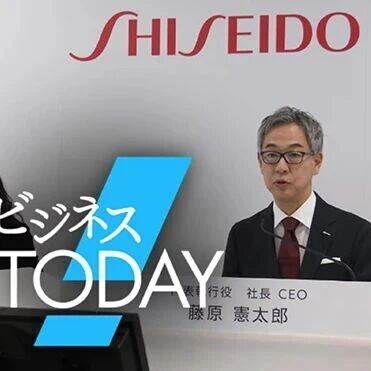
接连的误判让资生堂走向史上最大亏损
日经中文网· 2025-11-11 04:45
Core Viewpoint - Shiseido has significantly lowered its earnings forecast, expecting a consolidated net loss of 52 billion yen for the fiscal year 2025, primarily due to asset impairment losses from underperforming acquired American brands [2][4]. Financial Performance - For the fiscal year 2025, Shiseido anticipates a consolidated net loss of 52 billion yen, a substantial downgrade from a previous forecast of a profit of 6 billion yen, marking the largest loss in the company's history [2]. - Revenue for the fiscal year 2025 is projected to decrease by 3% year-on-year to 965 billion yen, falling short of the earlier estimate of 995 billion yen [4]. - For the first nine months of fiscal year 2025, the company reported a loss of 43.9 billion yen, compared to a profit of 75.4 million yen in the same period last year [4]. Asset Impairment Issues - The primary reason for the asset impairment in the U.S. business is the underperformance of the skincare brand "Drunk Elephant," acquired in 2019 for approximately 90 billion yen [6]. - Shiseido has faced asset impairment issues from previous acquisitions, including Bare Escentuals and Laura Mercier, leading to significant losses in past fiscal years [6][7]. Strategic Changes - Shiseido plans to implement layoffs and close its research facility in Singapore as part of its restructuring efforts, aiming for a total of over 70 billion yen in core operating profit by fiscal year 2026 [8]. - The new mid-term management plan for fiscal year 2030 emphasizes a shift in brand management strategy, with a focus on centralized decision-making from Japan's headquarters and a unified global brand strategy [8]. Market Challenges - The company faces increasing criticism for optimistic earnings forecasts and governance issues, with its stock price significantly declining from a peak of 9,250 yen in 2018 to around 2,000 yen recently [9]. - The competitive landscape in the premium cosmetics market is intensifying, raising questions about Shiseido's ability to effectively implement its brand rebuilding and market expansion strategies [9].
以色列央行原行长独家专访:控通胀如何铸就“创业国家”传奇
2 1 Shi Ji Jing Ji Bao Dao· 2025-10-30 11:44
Core Viewpoint - The independence of central banks is crucial for economic stability, especially in the current international context where political pressures can undermine effective monetary policy [1][14]. Group 1: Central Bank Independence - Central bank independence is essential for implementing necessary and sometimes difficult decisions, as political systems tend to focus on short-term goals [1][14]. - The independence of central banks allows for a long-term perspective in monetary policy, which is vital for sustainable economic outcomes [14][15]. Group 2: Israel's Economic Transformation - Israel's economic success in the 1990s was attributed to a comprehensive strategy that included stabilizing inflation, reducing budget deficits, developing capital markets, and enhancing exchange rate flexibility [2][12]. - The influx of highly skilled immigrants and improved geopolitical conditions contributed to Israel's transformation into a "startup nation," with high-tech exports accounting for over half of its total exports [2][12]. Group 3: Global Economic Governance - The shift from globalization to fragmentation is concerning, as countries are increasingly competing rather than cooperating, which can lead to unhealthy economic practices [6][8]. - China is recognized as a vital player in the global economy and should take on a larger role in global governance, responding to traditional systems' inadequacies [3][8]. Group 4: Emerging Markets Representation - Emerging markets have shown resilience and performed better than developed countries in recent years, but their representation in international institutions like the IMF does not reflect their economic weight [7][8]. - There is a growing recognition of the need to enhance the representation of emerging markets in global governance structures [7]. Group 5: Debt and Economic Stability - The accumulation of public debt is a long-term issue resulting from persistent budget and current account deficits, which can lead to systemic risks [9][10]. - Responsible government behavior and the development of robust capital markets are essential to manage high debt levels and maintain economic stability [10]. Group 6: Lessons from Israel - The experience of Israel in achieving price stability and economic openness can serve as a model for other emerging or middle-income economies [14][15]. - Effective public communication and building public support for monetary policy are critical for central banks to maintain their independence and achieve economic stability [15].
