美国衰退

Search documents
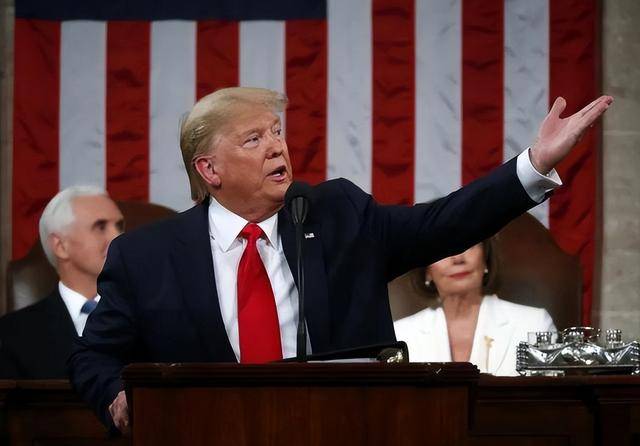
特朗普百日,乱象丛生
Sou Hu Cai Jing· 2025-04-30 07:07
Core Points - The article discusses the chaotic first hundred days of Trump's presidency, highlighting the political, social, economic, and diplomatic turmoil in the United States [1][3][4]. Domestic Policy - Trump's administration relied heavily on executive orders, bypassing Congress, leading to significant cuts and restructuring in key federal agencies, resulting in a chaotic government environment [3][4]. - The aggressive immigration policies implemented by Trump, including the abolition of birthright citizenship and mass deportations, faced backlash from both domestic courts and international observers [3][4]. Economic Impact - Trump's economic policies, including tax cuts and tariffs, failed to stimulate the economy and instead exacerbated inflation and consumer decline, leading to a significant drop in public trust [4][6]. - The stock market experienced declines, the bond market faced volatility, and the dollar depreciated, indicating a looming economic crisis characterized by "stagflation" [4][6]. International Relations - Trump's foreign policy, marked by high tariffs on Chinese goods and strained relations with traditional allies, resulted in widespread discontent both domestically and internationally [6][9]. - His approach to international diplomacy, particularly regarding the Russia-Ukraine conflict, has been criticized for its ineffectiveness and has damaged the U.S.'s diplomatic standing [7][9]. Institutional Integrity - The internal dynamics of the White House have devolved into chaos, with high-ranking officials publicly clashing and a lack of coherent policy-making processes [6][9]. - Trump's actions have led to a significant retreat from multilateral agreements and institutions, undermining the U.S.'s position as a global leader [9].

关税扰动下有色或偏弱,金价或偏强
HTSC· 2025-04-07 02:15
Investment Rating - The report maintains an "Overweight" rating for the non-ferrous metals sector and basic metals and processing [3]. Core Views - The report indicates that basic metals are likely to remain weak due to rising recession expectations in the U.S. following the announcement of reciprocal tariffs, while precious metals, particularly gold, may have significant upward potential due to inflationary pressures and recession risks [1][14]. Summary by Sections Basic Metals - The report highlights that the recent reciprocal tariffs have led to a significant drop in copper prices, with expectations of continued weakness in prices due to heightened recession fears in the U.S. [10][12]. - Copper prices fell sharply after the announcement of tariffs, with the cumulative tariff rate on China reaching 54% over 25 years, leading to a decline in domestic copper processing rates [10]. - Aluminum prices also showed a downward trend, with a reported price of 20,520 CNY/ton, down 1.44% week-on-week, and expectations of weak demand due to global recession concerns [11]. Precious Metals - Gold prices experienced a decline due to liquidity issues, despite not being directly affected by the new tariffs. The report notes that gold prices closed at 738.97 CNY/gram, reflecting a 4.23% increase week-on-week [13][24]. - The report maintains a positive outlook for gold, suggesting that inflationary disturbances and recession expectations will likely support its price in the future [14]. Lithium and Rare Earths - Lithium prices are expected to remain weak due to oversupply and declining demand, with the current price at 73,900 CNY/ton, down 0.54% week-on-week [16]. - Rare earth prices are also projected to fluctuate, with current prices for praseodymium-neodymium oxide at 442,000 CNY/ton, reflecting a slight increase, but demand may weaken in the short term due to tariff impacts [15]. Key Recommendations - The report recommends investing in leading companies such as Shandong Gold (1787 HK) with a target price of 20.65 CNY and an "Overweight" rating [3].
【广发策略刘晨明&李如娟】“东升西落”不只是宏观叙事
晨明的策略深度思考· 2025-03-09 07:58
Core Viewpoint - The article discusses the divergence between Chinese and American assets, highlighting the potential for A-shares to perform independently amid a challenging U.S. market environment [13][14]. Group 1: Market Trends - A-shares in the TMT sector have seen trading volume exceed 40% for the first time in five years, mirroring trends in the U.S. tech sector [3]. - The divergence between AH technology stocks and U.S. tech stocks has widened, with the negative correlation between the ChiNext 50 and Nasdaq 100 reaching -0.78 [13]. - Major foreign banks have shifted their outlook to bullish on Chinese stocks and technology [5]. Group 2: U.S. Market Challenges - The U.S. market is experiencing a confidence crisis, with significant layoffs announced, totaling 220,000 since the beginning of the year, the highest since 2009 [7]. - The GDPNow model predicts a -2.8% growth rate for the U.S. in Q1 2025, indicating downward pressure on the U.S. economy [9]. - The MAG7 index has seen a decline of 15.7% over 54 trading days, surpassing previous adjustment periods in both duration and magnitude [22]. Group 3: Implications for A-shares - A-shares may attract global capital if their fundamentals significantly outperform those of U.S. stocks [10]. - The potential for A-share valuation increases exists if the Chinese economy shows signs of recovery while the U.S. economy remains stagnant [26]. - The narrative of a "soft landing" in the U.S. could be beneficial for AH assets, with ongoing developments in AI and robotics sectors providing investment opportunities [35][36]. Group 4: Sector-Specific Insights - The real estate sector in China has shown mixed signals, with a cumulative year-on-year increase in transaction volume of 2.25% as of March 8 [38]. - The automotive market has seen a 26% year-on-year increase in retail sales for February, with significant growth in the new energy vehicle segment [39]. - In the steel industry, the average daily production has increased by 12.96% compared to mid-February, indicating a recovery in demand [40]. Group 5: Economic Indicators - The U.S. manufacturing PMI for February stands at 50.30, indicating stability in the manufacturing sector [46]. - China's official manufacturing PMI for February is reported at 50.2, reflecting a slight improvement from the previous month [49]. - The recent MLF injection by the People's Bank of China totaled 300 billion yuan, maintaining stable monetary policy [50].