美国衰退

Search documents
新债王:进入“保全资本”模式,风险仓位已砍到“历史最低”,“美联储加息、美国衰退、美债软违约”都有可能
美股IPO· 2026-03-29 01:47
Core Viewpoint - The long-term decline in U.S. Treasury yields that has lasted for 40 years has ended, and the massive debt burden is pushing the economy towards an unsustainable edge, with risks of a liquidity disaster similar to the 2006 subprime crisis [1][4][5] Group 1: Economic Environment and Interest Rates - The current financial environment is accumulating significant risks, with a warning against the consensus expectation of imminent interest rate cuts by the Federal Reserve [4][7] - Gundlach argues that the Federal Reserve is a follower of the two-year Treasury yield rather than a leader, suggesting that interest rates will not decrease as long as the two-year yield remains high [7][42] - The prediction is that if oil prices remain high, the Federal Reserve will likely raise interest rates instead of cutting them [8] Group 2: Private Credit Market Risks - Gundlach draws parallels between the current private credit market, estimated at $2-3 trillion, and the subprime mortgage market before the 2008 financial crisis, indicating a potential liquidity disaster [9][30] - He highlights the opacity in valuations within the private credit market, where different managers may hold identical positions but report vastly different valuations [9][30] - The fundamental mismatch in private credit, where illiquid assets are packaged for investors needing regular redemptions, is expected to lead to significant market turmoil [9][30] Group 3: Investment Strategy Recommendations - Gundlach recommends a radical shift in asset allocation, advising investors to completely divest from U.S. stocks and instead invest 40% in non-U.S. equities, particularly emerging markets [10][29] - He suggests allocating 25% to short-term fixed income, 15% to commodities (10% in a commodity index and 5% in gold), and holding 20% in cash to wait for better entry points in the market [11][12][29] - The emphasis is on capital preservation in a changing investment landscape, moving away from speculative assets [10][29] Group 4: U.S. Debt Concerns - The U.S. national debt has reached $39 trillion, with Gundlach warning that crossing the $40 trillion mark could trigger a psychological threshold for investors [13][24] - He predicts that in the next recession, long-term Treasury yields will rise rather than fall due to expanding deficits, contradicting traditional expectations [14][24] - Gundlach raises the possibility of a "soft default" or restructuring of U.S. Treasury securities, where the government may forcibly modify bond terms to reduce interest payments [15][25][26]


新债王:进入“保全资本”模式,风险仓位已砍到“历史最低”,“美联储加息、美国衰退、美债软违约”都有可能
华尔街见闻· 2026-03-28 13:14
Core Viewpoint - The 40-year decline in interest rates has ended, and the massive debt burden is pushing the economy towards an unsustainable edge, with the private credit market resembling the subprime crisis of 2006, potentially leading to a liquidity disaster [2][3]. Federal Reserve Policy - Gundlach warns against the prevailing market expectation of interest rate cuts by the Federal Reserve, asserting that the Fed is a follower of the two-year Treasury yield rather than a leader [5][6]. - He predicts that if oil prices remain high, the Fed will likely raise interest rates instead of cutting them [6]. Private Credit Market - Gundlach draws parallels between the current private credit market, estimated at $2-3 trillion, and the subprime mortgage market before the 2008 financial crisis, indicating a significant risk of a similar disaster [6][7]. - He highlights the fundamental mismatch in private credit, where illiquid assets are packaged for investors needing regular redemptions, warning of a potential major shakeout in this sector [7]. Investment Strategy - In response to rising long-term interest rates and credit crisis concerns, DoubleLine Capital has reduced its risk exposure to the lowest level in its 17-year history, prioritizing capital preservation [8][26]. - Gundlach recommends a radical asset allocation strategy: 40% in non-U.S. stocks, 25% in short-term high-quality bonds, 15% in commodities (10% in the Bloomberg Commodity Index and 5% in gold), and 20% in cash [9][10][11]. Debt Concerns - Gundlach expresses deep concern over the U.S. national debt, which has reached $39 trillion, warning that once it hits $40 trillion, it could become a psychological tipping point [13][27]. - He argues that in the next recession, long-term Treasury yields are likely to rise rather than fall due to increasing interest payments, which could reach $2 trillion annually [13][14]. Potential Outcomes - Gundlach suggests two possible outcomes for addressing the debt crisis: inflation devaluation or soft default (debt restructuring), with a significant chance of the government directly lowering Treasury yields [14][15]. - He emphasizes the need for investors to consider the potential deterioration of U.S. Treasury creditworthiness, which he believes is more likely than many are willing to accept [30][31]. Market Dynamics - Gundlach notes that the current financial environment is tightening, with credit spreads widening, indicating increasing risk in financial assets [26][35]. - He anticipates a surge in redemption requests from private credit investors, predicting that by June 2026, there will be significant pressure for redemptions [53].

海外周报20260308:2月美国CPI前瞻:油价飙升前的平静-20260308
Soochow Securities· 2026-03-08 14:31
Economic Outlook - The surge in oil prices has rapidly increased U.S. inflation expectations, alongside disappointing February non-farm employment data, raising concerns about stagflation and recession in the U.S. market[1] - The overall economic data in the U.S. has been better than expected year-to-date, with a forecast of steady growth in Q1 due to fiscal and monetary stimulus[1] Inflation Projections - The upcoming February CPI is expected to show a month-on-month increase of 0.25-0.3%, with core CPI around 0.2%, indicating continued improvement in inflation pressure[1] - If oil prices remain at $150 per barrel in March and April, the year-on-year CPI growth could increase by 1.80 and 2.04 percentage points, respectively, leading to a CPI of 4.19% and 4.43%[1] Market Reactions - The geopolitical tensions in the Middle East have led to a significant rise in oil prices, with WTI crude increasing by 35.63% during the week, while global stock markets generally declined[2] - The Korean stock market, heavily reliant on imported oil, fell by 10.56% due to these tensions and rising oil prices[2] Risk Factors - Potential risks include unexpected developments in the Iranian situation, excessive rate cuts by the Federal Reserve leading to inflation rebound, and prolonged high interest rates causing liquidity crises in the financial system[1][22]
美国社会为何陷入衰退?曾经拼搏精神消失,现今只剩表面繁荣
Sou Hu Cai Jing· 2026-02-10 16:57
Core Viewpoint - The article discusses the decline of the United States, attributing it to a combination of political dysfunction, changing societal values, and economic disparities, leading to a loss of the traditional American spirit of hard work and self-reliance [1][3][13]. Group 1: Political and Social Dynamics - The political landscape in the U.S. is characterized by a lack of genuine effort from politicians, who are more focused on performance than addressing real issues [3][9]. - There is a notable shift in societal values, with many individuals preferring to rely on government assistance rather than seeking employment, leading to a culture of dependency [5][11]. - The article highlights a significant number of elderly individuals living in hardship, with over 15 million facing difficulties, and middle-class retirement savings being nearly non-existent [5][11]. Group 2: Economic Disparities - The U.S. is criticized for its inability to support its elderly population despite being a wealthy nation, reflecting a loss of the "independence and self-reliance" ethos [5][9]. - The wealth gap is widening, with the rich benefiting from tax breaks and stock market gains while the poor struggle with inadequate welfare and healthcare costs [5][11]. - The article points out that the job market has transformed, with many young people opting for gig work instead of stable employment, leading to a lack of long-term financial security [7][11]. Group 3: Education and Skills Gap - High tuition costs and a lack of vocational training are preventing young people from acquiring useful skills, contributing to difficulties in finding stable employment [11]. - The article notes that technological advancements are reducing the availability of low-skill jobs, exacerbating the challenges faced by younger generations [11]. Group 4: International Relations Impact - The fluctuating U.S.-China relationship is seen as a contributing factor to domestic issues, with a lack of unified strategy and internal division complicating the situation [9][11]. - The article suggests that the U.S. is facing both international pressure and internal fragmentation, which are further undermining its stability [9].

美国军事专家:最终世界上只有一个超级大国,那就是中国
Sou Hu Cai Jing· 2026-01-06 12:11
Core Insights - Douglas Macgregor emphasizes the need for a shift in U.S. foreign policy as the Cold War has ended, suggesting that traditional alliances like NATO may fade and the U.S. should not provide free security to Europe anymore [1][3] - He highlights China's rise in manufacturing and resource control, predicting that by 2025, the U.S. will be heavily reliant on China for rare earth refining technology [1][5] - Macgregor warns of the impending U.S. debt crisis, projecting that by 2025, U.S. debt will reach $38 trillion, which could lead to a financial system collapse [1][7] Military Perspective - Macgregor argues that China's military is primarily defensive and does not seek expansion beyond Taiwan, predicting U.S. failure in defending Taiwan due to China's determination and resources [3][5] - He notes that the U.S. military is ill-suited to confront equally matched opponents and is overextended with too many bases [3][7] - He compares the decline of the U.S. to that of the British Empire, suggesting that both faced similar paths of losing global dominance [3][5] Economic Trends - Macgregor states that global wealth is shifting towards the East, with China and India rising while the BRICS economies have surpassed the G7 in size [5][7] - He critiques U.S. imperialism for causing domestic turmoil and economic decline, asserting that the real issues lie within the U.S. rather than attributing them solely to China [5][7] - He highlights that China's manufacturing accounts for over 30% of global production, while the U.S. remains heavily reliant on imports [5][7] Education and Talent - Macgregor criticizes the U.S. education system for failing to identify and nurture talent, leading to a shortage of engineers, while China invests in education to cultivate a skilled workforce [7] - He predicts that if current trends continue, China will dominate in resources and technology [7] - He emphasizes the importance of adapting to a multipolar world, warning that failure to do so could result in U.S. marginalization [7]

尼米兹号连坠2机,美军锐气受挫,全球资本紧盯中国4000点A股
Sou Hu Cai Jing· 2025-11-12 10:39
Group 1 - The recent ADP data indicates that 42,000 jobs were added in October, surpassing expectations, which has led to market optimism [1] - President Trump reassured Republican senators that the government shutdown has impacted the stock market, but he believes the U.S. stock market can still reach new highs [1][3] - The new Federal Reserve board member, Milan, stated that despite the positive ADP employment data, continuing interest rate cuts remains reasonable, suggesting that Trump's plan to push for rate cuts is still viable [3] Group 2 - Concerns are rising in the financial market regarding whether the Federal Reserve will continue to lower interest rates, potentially inflating the AI bubble [5] - Deutsche Bank is reportedly considering shorting AI stocks to hedge against risks associated with data center loans, indicating a cautious approach towards the AI sector [5][10] - The current situation is reminiscent of the 2008 financial crisis, where Deutsche Bank was one of the first to short the U.S. subprime market [8] Group 3 - The U.S. capital market's reliance on AI capital expenditures for growth raises questions about sustainability, as it mirrors the previous real estate market bubble [11] - While the U.S. stock market appears to be reaching new highs, the bond market is signaling risks, leading to skepticism among seasoned investors [13] - The shift in international capital flows indicates that China is becoming a new safe haven for investors, as they reassess asset values in light of perceived U.S. decline [16][18] Group 4 - The performance of the Chinese market and the renminbi's trajectory are increasingly influencing global capital decisions, contrasting with the U.S. market's reliance on policy support [20] - A consensus is forming in global capital markets regarding the comprehensive decline of the U.S., with implications across trade, military, and financial sectors [22] - The trend of global asset pricing power shifting eastward is becoming evident, with the importance of renminbi assets in the global market expected to rise [24]


美政府已停摆三周,5个因素导致美国走向衰落,鲍威尔要降息救市
Sou Hu Cai Jing· 2025-10-24 03:43
Core Viewpoint - The article discusses the decline of the United States, attributing it to internal issues rather than external threats, highlighting the potential for systemic collapse similar to that of the Soviet Union [2]. Group 1: Government Shutdown - The U.S. government has been in a shutdown for three weeks due to partisan disagreements over healthcare policy, with no immediate resolution in sight [2][3]. - The shutdown has resulted in hundreds of thousands of federal employees being placed on unpaid leave, affecting public services and military personnel's pay [2]. Group 2: Factors Leading to Decline - Five major factors contributing to the decline of the U.S. have been identified, including: 1. **Massive Debt**: The total U.S. debt has reached $37.8 trillion, exceeding the GDP of $30.3 trillion, resulting in a debt-to-GDP ratio of 124.84% [6]. 2. **Poor Education Quality**: The education system is failing to produce well-educated individuals, which is critical for future economic growth [6]. 3. **Widening Wealth Gap**: The wealthiest 10% of Americans hold 67% of household wealth, while the bottom 90% only possess 33%, leading to increased social unrest [8]. 4. **Lack of National Identity and Patriotism**: Political polarization has eroded the younger generation's sense of national identity and pride [9]. 5. **Political System Collapse**: The political landscape is highly polarized, with unprecedented levels of conflict between the two major parties [10]. Group 3: Economic Measures - Federal Reserve Chairman Jerome Powell is considering a potential interest rate cut of 25 basis points to stimulate the economy amid these challenges [11]. - While such measures may provide temporary relief, the article questions their effectiveness in addressing the deeper structural issues facing the U.S. [11].

预料之中的黑天鹅事件
鲁明量化全视角· 2025-10-12 03:20
Core Viewpoint - The article discusses the recent market fluctuations driven by retail investor sentiment and the impact of a new round of global "black swan" events, particularly focusing on the escalation of the US-China trade conflict and its implications for the market [3][4]. Market Performance - In the last two weeks, the CSI 300 index increased by 1.47%, the Shanghai Composite Index rose by 1.80%, and the CSI 500 index saw a gain of 2.17% [3]. - The market was primarily influenced by retail investor sentiment, leading to a temporary surge before facing a significant downturn due to external shocks [3]. Trade Conflict Analysis - The article highlights China's proactive response to the US's intensified trade conflict, particularly in the semiconductor and rare earth sectors [4]. - The announcement by Trump on October 10 to impose further tariffs on China triggered a global market sell-off, including a notable drop in the A50 index and significant declines in cryptocurrency markets [4]. Technical Analysis - The article notes a successful early warning for reducing positions, which helped avoid losses during the April 7 market crash [5]. - Despite recent highs in the market, institutional and speculative investors are maintaining a cautious stance, while retail investors continue to drive prices upward, leading to potential market reversals [5]. Investment Strategy - The recommendation is to maintain a low position in the main board and small-cap sectors, emphasizing a focus on avoiding risks in the current market environment [2][6]. - The prevailing market style is identified as large-cap dominant, with no specific sectors recommended for short-term momentum [6].

中方连开3枪,抛257亿美债,封杀美芯片,马斯克:美基本没救了
Sou Hu Cai Jing· 2025-09-20 03:58
Group 1 - Elon Musk's controversial statement about the bleak future of the United States has sparked widespread discussion, highlighting concerns over internal governance and external competition [1][10] - Musk's experience with the Trump administration's efficiency reform plan revealed deep-rooted issues within the U.S. bureaucratic system, leading to increased government spending instead of the anticipated savings [2][4] - The U.S. leadership's lack of attention to the growing debt crisis was exposed when Musk faced backlash for opposing infrastructure legislation that could exacerbate national debt [4][10] Group 2 - China has significantly reduced its holdings of U.S. Treasury bonds, cutting $25.7 billion and bringing the total to approximately $700 billion, the lowest level since 2009, reflecting concerns over U.S. debt sustainability [5] - Chinese tech companies are diversifying their chip procurement strategies to reduce reliance on U.S. technology, driven by unpredictable U.S. export control policies [7] - China has shifted its agricultural imports, particularly soybeans, from the U.S. to Brazil due to competitive pricing and the impact of tariffs imposed during the Trump administration [9]
德林控股陈宁迪:“大而美”或将加速美降息,影响不容小觑
Sou Hu Cai Jing· 2025-07-21 01:23
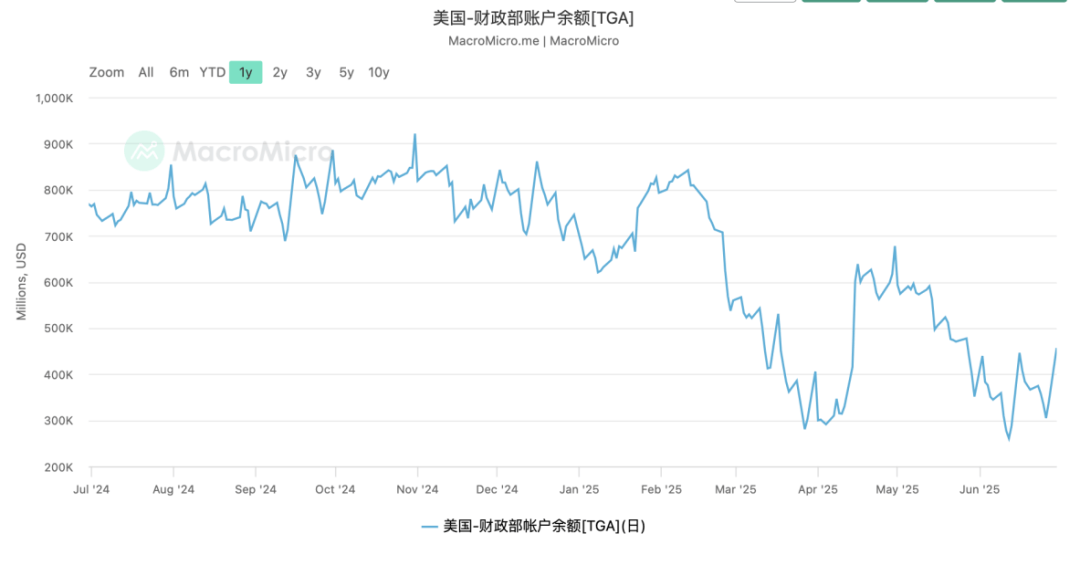
Group 1 - The "Big and Beautiful" Act passed by the U.S. Senate raises the debt ceiling by $5 trillion, addressing immediate liquidity pressures faced by the U.S. Treasury [1][2][4] - The Act fulfills Trump's campaign promises, including tax cuts, increased military spending, and stricter immigration policies, while also targeting Democratic support bases by cutting Medicaid and food assistance [7][9] - The Act is projected to increase federal debt by approximately $3.8 trillion over the next decade, which may necessitate accelerated interest rate cuts by the Federal Reserve [10][21] Group 2 - The U.S. Treasury's cash balance has significantly decreased from $800 billion at the beginning of the year to $456.7 billion by June 30, 2025, indicating potential liquidity challenges [2][4] - The Act's provisions include $460 billion for border wall construction, $450 billion for immigrant detention facilities, and $1.5 trillion in defense funding, reflecting a substantial increase in spending commitments [7][8] - The elimination of green energy subsidies and tax breaks for electric vehicles under the Act is expected to impact traditional automakers positively while disadvantaging electric vehicle manufacturers [9][11] Group 3 - The Federal Reserve is likely to accelerate interest rate cuts in response to the economic impacts of the "Big and Beautiful" Act, with current inflation at 2.4% and unemployment at 4.2% [13][15] - The Act's implementation may lead to a recession, prompting the Federal Reserve to adjust its policies to mitigate economic downturns [23] - The anticipated reduction in interest rates could stimulate the Hong Kong real estate market, as increased liquidity may lead to a recovery in property prices [17][23]