
能源需求

Search documents
Caterpillar(CAT) - 2025 Q2 - Earnings Call Transcript
2025-08-05 13:30
Financial Data and Key Metrics Changes - Sales and revenues decreased by 1% year-over-year to $16.6 billion, primarily due to unfavorable price realization, partially offset by higher sales volume and financial products revenue growth [26][8] - Adjusted operating profit was $2.9 billion, with an adjusted operating profit margin of 17.6%, both exceeding expectations [27][9] - Adjusted profit per share was $4.72, down from $5.99 in the previous year [27][9] Business Line Data and Key Metrics Changes - Construction Industries sales decreased by 7% to $6.2 billion, with a profit of $1.2 billion, a 29% decrease year-over-year [31][33] - Resource Industries sales decreased by 4% to $3.1 billion, with a profit of $537 million, a 25% decrease year-over-year [34] - Energy and Transportation sales increased by 7% to $7.8 billion, with a profit of $1.6 billion, a 4% increase year-over-year [36] Market Data and Key Metrics Changes - North America saw a 3% increase in sales to users, driven by growth in residential and nonresidential construction [10] - EAME region sales increased primarily due to growth in Africa and the Middle East, but overall growth was below expectations due to weakness in Europe [10] - Asia Pacific sales declined slightly, with China being flat compared to the prior year [11] Company Strategy and Development Direction - The company remains optimistic about top-line expectations, driven by strong order rates and backlog growth across all segments [14][42] - Caterpillar is considering various options to mitigate the impact of tariffs, including cost controls and dual sourcing [61][62] - The company plans to focus on long-term profitable growth and is preparing for an upcoming Investor Day to discuss strategic priorities [24][25] Management's Comments on Operating Environment and Future Outlook - Management noted that the environment remains dynamic, with tariffs expected to be a significant headwind to profitability in 2025 [7][14] - The company anticipates moderate sales growth in the third quarter, driven by higher volumes across all segments [15][47] - Full-year sales and revenues are expected to increase slightly compared to 2024, with services revenues anticipated to be flat [16][44] Other Important Information - The backlog increased by $2.5 billion to a record level of $37.5 billion, driven by strong order rates in all primary segments [7][13] - Free cash flow for the quarter was approximately $2.4 billion, with capital expenditures expected to be around $2.5 billion for the year [40][41] - The company deployed about $1.5 billion to shareholders through share repurchases and dividends during the quarter [41] Q&A Session Summary Question: How is the company planning to mitigate tariff headwinds in the medium to long term? - Management indicated that all options are on the table, including changing sourcing and pricing strategies, but more clarity is needed before making decisions [56][60] Question: Can the backlog be repriced to improve margins? - Management stated that there is flexibility on pricing in the backlog, and they will consider all levers to improve margins as they move into 2026 [68][70] Question: What is the impact of capacity additions on sales and margins in the Energy and Transportation segment? - Management noted that capacity investments are increasing throughput, and they expect to see more efficiency as capacity comes online [78][80] Question: Are orders being taken for expanded capacity in the solar segment? - Management confirmed that they are taking orders for solar capacity and are seeing strong interest in solar turbines [87][88] Question: What are the key tariff-related uncertainties to watch for? - Management highlighted that ongoing negotiations and investigations could impact tariffs, and the situation remains fluid [91][93]

美银证券:上调油价预测 升中国石油股份(00857)目标价至8港元
智通财经网· 2025-07-18 02:38
Group 1 - Bank of America Securities raised the average Brent crude oil price forecast for 2025 to $67 per barrel from $65 [1] - The net profit forecasts for China Petroleum & Chemical Corporation (00857) for fiscal years 2025 and 2026 were increased by 16% and 10% to RMB 157 billion and RMB 160 billion respectively [1] - The target price for H-shares of China Petroleum was raised from HKD 6.8 to HKD 8, while the target price for A-shares was increased from RMB 9.5 to RMB 10, reflecting a 40% premium of A-shares over H-shares in the past 12 months [1] Group 2 - In Q2 2025, energy prices continued to decline, with Chinese thermal coal and metallurgical coal prices dropping by 12% and 9% respectively, and Brent crude oil prices falling by 11% [1] - The apparent demand for Chinese thermal coal in the first five months of 2025 was 1.647 billion tons, a year-on-year decrease of 0.4%, while oil demand was 381 million tons, a year-on-year increase of 0.8% [1] - Bank of America Securities expects the earnings of Chinese energy producers to decline quarter-on-quarter in Q2 2025 due to weak energy demand and falling prices [1] Group 3 - China Petroleum's Q2 2025 net profit is expected to be RMB 39.7 billion, a quarter-on-quarter decline of 15% and a year-on-year decline of 7% [2] - The decline in net profit for China Petroleum is driven by lower realized oil prices, weak oil and gas demand, and lackluster downstream performance [2] - China Petroleum & Chemical Corporation (00386) is expected to report a Q2 net profit of RMB 6.3 billion, a quarter-on-quarter decline of 55% and a year-on-year decline of 66% due to lower oil and gas prices and potential inventory losses affecting refining margins [2]

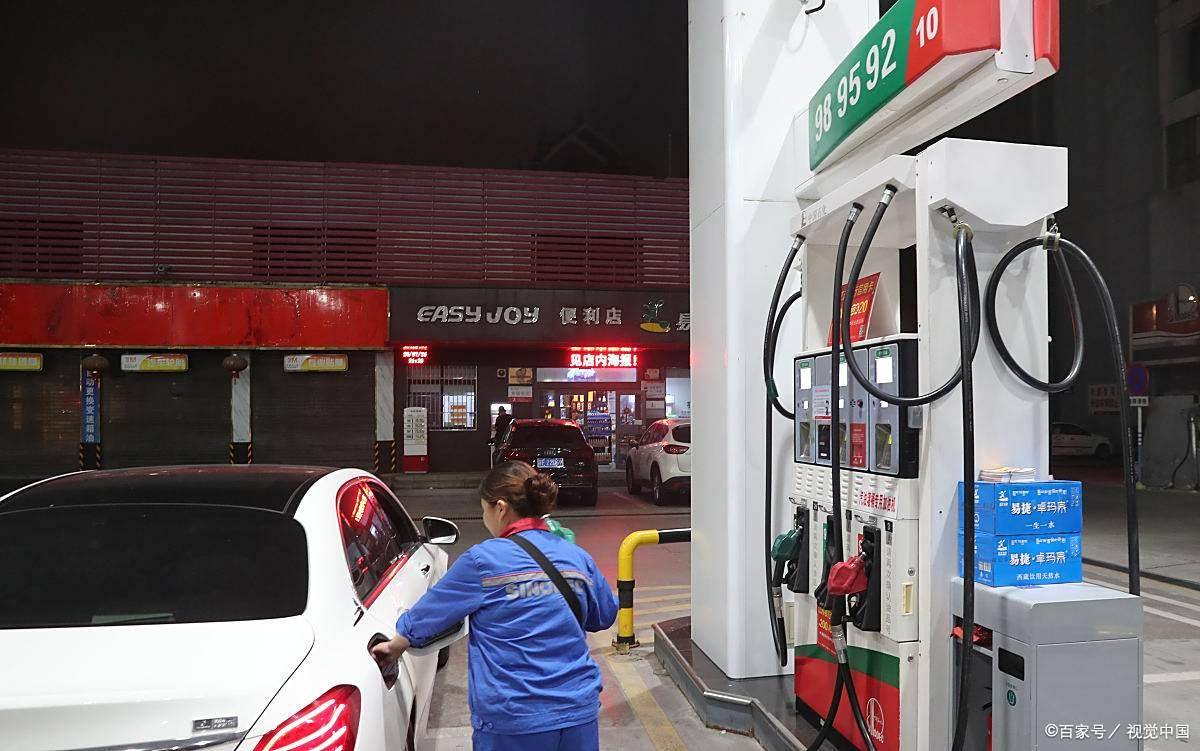
油价大跌!7月13日油价迎大幅下跌,调价后全国地区油价价格
Sou Hu Cai Jing· 2025-07-15 06:08
Group 1 - The core viewpoint of the article highlights the volatility of oil prices, with a potential slight decrease expected on July 15, amidst fluctuating international oil prices and geopolitical factors [1][2] Group 2 - International oil prices experienced significant fluctuations, initially rising over 5% due to geopolitical tensions, followed by a sharp decline due to unexpected increases in oil inventory, leading to a reassessment of energy demand [2] - The International Energy Agency's announcement of tighter global oil supply and a 35% tariff on Canadian oil provided a boost to oil prices, reversing the downward trend [2] Group 3 - Predictions for domestic oil price adjustments indicate a potential decrease of approximately 145 yuan per ton, translating to a reduction of 0.11 to 0.13 yuan per liter for gasoline [3] - The volatility in international oil prices may affect the final adjustment, with the possibility of the decrease being less than 100 yuan per ton if prices continue to rise before the adjustment [3] Group 4 - A review of the first 13 oil price adjustments in 2023 shows a mixed trend, with 6 increases and 5 decreases, leading to a cumulative reduction of only 95 yuan per ton for gasoline and 90 yuan per ton for diesel [4] - The overall trend indicates a narrowing of the price reduction despite some earlier significant decreases, with recent adjustments resulting in increased consumer costs [4] Group 5 - Regional price variations for 95 and 98 octane gasoline are noted, with higher prices in the southwest due to complex terrain and transportation costs, while the northwest benefits from lower costs due to refinery concentration [5][12] - Specific prices for 95 octane gasoline range from 7.66 yuan per liter in the northwest to 8.06 yuan per liter in the southwest, while 98 octane gasoline prices vary significantly across regions, with Guangdong reaching 10.00 yuan per liter [10][14]

以色列能源部长:以色列的能源需求将通过替代能源和燃料来满足。
news flash· 2025-06-13 10:06
Core Viewpoint - Israel's energy needs will be met through alternative energy and fuels [1] Group 1 - The Israeli Energy Minister emphasizes the shift towards alternative energy sources to fulfill the country's energy requirements [1]
印度电力部门对液化天然气的需求因天气炎热而在上升。
news flash· 2025-05-19 12:42
Core Insights - The demand for liquefied natural gas (LNG) in India's power sector is increasing due to rising temperatures [1] Group 1 - The hot weather conditions are driving up the need for LNG in the electricity sector [1]
5月19日电,印度电力部门对液化天然气的需求因天气炎热而在上升。
news flash· 2025-05-19 12:40
Group 1 - The core viewpoint is that the demand for liquefied natural gas (LNG) in India's power sector is increasing due to rising temperatures [1]
IEA:2024年石油消费占比创新低
Zhong Guo Hua Gong Bao· 2025-03-31 01:47
Group 1 - The International Energy Agency (IEA) reports that in 2024, the share of oil in global energy consumption will fall below 30% for the first time, primarily due to slow post-pandemic recovery in oil demand and growth driven by aviation fuel and petrochemical feedstock [1] - Global oil demand is projected to increase by 830,000 barrels per day in 2024, significantly lower than the 2.1 million barrels per day growth in 2023, and slightly below the 900,000 barrels per day forecast by S&P Global Commodity Insights [1] - Road transport oil demand growth has significantly slowed, contributing only 5% to global oil demand growth since 2022, due to the rise of alternative fuels like electric vehicles and liquefied natural gas [1] Group 2 - In the latest monthly oil market report, the IEA predicts that global oil demand growth will slightly exceed 1 million barrels per day in 2025, while S&P Global Commodity Insights expects a growth of 1.3 million barrels per day [2] - The IEA forecasts a 2.2% increase in total global energy demand in 2024, with electricity consumption being the main driver, supported by increased generation from natural gas, coal, nuclear, and renewable energy sources [2] - All major fuels are expected to see an increase in demand in 2024, with renewable energy having the highest share, followed by natural gas [2]