节水优先

Search documents
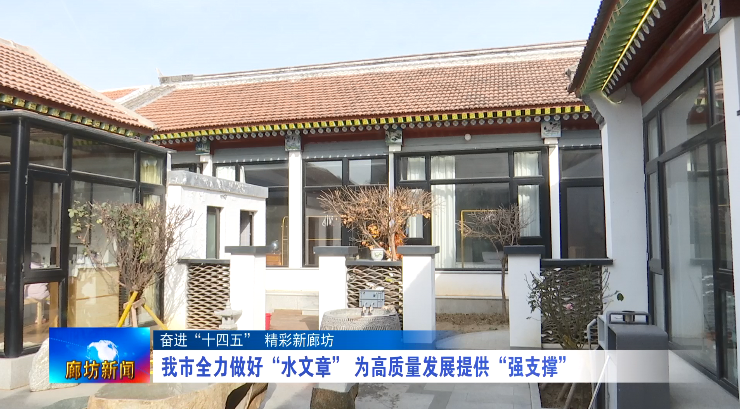
廊坊广电·关注丨【奋进“十四五”精彩新廊坊】我市全力做好“水文章” 为高质量发展提供“强支撑”
Xin Lang Cai Jing· 2026-02-01 14:11
Core Viewpoint - The city has implemented a new water management strategy focusing on water conservation, spatial balance, systematic governance, and dual efforts, leading to significant improvements in water security and infrastructure, thereby supporting high-quality economic and social development [1] Group 1: Water Supply Improvements - The rural water supply in Dachang Hui Autonomous County has transitioned to a unified supply system, benefiting approximately 68,000 residents across 75 administrative villages, with enhanced water quality and 24-hour availability [3][4] - The city has achieved a rural water supply rate of 84%, surpassing the provincial average by 20 percentage points, with 80% of counties implementing unified water management [7] Group 2: Investment in Water Infrastructure - During the "14th Five-Year Plan" period, the city secured 55.14 million yuan in central and provincial funding for rural water projects, constructing five new surface water plants and laying over 3,500 kilometers of water supply pipelines, benefiting 6.2249 million rural residents [7] - Water infrastructure investment reached 37.06 billion yuan, a tenfold increase compared to the previous five-year period, with 15.11 billion yuan invested in 2024 alone, ranking second in the province [15] Group 3: Technological Advancements - The city has implemented smart upgrades in urban water supply, reducing maintenance response times from 2 hours to under 30 minutes through the use of inspection robots and efficient scheduling systems [11][13] - The surface water plants have adopted a strategy centered on smart technology, enhancing service quality and efficiency, including 24-hour automated inspections and improved emergency response capabilities [13] Group 4: Ecological and Conservation Efforts - The city has focused on river management and ecological preservation, with eight rivers recognized as provincial "happy rivers," and significant water conservation measures have been implemented, including the development of efficient irrigation systems covering 189,000 acres [23][25] - The city has achieved a reduction in groundwater extraction by 114 million cubic meters annually, effectively eliminating areas of severe over-extraction [25][27]

松辽水利委员会组织召开西辽河流域2026—2027年度水资源调度计划技术咨询暨行政协调会
Shui Li Bu Wang Zhan· 2026-02-01 04:23
Core Viewpoint - The meeting focused on the technical consultation and administrative coordination for the water resource scheduling plan of the Xiliao River Basin for the years 2026-2027, emphasizing the importance of unified water resource management and ecological water flow protection [1][2] Group 1: Meeting Objectives - The meeting aimed to implement Xi Jinping's water management philosophy, which prioritizes water conservation, spatial balance, systematic governance, and dual efforts in water management [2] - It emphasized the need to improve the annual scheduling plan by strictly adhering to water allocation schemes, ecological flow guarantees, and water resource control targets [2] Group 2: Water Resource Management Strategies - The meeting called for strengthening the unified scheduling of water resources in the basin, considering various water demands and scientifically allocating local and external water sources [2] - It highlighted the importance of scientifically implementing ecological water flow scheduling during critical periods to ensure ecological water rights and achieve continuous water flow in the Xiliao River [2] Group 3: Participation and Format - The meeting was conducted in a "hybrid" format, combining in-person and video participation, with representatives from various water resource departments across provinces and regions involved [2]
五年来,菏泽水务事业实现跨越式发展
Qi Lu Wan Bao· 2026-01-29 15:01
Core Viewpoint - The Heze Municipal Water Authority has made significant advancements in water management during the "14th Five-Year Plan" period, focusing on flood safety, water supply security, food security, and ecological safety, thereby supporting high-quality economic and social development in the city [1] Urban Water Supply Enhancement - The city's water supply capacity has improved significantly with the construction and expansion of three water plants, adding 25.5 million cubic meters per day in supply capacity, and the renovation of 274.2 kilometers of old water supply pipelines [2] - The leakage rate of urban water supply networks has decreased from 10% at the end of the "13th Five-Year Plan" to 4.94%, achieving advanced provincial standards [2] - The city has constructed and renovated 572 kilometers of rainwater pipelines and 506 kilometers of sewage pipelines, enhancing drainage and flood prevention capabilities [2] Infrastructure Development - The city has implemented over 135 water conservancy projects during the "14th Five-Year Plan," a 1.5 times increase compared to the "13th Five-Year Plan," marking a historical high [3] - The flood control system has improved, with the compliance rate of key river embankments rising from 75% to 92% [3] - Rural water supply projects have reached a coverage rate of 99.75%, promoting balanced urban-rural water supply development [3] Water Resource Efficiency - The city has prioritized water conservation, achieving a reduction of 24.75% in water usage per unit of GDP and 31.01% in water usage per unit of industrial added value compared to 2020 [4] - The total utilization of unconventional water resources has reached 896.11 million cubic meters during the "14th Five-Year Plan" [4] - The effective utilization coefficient of irrigation water has improved to 0.6369, with significant advancements in groundwater management [4] Ecological Environment Improvement - The implementation of the river and lake chief system has led to comprehensive management of rivers and lakes, with over 8,700 issues addressed [5] - The ecological flow compliance rate for key rivers and lakes has exceeded 95%, contributing to the creation of 34 "happy rivers and lakes" [5] - Projects aimed at improving the living conditions of relocated populations and enhancing rural infrastructure have been successfully executed [5] Future Goals - The focus for the "15th Five-Year Plan" will be on strengthening guarantees, improving quality, optimizing ecology, and enhancing governance in water management [6] - The city aims to continue improving flood control and water supply systems while advancing smart water management and ecological restoration efforts [6]
“十四五”期间内蒙古水安全保障能力显著提升
Xin Lang Cai Jing· 2026-01-23 19:56
Core Viewpoint - Inner Mongolia has significantly improved its water security and disaster prevention capabilities through comprehensive water management strategies, achieving substantial progress in water resource optimization and ecological protection during the "14th Five-Year Plan" period [1][2][3] Group 1: Water Disaster Prevention and Management - The overall water and drought disaster prevention capability in Inner Mongolia has significantly improved, with the completion of 49 dangerous reservoirs' reinforcement projects and the enhancement of flood control systems, achieving an 80.13% compliance rate for river embankments [1] - The monitoring and early warning capabilities have been strengthened, ensuring effective flood emergency response [1] Group 2: Water Resource Optimization and Infrastructure Development - Inner Mongolia has advanced its water resource optimization framework, focusing on modern water network construction and major water diversion projects, resulting in an additional water supply capacity of 600 million cubic meters [2] - The agricultural irrigation infrastructure has been improved, with 520 million acres of irrigation area enhanced through modernization projects [2] Group 3: Water Conservation Efforts - The total water usage in Inner Mongolia has been strictly controlled within 19.63 billion cubic meters, with water consumption per unit of GDP and industrial output decreasing by 14% and 15% respectively compared to 2020 [3] - The region has established 28 water-saving benchmark enterprises and 174 water-saving enterprises, with significant improvements in agricultural water use efficiency [3] Group 4: Ecological Protection and Governance - Inner Mongolia has implemented integrated protection and governance of mountains, rivers, forests, fields, lakes, grasslands, and deserts, leading to a reduction of 20,500 square kilometers in soil erosion area, representing a 3.55% decrease [3] - The ecological environment of rivers and lakes has shown continuous recovery, supported by effective water volume scheduling and management [3]
守护“一江碧水向东流”——长江经济带水利高质量发展10年综述
Zhong Guo Jing Ji Wang· 2026-01-16 08:14
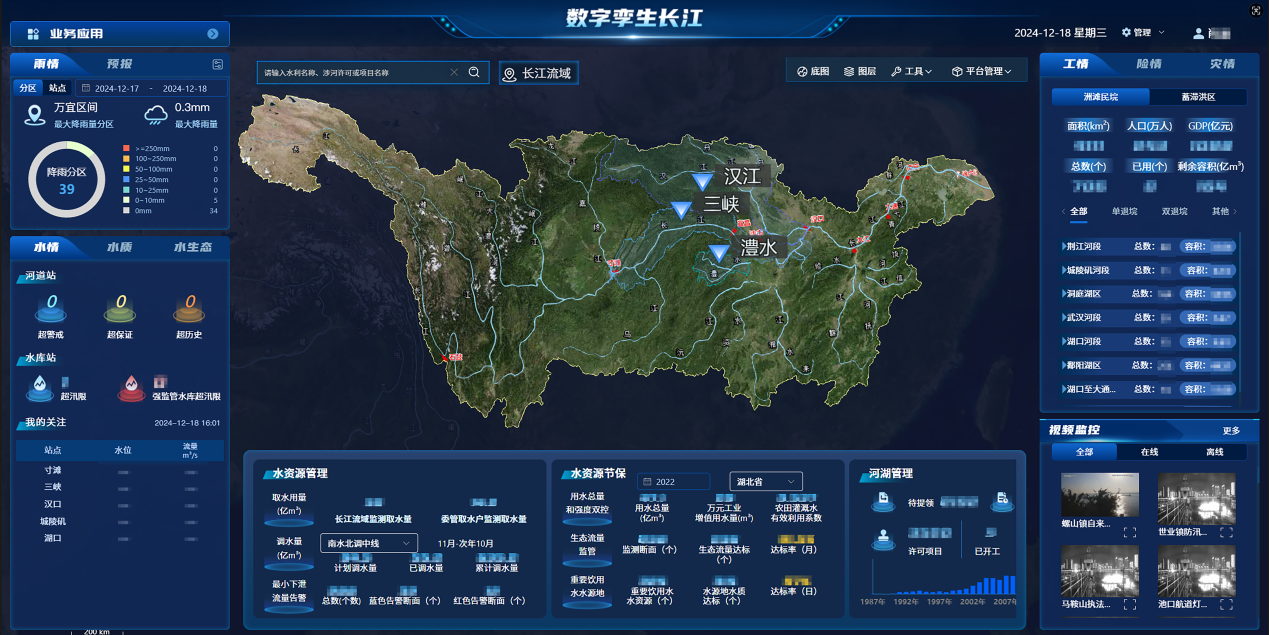
Core Viewpoint - The development of the Yangtze River Economic Belt over the past decade has focused on ecological priority and green development, leading to significant improvements in water management and environmental protection [1] Group 1: Flood and Drought Disaster Prevention - A comprehensive flood and drought disaster prevention system has been established in the Yangtze River basin, significantly enhancing flood control capabilities with over 52,000 reservoirs and a total storage capacity of approximately 400 billion cubic meters [2][4] - The joint scheduling of 132 water projects, including reservoirs and flood storage areas, has transitioned from single flood control to multi-objective management, improving overall water resource efficiency [2] - The digital twin system for flood and drought management has improved forecasting accuracy to 90% for key river sections, extending the effective forecasting period to 3-7 days [2][4] Group 2: Ecological Restoration - The ecological restoration of the Yangtze River is a top priority, with measures taken to ensure ecological flow and health of rivers and lakes [5][6] - Over 607 cross-provincial rivers and lakes have been assessed for ecological flow, with a compliance rate exceeding 97% from 2021 to 2024 [6][7] - Significant actions have been taken to restore 17 rivers and lakes, improve water quality, and eliminate illegal sand mining activities, resulting in a substantial increase in the safety of drinking water sources [7] Group 3: Water Resource Management - The Yangtze River Water Resources Commission has prioritized water conservation, achieving a 50% reduction in water usage per unit of GDP over the past decade [8] - The unconventional water utilization has increased from 1.279 billion cubic meters to 5.335 billion cubic meters, reflecting improved efficiency in water resource management [8] Group 4: Socioeconomic Benefits - The Yangtze River has been transformed into a "happy river," benefiting local populations through improved water quality and environmental conditions [9][12] - The GDP of the region has more than doubled, with the proportion of national GDP rising from 42.2% to 47.3%, and per capita disposable income increasing by 91% [11] - The South-to-North Water Diversion Project has delivered over 75.5 billion cubic meters of water to northern regions, benefiting approximately 118 million people [12] Group 5: Cultural and Heritage Preservation - Efforts have been made to protect and promote the cultural heritage of the Yangtze River, enhancing the integration of traditional culture with modern development [15]
珠江水利委员会部署推进水资源“三化管理” 全面提升水资源管理能力和水平
Shui Li Bu Wang Zhan· 2026-01-15 06:56
Core Viewpoint - The article emphasizes the implementation of a systematic approach to water resource management in the Pearl River Basin, focusing on standardization, specialization, and precision to enhance the efficient and safe use of water resources [1][4]. Standardized Management - The management framework is centered on processes, standards, and regulations, including the development of job descriptions for 67 business types, clarifying responsibilities and operational guidelines [2] - Business standards are being refined based on legal requirements, with the creation of technical requirements for water extraction facility acceptance and evaluation reports [2] - A new system for informing water users of their responsibilities has been introduced, alongside the establishment of a comprehensive water resource management manual with over 160 regulatory documents [2] Specialized Management - The focus is on technology, talent, and intelligent applications, with initiatives to enhance technical capabilities in ecological flow assurance and water resource scheduling [3] - A professional team is being developed by leveraging the technical strengths of affiliated units, promoting deep integration of management and technical expertise [3] - An advanced water resource management system with AI capabilities has been established, enabling intelligent query and document retrieval to improve management efficiency [3] Precision Management - A rigid indicator system for total water use, allocation, ecological flow, and available water has been established to set clear limits on water resource development [4] - Strict measures are being implemented for total water use control, ensuring comprehensive management of water extraction and monitoring systems [4] - The assessment of water resource carrying capacity in 385 counties has been conducted for nine consecutive years, enforcing policies on water extraction limits and addressing areas of severe water scarcity [4]
珠江水利委员会党组专题学习贯彻水利部流域管理机构座谈会精神
Shui Li Bu Wang Zhan· 2025-12-23 06:31
Core Viewpoint - The meeting emphasized the importance of implementing the national "river strategy" established by General Secretary Xi Jinping, focusing on unified governance and management of river basins to enhance river protection and management efforts [1][2] Group 1: Policy Implementation - The meeting highlighted the need to deeply learn and implement the spirit of the 20th Central Committee's Fourth Plenary Session, adhering to Xi Jinping's water management philosophy of prioritizing water conservation, spatial balance, systematic governance, and dual efforts [2] - It was stressed that the river management institutions should play a leading role in river governance, ensuring that the Ministry of Water Resources' directives regarding the "three rivers" are effectively integrated into the Pearl River's water management efforts [2] Group 2: Strategic Planning - The meeting called for a thorough political, strategic, and task-oriented alignment, focusing on clear objectives, logical planning, and effective implementation measures for the "14th Five-Year" water management work in the Pearl River basin [2] - There is an emphasis on the significance of scientifically formulating and continuously implementing five-year plans, promoting a unified approach across the commission to enhance the quality of development and ensure water security in the Pearl River [2]
湖北省水利厅召开全省堤防运行管理工作会议
Shui Li Bu Wang Zhan· 2025-12-04 13:56
Core Points - The meeting summarized the key work of river management during the "14th Five-Year Plan" period and outlined the focus for the upcoming "15th Five-Year Plan" period [1][2] Group 1: Achievements during the "14th Five-Year Plan" - River management departments implemented Xi Jinping's water management philosophy, ensuring river safety amid multiple floods in the Yangtze and Han rivers [1] - Legislative progress was made with the promotion of the "Hubei Province River Management Regulations," enhancing river-related approvals and sand extraction management [1] - Significant improvements were noted in the management of river embankments and the standardization of flood control projects [1] Group 2: Focus Areas for the "15th Five-Year Plan" - Emphasis on flood prevention work, including comprehensive assessments and enhanced early warning systems [2] - Promotion of river embankment construction and management of major rivers and tributaries, alongside the development of flood retention areas [2] - Strengthening of water project management, including the regulation of river-related activities and standardization of engineering practices [2] - Support for the construction of key projects and optimization of river-related service permits [2] - Enhancement of team building and adherence to party leadership and discipline [2]
水利部:“十四五”期间在我国经济增速年均5.5%的情况下,全国用水总量实现零增长
Yang Shi Wang· 2025-09-29 03:05
Core Insights - The "14th Five-Year Plan" emphasizes high-quality water resource management, achieving zero growth in total water usage despite an average economic growth rate of 5.5% [1][2] Group 1: Water Resource Management Strategies - The water department prioritizes water conservation, implementing measures across various sectors to enhance water efficiency and effectiveness [1] - Key actions include modernizing irrigation systems, promoting deep water conservation in the Yellow River basin, and comprehensive water-saving initiatives in the South-to-North Water Diversion project areas [1] - By 2024, water usage per unit of GDP and industrial added value is expected to decrease by 17.7% and 23.6% respectively compared to 2020 [1] Group 2: Strict Water Resource Regulations - The implementation of the strictest water resource management system aims to establish a rigid constraint mechanism for water resources [2] - A comprehensive policy framework for water conservation has been developed across agriculture, industry, and urban areas, transitioning water usage from extensive to efficient [2] - The establishment of a national water quota system and strict management of water resource verification and extraction permits are key components of this strategy [2]
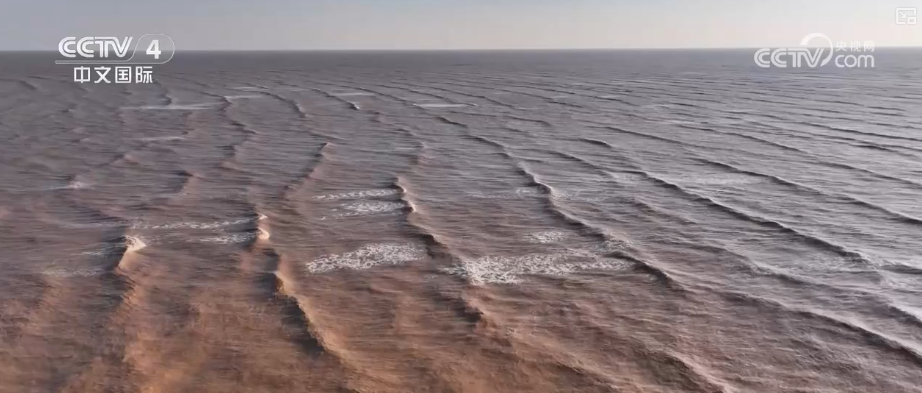
“红毯”湿地焕新生、科技破解“水困” 生态保护与发展同频共振交出亮眼答卷
Yang Shi Wang· 2025-08-12 07:48
Group 1: Ecological Protection and Development in Shandong - The Yellow River Delta in Dongying, Shandong, is home to a young wetland ecosystem, covering over 1,530 square kilometers, which is being nurtured and protected [4] - The local government has been actively restoring the native plant Salicornia, having rehabilitated 52,000 acres, which supports various aquatic and bird species [7] - Bird species in the area have increased from 187 in 1992 to 374 currently, with millions of birds migrating here annually, indicating a thriving ecosystem [9][14] - The Yellow River Delta has become a 5A-level tourist attraction, expecting to receive over one million visitors in 2024, contributing to steady tourism revenue growth [17] Group 2: Water Management and Technological Advancements in Ningxia - Ningxia, the only province entirely within the Yellow River basin, faces severe water scarcity, with per capita water resources at one-twelfth of the national average [21] - The region has implemented modern technology and management practices to optimize water usage, combining ancient irrigation wisdom with contemporary methods [21][23] - Over 900 smart irrigation devices have been installed, allowing for precise water measurement and distribution, significantly reducing water waste [25] - Ningxia has established 6.58 million acres of efficient water-saving irrigation, achieving a 61% efficiency rate, and reducing water consumption per unit of GDP by 30.8% since 2020 [29]