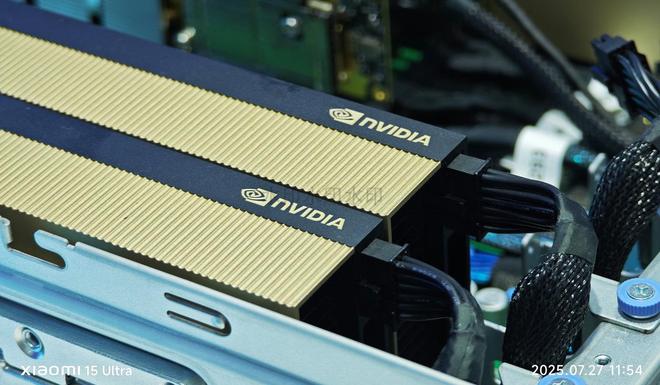
芯片安全

Search documents
心智观察所:买来的“特供”芯片一定不安全
Guan Cha Zhe Wang· 2025-08-14 03:08
Core Viewpoint - The article discusses the security risks associated with NVIDIA's H20 chip, particularly the potential for backdoor vulnerabilities, and highlights the broader implications for the semiconductor industry regarding chip security and trustworthiness [1][13]. Group 1: Security Concerns - The National Internet Information Office of China has formally questioned NVIDIA regarding the security risks of its H20 chip, which has been reported to have potential backdoor vulnerabilities [1]. - NVIDIA's Chief Security Officer, David Leber, claimed that all of NVIDIA's GPU chips do not contain any form of backdoor or monitoring software, although this statement raises skepticism about its credibility [2][13]. - The article categorizes backdoors into three types: malicious self-contained, post-hoc cracking, and covert implantation, emphasizing that all chips, including those from major Western companies, are susceptible to such vulnerabilities [3][4]. Group 2: Historical Context of Vulnerabilities - Major Western IC design companies, including Intel, AMD, and ARM, have been reported to have serious vulnerabilities in their chips, with Intel's Management Engine being a notable example of a high-risk backdoor [5][6]. - Recent vulnerabilities in Intel CPUs, such as the Downfall vulnerability, have led to legal actions against the company, highlighting ongoing security issues and the potential for data breaches [6]. - ARM processors have also been found to have critical design flaws that cannot be patched through software updates, necessitating hardware upgrades for resolution [7]. Group 3: Implications for Chip Purchases - The article argues that chips purchased from external sources are inherently less secure than those developed in-house, as they may contain undisclosed vulnerabilities and backdoors [9][12]. - The reliance on foreign technology can lead to a lack of transparency and control over security updates, as seen in the case of Intel's long-standing vulnerabilities [12]. - The H20 chip, being a China-specific version, is suggested to carry greater security risks compared to globally available models, as it is only subject to scrutiny from local researchers [13].





8月13日重要资讯一览
Zheng Quan Shi Bao Wang· 2025-08-13 13:43
Monetary Policy and Financing - As of the end of July, the M2 balance reached 329.94 trillion yuan, with a year-on-year growth of 8.8% [1] - The total social financing scale increased by 23.99 trillion yuan in the first seven months of 2025, which is 5.12 trillion yuan more than the same period last year [2] - The net increase in RMB loans to the real economy was 12.31 trillion yuan, a decrease of 694 billion yuan year-on-year [2] Government Initiatives - The National Development and Reform Commission has allocated 188 billion yuan in special bonds to support equipment upgrades, impacting approximately 8,400 projects and driving total investment over 1 trillion yuan [3] Regulatory Actions - The Ministry of Commerce has implemented countermeasures against two EU financial institutions due to their inclusion in sanctions against Chinese entities, prohibiting domestic organizations from engaging in transactions with them [4] - The State Administration for Market Regulation and the Ministry of Industry and Information Technology are enhancing supervision over the recall and production consistency of smart connected new energy vehicles [5] Corporate News - Jishi Media has a minimal investment in the film "731" [9] - Ningde Times announced a mid-year dividend of 10.07 yuan per 10 shares, with the record date set for August 19 [9] - Yongji Co. is planning to acquire control of Tena Fei, leading to a suspension of trading from August 14 [9] - Tencent Holdings reported a second-quarter revenue of 184.5 billion yuan, reflecting a year-on-year growth of 15% [10]
中国已要求本土企业避免使用英伟达H20芯片?外交部回应
财联社· 2025-08-13 10:37
Core Viewpoint - The Chinese government has reportedly requested domestic companies to avoid using Nvidia's H20 chip, particularly in government or national security-related applications, due to concerns over chip security risks [1] Group 1 - The Chinese Ministry of Foreign Affairs spokesperson Lin Jian responded to a question regarding the reported request to avoid Nvidia's H20 chip, stating that he was not aware of the situation mentioned [1]

英伟达深夜发声明:NVIDIA 芯片不存在后门、终止开关和监控软件
Xi Niu Cai Jing· 2025-08-11 05:51
Group 1 - The core issue revolves around serious security concerns related to NVIDIA's H20 computing chip, prompting the National Internet Information Office to request explanations and proof from NVIDIA regarding the security risks associated with backdoor vulnerabilities [1] - NVIDIA officially responded on August 6, stating that their chips do not contain backdoors, kill switches, or monitoring software, emphasizing the importance of user consent and awareness in hardware design [4] - The company referenced the historical Clipper chip incident to highlight the dangers of built-in backdoors, which were found to have fundamental flaws that could be exploited, undermining user trust in system security [4] Group 2 - Experts and policymakers have suggested the need for "kill switches" in hardware to mitigate misuse risks, but NVIDIA firmly opposes the implementation of such features, arguing they violate basic cybersecurity principles [4] - The existence of government backdoors is seen as detrimental to user confidence in system security, as it creates single points of failure [4] - NVIDIA's statement aims to reassure stakeholders about the integrity of their products and the company's commitment to cybersecurity [4]
X @外汇交易员
外汇交易员· 2025-08-11 01:12
Security Concerns - Concerns raised by CCTV's "Yu Yuan Tan Tian" regarding potential "governance mechanisms" in US-designed chips, including licensing locks, tracking, usage monitoring, and restrictions [1] - CCTV suggests Nvidia's H20 chip, intended for the Chinese market, may not be secure due to these potential mechanisms [1] Nvidia's Response - Nvidia's Chief Security Officer, David Reber, denies the existence or intention to include kill switches or backdoors in Nvidia GPUs [1] - Nvidia argues that such features would create vulnerabilities exploitable by hackers and adversaries, undermining global digital infrastructure and trust in US technology [1] Market Implications - The report suggests a potential consumer choice to avoid Nvidia's H20 chip if it is perceived as environmentally unfriendly, technologically inferior, and insecure [1] - Nvidia emphasizes that current laws require companies to fix vulnerabilities rather than create them [1]
周鸿祎:英伟达芯片是否有“后门”技术上很难判断 关键看是否有意引入漏洞
Xin Lang Cai Jing· 2025-08-06 11:25
Core Viewpoint - The discussion revolves around the potential security risks associated with NVIDIA's H20 computing chip, particularly the possibility of "backdoor" vulnerabilities, which is difficult to assess technically [2]. Group 1: Security Concerns - Zhou Hongyi, CEO of 360, stated that it is technically challenging to determine if the NVIDIA H20 chip has "backdoor" vulnerabilities [2]. - He explained that hardware requires software drivers to operate, and the software system inherently leads to potential vulnerabilities [2]. - Zhou emphasized that intentional vulnerabilities are termed "backdoors," while unintentional ones are simply called vulnerabilities [2]. Group 2: Market Dynamics - The U.S. government's inquiries into NVIDIA regarding the H20 chip have led to suspicions in China, which is a significant market for NVIDIA [2]. - Zhou expressed confidence that NVIDIA does not have the intention to introduce backdoors in their software, given the substantial market share in China [2]. Group 3: Recommendations - Zhou suggested that NVIDIA could engage third-party security firms to conduct security audits to alleviate concerns regarding potential vulnerabilities [2].
英伟达深夜发文回应芯片“后门”问题
Xin Lang Cai Jing· 2025-08-06 06:17
Group 1 - NVIDIA denies the existence of backdoors, kill switches, or monitoring software in its chips, emphasizing that these are not ways to build trustworthy systems [1] - Concerns have been raised regarding the potential for remote disabling of GPUs without user consent, leading to calls for hardware kill switches by experts and policymakers [1] - The Chinese government has requested NVIDIA to explain security risks associated with its H20 chips, following reports of serious security issues [1] Group 2 - NVIDIA's CEO Jensen Huang announced the launch of the new NVIDIA RTX PRO GPU, designed for digital twin AI applications in smart factories and logistics [2] - The U.S. government imposed a ban on NVIDIA's H20 chip sales to China, which was specifically designed to comply with U.S. export restrictions [2] - Huang highlighted the importance of the Chinese market for U.S. companies, noting its size, vibrancy, and innovation potential [2]
英伟达发文:NVIDIA芯片不存在后门、终止开关和监控软件
Jing Ji Guan Cha Bao· 2025-08-06 05:52
Group 1 - NVIDIA asserts that its chips do not contain backdoors, kill switches, or monitoring software, emphasizing the importance of security in modern computing [2] - The company highlights the widespread applications of its GPUs in various sectors, including healthcare, finance, scientific research, autonomous driving, and AI infrastructure [2] - NVIDIA argues that embedding backdoors or kill switches could compromise global digital infrastructure and erode trust in leading technologies, aligning with existing laws that mandate companies to fix vulnerabilities rather than create them [2] Group 2 - Recent reports indicate that NVIDIA's computing chips have been exposed to serious security issues, prompting U.S. lawmakers to call for advanced chips to include tracking and remote shutdown capabilities [3] - The National Internet Information Office of China has requested NVIDIA to explain the security risks associated with its H20 computing chips sold to China, in accordance with local cybersecurity laws [3]

英伟达凌晨发文 回应芯片“后门”问题
2 1 Shi Ji Jing Ji Bao Dao· 2025-08-06 03:27
Core Viewpoint - NVIDIA asserts that its chips do not contain backdoors, kill switches, or monitoring software, emphasizing that these features are not a way to build trustworthy systems and will never be implemented [2] Group 1 - NVIDIA's statement comes in response to concerns raised by experts and policymakers about the potential need for a "kill switch" in hardware to remotely disable GPUs, which the company argues could lead to serious permanent defects and is an unreasonable policy [2] - On July 31, a Chinese government account reported serious security issues with NVIDIA's computing chips, prompting discussions about the need for advanced chips exported from the U.S. to include "tracking" capabilities [2] - U.S. AI experts have indicated that the technology for "tracking" and "remote shutdown" in NVIDIA's computing chips is already mature [2]
英伟达再度深夜发声:英伟达芯片不存在后门、终止开关、监控软件
Tai Mei Ti A P P· 2025-08-06 00:52
英伟达再度回应公司被约谈事件。 8月6日消息,今天凌晨,英伟达通过官网发布长文《NVIDIA 芯片不存在后门、终止开关和监控软 件》,作者是英伟达首席安全官大卫·雷伯 (David Reber)。 | C NVIDIA | σ | | --- | --- | | 平台 · 开发者 · 社群 · 支持 · 驱动程序 · 关于 NVIDIA · | | | 首页 生成式Al 网络 智能汽车 游戏 专业图形 机器人 初创加速会员成功故事 初创加强新闻 成功案例 Al 福客 | | | 【1/17/11/2017 1/2 1/2 1 -- 1/ 1 -- V Tr V Trill Intell | | 英伟达表示,为了降低误用风险,一些专家和政策制定者提出需要在硬件中设置"终止开关"或内置控 件,以便在用户不知情和未经同意的情况下远程禁用 GPU。有人怀疑这种情况已经存在。但他表示, 英伟达 GPU 不存在也不应该设置终止开关和后门。 此前,大卫·雷伯曾担任 Nutanix 的网络安全高级总监,Frame的安全和解决方案总监,并为美国政府提 供了 10 多年的信息技术和安全领导。 这篇文章是上周中国表示约谈英伟达,并 ...