责任投资

Search documents
高毅资产招聘计划
高毅资产管理· 2025-12-25 07:04
Core Viewpoint - The article emphasizes the recruitment of talented individuals for various positions within the company, highlighting the importance of expertise in investment research and human resources to support the firm's long-term investment goals and commitment to value investing [18]. Group 1: Recruitment Positions - The company is seeking an Industry Research Analyst focused on the electric power and new energy sectors, requiring at least 2 years of relevant experience and strong analytical skills [7][9]. - A Human Resources Intern position is also available, aimed at students graduating in 2026 or 2027, with responsibilities including organizing training activities and supporting corporate culture initiatives [11][13]. Group 2: Company Overview - Shanghai Gao Yi Asset Management is a private equity fund management company founded by experienced fund managers, focusing on public market investments and fundamental research [18]. - The company promotes a culture of deep analysis and forward-looking research, aiming to identify long-term value creation opportunities amid rapid global changes [18]. - Gao Yi Asset emphasizes professionalism across all business areas, including compliance, risk control, and client service, to enhance investment outcomes for clients [18].


银华基金荣膺“可持续责任典范”:以金融专业力书写责任投资新范式
Di Yi Cai Jing· 2025-12-17 15:50
银华基金用124个公益项目、近3300万元真金白银的投入,在金融与公益的交会地带开辟出一条独具特 色的"责任航道"。 即使是扶贫济困的公益项目,银华基金的公益实践也不会简单直接地拨款。例如在内蒙古兴和县的饮水 工程中,银华基金经过详细调研,将资金精准定向用于搭建24小时自来水供水试点,切实解决村民"靠 天吃水"的困境。 此外,银华基金还积极开展水灾、地震等自然灾害以及重大公共卫生事件救援救助,通过捐赠资金和急 需物资等,协助相关单位和群众共同抗灾抢险,减少重大公共卫生事件影响,帮助群众尽快恢复生产生 活。 "路漫漫其修远兮,吾将上下而求索"。近年来,银华基金积极践行企业的社会责任,并依托金融行业优 势,在救灾扶困、乡村振兴、教育扶贫等各个层面展开实际行动。截至今年8月,银华公益基金会累计 实施公益项目124个,对外捐助金额近3300万元。 日前,2025年第一财经·中国企业社会责任典范评选榜单揭晓,银华基金凭借在防沙治沙、助学助教、 公益慈善等社会责任方面的多维探索,从众多参选机构中脱颖而出,获得了"可持续责任典范"评价。 作为服务大众理财需求的公募基金公司,银华基金将教育公益置于其社会责任版图的核心位置,其 ...
盛世投资姜明明:推动责任投资,S策略将成为核心发力方向
2 1 Shi Ji Jing Ji Bao Dao· 2025-12-17 13:00
(原标题:盛世投资姜明明:推动责任投资,S策略将成为核心发力方向) 21世纪经济报道记者 赵娜 上海报道 进入年末,股权投资行业会议密集举行。近期由私募股权行业ESG倡议(CID)主办的第八届创投责任 投资论坛上,盛世投资董事长姜明明主旨分享了盛世投资在推动行业ESG生态建设和S领域的负责任投 资实践。 在论坛现场,姜明明的分享首先围绕责任投资与ESG实践展开。对他而言,这绝非一次突如其来的转 向,而是与盛世投资过往在行业中的探索路径一脉相承。 在内部管理与投资流程方面,其已将ESG要求嵌入项目筛选、投资决策、投后管理及退出等多个环节。 无论基金投资还是直投项目,在投资决策过程中,相关项目团队均需就ESG相关问题进行回应和说明。 此外,该机构还对部分投资案例进行系统梳理。近年来,其从直投及基金投资项目中筛选出多项符合 ESG标准的案例,并向行业协会及相关机构提供研究素材。 在国内股权投资行业,盛世投资长期以来被视为母基金管理人和政府投资基金管理人。姜明明仍清楚记 得,在早年推广市场化母基金模式之初,不少投资人甚至会将"FOF"逐字读作"F、O、F"。 而如今,一级市场的基金出资人不仅已熟悉FOF配置,还在主动 ...
《报告》:2025年中国责任投资市场规模达48.55万亿元
Zhong Guo Jing Ying Bao· 2025-12-05 13:32
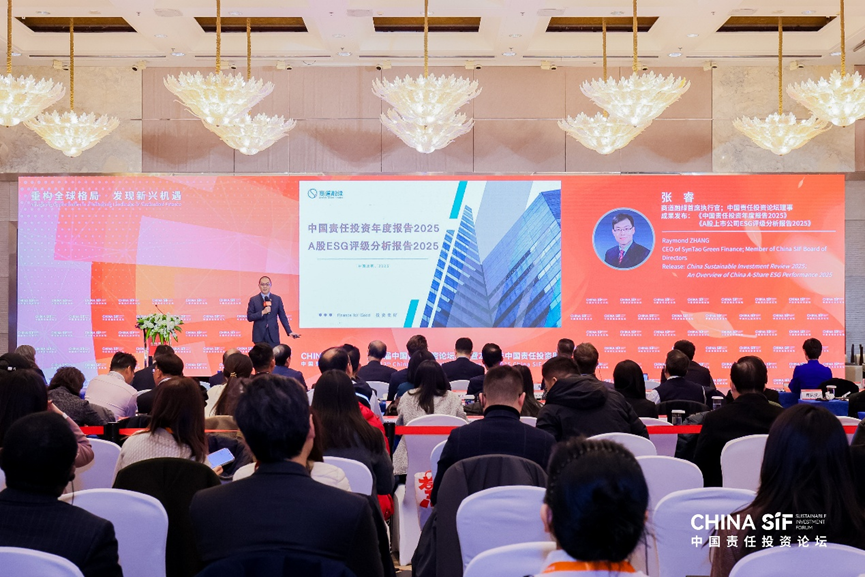
近日,第十三届中国责任投资论坛(ChinaSIF)年会在北京召开,商道融绿首席执行官、中国责任投资 论坛理事张睿代表研究团队正式发布了《中国责任投资年度报告2025》(以下简称"《责任投资报 告》")与《A股ESG评级分析报告2025》(以下简称"《A股ESG报告》")。 商道融绿认为,针对"资金端"呼唤优质资产与"资产端"实质性披露不足的矛盾,坚实的数据是解决痛点 的"题眼"。必须将上市公司的ESG核心信息从非财务信息转化为可定价的风险和机遇,并阐明ESG实践 的正外部性价值,才能激发市场的内生动力。未来的投资机会将在于"实质性披露"和"量化分析"。 上述两份报告分别从责任投资市场(资金端)与上市公司ESG绩效(资产端)整体描述了中国ESG市场 的发展现状图景。 《责任投资报告》显示,得益于日益完善的政策体系推动,中国责任投资市场呈现强劲的增长态势。 2025年,中国责任投资整体市场规模达到48.55万亿元,年均增长率保持在30%左右,实现了市场与政 策的良好共振。 《A股ESG报告》则显示,A股头部企业ESG管理水平显著提升。根据商道融绿ESG评级数据,中证800 成分股中,ESG评级在A-级及以上的企业 ...
China SIF|安国俊:建资管机构责任投资能力评估体系 完善国内ESG生态体系建设
Xin Lang Cai Jing· 2025-12-05 06:36
Core Viewpoint - The 13th China Responsible Investment Forum highlighted the rapid development of responsible investment in China, driven by dual carbon goals and green finance policies, while emphasizing the need for a comprehensive evaluation system for asset management institutions' responsible investment capabilities [1][3][4]. Group 1: Responsible Investment Capability Assessment - The updated Responsible Investment Capability Evaluation System (RICE) was introduced to assess asset management institutions across six dimensions: strategy, management, products, climate, disclosure, and advocacy [3][8]. - Evaluation results indicate a disparity in responsible investment capabilities among public fund companies, with significant room for development; insurance asset management shows continuous improvement; and bank wealth management subsidiaries are in a steady transformation phase, needing to enhance the diversity and maturity of ESG products [3][8]. Group 2: Recommendations for Improvement - The evaluation system proposes differentiated enhancement paths for various types of asset management institutions: public funds should balance short-term market performance with long-term sustainability, improve investor education and product design, and enhance the market appeal of ESG products; insurance asset management should leverage long-term funding advantages and integrate ESG factors into asset allocation; bank wealth management should design low-volatility ESG products to meet stable return demands [3][8][9]. Group 3: Future Outlook - There is a call for further improvement in responsible investment capability assessments, innovation in green asset management products, and collaboration across financial sectors to promote long-term capital market entry, support technological innovation, and aid the development of green low-carbon industries [4][9]. - The expectation is that research in green finance, responsible investment, ESG investment, impact investing, blended finance, and charitable finance will effectively support the real economy, guide capital towards social responsibility, and promote sustainable development [4][9]. Group 4: ESG Rating Center Overview - The Sina Finance ESG Rating Center is the first Chinese platform for ESG professional information and ratings, dedicated to promoting sustainable development and responsible investment, and advancing the establishment of ESG evaluation standards in China [5][10]. - The center has launched multiple ESG innovation indices to provide investors with more options regarding corporate ESG performance and has established the China ESG Leaders Organization Forum to collaborate with leading ESG companies and partners [5][10].
China SIF|商道融绿发布年度双旗舰报告
中国责任投资市场规模:总量攀升与结构分化并存
A股上市公司ESG绩效:合规披露大幅提升,量化分析亟待增强
数据是连接投融资两端的“题眼”
Xin Lang Cai Jing· 2025-12-05 06:30
Core Insights - The 13th China Responsible Investment Forum highlighted the growth of China's responsible investment market, which has reached a scale of 48.55 trillion yuan by 2025, with an average annual growth rate of around 30% [3][17] - The reports indicate a shift from quantitative growth to qualitative improvement in ESG performance among listed companies, although challenges remain in quantitative analysis related to climate change [1][5] Group 1: Responsible Investment Market - The responsible investment market in China is experiencing strong growth, driven by an improving policy framework [3][17] - Green credit remains the dominant force in the market, accounting for over 43 trillion yuan, approximately 90% of the total market [3][17] - ESG public funds have rebounded, with over 1,000 funds and a total scale exceeding 530 billion yuan, indicating future growth potential despite currently representing only 2.84% of the overall fund market [3][17] Group 2: ESG Performance of Listed Companies - A significant improvement in ESG management levels has been observed among leading A-share companies, with over 50% of CSI 800 constituents rated A- or above for the first time [5][20] - Compliance with the disclosure rules set by the three major exchanges has reached 72.1% among CSI 800 constituents [5][20] - Despite increased reporting rates, there is a notable weakness in quantitative disclosures, with only 1.88% of companies able to conduct and disclose quantitative climate risk analysis [5][20] Group 3: Future Opportunities and Challenges - The need for solid data to bridge the gap between the demand for quality assets and insufficient substantive disclosures is emphasized [7][22] - Future investment opportunities are expected to focus on "substantive disclosures" and "quantitative analysis" [7][22] - Digital tools such as climate risk analysis platforms and biodiversity analysis platforms are being developed to assist companies and investors in quantifying disclosures and identifying real risks and values [9][24]
“耐心资本”作答时代课题 险资详解长期投资实践
Zheng Quan Shi Bao· 2025-12-04 17:49
证券时报记者 刘敬元 邓雄鹰 "十五五"即将开篇,在培育壮大新兴产业与未来产业的进程中,37万亿元险资如何更好发挥"耐心资本"作用,仍是 亟待解答的时代课题。 近日,在"第十九届深圳国际金融博览会暨2025中国金融机构年会"分论坛"2025中国保险业资产负债管理年会"上, 四位保险资管高管以"壮大耐心资本,赋能新质生产力"为主题展开了圆桌讨论,分享不同业务条线的实践和思 考。 这四位高管包括新华资产总裁陈一江,太保资产副总经理、董事会秘书赵峰,中意资产总经理助理陈伍斌,中邮 资管首席风险管理执行官张超。 长期投资试点 是"上下结合"的成果 自去年鸿鹄基金入市以来,保险资金长期投资试点改革在资本市场上受到高度关注,今年试点规模进一步扩围到 2220亿元。 张超表示,中邮资管获得第三批试点资格,在投资思路上,基金将发挥"耐心资本"的核心优势,坚持长期投资、 价值投资、责任投资的理念,重点围绕服务国家战略、科技等领域,展开深入研究和投资。 做好支持科技的"耐心资本" 科技创新的金融支持是当前重要命题,保险资金凭借"耐心资本"属性,正积极投身"科技金融"实践,相关领域已积 累诸多经验认识。 陈一江表示,对于险资这类大 ...

港投公司首份年报亮相:总资产超640亿港元,硬科技投资占比超七成 | 公司动态
Sou Hu Cai Jing· 2025-12-04 07:23
港投公司在报告中强调其"资本带动"效应。截至2025年6月30日,公司每投资1港元,可带动超过6港元的市场长期资金跟投。成立两年间,投资组合中已有2 家企业成功在港上市,另有10余家企业已于2025年内提交或计划提交上市申请,其中5家在上市前已成为独角兽企业。 这些被投企业为香港本地经济带来实质贡献:累计租赁楼面面积超过26.8万平方米,创造直接职位超过6,400个,注册知识产权达109项,并举办行业活动164 场。 构建生态圈,强化香港"超级联系人"角色 港投公司积极搭建涵盖"政、产、学、研、投"的生态圈,已与香港城市大学、中文大学、科技大学、理工大学及香港大学开展超过100项协作项目。此外, 通过设立海外合作基地、举办国际峰会等形式,助力香港巩固其"超级联系人"与"超级增值人"的双重角色。 港投公司行政总裁陈家齐表示:港投公司是坚持长期投资、价值投资、责任投资的专业机构投资者。我们秉持全球视野,加强在区域和国际市场上发挥影响 力,贡献国家发展,说好香港故事,助力构筑互利共赢的市场规则和投资格局。同时,我们透过构建港投公司生态圈,汇聚本地及海外公私营界别的资源和 智慧,助力转型、重塑、定义香港产业、经济和金 ...
港投公司:2024年录得22.52亿港元营运利润 已投资超过150个项目
智通财经网· 2025-12-04 02:46
陈家齐指,港投公司是坚持长期投资、价值投资、责任投资的专业机构投资者。秉持全球视野,加强在 区域和国际市场上发挥影响力,贡献国家发展,说好香港故事,助力构筑互利共赢的市场规则和投资格 局。 同时,透过构建港投公司生态圈,汇聚香港本地及海外公私营界别的资源和智慧,助力转型、重塑、定 义香港产业、经济和金融发展的新优势。将持续拓展策略布局、深化投资伙伴关係,配合国家的发展战 略和香港长远的繁荣发展需要。 运营方面,截至2024年12月31日,港投公司总资产规模640.07亿港元,已投入项目的资金占不到初始资 金规模的1/5,实现投资收入23.45亿港元,营运开支仅0.93亿港元,最终录得22.52亿港元的营运利润。 港投公司行政总裁陈家齐表示,截至2024年年底,港投公司已投入项目的资金占初始资金规模的少于五 分之一,已录得23亿港元投资收入。按照"先博后深"、"循序渐进"的投资策略,旨在为香港在抢占先 机、争取区域和国际话语权、以及投资风险管控等因素之间,取得合理平衡,兼具财务和战略价值的维 度。 在2024年奠下的基础上,于2025年已进一步深耕和推进,包括按原定计划,对达到发展和表现标准的企 业,投入更多资 ...
安国俊:构建资管机构责任投资能力评估体系
Sou Hu Cai Jing· 2025-12-03 06:26
Core Insights - The 2025 Asset Management Institutions Responsibility Investment Capability Assessment System Report (RICE) was released at the 13th China Responsible Investment Forum, highlighting the need for a standardized evaluation framework for asset management institutions in China to enhance the domestic ESG ecosystem [2][3] - The report indicates significant disparities in the responsible investment capabilities of various financial institutions, with public funds showing potential for growth, insurance asset management improving overall performance, and bank wealth management subsidiaries in a steady transformation phase [2][3] Group 1 - The RICE assessment framework evaluates asset management institutions across six dimensions: strategy, management, products, climate, disclosure, and advocacy [2] - Public fund companies need to balance short-term market performance with long-term sustainability in their responsible investment strategies, while enhancing investor education and product design capabilities [3] - Insurance asset management should leverage long-term funding advantages by integrating ESG factors into asset allocation to improve long-term risk management [3] Group 2 - Bank wealth management can design low-volatility ESG products to meet stable return demands, while further integrating ESG into investment decisions to manage portfolio risks and enhance returns [3] - The report emphasizes the importance of developing green investment products and strengthening research and investment systems to improve investment management performance and fulfill environmental, social, and governance responsibilities [3] - Future efforts should focus on refining responsibility investment capability assessments, promoting innovation in green asset management products, and facilitating the entry of long-term capital into the market to support technological innovation and the development of green low-carbon industries [3]