
资产代币化

Search documents
Superstate Raises $82.5 Million, Cashing in on Wall Street's Tokenization Bonanza
Yahoo Finance· 2026-01-22 17:02
Core Insights - Superstate has raised $82.5 million in Series B funding, highlighting the increasing trend of tokenizing traditional Wall Street assets [1] - The funding round was led by Bain Capital's crypto division and Distributed Global, with participation from notable crypto investors [1] - The tokenization of assets has shifted from a novelty to a standard practice on Wall Street, with significant developments from major financial institutions [2] Industry Developments - Superstate is focused on creating infrastructure for moving traditional assets onto blockchain networks like Ethereum and Solana [2] - BlackRock's tokenized money market fund has seen substantial growth, expanding to several billion dollars since its launch on Ethereum [2] - The New York Stock Exchange is developing an on-chain platform for trading tokenized stocks and ETFs, indicating a broader acceptance of tokenization in traditional finance [3] Company Positioning - Superstate has become a preferred service provider for companies looking to tokenize their assets, particularly those with ties to the crypto industry [3] - The CEO of Superstate anticipates that tokenized stocks will attract retail investors, allowing them to utilize idle assets within the decentralized finance ecosystem [4] - Crypto-native companies are increasingly entering the tokenized stock market to compete with traditional finance firms [4] Market Trends - A report from BlackRock indicates that the convergence of crypto and traditional finance is creating lucrative financial opportunities [6] - The author of the BlackRock report emphasizes the accelerating trend of traditional securities being tokenized and digital assets integrating into traditional financial systems [7]

达沃斯论坛:香港勾勒金融科技新路径,力推黄金贸易枢纽建设
Nan Fang Du Shi Bao· 2026-01-22 10:49
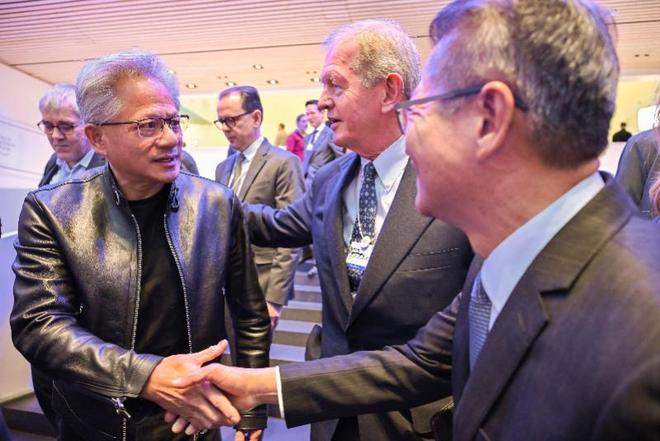
Core Insights - Hong Kong is positioning itself as a global financial, trade, and innovation hub by leveraging digital finance, AI, and blockchain technologies, as well as restructuring the international gold trading system [1][3]. Group 1: Digital Finance and Technology Integration - The integration of finance and technology is seen as a key driver for economic transformation, with AI and blockchain leading to significant industry changes [3]. - Hong Kong has adopted a principle of "same activity, same risk, same regulation" to promote responsible and sustainable development in the digital asset market, having issued licenses to 11 virtual asset trading platforms and planning to issue stablecoin licenses later this year [3]. - The government has issued three batches of tokenized green bonds totaling approximately $2.1 billion and established a regulatory sandbox to encourage innovation in asset tokenization [3]. Group 2: International Trade and Gold Trading - In response to rising demand for diversified asset allocation and gold trading platforms in Asia, Hong Kong is accelerating its development as an international gold trading center, with plans to enhance its central clearing system for gold [4]. - The upcoming signing of a memorandum of cooperation with the Shanghai Gold Exchange aims to prepare for future connectivity with the mainland market [4]. Group 3: Trade Ecosystem Upgrade - To address the reshaping of global supply chains, Hong Kong is set to announce a new roadmap for CargoX, focusing on "data, infrastructure, and connectivity" as three strategic pillars to optimize the digital trade financing ecosystem [5]. Group 4: International Cooperation and Market Positioning - During the World Economic Forum, Hong Kong's Financial Secretary engaged in discussions with officials from multiple countries and international organizations, emphasizing Hong Kong's role as a bridge linking mainland China and global markets [7]. - The commitment to free trade and multilateralism was reiterated, with support for necessary reforms in the World Trade Organization to adapt to new international trade challenges [7]. Group 5: AI and Market Dynamics - The transformative impact of AI on various sectors, including technology, media, and telecommunications, was highlighted, with a shift in focus from AI model performance to profitability and application scenarios [9][10]. - The financial sector in Hong Kong is exploring innovations in digital services to enhance transparency, efficiency, inclusivity, and risk management, thereby improving capital allocation to the real economy [10]. Group 6: Regional Collaboration - Hong Kong's development in innovative technology is not isolated but is part of a collaborative effort with the other 10 cities in the Guangdong-Hong Kong-Macao Greater Bay Area, leveraging collective strengths for regional technological advancement [11].

CEO 详谈创立 Coinbase 幕后故事:银行伙伴是成功关键,曾反对投资 USDC
Xin Lang Cai Jing· 2026-01-13 00:16
Core Insights - The podcast features a deep conversation between Stripe co-founder John Collison and Coinbase CEO Brian Armstrong, discussing Coinbase's strategies, challenges, and the future of cryptocurrency, particularly Bitcoin's potential price increase to $1 million by 2030 due to regulatory clarity and institutional investment [1][2][3]. Group 1: Coinbase's Competitive Edge - Coinbase's success in the U.S. is attributed to its compliance approach, securing a money transmission license, which allowed it to become the only U.S. crypto company with bank partnerships, enabling users to connect their bank accounts for Bitcoin purchases [3][4]. - The company has chosen not to apply for a banking license, preferring to maintain a 100% reserve model rather than a fractional reserve system, which they believe is safer for customers [4][36]. - Armstrong noted that the majority of wealth management firms and sovereign funds will likely include 1%-10% of crypto assets in their portfolios within the next five to ten years [5][38]. Group 2: Cybersecurity and Threats - Armstrong highlighted the ongoing threat from North Korean hackers, with approximately 500 new recruits entering the field each quarter, necessitating robust security measures at Coinbase [3][16]. - The company has implemented strict hiring protocols to mitigate risks, including requiring physical presence for sensitive roles and conducting thorough background checks [17][20]. Group 3: Market Trends and Predictions - Armstrong predicts that only five to ten major fiat currencies will survive, with Bitcoin and USDC likely replacing around 150 other government currencies [2][4]. - The podcast discusses the growing trend of asset tokenization and the concept of an "everything exchange," where various asset classes, including stocks and commodities, will be traded on blockchain platforms [23][24]. Group 4: Regulatory Landscape and Legislative Impact - The passage of the GENIUS Act is seen as a significant step towards regulatory clarity for stablecoins, requiring 100% reserves backed by U.S. dollars or short-term U.S. Treasury securities [42][43]. - Armstrong emphasized the importance of political engagement in shaping cryptocurrency legislation, noting the establishment of a nonprofit organization to mobilize voter support for pro-crypto candidates [45][48]. Group 5: Future of Banking and Financial Services - Armstrong believes that banks will eventually embrace cryptocurrency in response to customer demand, with some banks already experimenting with stablecoins [30][31]. - Coinbase aims to position itself as a primary financial account for users, offering services such as loans and credit cards, thereby competing directly with traditional banks [33][34].

贝莱德智库:为何AI仍是核心主题?这三大启示值得关注
Zhi Tong Cai Jing· 2026-01-09 01:31
Group 1 - The core viewpoint is that 2025 will be a year of breakthroughs in various fields, particularly in AI investment and financial innovation, while trade policies face constraints [1] - The resilience of the US economy is partly attributed to immutable economic laws, which prevent rapid changes in the global landscape, thus stabilizing market conditions despite previous volatility [1] - The S&P 500 index is projected to rise by 16% in 2025, reflecting market validation of these economic principles [1] Group 2 - Disruptive trends are now more influential than traditional macroeconomic factors, with AI emerging as a dominant force driving structural transformation in the market [2] - Investors are encouraged to adopt more active investment strategies rather than indiscriminately diversifying risks, emphasizing the importance of identifying skilled investment managers [2] - The ability to discover winners in the AI sector and capitalize on unique return opportunities in private markets and hedge funds will be crucial for investment success [2] Group 3 - The rise of stablecoins and asset tokenization is evolving at an unprecedented pace, shaping the future of the financial system [3] - The "Genius Act" of 2025 establishes the first regulatory framework for payment stablecoins in the US, which may impact the way banks provide credit and the existing global payment system [3] - If stablecoins pegged to the US dollar are widely adopted in emerging markets, they could reinforce the dollar's status as a reserve currency and alleviate negative sentiment towards the dollar [3] - Asset tokenization allows for instant settlement by recording ownership on a digital ledger, potentially broadening investment channels in illiquid private market asset classes [3]
天时资源(08028) - 业务更新 发行白银代币產品的申请
2026-01-07 08:47
香港交易及結算所有限公司及香港聯合交易所有限公司對本公告之內容概不負責,對其準確性 或完整性亦不發表任何聲明,並明確表示概不就因本公告全部或任何部分內容而產生或因倚賴 該等內容而引致之任何損失承擔任何責任。 TIMELESS RESOURCES HOLDINGS LIMITED 天時資源控股有限公司 (於香港註冊成立的有限公司) (股份代號:8028) 本公告旨在向股東及潛在投資者提供有關根據戰略合作備忘錄開發、部署及發行白銀 代幣之近期進展之最新資訊。 董事會欣然宣佈,據艾德證券於二零二六年一月六日所告知,證監會確認對實體白銀 資產的代幣化及本集團擬發行白銀代幣一事並無進一步意見。本集團將儘快推進白銀 代幣之發行事宜。 為籌備發行白銀代幣,本集團已收購相關白銀資產以作為白銀代幣之實體資產組成部 分。截至二零二五年十二月三十一日,本集團以平均成本約為每盎司 46 美元持有約 54,000 盎司白銀庫存。本集團亦自二零二五年十一月起開始實體白銀資產銷售業務, 作為其貴金屬銷售業務中的一部分。 本公司將適時透過刊發進一步公告,持續向股東及潛在投資者通報重大進展,包括與 白銀代幣相關籌備工作之進展。 1 本 公 司 ...
灰度:2025 年 12 月美国现货比特币 ETP 净流出约 10 亿美元主要由年末税务卖出驱动,而非需求恶化
Xin Lang Cai Jing· 2026-01-07 02:46
Core Insights - Grayscale research indicates that the net outflow of approximately $1 billion from U.S. spot Bitcoin ETPs in December 2025 was primarily driven by year-end tax-loss harvesting rather than a deterioration in demand [1] - The first trading day of 2026 saw a reversal with nearly $500 million in net inflows [1] - On-chain data shows no significant sell-off from OG whales [1] Industry Developments - There has been substantial progress in the tokenization of institutional-grade assets, including the DTCC receiving a no-action letter from the SEC to initiate tokenization services [1] - JP Morgan Asset Management launched a tokenized money market fund on Ethereum [1] Regulatory Environment - The U.S. Senate plans to review the cryptocurrency market structure bill on January 15 [1] - Grayscale anticipates that legislation may be passed in 2026 [1]
Major Web3 events shelved, marking first cancellations of 2026
Yahoo Finance· 2026-01-05 23:09
Core Insights - Two major Web3 events, NFT Paris and RWA Paris, have been officially canceled for 2026 after four successful editions, marking the end of Paris's status as a leading hub for Web3 gatherings in Europe [1][5]. Group 1: Event Cancellation - The cancellation was announced on January 6, 2026, due to the severe impact of the prolonged crypto market downturn [5][6]. - NFT Paris, launched in 2022, quickly became a flagship event for the NFT and digital art sectors, attracting tens of thousands of attendees and hundreds of speakers globally [5]. - The expansion into RWA Paris reflected the industry's shift towards tokenization and institutional adoption [5]. Group 2: Market Context - The NFT market has cooled since its 2021 boom, but NFTs continue to evolve beyond digital art, influencing sectors like gaming, identity, and tokenized assets [3]. - Real-world asset (RWA) tokenization applies the concept of NFTs to tangible assets, increasing liquidity, transparency, and accessibility for global investors [4].
普华永道积极布局加密货币领域
Sou Hu Cai Jing· 2026-01-05 02:51
Group 1 - PwC has decided to increase its investment in the cryptocurrency sector after years of cautious stance [1] - The strategic shift occurred last year, influenced by the appointment of pro-crypto regulatory officials in the U.S. and the passage of new legislation regarding digital assets, such as stablecoins [1] - Paul Griggs, PwC's U.S. leader, believes that the "Genius Act" and the regulatory guidelines surrounding stablecoins will enhance market confidence in these products and asset classes [1] Group 2 - The evolution of asset tokenization is expected to continue, and PwC recognizes the necessity to be part of this ecosystem [1]
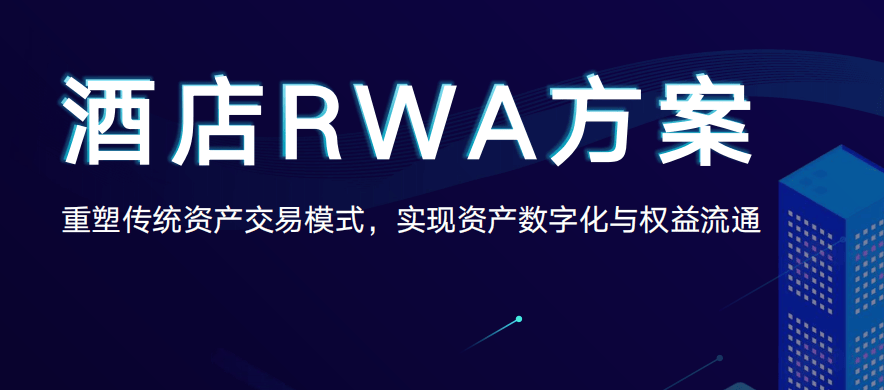
融资难?酒店RWA模式:不抵押、不稀释股权!3个月收回5年成本!
Sou Hu Cai Jing· 2026-01-04 09:40
Core Insights - The hotel RWA (Real World Assets) model represents an innovative approach that combines blockchain technology with the digital economy, allowing hotel assets to be tokenized and traded as security tokens, thus facilitating digitalization, liquidity, and global asset allocation [1][3]. Group 1: Core Logic of Hotel RWA Model - Traditional hotels are capital-intensive, with core assets including property rights, facilities, brand value, and stable cash flows from various revenue streams [3]. - The RWA model enables the tokenization of these assets, allowing investors to indirectly hold shares in hotel assets through the purchase of standardized digital tokens, which entitle them to profit-sharing and potential capital gains [3][5]. Group 2: New Opportunities for Traditional Hotel Transformation - The RWA model addresses several pain points in the traditional hotel industry, such as high capital investment, limited financing channels, poor asset liquidity, and weak digital capabilities [5]. - It facilitates a shift towards asset-light operations by allowing hotels to tokenize part of their assets, thereby releasing liquidity and reducing capital requirements [6]. - The model promotes digital upgrades through blockchain's smart contract capabilities, enhancing operational efficiency and cost reduction [6]. - Token trading on blockchain networks allows hotels to reach a global customer base, attracting small investors and high-net-worth individuals [6]. Group 3: New Entrepreneurial Opportunities - The implementation of the hotel RWA model creates new business avenues for entrepreneurs, including RWA technology service providers that offer asset tokenization solutions [8]. - Vertical platforms focusing on hotel asset tokenization and trading can emerge, providing more flexibility than traditional real estate investment trusts (REITs) [10]. - Innovative product offerings such as fractional ownership and time-sharing rights can be developed, allowing tourists to invest in hotel revenue streams [10]. - Compliance and consulting services are needed due to the regulatory aspects of RWA, creating demand for professionals with expertise in law, finance, and blockchain [10]. Group 4: New Financing Channels - The RWA model opens up low-cost, efficient, and widely accessible financing channels for traditional hotels [13]. - Tokenization lowers financing thresholds by allowing large assets to be divided into smaller shares, attracting a broader range of investors [13]. - The model shortens financing cycles through automated processes, significantly reducing time costs compared to traditional methods [13]. - Global fundraising is facilitated by the open nature of blockchain networks, enabling hotels to attract investors from around the world [13]. - The dynamic valuation and liquidity of tokens allow real-time reflection of hotel asset values, addressing traditional real estate valuation and liquidity challenges [13]. Conclusion - The hotel RWA model represents a dual innovation of asset financialization and digitalization, revitalizing traditional hotel operations and enhancing financing flexibility [18]. - It serves as a critical lever for traditional hotels transitioning from heavy asset operations to a model that combines light assets with capital operations [18]. - For entrepreneurs, it presents a new avenue for integrating digital economy with traditional industries [18]. - For investors, it offers a new tool for participating in the growth of the hotel industry [18].
Coinbase 投资研究负责人:推动加密行业发展的多重因素将在 2026 年进一步增强
Xin Lang Cai Jing· 2026-01-01 09:27
Core Insights - The cryptocurrency industry is expected to experience significant growth by 2025, driven by multiple factors that will further accelerate adoption in 2026, including crypto ETFs, stablecoins, asset tokenization, and clearer regulatory frameworks [1] Group 1: Growth Drivers - The approval cycle for ETFs is anticipated to shorten, enhancing the role of stablecoins in DvP settlements and leading to broader recognition of tokenized collateral [1] - The trend of clearer global regulations is shifting cryptocurrency from a niche market to a component of global financial infrastructure [1] Group 2: Market Dynamics - Demand for cryptocurrency is evolving beyond a single narrative, now influenced by macroeconomic conditions, technology, and geopolitical factors [1] - The market is gradually transitioning towards more long-term and strategic capital participation [1]