
载人航天精神

Search documents
神舟二十二号飞船载货飞赴中国空间站
Ren Min Wang· 2025-11-26 01:25
Core Points - China successfully launched the Shenzhou-22 spacecraft on November 25, marking the first emergency launch mission in its manned space program [1][2] - The Shenzhou-22 spacecraft is unmanned and carries supplies and equipment for the Shenzhou-21 astronaut crew, including food, medicine, and a device to address a crack in the Shenzhou-20 spacecraft's window [1] - The launch demonstrates the advantages of China's new national system and validates the "one launch, one backup" strategy for space station missions [2] Summary by Sections Launch Details - The Shenzhou-22 spacecraft was launched at 12:11 PM on November 25 after the Shenzhou-20 mission was delayed due to a suspected collision with space debris [1] - The Long March 2F Yao-22 rocket and Shenzhou-22 spacecraft were put into a launch-ready state within 16 days following the decision to implement an emergency launch [1] Mission Objectives - The Shenzhou-22 spacecraft successfully docked with the Tianhe core module of the space station at 3:50 PM on the same day [1] - The spacecraft will serve as the return vehicle for the Shenzhou-21 astronaut crew [1] Operational Insights - The Shenzhou-21 astronaut crew is currently in good condition and completing their planned tasks in orbit, while the Shenzhou-20 spacecraft will continue to conduct related experiments [2] - The mission highlights the effectiveness of rapid response and emergency management capabilities within China's space engineering [2]
“太空快递” 成功送达
Xin Hua Ri Bao· 2025-11-25 23:45
Core Points - The successful launch of the Shenzhou-22 spacecraft on November 25 demonstrates the advantages of China's new national system and emphasizes the principle of "life first, safety first" in manned spaceflight [1][2] - The mission validated the scientific reliability of the "one launch, one backup" strategy for the Chinese space station and tested the rapid response and emergency handling capabilities of the entire engineering team [1][3] Group 1 - The Shenzhou-22 spacecraft was launched successfully at 12:11 PM on November 25, marking the first emergency launch mission for China's manned space program [1] - The launch was executed under challenging weather conditions, with strong winds, but the meteorological team provided critical risk assessments for the launch [1] - The Shenzhou-22 spacecraft is designed to be unmanned and carries supplies such as food, medicine, and equipment to address issues with the Shenzhou-20 spacecraft [2] Group 2 - The Shenzhou-22 spacecraft successfully docked with the Tianhe core module of the space station at 3:50 PM on the same day, completing its mission objectives [2] - The Shenzhou-21 astronaut crew is currently in good condition and is completing their planned tasks in orbit, while the Shenzhou-20 spacecraft remains in orbit for further experiments [3] - The rapid response to the Shenzhou-20's delayed return due to a suspected collision with space debris showcases the effective handling of emergencies in the international space sector [3]

全球媒体广泛关注,高效应对成为范例,中国载人航天完成首次应急发射
Huan Qiu Wang Zi Xun· 2025-11-25 23:16
Core Insights - The successful launch of the Shenzhou-22 spacecraft marks China's first emergency space mission, completed in less than 20 days, showcasing the efficiency of the country's manned space program [1][2][5] - The mission involved a rapid response to a potential risk, demonstrating China's capability to handle unexpected events in the international space arena [2][5] Group 1: Mission Details - The Shenzhou-22 spacecraft was launched on November 25, 2025, and successfully docked with the Tianhe core module of the space station [1] - The spacecraft is designed to return three astronauts and carries a larger payload than previous missions, including supplies and equipment for the space station [3][4] Group 2: Emergency Response and Efficiency - The mission's emergency launch plan was executed in 16 days, significantly shorter than the typical preparation time of over 30 days for a Long March 2F rocket [2] - The project team effectively allocated tasks and optimized testing processes to maximize efficiency while ensuring safety [2][4] Group 3: Technological Advancements - The Shenzhou-22 spacecraft features multiple technical improvements, enhancing human-machine interaction, payload capacity, and autonomous control capabilities [4] - The mission exemplifies the advantages of China's new national system and reinforces the principle of prioritizing life and safety in manned spaceflight [4][5]
16天应急启动,与时间赛跑,刚刚成功对接!神舟二十二号飞船将带三位航天员回来
Mei Ri Jing Ji Xin Wen· 2025-11-25 08:59
Core Points - The Shenzhou-22 spacecraft successfully docked with the Tianhe core module of the Chinese space station on November 25, 2025, marking a significant milestone in China's manned space program [1] - The Shenzhou-21 crew is currently in good condition and completing their planned tasks, while the Shenzhou-20 spacecraft remains in orbit for ongoing experiments [5] - The Shenzhou-20 mission faced a delay due to a suspected collision with space debris, leading to the first emergency launch in China's space history [8] Group 1 - The Shenzhou-22 spacecraft was launched in an unmanned state but carried essential supplies for the space station, including food, medical supplies, and spare parts [13][15] - The mission timeline was significantly compressed from over 30 days to just 16 days, showcasing the rapid response capabilities of the Chinese space program [10] - The launch demonstrated China's commitment to astronaut safety and mission success, reflecting a responsible approach to space exploration [11] Group 2 - The Shenzhou-22 spacecraft features several technical improvements, enhancing its functionality and performance, including upgrades to the human-machine interface and payload capacity [15][17] - The cargo for the Shenzhou-22 mission was carefully balanced to ensure the spacecraft's stability during launch and docking [17][18] - The innovative approach to cargo placement involved using soft packaging and securing it in the spacecraft's seats, ensuring effective use of space and safety [20]

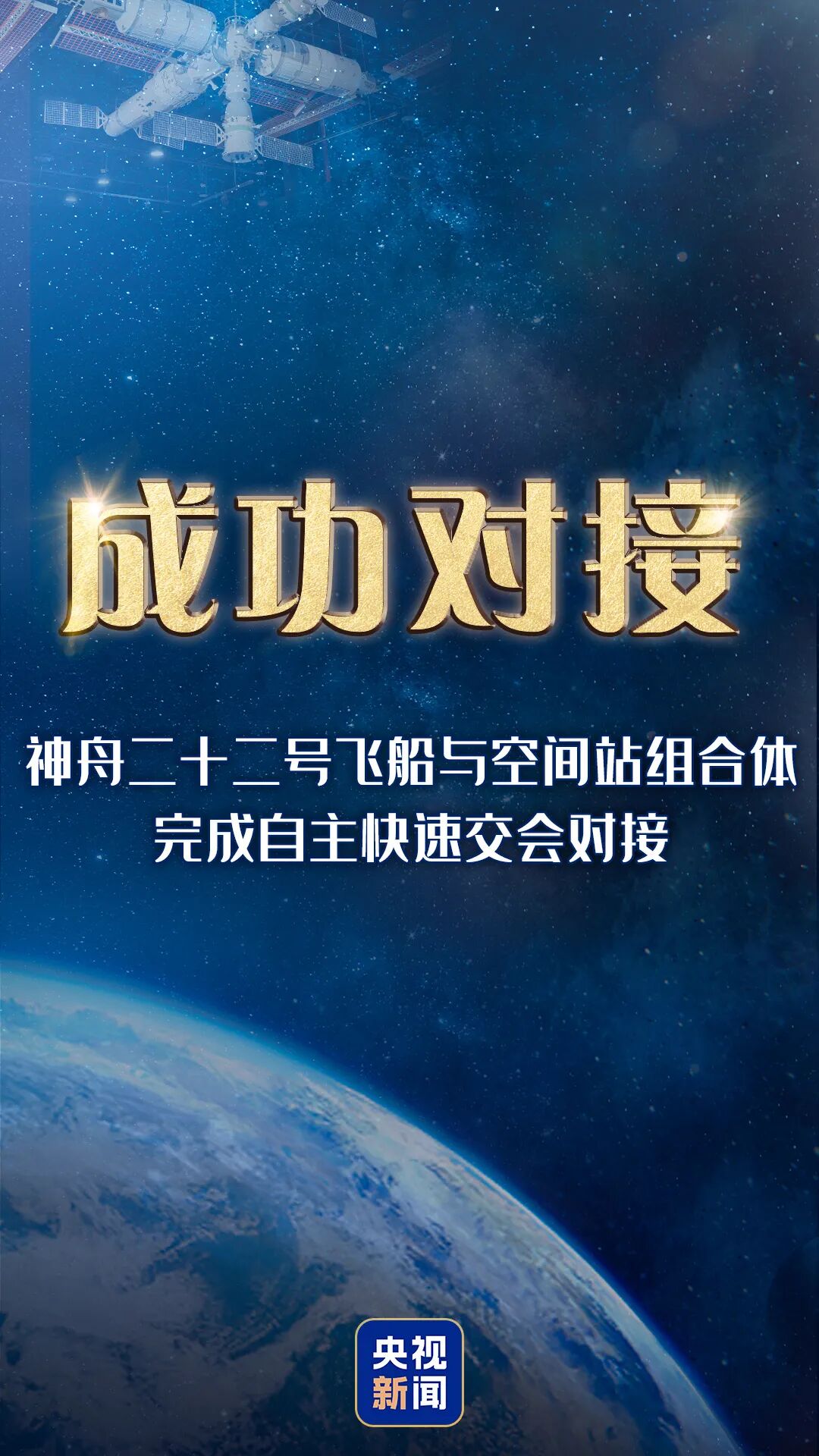
神舟二十二号飞船与空间站组合体完成自主快速交会对接
Huan Qiu Wang Zi Xun· 2025-11-25 08:15
Core Viewpoint - The successful docking of the Shenzhou-22 spacecraft with the Tianhe core module of the Chinese space station demonstrates the effectiveness of China's manned space program and its emergency response capabilities [1] Group 1: Mission Success - The Shenzhou-22 spacecraft completed its docking with the Tianhe core module on November 25, 2025, at 15:50 Beijing time [1] - Following the docking, Shenzhou-22 will serve as the return vehicle for the Shenzhou-21 astronaut crew, who are currently in good condition and executing their planned tasks [1] Group 2: Emergency Response - The Shenzhou-20 spacecraft's return was delayed due to a suspected collision with space debris, prompting the mission command to activate contingency plans [1] - Within 20 days, the team efficiently completed risk assessments, decision-making, personnel and material mobilization, crew transfer, and emergency launch operations, showcasing a successful model for handling unexpected events in international space exploration [1] Group 3: System Advantages - The mission highlights the advantages of China's new national system and emphasizes the principle of "life first, safety first" in manned spaceflight [1] - The operation validated the scientific reliability of the "one active, one backup" strategy for space station missions and tested the rapid response and emergency handling capabilities of the entire engineering team [1] - The mission embodies the spirit of dedication, resilience, and commitment prevalent in China's manned space program [1]
大漠再启航!神舟二十一号载人飞行任务进入攻坚决胜阶段
Xin Jing Bao· 2025-10-30 07:06
Core Points - The Shenzhou 21 manned spaceflight mission is approaching, with a motivational rally held for over a hundred technology personnel to ensure mission success and astronaut safety [2][3] - Continuous ideological mobilization has been organized, emphasizing the importance of the "manned spaceflight spirit" and the "Dongfeng spirit" [2][3] - The center has implemented various measures to support technology personnel, including a hotline for child transportation and medical services, ensuring their well-being during the mission [4][5][6] Group 1 - The Shenzhou 21 mission is characterized by a strong commitment to ensuring astronaut safety and mission success, with personnel expressing high motivation [2] - A series of educational activities have been conducted to promote the spirit of manned spaceflight, including learning from advanced models and recognizing exemplary contributions [3] - The center has established a supportive environment by addressing personnel's family needs and providing timely assistance during challenging times [4][5] Group 2 - The center has focused on enhancing communication and support for technology personnel, ensuring that their concerns are addressed promptly [4][6] - Initiatives such as "small buses, small dining tables, and small desks" have been implemented to strengthen family support for personnel working on the mission [4] - The center's proactive approach in understanding and resolving personnel issues has contributed to a positive work environment, allowing them to focus on their tasks [6]
酒泉卫星发射中心组建成立67周年:接过前辈战旗向更高远进发
Bei Jing Ri Bao Ke Hu Duan· 2025-10-20 05:30
Core Viewpoint - The article emphasizes the importance of continuous efforts in building a strong aerospace nation, highlighting the legacy of past pioneers and the commitment of current aerospace professionals to advance China's space exploration and technology [1][19][30]. Group 1: Historical Achievements - The China Jiuquan Satellite Launch Center was established in 1958, overcoming harsh conditions to create the country's first launch site within two and a half years [3]. - The first domestically manufactured missile, Dongfeng-1, was launched in 1960, showcasing the dedication of technical staff who faced extreme challenges during the process [5]. - The successful launch of Dongfeng-2 missile with a nuclear warhead in 1966 involved significant risks, with personnel prepared to sacrifice their lives for the mission [5]. Group 2: Milestones in Space Exploration - The launch of Dongfanghong-1 satellite in 1970 marked a significant achievement, with the team completing a critical cleaning task under intense pressure [7]. - The Shenzhou-5 mission in 2003 successfully carried China's first astronaut, Yang Liwei, into space, fulfilling a long-held national dream [9]. - Over the years, 20 Shenzhou spacecraft have been launched, with 41 manned missions, reflecting the progress made in human spaceflight [10]. Group 3: Current Developments and Innovations - New launch facilities have been established to accommodate various rocket types, enhancing the capacity for simultaneous testing and launching [12]. - Upgrades in measurement and control equipment have significantly improved capabilities, ensuring complete autonomy and enhanced operational efficiency [14]. - The center has achieved a remarkable acceleration in launch frequency, completing 100 launches in less than five years, compared to nearly 50 years for the first 100 [16]. Group 4: Future Aspirations and Values - The article stresses the need for a strong commitment to quality and safety in aerospace missions, with a focus on maintaining a 100% success rate in manned spaceflight [26][27]. - Emphasis is placed on innovation and the integration of new technologies to meet the challenges of space exploration, with a call for a collaborative approach to achieve national goals [29][30]. - The importance of honoring the legacy of past aerospace pioneers while striving for new achievements is highlighted, with a focus on collective effort and national pride [19][20][30].
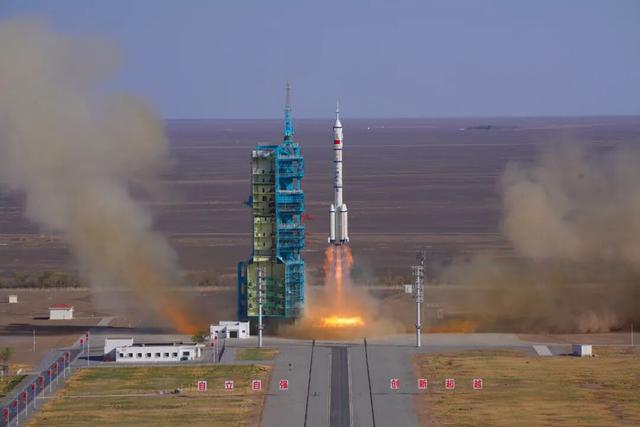
中国2030年登月计划再获重大突破
Zhong Guo Jing Ying Bao· 2025-06-17 14:33
Core Insights - The Chinese manned space program has achieved significant milestones, including the successful escape flight test of the new generation "Dream Boat" manned spacecraft, marking a major breakthrough in lunar exploration efforts [1][2] - The program has evolved over 30 years, transitioning from non-existence to becoming a global space power, showcasing China's technological self-reliance and strength [1] Group 1: Achievements and Goals - The primary goal is to operate, apply, and develop the Chinese space station effectively, with an aim for Chinese astronauts to land on the moon by 2030 [1] - Key technological advancements include mastering spacewalking and constructing a self-controlled space station, which are pivotal in establishing China as a leading space nation [1] Group 2: Operational Strategies - The success of the Chinese space program is attributed to the national system advantages and the effective method of concentrating efforts on significant projects under a socialist market economy [1][2] - The program emphasizes an integrated approach and competitive mechanisms to maximize participation and creativity, fostering a collaborative development environment [1] Group 3: Innovation and Efficiency - The program has focused on self-reliance and independent innovation, avoiding redundant paths by optimizing systems and achieving technological breakthroughs [2] - The development of the space station involved extensive planning and iteration, with thousands of technical routes considered before finalizing the design [2] Group 4: Spirit and Culture - The Chinese manned space program embodies a spirit characterized by resilience, dedication, and a commitment to overcoming challenges, reflecting the qualities of its personnel [2] - This spirit is evident in the willingness to tackle technical difficulties, the humility of the workforce, and the courage to face harsh conditions [2]
高微重力、高精度时频、超冷原子,从零开始到国际首创……航天人讲述把核心关键技术掌握在自己手中的生动实践
Mei Ri Jing Ji Xin Wen· 2025-06-17 14:07
Core Viewpoint - The meeting highlighted China's commitment to developing manned spaceflight, with plans to achieve manned lunar landing by 2030, showcasing the collective efforts and advancements in space technology over the past 30 years [1][4]. Group 1: Achievements in Manned Spaceflight - China has made significant achievements in manned spaceflight, establishing a national-level "space laboratory" and creating internationally leading scientific experiment cabinets [4][5]. - The development of these technologies is a result of self-reliance and innovation, with a focus on optimizing systems and avoiding past mistakes [5][6]. Group 2: Spirit and Culture of Space Exploration - The spirit of perseverance and dedication among Chinese astronauts is emphasized, reflecting a legacy of hard work and commitment to overcoming challenges in space exploration [5][6]. - The culture of rigorous training and preparation is crucial for astronauts, ensuring they are well-equipped to handle the demands of space missions [6][7]. Group 3: International Collaboration and Breakthroughs - The use of scientific experiment cabinets has led to breakthroughs in various fields, including genetics and materials science, demonstrating China's capability to achieve results on par with international standards [4][5].
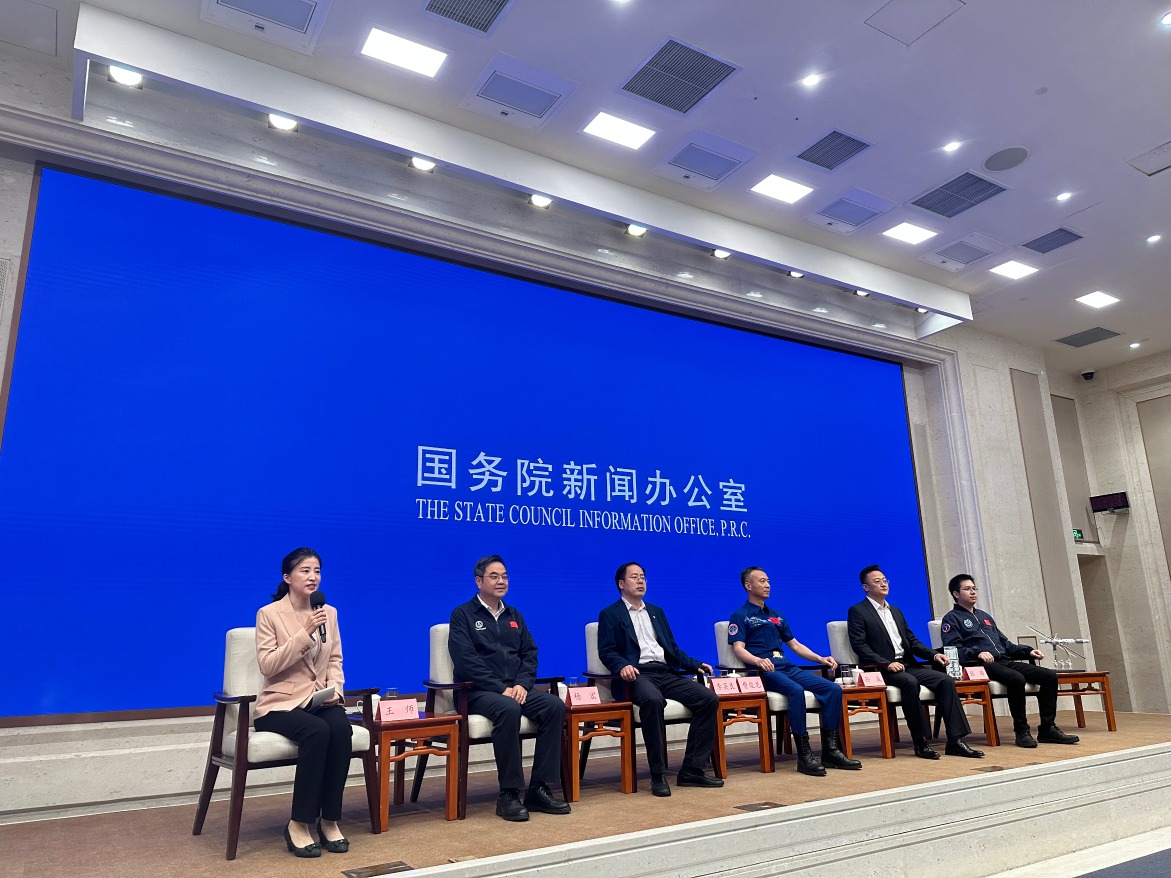
豫论场 | 这一次,太空又来俩河南人
He Nan Ri Bao· 2025-04-24 11:08
Group 1 - The successful launch of Shenzhou 20 marks a significant milestone in China's space exploration, coinciding with the 55th anniversary of the launch of the first artificial satellite, Dongfanghong 1 [1] - The mission features three astronauts, including Chen Dong, who is the first astronaut from the second batch to fly three times, and Chen Zhongrui, who is embarking on his first flight [1][2] - Innovation is highlighted as the primary driving force behind the development of the aerospace industry, with advancements in various missions showcasing China's commitment to space exploration [1] Group 2 - Chen Dong's previous missions included significant achievements such as the construction of the Chinese space station, where he and his team completed multiple docking and separation tasks, earning the title of the "busiest crew" in China's manned spaceflight history [2] - The aerospace sector is increasingly contributing to economic and social development, with applications in meteorology, communication, navigation, and commercial space ventures [3] - Henan province is actively integrating into the national strategy of building a strong aerospace nation, developing a comprehensive commercial aerospace industry chain that includes satellite manufacturing and data application [3]