通用智能体

Search documents
买下Manus,Meta的焦虑解药来了
第一财经· 2025-12-30 03:37
Core Viewpoint - Manus is set to be acquired by Meta, marking a significant recognition of Manus's work in the general AI agent field. This acquisition is Meta's third-largest in history, valued at several billion dollars, following its previous acquisitions of WhatsApp and Scale.ai [3][4]. Group 1: Acquisition Details - Manus has processed over 147 trillion tokens and created more than 80 million virtual computers since its launch [3]. - The acquisition aims to strengthen Manus's strategic position in AI applications, allowing for scalable and reliable systems to execute user tasks in real-world scenarios [3]. - Following the acquisition, Manus will continue to operate independently, with its CEO, Xiao Hong, becoming a Vice President at Meta [4]. Group 2: Market Context and Implications - The acquisition took only about ten days to finalize and serves as a significant encouragement for young entrepreneurs in the AI era [5]. - Prior to the acquisition, ByteDance had offered approximately $30 million for Manus, indicating the competitive landscape for AI startups [5]. - Manus was reportedly attempting to secure a new round of financing with an annual recurring revenue (ARR) exceeding $100 million [5]. Group 3: Industry Trends - The AI model landscape is transitioning from "unlimited data" to a "limited data" phase, emphasizing the importance of architectural and data innovations [6]. - By acquiring Manus, Meta aims to address its shortcomings in productization and commercialization within the general intelligence domain, although it does not resolve ongoing issues related to model performance and infrastructure [6]. - The acquisition reflects a shift in industry competition from foundational models to application-level capabilities [6]. Group 4: Strategic Insights - The acquisition is seen as a strategic move for Meta to enhance its general agent platform capabilities, with potential positive effects on its platforms like Facebook [7]. - Manus's strategy involves collaborating with major tech companies to integrate the best models, which may change post-acquisition as it aligns more closely with Meta's objectives [7].



扎克伯格豪掷数十亿美元收购Manus
21世纪经济报道· 2025-12-30 03:27
Group 1 - The acquisition of Manus by Meta amounts to several billion dollars, with Manus founder Xiao Hong set to become Meta's Vice President [1] - Manus's parent company, Butterfly Effect, was established in China in 2022 and later relocated to Singapore [1] - The core team of Manus includes Xiao Hong, Ji Yichao, and Zhang Tao, with backgrounds in technology and previous startups [1] Group 2 - Manus launched its universal intelligent agent product in March 2025, gaining significant attention [1] - The company raised $75 million (approximately 550 million RMB) in funding led by Benchmark, achieving a post-money valuation of nearly $500 million [1] - As of December 17, Manus reported an annual recurring revenue (ARR) exceeding $100 million, with total revenue run rate surpassing $125 million [2] Group 3 - Manus has maintained a monthly growth rate exceeding 20% since the release of its version 1.5 [2] - The company currently employs 105 people across Singapore, Tokyo, and San Francisco, with plans to open a new office in Paris [2]

买下Manus,Meta的焦虑解药来了
Di Yi Cai Jing· 2025-12-30 03:25
Core Insights - Meta's acquisition of Manus is a significant move amidst its ongoing anxiety regarding competition in the AI sector, but it is not a "magic bullet" solution to its challenges [4]. Group 1: Acquisition Details - Manus has been acquired by Meta for a price in the billions, marking Meta's third-largest acquisition, following the $19 billion purchase of WhatsApp in December 2014 and the $14 billion acquisition of Scale.ai in June 2025 [2]. - Manus has processed over 147 trillion tokens and created over 80 million virtual computers since its launch, indicating its substantial operational scale [2]. - The acquisition is expected to enhance Manus's strategic position in AI applications, allowing for scalable and reliable systems to execute user tasks [2]. Group 2: Market Context and Implications - The acquisition reflects the rising valuations of AI startups, driven by the growth of Chinese AI entrepreneurs and the anxiety of American tech giants like Meta [4]. - Meta's aggressive strategy in 2025 includes model iteration, computational infrastructure, organizational restructuring, and capital mergers, but results have been underwhelming, as evidenced by Morgan Stanley lowering Meta's target price from $820 to $750 [4]. - The AI landscape is shifting from a focus on foundational models to application-level capabilities, as indicated by industry experts [4]. Group 3: Strategic Significance - The acquisition is seen as a way for Meta to quickly address its shortcomings in productization and commercialization within the general intelligence domain, although it does not resolve ongoing issues related to model performance and computational infrastructure [4]. - Manus's CEO expressed optimism about the partnership, emphasizing that it allows Manus to grow on a stronger foundation without altering its operational mechanisms [3]. - The collaboration is expected to enhance Meta's capabilities in its general agent platform, potentially leading to significant effects across its platforms like Facebook [5].
游戏AI来了,英伟达新模型看直播学会所有游戏,GPT-5.2秒杀塞尔达
3 6 Ke· 2025-12-25 07:06
Core Insights - Nvidia has developed a new AI model called NitroGen that learns general gaming operations by observing 40,000 hours of gameplay on platforms like YouTube and Twitch, marking a significant advancement in AI learning methods [1][3][39] - NitroGen is designed to be a versatile AI capable of playing over 1,000 different games, demonstrating a form of "game intuition" that allows it to adapt quickly to new gaming environments [11][14] - The model's ability to learn from visual inputs and corresponding controller actions signifies a shift in AI training, moving from traditional data reading to a more observational learning approach [10][37] Group 1 - NitroGen learns by watching gameplay videos that include controller overlays, allowing it to associate visual actions with specific inputs [7][10] - The model's performance in unfamiliar games is significantly better than that of models trained from scratch, showing a 52% improvement [14] - Nvidia's ambition extends beyond gaming; the technology aims to create a universal AI capable of navigating real-world scenarios by leveraging insights gained from virtual environments [22][25] Group 2 - The development of NitroGen represents a pivotal moment in robotics, as it utilizes gaming as a training ground for physical intelligence, potentially overcoming the "Moravec's Paradox" [26][40] - The AI's learning process is likened to a "matrix" where it can experience thousands of trials in a virtual setting, accelerating its evolution beyond physical time constraints [41] - Future AI agents will likely be structured in a layered architecture, combining reasoning capabilities with motion control strategies derived from extensive video data [44]

张涛首次回应争议,Manus 为什么没有被替代?
AI前线· 2025-12-13 05:33
Core Insights - The article discusses the launch and development of Manus, a general AI agent, highlighting its innovative approach and the challenges faced during its introduction to the market [7][23][30]. Group 1: Manus Launch and Reception - Manus was officially launched on March 5, 2024, and received significant attention on social media, surpassing expectations in terms of engagement [4][7]. - Despite initial skepticism regarding its technological depth, Manus has consistently ranked high in various benchmarks, including the Remote Labor Index (RLI) [14][15]. - The launch video, created in a short timeframe, contributed to its viral success, but the underlying product's value was the primary reason for its popularity [20][23]. Group 2: Product Development Journey - The development of Manus involved a pivot from an AI browser project to creating a general AI agent after realizing the limitations of the initial concept [10][11]. - The team emphasized the importance of a flexible, user-driven approach, allowing the AI to determine task execution without predefined workflows [17][19]. - Key decisions included focusing on a general-purpose agent to ensure daily utility for users, which is crucial for long-term growth [30][31]. Group 3: Market Position and Future Outlook - Manus has maintained a leading position in performance benchmarks, outperforming competitors like ChatGPT Agent in various tasks [43][44]. - The company plans to expand Manus's capabilities to operate across more platforms, enhancing its utility and user engagement [49][50]. - The future vision includes developing an AI that can autonomously manage tasks and integrate seamlessly into users' daily lives, emphasizing proactive assistance [50][51]. Group 4: Marketing and User Engagement - The company initially relied on organic growth and viral marketing, spending minimal on traditional marketing strategies [54][56]. - As the product matures, there is a recognition of the need for more structured marketing efforts to reach a broader audience beyond early adopters [55][58]. - The focus will shift towards effectively communicating the product's value to a wider market, ensuring users understand its benefits [58]. Group 5: Advice for Future Generations - The article encourages students and young professionals to engage with AI agents, likening it to learning essential skills like driving or using computers in previous decades [8][60]. - Emphasizing the importance of adapting to technological advancements, the message is to start using AI tools now to remain competitive in the future job market [60].
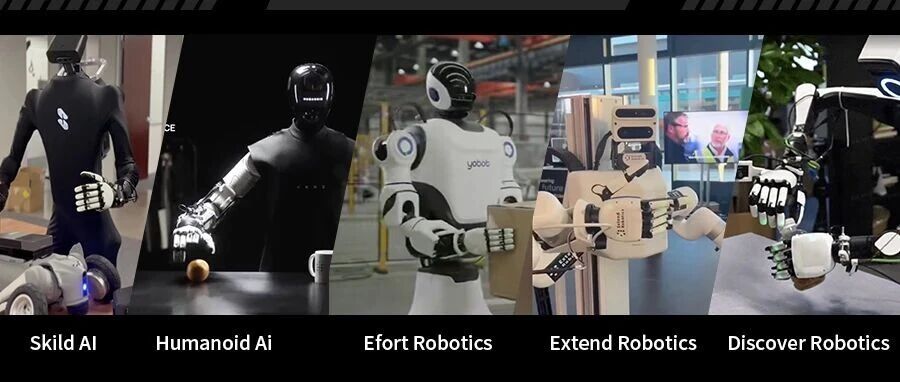
Skild AI、Humanoid AI等机器人独角兽,竟然都选了这只中国“手”
机器人大讲堂· 2025-12-11 04:01
Core Insights - The article discusses the emerging consensus in the humanoid robotics industry regarding the adoption of advanced dexterous hands, particularly highlighting the full direct drive five-finger dexterous hand as a standard among leading companies [1][5]. Group 1: Industry Trends - Major humanoid robotics companies, including Skild AI, Rainbow Robotics, and Extend Robotics, are reportedly adopting a common dexterous hand design, indicating a shift towards standardized technology in the industry [1]. - The dexterous hand developed by the Chinese company Star Motion Era has gained recognition among top global robotics firms and research institutions, suggesting its pivotal role in the evolution of humanoid robotics [5][7]. Group 2: Technological Advancements - Star Motion Era's dexterous hand, XHAND1, utilizes a full direct drive architecture, which enhances usability, durability, precision, and contributes to embodied intelligence research [10][12]. - The XHAND1 can handle a load of 25 kg with a grip strength of 80 N, significantly reducing maintenance costs by over 60%, making it suitable for high-intensity industrial applications [12][14]. Group 3: Strategic Positioning - The focus on dexterous hands is seen as a strategic move by Star Motion Era to establish a strong technological moat in the robotics industry, as hands are considered the physical boundary of intelligent agents [18][19]. - The company’s commitment to full-stack self-research, with over 95% of core components developed in-house, allows it to maintain control over the technology definition and innovation pace [22][25]. Group 4: Market Implications - The collective choice of XHAND1 by leading firms indicates a shift in industry standards from biomimetic designs to prioritizing interaction efficiency and data quality [33]. - The integration of XHAND1 into various humanoid robots, such as L7 and Q5, demonstrates its versatility across different applications, reinforcing the importance of dexterous hands in creating commercially viable robotic solutions [30][32].
别再肝了!Google 发布 SIMA 2,你的下一个游戏搭子可能是个 AI
深思SenseAI· 2025-11-21 04:14
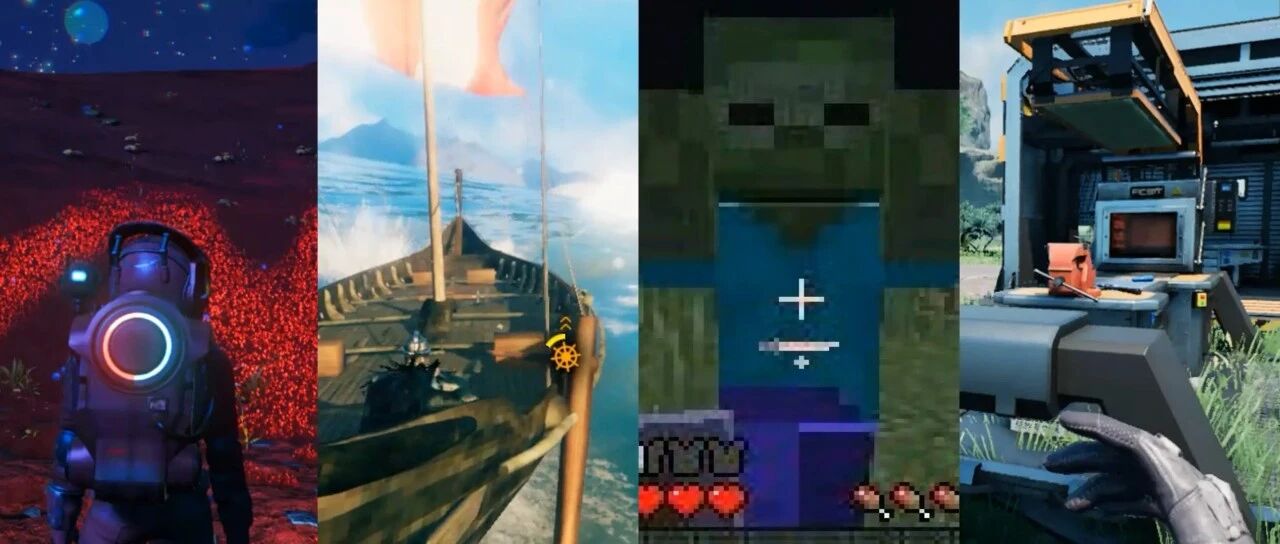
Core Insights - Google has launched the next-generation general intelligence agent SIMA 2, which integrates deeply with Gemini, enabling it to understand and execute commands in virtual worlds, plan actions around objectives, and interact with players while continuously improving through trial and error [1][2] Group 1: SIMA 2 Capabilities - SIMA 2 can understand and execute complex, multi-step commands in games like "Minecraft" and "ASKA," significantly improving upon its predecessor SIMA 1, which struggled with such tasks [1][2] - The agent has been trained using a large dataset of human demonstration videos with language annotations, allowing it to develop initial "conversational collaboration" capabilities, explaining its intentions and next steps to users [2][4] - SIMA 2's task completion success rate has shown significant improvement compared to SIMA 1, demonstrating its enhanced ability to follow detailed instructions and provide feedback, akin to interacting with a real player [5][9] Group 2: Self-Improvement and Learning - SIMA 2 employs a closed-loop system of "trial and error + Gemini feedback evaluation" during training, allowing it to learn and complete more complex tasks over time [11] - The experience data accumulated by SIMA 2 can be used to train future, more powerful agents, establishing a foundation for a "general agent" capable of adapting to any world [13] Group 3: Path to General Intelligence - The combination of Gemini and SIMA 2 offers a compelling approach to achieving embodied intelligence by training agents in controlled, low-cost virtual 3D environments, where they can gather interaction data [14] - SIMA 2's ability to operate in various gaming environments is crucial for developing general embodied intelligence, enabling the agent to master skills, perform complex reasoning, and learn continuously in virtual worlds [15] Group 4: Implications for Robotics - The capabilities developed by SIMA 2, including navigation, tool use, and collaborative task execution, are essential modules for future intelligent agents to achieve "intelligent embodiment" in the real world [16]
智能体崛起,AI+软件研发到新拐点了?
AI前线· 2025-11-18 05:34
Core Insights - The article discusses the transformative impact of large language models (LLMs) on software development processes, emphasizing the shift from AI as an auxiliary tool to a core productivity driver [2][3] - It highlights the current state of AI in development as being at a "halfway point," indicating that while significant advancements have been made, a true paradigm shift has not yet occurred [5][9] Group 1: AI's Role in Development - AI is primarily seen as a tool for efficiency in testing rather than a replacement for human roles, with the industry still far from a "native development era" [9][10] - The emergence of various AI programming products indicates a growing integration of AI in code production, with some teams reporting over 50% of their code being AI-generated [6][10] - The effectiveness of AI varies significantly among users, with some leveraging it for simple tasks while others utilize it for more complex processes [6][7] Group 2: Challenges and Limitations - AI's current capabilities are limited in handling complex tasks, particularly in existing codebases, where it often struggles with intricate logic and dependencies [5][10] - The stability and reliability of AI outputs remain significant concerns, impacting its adoption in real-world applications [20][21] - AI's role in testing is still largely supportive, with challenges in fully automating complex testing scenarios due to the need for human judgment [9][10] Group 3: Future Directions - The evolution from AI assistants to intelligent agents capable of executing complete development cycles is seen as a key future trend [28][31] - The integration of AI into existing workflows is expected to be gradual, with a focus on plugin-based ecosystems rather than monolithic platforms [32][33] - The article suggests that the future of software development will require professionals to adapt by enhancing their skills in prompt engineering and knowledge management to effectively collaborate with AI [23][24][39]

百度文库网盘发布GenFlow3.0 成全球最大通用智能体
Zheng Quan Shi Bao Wang· 2025-11-13 08:27
Core Insights - Baidu's GenFlow 3.0 has been officially launched, with over 20 million active users, positioning it as the "largest general-purpose intelligent agent globally" [1] Group 1 - GenFlow 3.0 is now fully available across Baidu's Wenku (document sharing) and Wangpan (cloud storage) platforms [1] - The new version aims to assist users in becoming "super individuals" in their work, study, and daily life [1]

奢侈科技品牌BUTTONS与特斯联合作,发布首款搭载HALI智能体的影音机器人|最前线
3 6 Ke· 2025-10-20 10:29
Core Insights - The global luxury tech brand BUTTONS has launched its first hardware device, the "BUTTONS SOLEMATE Smart Audio-Visual Robot," which is equipped with the HALI universal intelligent agent [1] - HALI, released on November 14, 2024, has evolved from a highly anthropomorphized agent to a "life collaborator" with spatial awareness and physical interaction capabilities [1] Group 1: HALI Universal Intelligent Agent - HALI constructs a three-dimensional semantic memory model deeply integrated with the physical environment, enhancing the intuitive and accurate retrieval of information related to spatial coordinates and context [3] - Unlike traditional models that rely on specific wake words, HALI interacts based on the user's location, behavior intentions, and environmental state, enabling a shift from "users finding services" to "services finding users" [3][4] - The operational process involves HALI parsing user intentions and optimizing resource allocation within a spatial continuum, understanding home structure, user movement, and environmental changes [3][4] Group 2: AIoT Computing Infrastructure - The AIoT computing center in Xuzhou, operated by Tsinghua Unigroup, utilizes GPU server clusters for large-scale collaborative computing, supporting dynamic task scheduling through a hybrid computing engine [4][6] - The cloud-based large model is responsible for path planning, ensuring devices navigate obstacles and reach destinations accurately, while visual and language models assist in identifying targets and generating execution strategies [4][6] - The AIoT cloud platform has established a unified abstraction layer for heterogeneous chip integration, significantly enhancing inference and training efficiency [6] Group 3: Industry Evolution - The transition of AI towards generality requires breaking barriers between the digital and physical worlds to achieve a complete feedback loop of "perception-reasoning-action" in real environments [6] - The true universal intelligent agent must perceive the geometric structure and dynamic changes of three-dimensional environments, reason spatial relationships, and execute tasks effectively in the real world [6]