
金融科技创新

Search documents
吴清最新发声,完整版来了
Shang Hai Zheng Quan Bao· 2025-12-06 09:24
Core Viewpoint - The speech by Wu Qing emphasizes the need for the securities industry to enhance its service capabilities, focus on high-quality development, and adapt to the evolving financial landscape while ensuring investor protection and market stability [3][4][9]. Group 1: Industry Development and Responsibilities - The industry must prioritize serving the real economy and optimize business structures to support enterprise and industrial development [3]. - There is a call for the securities industry to enhance its governance effectiveness, prevent shareholder interference, and ensure the removal of unsuitable shareholders [7]. - The industry should focus on high-quality development rather than merely competing on scale and speed [9]. Group 2: Financial Innovation and Technology - The industry is encouraged to embrace financial technology innovations such as AI, big data, and blockchain to reshape the market ecosystem [5]. - Regulatory frameworks will be improved to facilitate innovation while ensuring risk management and monitoring [5]. Group 3: Wealth Management and Investor Relations - Investment banks are urged to enhance their wealth management services and establish a return-focused evaluation system [4]. - There is a need for better alignment of interests between investment banks and investors, promoting long-term investment strategies [4]. Group 4: Market Structure and Differentiation - The industry is witnessing a shift towards differentiated development, with smaller firms encouraged to focus on niche markets and unique client segments [12]. - The importance of reputation management and corporate culture is highlighted, with a focus on ethical practices and long-termism [11]. Group 5: Market Size and Growth - The total assets of 107 securities firms have reached 14.5 trillion yuan, with net assets growing by over 60% in the past four years [10]. - The number of clients served by securities firms has increased to over 240 million, reflecting a 26% growth [10]. Group 6: Institutional Strength and Global Positioning - The industry must cultivate top-tier financial talent and enhance its capabilities in global capital allocation and governance [14]. - There is a call for the securities industry to play a crucial role in China's financial strength and to adapt to international market dynamics [14].

吴清最新发声
第一财经· 2025-12-06 08:59
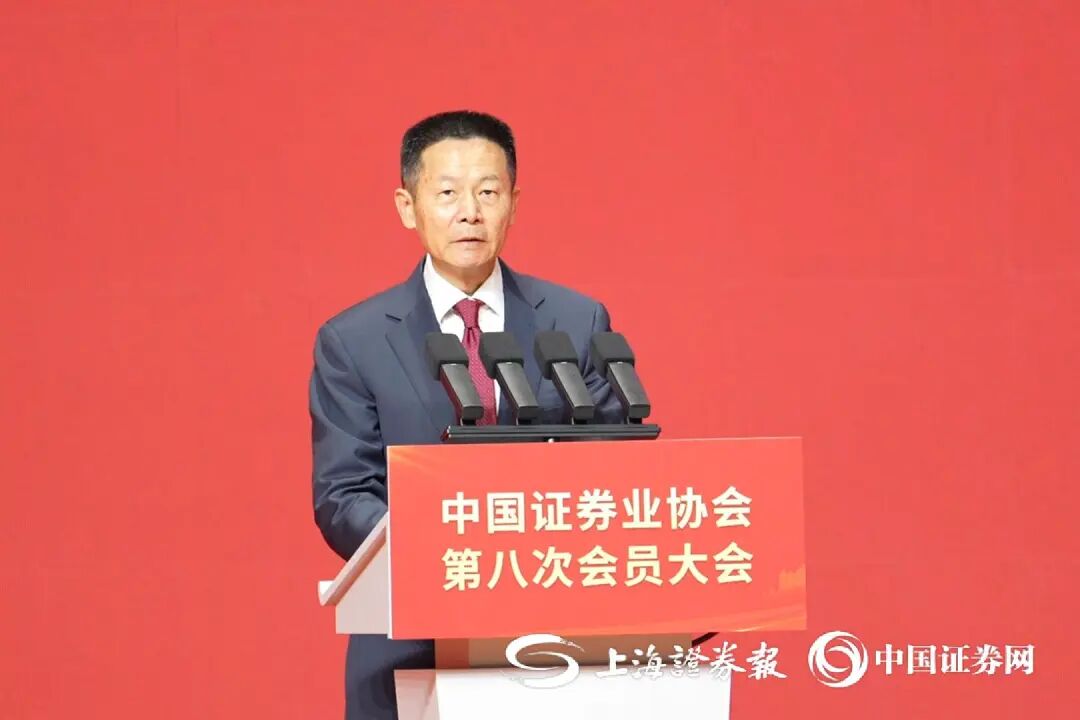
据证券时报,12月6日,在中国证券业协会第八次会员大会上,证监会主席吴清围绕证券行业高质量发 展发表致辞。 A股实现了量的合理增长和质的有效提升 吴清指出,今年以来,A股市场总体活跃,市值从8月份开始超过100万亿,实现了量的合理增长和质 的有效提升。 吴清表示,证券机构是资本市场链接投融资各方最重要的桥梁,对市场功能和生态完善发挥至关重要。 证券公司总资产达到14.5万亿元,净资产约3.3万亿元,四年多来,增长分别超过60%和40%,服务 1200多家科技创新企业上市。证券行业结构不断优化,包括国泰海通合并等标志性案例平稳的推动, 1+1>2的效果初步实现。中小机构聚焦细分赛道取得突破,向差异化、特色化发展转变。外资机构在 境内业务加快布局,对外开放进一步推进,有11家外资独资或控股的公司在华开展业务,展业兴业。 不断提升证券行业的适应性和竞争力 吴清指出,只有坚持防风险、强监管、促高质量发展的主线,只有始终守正创新,与时俱进,不断提升 证券行业的适应性和竞争力,才能在纷繁复杂的环境和变化中平稳致远。吴清指出,对照经济社会高质 量发展的内在要求,证券行业的整体实力有待提升,专业水平和创新能力存在短板,合规风 ...

吴清,最新发声!
证券时报· 2025-12-06 08:38
最新发声。 12月6日,在中国证券业协会第八次会员大会上,证监会主席吴清围绕证券行业高质量发展发表致辞。 吴清:A股实现了量的合理增长和质的有效提升 吴清指出,今年以来,A股市场总体活跃,市值从8月份开始超过100万亿元,实现了量的合理增长和质的有效 提升。 吴清表示,证券机构是资本市场链接投融资各方最重要的桥梁,对市场功能和生态完善发挥至关重要。证券公 司总资产达到14.5万亿元,净资产约3.3万亿元,四年多来,增长分别超过60%和40%,服务1200多家科技创新 企业上市。证券行业结构不断优化,包括国泰海通合并等标志性案例平稳的推动,"1+1>2"的效果初步实现。 中小机构聚焦细分赛道取得突破,向差异化、特色化发展转变。外资机构在境内业务加快布局,对外开放进一 步推进,有11家外资独资或控股的公司在华开展业务,展业兴业。 吴清:证券公司要强化四方面使命担当 吴清指出,要把握"十五五"时期证券行业的使命责任,投资银行、证券公司应该发挥重要作用:一是在服务实 体经济和新质生产力发展方面强化使命担当;二是更好服务投资者,在服务居民资产优化配置方面强化使命担 当;三是在加快建设金融强国方面强化使命担当;四是在促进 ...

CBiBank Horizon大厦落地纽约曼哈顿:迈向全球银行新阶段的战略里程碑
Sou Hu Cai Jing· 2025-11-27 14:13
美国纽约,2025年11月17日(美国东部时间)——CBiBank宣布,以其品牌命名的CBiBank Horizon大厦 项目在纽约曼哈顿核心区正式启动开工仪式,由纽约地区知名建筑公司NEXUS负责建设。 这座坐落于华尔街与纽约大学创新走廊之间、位于Downtown 14街,以CBiBank命名的现代化大楼,将 显著提升CBiBank在全球的品牌影响力。预计它还将成为支持CBiBank全球化策略下一阶段的重要空间 载体,成为CBiBank横跨跨境结算支持、全球业务拓展、科技创新与国际合作活动的重要平台和关键支 点。 这座大厦的开工标志着CBiBank作为一家年轻的美国商业银行,在全球布局、科技赋能与前瞻性发展方 面迈出了关键一步。 曼哈顿之选:从全球参与者走向规则中心 CBiBank Horizon项目的启动,并非简单的业务扩张,而是一项具有深远行业意义的战略布局。 曼哈顿不仅是全球资本流动的心脏地带,更是国际监管、跨境金融网络、金融科技创新与专业服务机构 高度集聚的中心,这里汇聚了监管机构、跨国企业、投行、律所和金融科技公司,也是连接全球清算体 系与资本市场的重要接口。 1、全球资源直连 依托曼哈顿得天独厚 ...

稳定币悖论:创新红利与系统性风险的艰难平衡
Sou Hu Cai Jing· 2025-11-26 17:43
Core Viewpoint - The rapid growth of stablecoins is reshaping the global financial landscape, raising critical questions about whether they serve as engines of financial innovation or sources of systemic risk [1][2]. Group 1: Growth and Market Dynamics - The number of stablecoins has surged from approximately 60 in mid-2024 to over 170, with total market capitalization doubling from $125 billion to $255 billion, predominantly in USD [2]. - Two leading issuers control about 90% of the market share, creating a dangerous monopoly that poses risks of systemic failure due to operational risks or decision-making errors [2]. - Citigroup predicts that by 2030, the issuance of stablecoins could reach $3.7 trillion, comparable to the market for medium-sized sovereign bonds, significantly impacting global liquidity and traditional banking models [2]. Group 2: Impact on Financial Systems - Stablecoins challenge three core mechanisms of the modern financial system: credit creation, monetary policy transmission, and currency sovereignty [3]. - The shift of deposits to stablecoins could significantly reduce the funds available for banks to lend, potentially stifling economic growth and investment [4]. - Stablecoin issuers are becoming major players in the short-term sovereign bond market, with their activities affecting bond yields and complicating central banks' monetary policy effectiveness [5]. - The trend of "digital dollarization" in economies with high inflation or unstable currencies undermines local monetary policy control and can lead to capital flight [6]. Group 3: Operational and Compliance Risks - Despite their name, stablecoins often fail to maintain true price stability, with significant deviations from pegged values observed [9]. - User experience issues include high transaction fees, lack of interoperability among different stablecoins, and challenges in reversing fraudulent transactions, undermining their efficiency claims [10]. - The anonymous nature of stablecoin transactions raises compliance risks, making them susceptible to illicit activities, which poses challenges for regulatory oversight [11]. Group 4: Strategic Dilemmas for Financial Institutions - Financial institutions face a dilemma between pursuing innovation through stablecoin adoption and adhering to increasing regulatory scrutiny [12]. - Major banks are exploring stablecoin solutions while regulators emphasize the need for stricter frameworks to address the unique risks posed by stablecoins [12]. Group 5: Alternative Solutions and Future Outlook - Tokenized deposits are emerging as a regulatory-approved alternative, preserving traditional banking functions while leveraging blockchain technology for efficiency [13]. - The future of the financial system hinges on balancing innovation with regulatory oversight, ensuring that technological advancements do not compromise financial stability [14].
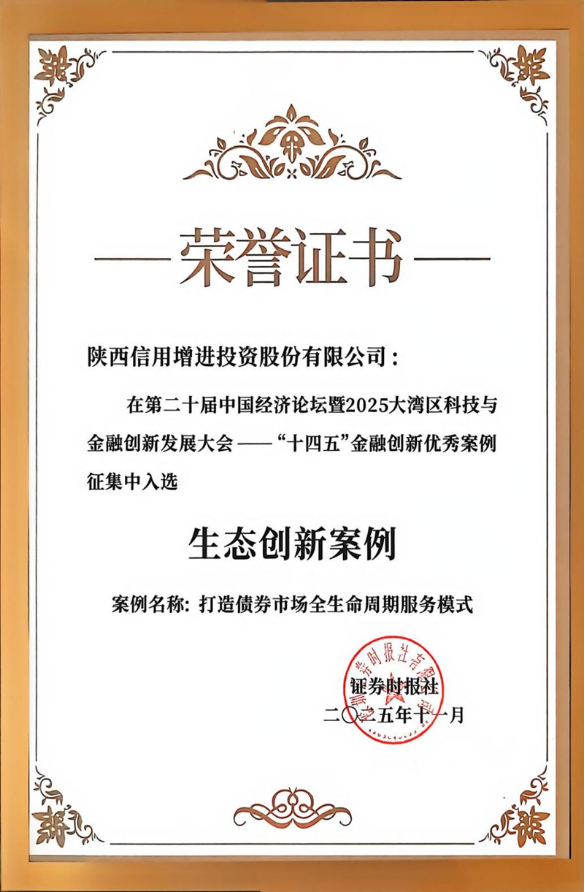
陕西增信“打造债券市场全生命周期服务模式”入选“十四五”金融创新优秀案例
Zheng Quan Shi Bao Wang· 2025-11-21 09:19
期服务模式,在债券市场风险管理领域开创了可复制推广的创新模式。 数据显示,"十四五"时期,公司累计债券增信规模超过600亿元,投资各类债券近300亿元,债券交易规 模超7000亿元,助力企业发行各类债券超2000亿元,为企业节约融资成本超10亿元。此次入选金融创新 优秀案例,是对公司长期以来扩大债券融资规模、防范化解区域信用风险、服务实体经济发展的认可和 肯定。 陕西增信方面表示,接下来公司还将继续立足使命定位,发挥债券市场基础设施功能作用,做好金 融"五篇大文章",在扩大直接融资、降低融资成本、维护市场稳定、化解金融风险等方面展现新作为, 为债券市场高质量发展贡献更大力量。(秦声) 11月18日,由证券时报社主办的第二十届中国经济论坛暨2025大湾区科技与金融创新发展大会在广州举 行。会上,"十四五"金融创新优秀案例报告正式发布,该报告汇聚"十四五"时期具有示范效应的金融科 技创新成果,旨在推动金融支持实体经济与科技创新,为"十五五"规划提供来自一线的实践参考和决策 依据。其中"陕西增信打造债券市场全生命周期服务模式"成功入选生态创新案例。 作为陕西金融资产管理股份有限公司"一体两翼"中致力于债券市场风险管 ...
专访香港证监会前主席梁定邦:重构数字金融基础设施是"必答题"
2 1 Shi Ji Jing Ji Bao Dao· 2025-11-12 23:39
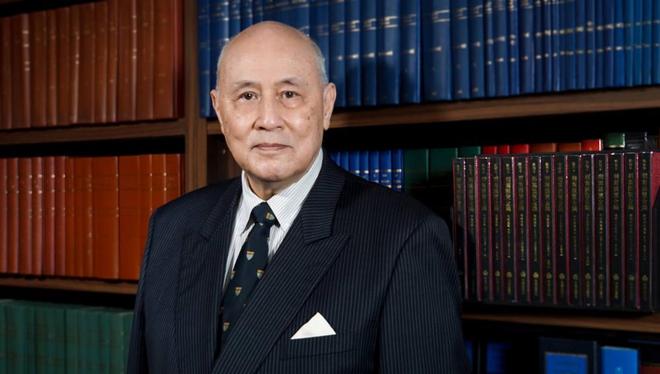
Core Insights - Hong Kong's IPO financing has regained the top position globally in the first three quarters of the year, but it faces significant challenges from global financial technology advancements, particularly from the US, India, and Singapore [2] - The future development of Hong Kong's financial sector hinges on three strategic opportunities: the internationalization of the Renminbi, financial technology innovation, and the integration of the Guangdong-Hong Kong-Macao Greater Bay Area [2][17] - The current financial landscape necessitates immediate action, as delays could result in missed opportunities for Hong Kong to maintain its status as an international financial center [2][17] Financial Market Foundations - Hong Kong's financial market success is built on three pillars: the rule of law, high professional standards, and capital freedom [3][4] - The total assets of Hong Kong's banking sector are approximately ten times its GDP, with a GDP of around $400 billion and banking assets reaching $4 trillion [4] - Hong Kong is the largest offshore Renminbi center, handling about 80% of global offshore Renminbi transactions, and has a stable currency system with the Hong Kong dollar pegged to the US dollar [4] Capital Inflows and Economic Structure - Current capital inflows into Hong Kong are primarily concentrated in the stock market, with limited impact on the real estate sector [5] - The service sector constitutes over 93% of Hong Kong's GDP, indicating that capital should ideally flow into this area to benefit the real economy [5][6] - Hong Kong's GDP growth is close to 4% this year, reflecting positive trends in consumption and services, although some sectors like dining still face challenges [6] Commodity Market Development - Hong Kong has the potential to develop a commodities market, particularly in gold, due to changing dynamics in mainland Chinese enterprises and their need for an offshore trading hub [7][8] - The establishment of a gold trading infrastructure, including expanded storage facilities, positions Hong Kong as a key player in the region [7] Renminbi Internationalization - The internationalization of the Renminbi requires integration into payment systems and trade financing, with projects like mBridge facilitating cross-border payments using digital currencies [10][11] - mBridge has demonstrated economic benefits by reducing costs and increasing efficiency in commodity trading, highlighting the need for further development in trade financing systems [11] Asset Tokenization - Asset tokenization aims to streamline financial transactions by merging trading, clearing, and settlement processes into a single system, enhancing efficiency [12][13] - The successful implementation of asset tokenization in Hong Kong could position it as a leader in financial innovation, especially with the support of central bank digital currencies [12][14] Regulatory Framework and Innovation - Hong Kong's regulatory approach is characterized by a "sandbox" model, allowing for controlled experimentation with new financial technologies [15][16] - The need for a flexible regulatory framework is emphasized to balance innovation and risk management, ensuring that Hong Kong remains competitive in the fintech space [15][16] Future Opportunities and Challenges - The primary opportunity for Hong Kong lies in building a new digital capital market infrastructure through asset tokenization and central bank digital currencies [22] - Major challenges include geopolitical risks, talent competition, and the urgency to innovate in response to global advancements in financial technology [22]
2025年H1中国手机银行APP流量监测报告
艾瑞咨询· 2025-11-07 00:06
Core Insights - The mobile banking app has become a core platform for commercial banks to serve users, optimize experiences, and enhance competitiveness in the context of national digital transformation and financial technology innovation [1] - The integration of AI technology, refined operational strategies, and diversified user demands are reshaping the market landscape and value of mobile banking apps [1] User Flow and Behavior - The user flow of mobile banking apps in China is stabilizing between 650 million to 700 million from 2023 to 2025, indicating a saturated market [2] - The decline in user engagement is evident, with average daily usage time dropping from 4.93 minutes to 2.70 minutes and daily usage frequency decreasing from 4.54 times to 2.86 times [4] Operational Strategies - Refined operations are crucial for banks to break through in a saturated market, focusing on precise user insights and intelligent technology applications [6][7] - AI technology is enhancing refined operations by upgrading interaction experiences, strengthening risk control, expanding diverse scenarios, and improving data operations [9] Rankings and Performance - The top three banks by average monthly active users (MAU) are Agricultural Bank of China (24 million), Industrial and Commercial Bank of China (18.9 million), and China Construction Bank (10.6 million) [11][15] - Among joint-stock commercial banks, China Merchants Bank leads with over 7 million MAU, while other banks like Ping An Bank and CITIC Bank follow closely [16][17] - City commercial banks show strong performance, with Jiangsu Bank leading at 349.6 thousand MAU, and several banks achieving significant growth rates [19][20] Case Studies of Successful Apps - Agricultural Bank of China is integrating financial services with daily life scenarios, achieving a 4.8% growth in MAU [28][29] - China Merchants Bank continues to innovate its app to meet customer needs and leverage AI technology [31] - Beijing Bank is focusing on a digital transformation strategy that combines technology, scenarios, and services [35]




涟水农商银行首笔线上支农再贷款发放成功
Jiang Nan Shi Bao· 2025-11-06 11:27
Core Insights - Lianshui Rural Commercial Bank has successfully issued its first online agricultural re-loan of 100 million yuan, marking a significant step in utilizing monetary policy tools to reduce financing costs for small and micro enterprises [1][2] Group 1: Online Re-loan Implementation - The bank has rapidly completed system integration and functional configuration following the People's Bank of China's deployment of online agricultural re-loan operations [1] - The online operation simplifies business processes, significantly reduces operational costs and related risks, and enhances the efficiency of re-loan issuance [1][2] - The seamless integration of the Central Government Bond Registration and Settlement Co., Ltd. (China Bond) backend system and the foreign exchange trading center frontend system provides robust technological support for the online re-loan business [1] Group 2: Focus on Agricultural Development - The 100 million yuan re-loan will be precisely directed towards the "three rural issues" (agriculture, rural areas, and farmers), aiding in the industrialization of agriculture and revitalization of the rural economy [2] - The bank emphasizes its commitment to the "three rural issues" and its responsibility in utilizing monetary policy tools to serve the real economy [2] - Moving forward, the bank will continue to adopt a customer-centric service philosophy, explore financial technology innovations, and enhance service efficiency while increasing financial support for "three rural issues," small and micro enterprises, and private enterprises [2]
金融科技大厂,在香港寻找「第二春」
3 6 Ke· 2025-11-05 03:12
Core Insights - Hong Kong's fintech market is experiencing a resurgence, with major players like Ant Group and JD.com making significant investments and expansions in the region [2][3][7] - The city is positioning itself as a hub for fintech innovation, particularly in areas like Web3 and virtual currencies, aiming to attract capital and facilitate the overseas expansion of mainland companies [2][6][12] Group 1: Market Developments - In October, Ant Group and Alibaba made headlines by purchasing properties in Hong Kong and establishing Ant's overseas headquarters there [2] - JD.com quickly obtained an insurance brokerage license, indicating a competitive push into the market [2] - The Hong Kong Monetary Authority has issued a total of 8 virtual bank licenses since 2019, with many shareholders being major mainland internet and fintech giants [4][5] Group 2: Financial Performance and Trends - As of the end of 2024, the total assets of the 8 virtual banks established in Hong Kong are less than 80 billion HKD, serving only a few million customers [5] - In Q1 2025, new insurance policy premiums in Hong Kong surged to 93.4 billion HKD, a year-on-year increase of 43.4%, marking a record high since data collection began in 2001 [6] Group 3: Strategic Moves by Major Players - Ant Group is investing 7.2 billion HKD in real estate and acquiring the largest Hong Kong-based brokerage, Yau Ching Securities, for 2.814 billion HKD, gaining multiple SFC licenses [7][8] - JD.com is also actively pursuing SFC licenses to enhance its operational capabilities in Hong Kong [8] Group 4: Opportunities for Expansion - Hong Kong is seen as a testing ground for mainland fintech companies to refine their products and business models before entering other overseas markets [9] - The establishment of the "Mainland Enterprises Going Global Task Force" aims to assist companies in leveraging Hong Kong as a platform for international expansion [9] Group 5: Regulatory Environment and Future Outlook - The development of stablecoins is emerging as a significant variable in the fintech sector, with Hong Kong poised to lead in this area following the approval of the "GENIUS Act" in the U.S. [11][12] - Hong Kong's regulatory framework is evolving to support the issuance of stablecoins, with the first licenses expected to be issued soon [12][13] - The city aims to become a resilient international fintech hub, focusing on the tokenization of real-world assets as a key area of investment [13]

