
AI设备

Search documents
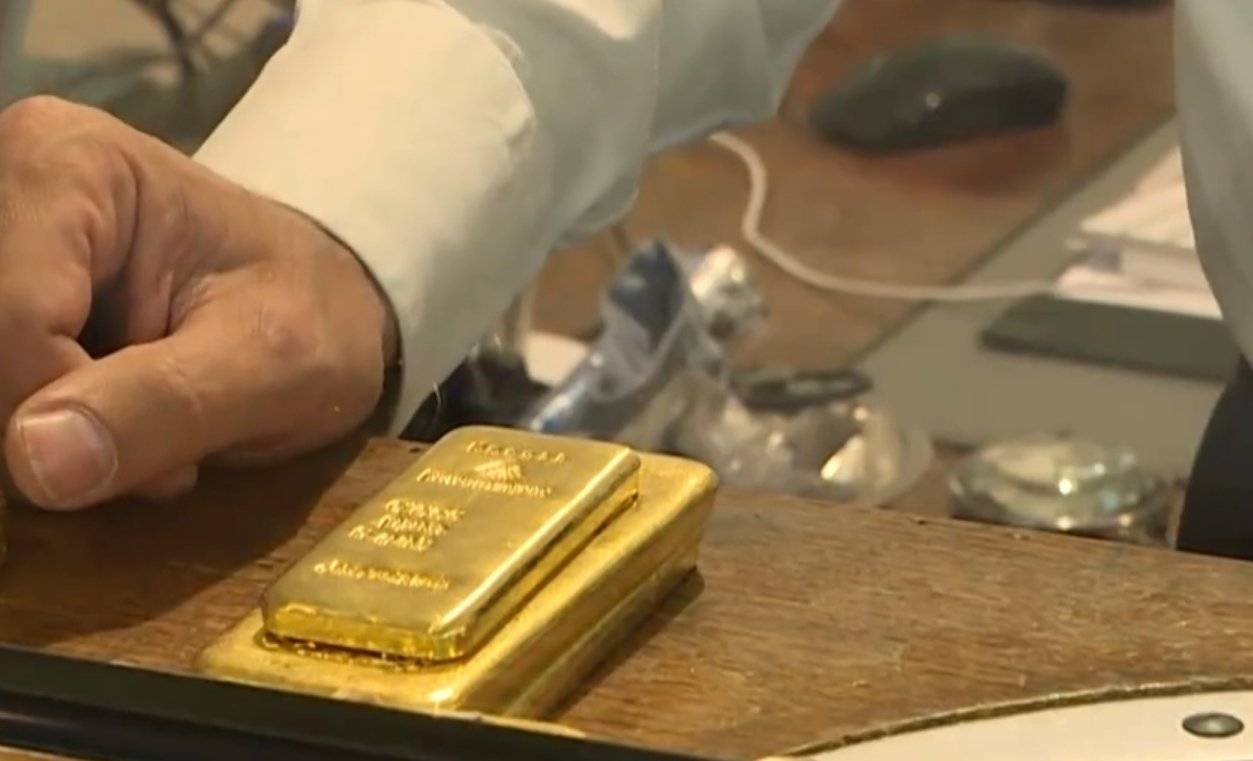
二季度全球黄金需求总量(含场外交易)仍同比增长3%至1249吨
Sou Hu Cai Jing· 2025-08-02 06:46
Core Insights - Global gold demand increased by 3% year-on-year to 1249 tons in Q2 2025, with a value surge of 45% to $132 billion, marking a historical high [1] - The growth was primarily driven by investment demand, central bank purchases, regional market differentiation, and structural changes in consumption trends [2] Investment Demand: Core Growth Engine - Gold ETFs and similar products were the main drivers of demand growth, with a net inflow of 170 tons in Q2 2025, contrasting with slight outflows in the same period of 2024 [3] - Cumulative inflows for the first half of the year reached 397 tons, the highest since 2020, reflecting institutional investors' hedging against geopolitical risks and economic uncertainties [3] - In China, gold ETF inflows amounted to 464 billion RMB (approximately $65 billion), with holdings increasing to 200 tons and assets under management (AUM) surging 116% year-on-year to 152.5 billion RMB [3] - Demand for gold bars and coins grew by 11% year-on-year to 307 tons, with Chinese investors leading globally with a demand of 115 tons, a 44% increase year-on-year [3] Central Bank Purchases: Long-term Support - Global central banks net purchased 166 tons of gold in Q2 2025, remaining at historically high levels, 41% above the average from 2010-2021 [6] - A survey indicated that 95% of central banks expect to continue increasing gold holdings in the next 12 months, highlighting a trend towards de-dollarization [6] - The People's Bank of China added 6 tons in Q2, totaling 19 tons for the first half of the year, with official reserves reaching 2299 tons, accounting for 6.7% of foreign reserves [6] Consumption Demand: Structural Changes - Global gold jewelry demand fell by 14% year-on-year to 341 tons, nearing 2020 pandemic lows, with China's demand dropping 20% year-on-year to 69 tons, the weakest Q2 since 2007 [7] - Despite the decline, high-end jewelry demand remained resilient, while the mass market shifted towards lighter, more innovative designs, leading to a 21% increase in consumption value to $36 billion [7] - India's demand decreased by 17% year-on-year, although pre-wedding season purchases and trade-in policies mitigated some of the decline [8] Price and Supply: Market Balance Amid High Prices - The average gold price in Q2 reached $3280.35 per ounce, a 40% increase year-on-year, marking a historical high [12] - In China, the average physical gold price surpassed 1000 RMB per gram, with retail prices fluctuating between 984-1018 RMB per gram [13] - Gold mine production increased by 3% year-on-year to 909 tons, a record high for the quarter, while recycled gold supply grew by only 4%, indicating a reluctance among holders to sell [14] - Overall, gold prices rose by 26% in the first half of the year, outperforming most mainstream assets [15] Regional Market: Differentiation and Resilience - The Chinese market exhibited strong investment but weak consumption, with total retail gold demand reaching 245 tons, a 28% increase year-on-year, despite weak jewelry demand [16] - In India, demand for gold bars and coins rose to 46 tons, but jewelry consumption fell by 17% due to price-sensitive consumers reducing purchases [17] - European demand doubled due to post-energy crisis risk aversion, while U.S. demand for bars and coins fell to 9 tons due to a high-interest rate environment [17] - The growth in gold demand underscores its dual value as a safe-haven asset and a long-term allocation tool [17] Future Outlook - Geopolitical developments, monetary policy trajectories, and changes in consumer behavior will be key variables influencing the gold market [19]

OpenAI与艾维合作新AI硬件细节曝光:不是这两种设备
Feng Huang Wang· 2025-06-24 04:16
Core Viewpoint - OpenAI is involved in a legal dispute regarding its collaboration with io, a hardware company founded by Jonathan Ive, focusing on the development of AI hardware devices, with ongoing discussions about potential product offerings and trademark infringement claims [1][2][3]. Group 1: Legal Dispute and Collaboration - OpenAI and io are facing a trademark infringement lawsuit initiated by the hardware startup iyO, which is developing customizable in-ear headphones [1]. - OpenAI has withdrawn promotional materials related to its $6.5 billion acquisition of io to comply with court orders [1]. - The lawsuit reveals that OpenAI executives have been researching in-ear hardware devices with former Apple executives at io [1][4]. Group 2: Product Development Insights - The first device developed in collaboration with io may not be an in-ear or wearable device, as stated by io's co-founder Tang Tan [2][3]. - OpenAI's CEO Sam Altman mentioned that the prototype device will be a "third type of device" that can be carried in pockets or placed on tables, capable of sensing the user's environment [3]. - OpenAI is exploring various types of devices, including desktop, mobile, wireless, wired, wearable, and portable products [3]. Group 3: Market Context and Competitors - The market is seeing a trend towards AI devices, with companies like Meta and Google developing smart glasses, while Apple is reportedly working on AI-enabled AirPods [3]. - Despite interest in AI headphones, io has not developed a "custom-molded headphone product," according to statements from io's chief product officer [4].
浪人早报 | 雷军回应质疑、余承东称自己发烧38度坚持上班、荣耀高管回应飞机拍成鲲鹏事件…
Xin Lang Ke Ji· 2025-05-22 02:12
Group 1 - Lei Jun announced the upcoming release of Xiaomi's YU7, acknowledging the intense competition in the SUV market but expressing confidence in the product's unique appeal [2] - Huawei's Yu Chengdong shared his commitment to work despite being ill, emphasizing the importance of balancing work and health during a speech at Southern University of Science and Technology [2] - Honor's chief imaging engineer responded to a viral incident involving a photo taken by Honor Magic7 Pro, stating that the phone's algorithm could not replicate the image and that legal actions have been initiated [2] Group 2 - Alibaba's entertainment division rebranded as Whale Entertainment Group, with its subsidiary Alibaba Pictures set to become Damai Entertainment, focusing on user satisfaction through its core platforms [3] - iQIYI reported a total revenue of 7.19 billion yuan for Q1 2025, with membership services contributing 4.4 billion yuan and online advertising services 1.33 billion yuan [3] - Baidu's Q1 2025 revenue reached 32.5 billion yuan, with core revenue growing by 7% year-on-year to 25.5 billion yuan, and a 48% increase in core net profit to 7.63 billion yuan [3] Group 3 - XPeng Motors' chairman expressed confidence in achieving over 100% sales growth this year, aiming for profitability by Q4 [4] - Tesla's CEO announced plans to order more GPUs from NVIDIA and AMD for AI development, highlighting the importance of chip supply for AI advancements [5] - OpenAI is set to acquire an AI hardware startup founded by former Apple designer Jony Ive for nearly $6.5 billion, marking its largest acquisition to date [6] Group 4 - Apple Stores in mainland China have begun accepting WeChat Pay, expanding payment options for customers [7] - Global sales of new energy vehicles reached 4.02 million units in Q1 2025, marking a 39% year-on-year increase, with new energy vehicles accounting for 18.4% of total global car sales [9]

Q2财报公布在即 宏观不确定性冲击下高通(QCOM.US)会作何指引?
Zhi Tong Cai Jing· 2025-04-28 07:30
Group 1 - Qualcomm is set to report its Q2 earnings on April 30, with analysts predicting a 13.3% year-over-year revenue increase to $10.64 billion and a 15.6% rise in adjusted EPS to $2.82 [1] - The QCT (semiconductor) segment is expected to see a 14.7% revenue growth to $9.21 billion, driven by strong demand in smartphones (up 11.2% to $6.87 billion), automotive (up 47.5% to $0.89 billion), and IoT (up 16.5% to $1.45 billion) [1] - In Q1, Qualcomm's revenue grew 17% year-over-year to $11.7 billion, significantly exceeding market expectations, with adjusted EPS at $3.41, also above forecasts [1] Group 2 - Qualcomm's strategic positioning in the AI device era, with a focus on edge computing, is expected to enhance its competitive advantage, particularly in markets like PCs, automotive, and IoT [2] - The company holds approximately 10% market share in Windows PCs priced over $800 in the U.S., with expectations to expand this share as it aims for over 100 commercial designs by 2026 [2] - The uncertainty surrounding tariff policies under the Trump administration poses a significant risk to Qualcomm and the broader electronics supply chain [2] Group 3 - Investors are likely to focus on the impact of tariffs on Qualcomm's future performance, with UBS suggesting that the company may provide weak guidance for Q3 due to macroeconomic challenges affecting global smartphone demand [3] - UBS analysts expect Qualcomm's Q3 guidance to be below typical seasonal levels, forecasting a low single-digit percentage decline, compared to the market expectation of a 2% decline [3] - Approximately 66% of Qualcomm's revenue is derived from China, making it vulnerable to tariff-related uncertainties impacting its smartphone business [3]
