Fiscal stimulus

Search documents
AI in Focus in 2026, Traders Look Past LLMs
Bloomberg Technology· 2025-12-19 21:02
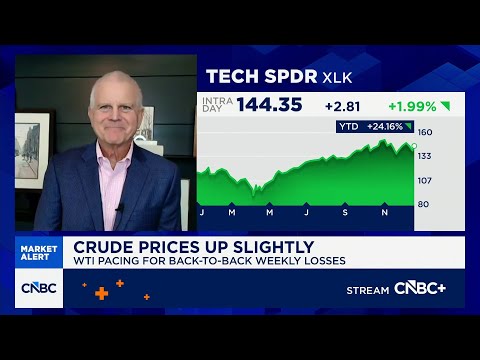
Tech & AI Outlook - Tech sector is expected to perform well in the coming year, with a setup similar to the previous year, driven by factors like Fed rate cuts and a strong economy [1][2] - AI is anticipated to be a tailwind, fostering growth in tech and other sectors [2] - AI use cases are expanding across various sectors, including tech, consumer, and financials, indicating its potential to become ubiquitous [3][4] - Companies need to continue investing in AI and demonstrate beneficial returns to sustain spending [4] - The market is discerning about AI investments, focusing on cash flow and returns, suggesting a healthy investment environment [10][11] Labor Market Impact - The extent to which job cuts are directly related to AI is currently uncertain [6] - There may be a period of workforce digestion due to AI, but in the long term, it is expected to be a net positive for jobs [6][7] Investment Strategy - Positive outlook on infrastructure spending, particularly on hyperscalers and electrical equipment companies involved in physical infrastructure for AI [8] - Focus on technology companies that enable AI scalability, deployment, and security, such as Palo Alto Networks and MongoDB [8][9] - Companies that help clean up and prepare data for AI are also considered promising [9] - US market remains favorable due to stronger growth and corporate earnings compared to other global regions [15][16]


Fed setup is for accommodative bias into 2026, says Citi's Scott Chronert
CNBC Television· 2025-12-19 19:16
Scott Croniner joins us from uh city. He's US equity strategist. Scott, not to ask how much you can deadlift, but feel free to offer, you know, [laughter] >> let's just say, Kelly, I can lift my weight, but that's about it.>> Which is looking like a little less than that. All right. So, you do think a more dovish Fed is is a plank of this bull market story.>> Yeah, it's it's kind of interesting. We just published a note that hit a few minutes ago that I I titled uh the data is dead, long live the data. And ...
Bank of Japan Hikes Rates to 30-Year High as Yen Weakens – The Catalyst for Bitcoin Rebound?
Yahoo Finance· 2025-12-19 09:48
Monetary Policy Changes - The Bank of Japan raised interest rates to 0.75%, marking the highest borrowing costs in three decades, which has implications for global crypto markets [1] - This rate increase represents Japan's most aggressive monetary tightening since 1995, although borrowing costs remain lower than in other major economies [2] Fiscal Policy and Debt Concerns - Prime Minister Sanae Takaichi's $117 billion stimulus package is largely funded by additional debt issuance, raising concerns about Japan's public debt, which is more than twice the size of its economy [3] - The combination of growing debt, higher interest rates, and aggressive fiscal spending creates uncertainty for Japan's economic outlook [3] Market Reactions - Market reactions were mixed, with the yen initially strengthening but later losing those gains as investors assessed the implications of the rate hike [3][4] - The initial strengthening of the yen was attributed to thin market liquidity, which amplified short-term price movements rather than reflecting a fundamental reassessment [4] Regulatory Developments in Crypto - The Financial Services Agency proposed requiring crypto exchanges to hold dedicated reserves against customer losses, a move aimed at enhancing security following significant breaches in the sector [5]
Pace of inflation is moderating, but speed is key question: Vanguard's Patterson
Youtube· 2025-12-18 20:13
Economic Outlook - The consensus in the market suggests that next year will see robust economic growth, supported by fiscal and monetary tailwinds, as well as deregulation [7] - Clarity around trade policy and a government focused on economic performance ahead of midterm elections may reduce the need for significant Federal Reserve rate cuts [7] Inflation Trends - Current inflation data is viewed with skepticism, and there is an expectation of a higher inflation number in the next report due in mid-January [4] - Despite concerns, there is a belief that the pace of inflation is moderating, indicating a disinflationary trend [4] Federal Reserve Policy - The Federal Reserve's approach to interest rates will depend on economic growth and inflation rates, with modest rate cuts possible if labor market softness is observed [8] - The Fed is unlikely to make drastic changes unless there is significant evidence of economic downturns, particularly in small businesses, which have not been hiring [8][9] Small Business Impact - Small businesses, which account for 46% of employment in the U.S., are a key area to monitor for hiring trends and overall economic health [9] - The NFIB small business sentiment survey will be an important indicator; stabilization and improvement in hiring from small companies could signal a bullish market outlook [10]

Maybe Weakness Isn't All Oracle's Fault: 3-Minutes MLIV
Youtube· 2025-12-11 11:01
Market Sentiment - The negativity in the market is largely attributed to Oracle's performance, with Nasdaq futures down more than 80 points [1] - There is a growing disappointment regarding the Federal Reserve's policies, which may be overshadowing the Oracle narrative [2][4] Federal Reserve and Economic Policy - The Fed's recent actions, including buying Treasury bills, are generally seen as positive for financial assets, but the market reaction has been more negative [3] - Investors are concerned about the lack of certainty regarding future policies, leading to a cautious approach as liquidity decreases towards year-end [4] Future Market Outlook - Despite current market challenges, there is a belief that stock markets will rise significantly by 2026 due to resilient growth and supportive fiscal policies [6][7] - The upcoming events, including central bank meetings, are expected to influence market focus, with particular attention on the ECB, Bank of England, and Bank of Japan [9][10]


Why trouble for the biggest foreign buyer of U.S. debt could ripple through America’s bond market
Yahoo Finance· 2025-11-21 21:09
Core Insights - Recent developments in Japan's government, particularly under Prime Minister Sanae Takaichi, have led to increased long-dated yields on Japanese government bonds and a depreciation of the yen, which may impact U.S. financial markets [2][4]. Group 1: Japanese Government Bond Market - Aggressive fiscal stimulus measures by Japan's government have resulted in a spike in long-dated yields, with the 10-year yield surpassing 1.78%, the highest in over 17 years, and the 40-year yield reaching an all-time high above 3.7% [2][4]. - The situation in Japan is drawing comparisons to the U.K. crisis in late 2022, which was triggered by unfunded tax cuts, indicating a potential loss of confidence in fiscal policy [2]. Group 2: U.S. Financial Market Implications - The U.S. is facing challenges in managing interest payment costs due to a national debt exceeding $38 trillion, which is influencing the administration's efforts to lower long-term Treasury yields [3]. - Recent U.S. Treasury yields for 2-year and 10-year bonds have reached their lowest levels in three weeks, at 3.51% and nearly 4.06%, respectively, indicating a potential limit on how low U.S. yields can go in light of Japanese developments [5][6]. - The correlation between U.S. Treasury yields and Japanese government bond yields may not be direct, but there is a concern that U.S. yields could rise alongside Japan's, affecting borrowing rates for households and businesses [4][6].
EUR/USD Hanging in There
Investing· 2025-11-21 08:16
Core Viewpoint - The EUR/USD exchange rate has shown resilience despite potential pressures from US economic data and Federal Reserve signals, indicating a delay rather than a complete abandonment of expectations for rate cuts [1][2][3]. Economic Indicators - A strong US jobs report indicated a rise in headline jobs growth, with the unemployment rate increasing due to a larger labor force, yet the dollar softened, suggesting better-balanced positioning among investors [2][3]. - The market is currently pricing the next Federal Reserve rate cut for January at 24 basis points, compared to 10 basis points for December, reflecting a shift in expectations [3]. European Economic Outlook - The eurozone is showing signs of stability, with business sentiment remaining constructive, which may support the euro against the dollar [6]. - The European Central Bank (ECB) is expected to report negotiated wages for Q3 at an annualized rate of 2.45%, down from 3.95% in the previous quarter, indicating rising real wages and potential positive consumption surprises in 2026 [6]. Central Bank Activities - ECB President Christine Lagarde is set to speak at the Frankfurt European Banking Congress, focusing on the benefits of investing in Europe and possibly discussing the expansion of EUREP repo lines to enhance euro invoicing [7]. - The Swiss National Bank is expected to maintain a cautious stance regarding the strength of the Swiss franc, with limited options for rate cuts or interventions [9]. Japanese Economic Policy - Japan is implementing targeted fiscal stimulus aimed at energy subsidies, which may help lower headline inflation and keep the Bank of Japan from raising rates, potentially leading to more negative real rates and a weaker yen [10]. - There is an increasing likelihood of intervention in the USD/JPY exchange rate if it approaches the 159/160 range, particularly during the US Thanksgiving holiday when market conditions are thinner [11].


Yen drops after Takaichi elected as Japan PM, dollar firms
Yahoo Finance· 2025-10-21 19:21
Core Viewpoint - The election of hardline conservative Sanae Takaichi as Japan's prime minister has led to a decline in the yen, with traders speculating on potential changes in interest rate outlook and increased fiscal spending [1][2]. Currency Market Impact - The yen fell 0.76% to 151.895 per dollar, marking its lowest level since October 14, and experienced its largest single-day decline in two weeks [2]. - The yen also faced challenges against the euro and sterling, indicating broader currency market pressures [2]. Government Appointments and Economic Policy - Takaichi plans to appoint Satsuki Katayama as finance minister, who has previously expressed a preference for a stronger yen, potentially influencing market perceptions regarding yen depreciation [3]. - Analysts suggest that inflation and household purchasing power will be critical issues for the new government, which may lead to a reluctance to support further yen depreciation [4]. Monetary Policy Considerations - The Bank of Japan (BOJ) faces challenges in navigating monetary policy, as Takaichi's support for fiscal stimulus complicates the path for potential interest rate increases [4][5]. - There are indications that monetary tightening may be delayed until fiscal easing takes effect, creating a complex environment for the BOJ [5]. Broader Market Context - The dollar index rose to a six-day high, supported by the weaker yen, amidst a generally positive market sentiment following optimistic trade deal discussions between the U.S. and China [6][7]. - Concerns regarding U.S. dollar funding and its implications for euro zone banks were highlighted, reflecting the interconnectedness of global financial markets [7].
Instant view: China Q3 GDP growth slows to 4.8% y/y, in line with forecast
Yahoo Finance· 2025-10-20 03:12
Core Viewpoint - China's economic growth in the third quarter slowed to 4.8%, the weakest pace in a year, due to a prolonged property slump and trade tensions, prompting calls for more stimulus to support economic momentum [1]. Economic Data Summary - Q3 GDP growth was 4.8% year-on-year, matching forecasts and down from 5.2% in Q2 [5] - Q3 GDP growth was 1.1% quarter-on-quarter, seasonally adjusted, exceeding the forecast of 0.8% and slightly up from a revised 1.0% in Q2 [5] - September industrial output increased by 6.5% year-on-year, surpassing the forecast of 5.0% and up from 5.2% in August [5] - September retail sales rose by 3.0% year-on-year, in line with forecasts but down from 3.4% in August [5] - Fixed asset investment from January to September decreased by 0.5% year-on-year, below the forecast of a 0.1% increase, and down from a 0.5% increase from January to August [5] - Property investment from January to September fell by 13.9% year-on-year, worsening from a 12.9% decline from January to August [5] Analyst Commentary Summary - Analysts suggest that while the GDP number is decent, domestic activity remains weak, indicating a need for further measures to boost demand [2][3] - There is an expectation that Beijing will meet its 2025 growth target of around 5%, with little need for broad fiscal stimulus at this time [2] - Targeted additional fiscal stimulus is anticipated, with the Q3 GDP number possibly being the low point in the current cycle [4]
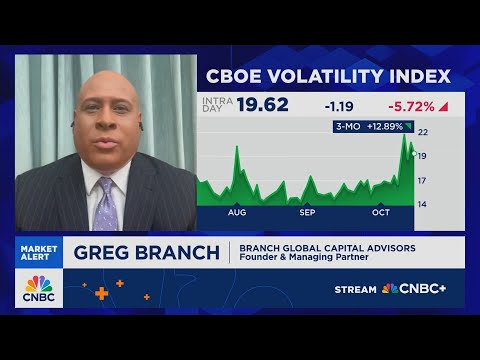
Branch: We're entering a cyclical recovery
CNBC Television· 2025-10-15 12:40
So, I think everybody's trying to figure out what to make of this market right now. I want to ask you not about an investment but a trade. Right now, it seems like one of the more attractive uh trades in the market right now with the government shutdown, trade tensions, also questions about the labor market would be VIX futures.Do you see it that way as well or are you seeing some other opportunities with all this volatility. >> Right. I I might say that that trade is happening uh in spite of those um seemi ...