
mRNA技术

Search documents
Moderna Stock on the Move: What Sparked the 13% Jump in the Past Week?
ZACKS· 2026-01-15 14:57
Core Insights - Moderna's shares increased by 13% following the announcement of preliminary sales for 2025 and business outlook for 2026 and beyond [2] - The company reported unaudited total revenues of $1.9 billion for 2025, exceeding the previous guidance range of $1.6-$2.0 billion [3] - Moderna expects operating expenses for 2025 to be between $5.0 billion and $5.2 billion, lower than the prior guidance of $5.2-$5.4 billion [3] Financial Performance - Moderna anticipates ending 2025 with cash and cash equivalents of $8.1 billion, an increase from the previous forecast of $6.5-$7.0 billion [4] - The company projects up to 10% revenue growth for 2026, with targeted operating expenses of approximately $4.9 billion [4] - For 2027, while no revenue guidance was provided, operating expenses are expected to be in the range of $4.2-$4.7 billion [5] Stock Performance - Year-to-date, Moderna's shares have risen by 20%, compared to the industry's growth of 19% [6] Pipeline and Milestones - Moderna has over 30 mRNA-based investigational candidates in various clinical stages, targeting multiple indications including cancer [9] - The company submitted regulatory filings for its seasonal influenza vaccine mRNA-1010 in several regions, with expectations for approval this year but a commercial launch anticipated next year [10] - Data readouts from late-stage studies on RSV and norovirus vaccines are expected before the end of this year [12] Oncology Focus - A key candidate in Moderna's pipeline is intismeran autogene, a personalized cancer therapy developed in collaboration with Merck, with a commercial launch targeted for next year [13] - Moderna is expanding its oncology pipeline, prioritizing the development of mRNA-4359, with a data readout expected before the end of 2026 [14]



BioNTech (NasdaqGS:BNTX) FY Conference Transcript
2026-01-13 23:17
BioNTech Conference Call Summary Company Overview - **Company**: BioNTech - **Industry**: Biotechnology, specifically focusing on mRNA technology and oncology treatments Key Points and Arguments Company Growth and Achievements - BioNTech, in partnership with Pfizer, has delivered **5 billion doses** of vaccines globally, maintaining leadership in the COVID vaccine market [2][3] - The company has pivoted back to oncology with **25 clinical trials** ongoing and **16 clinical programs** [2][3] - BioNTech's financial position is strong, ending the year with over **$17 billion** in cash and cash equivalents [3] Clinical Trials and Pipeline - BioNTech has **25 late-stage programs** running, with over **4,000 patients** enrolled in clinical trials [5] - The company expects **15 phase 3 readouts** in 2026 and 2027, indicating a robust pipeline [5][21] - Key oncology assets include: - **Prometimic**: A PD-L1 VEGF bispecific antibody showing an **85% objective response rate** in small cell lung cancer and **70% in triple-negative breast cancer** [9] - **Gutysava**: An antibody targeting regulatory T cells, showing a **54% reduction in the risk of death** compared to chemotherapy in squamous non-small cell lung cancer [12] - **B7-H3 ADC**: Targeting multiple solid tumors with a favorable safety profile [14] Strategic Partnerships and Acquisitions - BioNTech has executed strategic deals, including a partnership with BMS to strengthen execution and de-risk programs [3] - The acquisition of BioPhios and CureVac has enhanced BioNTech's position in the mRNA field [3] Future Objectives and Strategies - In 2026, BioNTech aims to: - Accelerate late-stage development of oncology assets - Engage in multiple combination strategies - Shift from a platform-centric to a tumor-centric clinical development approach [6] - The company is focusing on a **synergy-driven development strategy** across next-generation immunomodulators, targeted therapies, and mRNA cancer immunotherapies [7] Combination Therapy Approach - BioNTech is pursuing a combination therapy strategy, integrating ADCs with immunotherapies and mRNA vaccines to enhance treatment efficacy [17][18] - The company believes that combination therapies will provide durable control in patients and open clinical benefits for those not responding to checkpoint blockade [30] Financial Management and Future Plans - BioNTech plans to use its cash reserves primarily for developing its internal pipeline and may consider inorganic acquisitions or collaborations in the future [39] Additional Important Information - The company has a strong focus on high-incidence cancers such as lung cancer and breast cancer, with strategies tailored to address various lines of treatment [18] - BioNTech anticipates a steady news flow from multiple late-stage trial readouts throughout 2026, supporting rapid decision-making and value creation [21] This summary encapsulates the key points discussed during the BioNTech conference call, highlighting the company's strategic direction, clinical advancements, and financial outlook.

康希诺:公司将利用搭建的mRNA技术平台拓展更多应用领域
Zheng Quan Ri Bao Wang· 2026-01-13 13:11
Core Viewpoint - The company, CanSino, is focusing on its main business while leveraging its mRNA technology platform to explore additional application areas and potential commercial opportunities [1] Group 1 - CanSino plans to utilize its mRNA technology platform to expand into more application fields [1] - The company is committed to sharing updates on any significant progress made in this area [1]

金融破段子 | 股价回调9成多,当“成功”被简单外推
中泰证券资管· 2026-01-12 11:32
Core Viewpoint - The article discusses the dramatic decline of a prominent American biotech company, referred to as M Company, which was once celebrated for its COVID-19 vaccine but has since faced significant financial challenges and operational setbacks [2][3]. Group 1: Company Performance - Four years ago, M Company reached a market peak of nearly $200 billion and held $18 billion in cash, but its market value has since shrunk by over 90% [2]. - The company's revenue peaked at $19.3 billion in 2022 but is projected to drop to $6.848 billion in 2023 and further to $3.236 billion in 2024, indicating a steep decline in sales [3]. - Following the decline in revenue, M Company has incurred continuous losses due to high fixed costs associated with research, personnel, and production capacity [3]. Group 2: Expansion and Challenges - M Company expanded rapidly during the pandemic, increasing its workforce from under 1,000 to nearly 6,000 and expanding its pipeline from over ten to more than thirty projects [3]. - Despite the expansion, the company has struggled to generate significant revenue from new vaccine approvals, with only $200,000 in revenue from vaccines approved post-COVID [3]. Group 3: Market Dynamics and Future Outlook - The initial optimism surrounding mRNA technology was based on its rapid development and approval processes, which may not be replicable in standard pharmaceutical development [5]. - The article emphasizes the need for caution in assuming that short-term successes will translate into long-term competitive advantages, highlighting the complexities of drug development and market competition [5].

中国专家探索借mRNA技术建“活性心脏创口贴” 为心衰治疗提供新策略
Zhong Guo Xin Wen Wang· 2026-01-12 04:17
Core Insights - Chinese medical experts have proposed a new strategy for heart failure treatment by combining mRNA technology with human-induced pluripotent stem cell-derived cardiomyocyte precursor cells to create a cardiac patch [1][2] - The research demonstrated that IGF1 mRNA-modified cardiac patches significantly improve graft survival rates and promote heart function recovery, revealing potential mechanisms behind these effects [1][2] Group 1: Research Background - Heart failure is one of the leading causes of death globally, and while significant advancements have been made in drug therapy, interventional, and surgical treatments, effective options for end-stage heart failure patients primarily rely on heart transplantation [1] - Limitations in heart transplantation include donor shortages and rejection reactions post-surgery, which restrict clinical applications [1] Group 2: Innovative Treatment Method - The emerging treatment method involves engineering cardiac patches by first obtaining a sufficient number of cardiomyocytes through directed differentiation of human-induced pluripotent stem cells, followed by constructing the patches with biomaterials for surface application on the heart [2] - The research addresses the critical challenge of enhancing the survival rate of transplanted cells within the cardiac patches, which is essential for improving treatment outcomes [2] Group 3: Research Achievements - The study led by researchers Fu Wei and Wang Wei has been recognized by being selected for the finals of the 2024 National Disruptive Technology Innovation Competition [2]
康希诺:mRNA是公司的领先技术平台之一
Zheng Quan Ri Bao Zhi Sheng· 2026-01-06 13:09
Core Viewpoint - The company, CanSino, has been deeply engaged in key areas such as meningitis vaccines, pneumonia vaccines, infant vaccines, innovative vaccination schemes, and adult vaccines for many years, and plans to continue enriching its pipeline through advanced technology platforms [1] Group 1: Current Focus Areas - The company is exploring innovative fields and expanding into areas such as tumor vaccines and therapeutic vaccines, aiming to develop differentiated competitive products [1] - mRNA technology is one of the company's leading platforms, recognized for its high platform value and broad development prospects [1] Group 2: Research and Development - The company has accumulated years of experience in the development and production of mRNA vaccines, including in-depth knowledge of infectious diseases and antigen screening [1] - In the therapeutic area, the company is advancing the development of mRNA vaccines for glioblastoma and rhabdomyosarcoma, aiming to expand the application range of its leading technology platform [1] Group 3: Technology and Licensing - The company has achieved external technology licensing for its proprietary new three-component lipid nanoparticle delivery system (ISL-3C-LNP) [1]
康希诺:利用搭建的mRNA技术平台在治疗领域持续探索更多适应症
Zheng Quan Ri Bao Zhi Sheng· 2026-01-06 12:39
Core Viewpoint - The company, CanSino, is focusing on its core business while exploring additional indications in the treatment field using its mRNA technology platform, with updates to be provided upon significant progress [1]. Group 1 - CanSino is committed to enhancing its main business operations [1]. - The company is leveraging its mRNA technology platform for further exploration in treatment indications [1]. - CanSino will announce any significant advancements in its research and development efforts in a timely manner [1].
A股IPO募投效果不彰,悦康药业抛3亿元定增方案后再赴港融资
Sou Hu Cai Jing· 2026-01-05 09:48
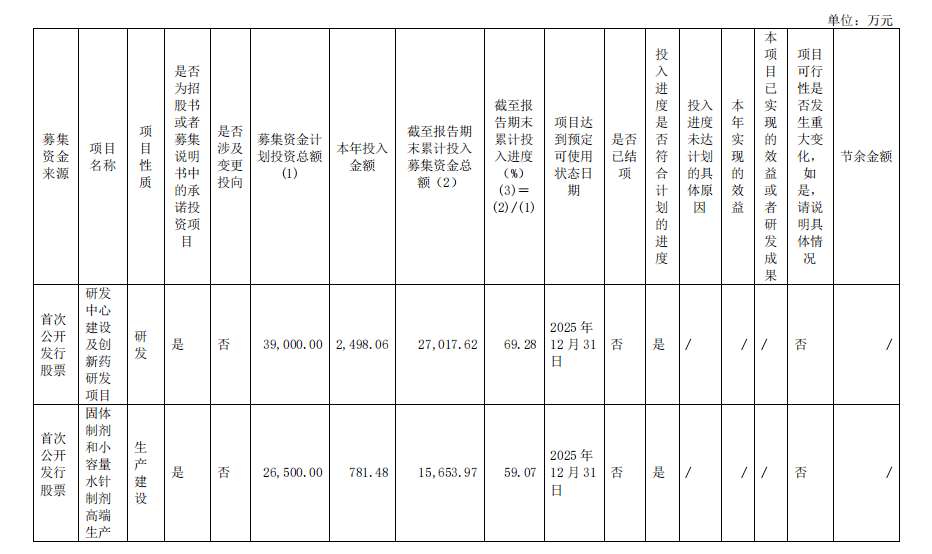
Core Viewpoint - Yuyuan Pharmaceutical (688658) has submitted an application for H-share listing on the Hong Kong Stock Exchange, marking a significant move following its 2020 debut on the STAR Market. This "A+H" strategy aims to broaden financing channels amid macro policy adjustments and pressure on core products due to regulatory price cuts [1]. Group 1: Core Product and Financial Performance - The company's core product, Ginkgo biloba extract injection (Yuyuan Tong), has historically supported its performance, holding approximately 94.1% market share in China. However, recent regulatory changes have exposed vulnerabilities in this concentrated product structure [2]. - In 2024, the National Healthcare Security Administration targeted the "one drug, two prices" phenomenon, leading to a price reduction of 38% to 53% for Yuyuan Tong. This adjustment resulted in a significant revenue decline, with a 41.20% year-on-year drop in revenue for the first nine months of 2025, totaling 1.759 billion yuan compared to 2.992 billion yuan in the same period last year [2]. - The company's net profit attributable to shareholders for the first three quarters of 2025 was -148 million yuan, a 170.56% decrease from 210 million yuan in the same period of 2024, indicating challenges in transitioning its core growth engine [2]. Group 2: Fundraising Efficiency and Project Management - The market is closely watching Yuyuan Pharmaceutical's management efficiency of previously raised funds, as the company raised approximately 2.018 billion yuan during its STAR Market IPO in 2020. However, the expected outcomes from these funds have not been fully realized, with project delays noted [3]. - By the end of 2024, the "R&D Center Construction" project had only achieved 69.28% of its planned investment progress, while the "High-end Pharmaceutical Formulation Industrialization Project" reached only 59.07%. Additionally, some projects have been postponed to 2025 or 2026 due to external environment changes [3]. Group 3: Cash Flow and R&D Investment - Yuyuan Pharmaceutical's cash flow is under pressure, with a net cash flow from operating activities of 170 million yuan for the first three quarters of 2025, down over 60% year-on-year. This decline is attributed to a significant drop in revenue, while fixed R&D expenditures and production costs have not decreased proportionately [5]. - Despite facing losses, the company has maintained its R&D investment, spending 329 million yuan in the first three quarters of 2025. It is advancing multiple cutting-edge technology platforms, including small nucleic acid drugs and mRNA vaccines, although competition in these areas is intense [6]. Group 4: Market Position and Future Outlook - Yuyuan Pharmaceutical's past compliance issues may increase the scrutiny of its H-share listing process. The company's ability to attract international institutional investors will depend on the quality of clinical data from its R&D pipeline by 2026 [7]. - The H-share listing represents a defensive expansion strategy, aiming to mitigate the impact of core product price cuts and secure funding for long-term, capital-intensive nucleic acid drug development. However, the shift in capital market logic from "expectations" to "certainty" poses challenges for the company [7].

对话诺贝尔奖得主Katalin:寻找真理本身,是一项极其艰苦、却又令人着迷的工作
Tai Mei Ti A P P· 2026-01-05 03:45
Core Insights - The article highlights the journey of Katalin Karikó, a Nobel Prize winner in Physiology or Medicine in 2023, who dedicated over 40 years to mRNA research despite facing skepticism and adversity in the scientific community [1][2]. Group 1: Background and Early Life - Katalin Karikó grew up in a small village in Hungary, which lacked basic amenities like running water and stable electricity, but her simple life fostered a deep connection with nature and curiosity about science [1][3]. - Her childhood experiences, such as observing chickens hatching, sparked her scientific intuition and curiosity [1][3]. Group 2: Scientific Journey and Challenges - Karikó's focus on mRNA, which was considered a "tricky" and "hopeless" area by her peers, led to a long struggle against mainstream scientific opinions that favored DNA research [1][2]. - Throughout her career, she faced demotions, funding difficulties, and skepticism from colleagues, yet she remained committed to her research, driven by a belief in its importance [1][2][10]. Group 3: Key Scientific Breakthroughs - A significant breakthrough in her research was the discovery that substituting natural components of mRNA with modified nucleotides, such as pseudouridine, could significantly reduce harmful immune responses [1][15]. - This modification allows mRNA to evade immune detection, leading to more stable and efficient protein production within cells [15][16]. Group 4: Philosophical Approach and Resilience - Karikó's resilience is partly attributed to her unique philosophy of transforming negative pressure into motivation, viewing challenges as opportunities for growth [2][6]. - She emphasizes the importance of focusing on what can be changed and not wasting time on uncontrollable factors, a Stoic principle that guided her through adversity [5][6]. Group 5: Future of mRNA Technology - mRNA technology has evolved into a revolutionary platform in biomedicine, with applications ranging from vaccines to cancer treatments and protein replacement therapies [2][21]. - The potential of mRNA technology lies in its ability to instruct the body to produce desired proteins, which could address complex diseases caused by protein dysfunction [21][22]. Group 6: Personal Reflections on Success - Karikó defines success not by external recognition but by remaining true to oneself and maintaining integrity in scientific pursuits [2][26]. - She expresses contentment with her life's work, stating that she does not seek accolades or recognition, valuing the pursuit of knowledge over fame [25][26].
中国创新药迈入全球化临界点 云顶新耀擘画进阶新篇
2 1 Shi Ji Jing Ji Bao Dao· 2025-12-23 09:25
Core Insights - By 2025, China's innovative pharmaceutical industry is projected to be the second largest globally, with approximately 30% of new drugs in development being from China, and the total amount of licensing agreements for domestic innovative drugs exceeding $100 billion, doubling from 2024 [1] - The Economist highlights that Chinese innovative drugs are at a critical point of globalization, with significant increases in global market share for Chinese pharmaceutical companies, and stock prices of Chinese biotech firms outperforming their US counterparts [1] - The rapid development is attributed to a decade of regulatory reforms, an ecosystem fostering innovation, and the advantages of China's large population and manufacturing capabilities [1] Industry Challenges - Despite impressive growth, the total market capitalization of Chinese biotech companies is only 15% of their US counterparts, with upfront licensing fees typically two-thirds lower than global averages [1] - Some pharmaceutical companies struggle with commercialization capabilities, which limits their potential value realization [1] Value Restructuring - Leading innovative pharmaceutical companies are advancing towards the top of the global value chain, with firms like Kangfang Biotech transitioning from licensing revenue to self-driven commercialization [2] - Companies are focusing on both global product development and building scalable commercialization platforms, which is becoming a core strategy for Chinese biotech firms to evolve into biopharma [2] Global Innovation Landscape - Chinese pharmaceutical companies are shifting from being fast followers to first movers, evidenced by significant business development deals with major international firms [3] - The mRNA technology sector is also seeing growth, with multiple companies advancing clinical trials and product development [3] mRNA Technology Potential - The value of mRNA technology is becoming increasingly evident, with major collaborations and acquisitions highlighting its potential [4] - Companies are pursuing dual strategies of in-licensing and out-licensing innovative assets to establish a strong global presence [4] Commercialization Challenges - The approval rate for new drugs is low, with only about 5% of drugs entering clinical trials successfully reaching the market, and only 20% of those achieving profitability [6] - Successful commercialization is critical for innovative drug companies, as it provides funding for future research and development [7] Market Dynamics - The traditional division of labor in the biopharmaceutical industry is evolving, with biotech companies gaining more negotiating power and opportunities for commercialization [9] - The market is expected to consolidate around platform companies with revenues between $5 billion and $10 billion, with a focus on integrating commercial strategies for innovative drugs [9] Commercialization Strategies - Companies like Cloudtop New Horizon are establishing integrated commercialization systems to enhance product growth and are actively pursuing partnerships to expand their market reach [10] - The company plans to introduce 3-5 significant products annually and aims to achieve substantial revenue growth by 2030 [10] Industry Evolution - The Chinese innovative pharmaceutical industry is undergoing a comprehensive upgrade, reshaping its value structure and positioning itself as a key player in the global biopharmaceutical landscape [11] - This transformation is moving China from a follower to a significant contributor and standard-setter in global biopharmaceutical innovation [11]