
碳达峰碳中和

Search documents
建设美丽中国
Ren Min Ri Bao· 2025-12-19 09:48
Group 1 - The construction of a beautiful China is a significant goal for the comprehensive modernization of the socialist state and is essential for the realization of the Chinese Dream of national rejuvenation [2][3] - Building a beautiful China is a necessary path to embed a green foundation in Chinese-style modernization, emphasizing harmonious coexistence between humans and nature [2] - The construction of a beautiful China is an inherent requirement to meet the growing needs of the people for a better life, with a focus on improving ecological quality and providing high-quality ecological products [3] Group 2 - Significant progress has been made in the construction of a beautiful China since the 18th National Congress, with historical changes in ecological civilization construction [5] - Environmental quality has improved significantly, with PM2.5 concentrations in key cities decreasing by 56% over the past decade, and the proportion of good surface water quality increasing from 64.1% to 90.4% [5] - The green and low-carbon transition is accelerating, with over 96% of coal-fired power units completing ultra-low emissions upgrades and a significant increase in renewable energy capacity [6][7] Group 3 - The quality of ecosystems is steadily improving, with over 30% of land area designated as ecological protection red lines and a forest coverage rate exceeding 25% [7] - The ecological civilization system reform has shown significant results, with a comprehensive legal framework for environmental protection established [8] - China's contributions to global environmental governance are evident, actively participating in international climate negotiations and promoting biodiversity frameworks [9] Group 4 - The "15th Five-Year Plan" emphasizes the importance of achieving significant progress in building a beautiful China, with goals for green production and living styles, carbon peak targets, and a clean energy system [10] - The plan includes strengthening party leadership in ecological construction and establishing a comprehensive responsibility system for environmental protection [11] - Continuous efforts will be made to advance pollution prevention and ecological system optimization, focusing on source governance and multi-pollutant control [12][13]
孙金龙:建设美丽中国
Ren Min Ri Bao· 2025-12-19 08:59
生态环境部党组书记、副部长 孙金龙 党的二十届四中全会通过的《中共中央关于制定国民经济和社会发展第十五个五年规划的建议》(以下 简称《建议》)明确提出,加快经济社会发展全面绿色转型,建设美丽中国。这是以习近平同志为核心 的党中央着眼人与自然和谐共生现代化建设全局作出的重大战略部署。我们要坚持以习近平新时代中国 特色社会主义思想为指导,深入贯彻习近平生态文明思想,准确把握新时代新征程美丽中国建设的重大 意义和目标任务,坚决抓好贯彻落实,加快推动建设美丽中国。 一、充分认识建设美丽中国的重大意义 建设美丽中国是全面建设社会主义现代化国家的重要目标,是实现中华民族伟大复兴中国梦的重要内 容。当前,我国生态文明建设仍处于压力叠加、负重前行的关键期。要把美丽中国建设摆在强国建设、 民族复兴的突出位置,让我们的祖国天更蓝、山更绿、水更清、生态环境更优美。 (一)建设美丽中国是厚植中国式现代化绿色底色的必由之路。中国式现代化是人与自然和谐共生的现 代化,绿色发展是中国式现代化的鲜明底色。我国作为14亿多人口的发展中大国,要整体迈入现代化, 走西方以资本为中心、物质主义膨胀、先污染后治理的现代化发展道路是行不通的。美丽中国建 ...
四川水电装机容量突破1亿千瓦
Zhong Guo Xin Wen Wang· 2025-12-19 07:09
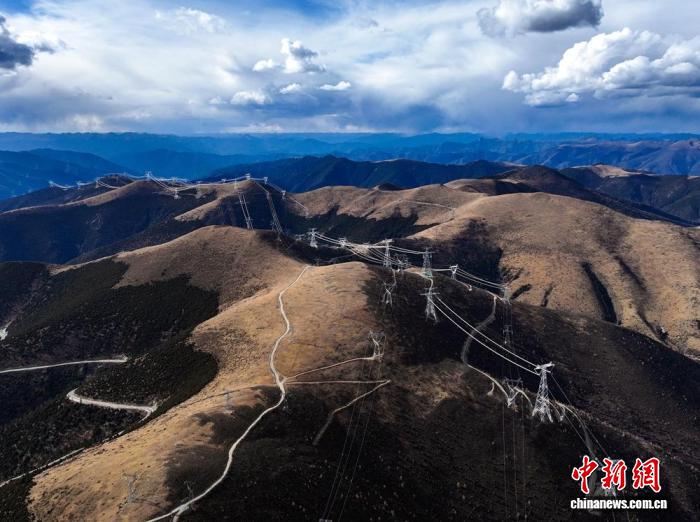
四川水电装机容量突破1亿千瓦 中新网成都12月19日电 (记者 刘忠俊)记者19日从国网四川省电力公司获悉,随着银江水电站220千伏渡 银线成功接入国家电网主网,四川省水电装机容量正式突破1亿千瓦,标志着四川清洁能源发展迈入新 阶段。 四川清洁能源实现大范围优化配置,为四川建设清洁能源强省、保障国家能源安全、助力实现碳达峰碳 中和目标作出积极贡献。 此外,国网四川省电力公司还畅通电网"毛细血管",强化精益运维,确保电能在终端落得下、用得 好。"十四五"以来,国网四川电力大力推进配电网建设运维,完成农网巩固提升工程5700余个、城市配 电网项目2400余个,配网可靠性持续提升。在电网运维中,广泛应用带电作业、机器人巡检、无人机飞 巡等技术手段;2024年,世界首套电网侧构网型静止无功发生器(SVG)设备在四川投入运行,大幅提升 了电力保供能力。 在国网攀枝花供电公司电力调度大厅,银江水电站机组并网的红色指示标识同步亮起。国网攀枝花供电 公司电力调控中心主任舒萍介绍,银江水电站年发电量可达16亿千瓦时,全部输送至负荷中心,相当于 攀枝花市全年居民用电量总和。 1亿千瓦的水电装机主要集中在川西高原,如何将其输送至负 ...

“对投资下滑,既要高度重视也要沉着冷静”
Sou Hu Cai Jing· 2025-12-19 06:14
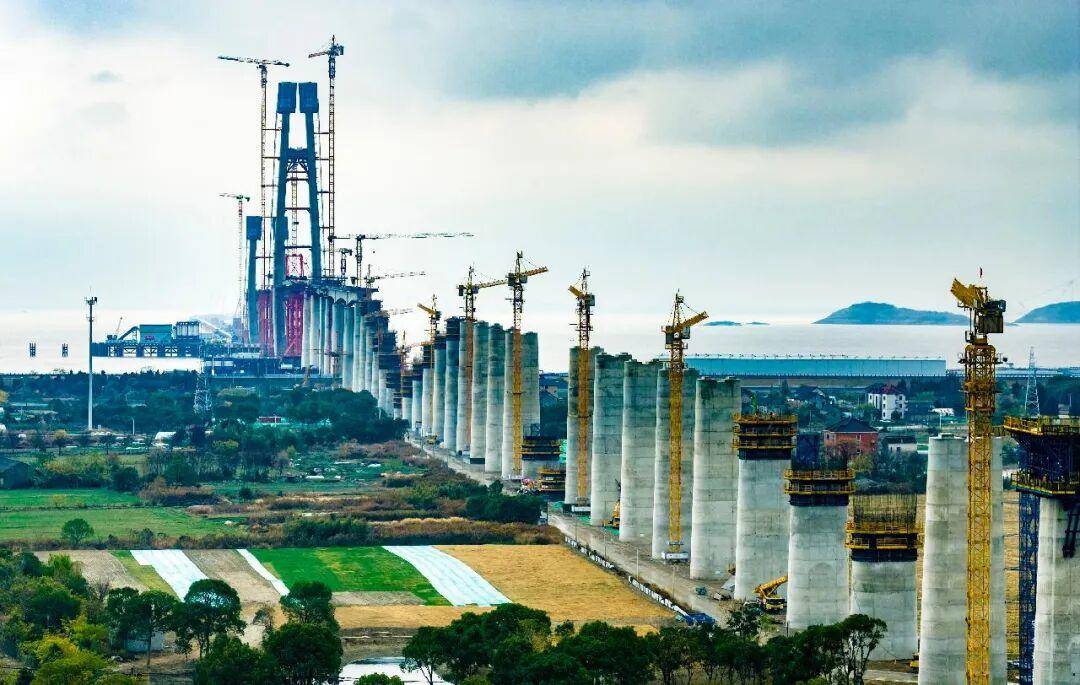
Core Viewpoint - China's fixed asset investment has experienced a significant decline, with a year-on-year decrease of 2.6% from January to November, and a month-on-month decline of 1.03% in November. This situation requires both serious attention and a calm perspective, as investment plays a crucial role in economic performance and reflects market expectations for the future [1][2]. Investment Trends - Excluding real estate development, project investment has shown a growth of 0.8%, indicating that the decline in investment is not uniform across all sectors. Notably, investments in information services have surged by 29.6%, while investments in railway, shipbuilding, aerospace, and other transportation equipment manufacturing have increased by 22.4%. The internet and related services sector has also seen a year-on-year growth of 20.7%, highlighting the robust development of new industries and technologies [2][4]. Real Estate Sector - Real estate development investment has dropped by 15.9% in the first eleven months, significantly dragging down overall investment growth. The shift in urban development from large-scale expansion to improving existing stock is evident, and the rapid growth in real estate is expected to undergo a deep adjustment. The central economic work conference has emphasized the need to stabilize the real estate market, with several economists suggesting a potential stabilization and recovery in the sector [4][5]. Future Investment Potential - Despite the current decline, there remains substantial potential for investment in China. For instance, the international data company predicts that China's intelligent computing power will continue to grow rapidly, potentially doubling by 2026 compared to 2024. Additionally, achieving carbon peak and neutrality by 2030 is projected to require investments exceeding 2% of GDP, creating significant investment demand. Compared to many high-income countries, China still has gaps in infrastructure capital stock and healthcare resources, which represent both current shortcomings and ongoing investment opportunities [5][6]. Policy Measures - The central economic work conference has outlined systematic measures to address current investment challenges. These include maintaining necessary fiscal deficits and total debt levels, promoting investment stabilization, optimizing project implementation, stimulating private investment, and enhancing regulations to support the private economy. These targeted actions aim to form a comprehensive strategy to stabilize investment [5][6].
2026年《中国能源报》火热征订中!
中国能源报· 2025-12-19 05:33
Core Viewpoint - The article emphasizes the role of China Energy News as a leading media platform in the energy sector, promoting high-quality development and supporting the carbon peak and carbon neutrality goals set by the government [1]. Group 1: Overview of China Energy News - China Energy News was established on June 1, 2009, and is the first mainstream economic newspaper in China covering the entire energy industry chain [1]. - The publication serves as an authoritative platform for interpreting important discussions by General Secretary Xi Jinping regarding energy work [1]. - It has become a media benchmark for the energy industry, showcasing high-quality development and fostering innovation in media integration [1]. Group 2: Audience and Partnerships - The readership of China Energy News spans the entire energy industry chain, making it a preferred industry publication for professionals in various sub-sectors [1]. - Many readers habitually save and collect issues of China Energy News, indicating its value and relevance in the industry [1]. - The publication has established strong partnerships with numerous government agencies, enterprises, and think tanks, enhancing its influence and reach [1]. Group 3: Collaboration and Brand Building - China Energy News aims to collaborate deeply with energy enterprises, leveraging its multi-dimensional media platform to support brand building and enhancement [1]. - The publication invites professional readers to join its efforts in promoting high-quality development in the energy sector and contributing to the realization of carbon neutrality goals [1].
生态环境部党组书记孙金龙在《人民日报》发表署名文章《建设美丽中国》
Ren Min Ri Bao· 2025-12-19 01:53
党的二十届四中全会通过的《中共中央关于制定国民经济和社会发展第十五个五年规划的建议》(以下 简称《建议》)明确提出,加快经济社会发展全面绿色转型,建设美丽中国。这是以习近平同志为核心 的党中央着眼人与自然和谐共生现代化建设全局作出的重大战略部署。我们要坚持以习近平新时代中国 特色社会主义思想为指导,深入贯彻习近平生态文明思想,准确把握新时代新征程美丽中国建设的重大 意义和目标任务,坚决抓好贯彻落实,加快推动建设美丽中国。 建设美丽中国(学习贯彻党的二十届四中全会精神) 生态环境部党组书记 孙金龙 充分认识建设美丽中国的重大意义 建设美丽中国是全面建设社会主义现代化国家的重要目标,是实现中华民族伟大复兴中国梦的重要内 容。当前,我国生态文明建设仍处于压力叠加、负重前行的关键期。要把美丽中国建设摆在强国建设、 民族复兴的突出位置,让我们的祖国天更蓝、山更绿、水更清、生态环境更优美。 (一)建设美丽中国是厚植中国式现代化绿色底色的必由之路。中国式现代化是人与自然和谐共生的现 代化,绿色发展是中国式现代化的鲜明底色。我国作为14亿多人口的发展中大国,要整体迈入现代化, 走西方以资本为中心、物质主义膨胀、先污染后治理的 ...
封关,对海南和全国意味着什么
Sou Hu Cai Jing· 2025-12-18 22:06
Core Insights - The official launch of the Hainan Free Trade Port on December 18, 2025, marks a significant event in China's high-level opening-up strategy, attracting national and global attention [1] - Hainan is positioned as a "testing ground" for international economic rules and a strategic hub for companies entering the Chinese market and expanding into Southeast Asia and Oceania [1] - The Hainan Free Trade Port aims to complement rather than replicate existing free trade ports like Hong Kong and Singapore, focusing on unique institutional innovations and differentiated positioning [1] Group 1: Economic Policies and Impact - The tax policies in Hainan are designed to lower enterprise financing costs and stimulate market vitality, featuring targeted incentives to reduce operational costs through zero tariffs and low tax rates [1] - The expansion of the Free Trade Account (FT Account) will facilitate cross-border financing for enterprises, aligning them with international interest rates and enhancing investment opportunities in the offshore RMB market [1][2] - Hainan's policies will encourage the development of green industries and technologies, supporting China's goals for carbon neutrality [2] Group 2: Industry Development and Upgrading - Hainan's processing and manufacturing sectors are expected to attract numerous enterprises due to favorable rules like "duty-free processing," leading to the formation of billion-level industry clusters [2] - The focus on high-tech industries such as biomedicine and digital economy will accelerate technological innovation and result transformation in Hainan [2] - The strategic location of Hainan will enable companies to establish global supply chain hubs, enhancing resilience and expanding market reach [2] Group 3: Long-term Global Impact - The implications of Hainan's closure extend beyond regional boundaries, positioning it as a key player in China's global economic participation and globalization efforts [3] - Continuous policy optimization and institutional improvements in Hainan are expected to unlock greater potential for economic development [3]

建设美丽中国(学习贯彻党的二十届四中全会精神)
Ren Min Ri Bao· 2025-12-18 21:52
Core Viewpoint - The 20th Central Committee's Fourth Plenary Session emphasizes accelerating the comprehensive green transformation of economic and social development to build a beautiful China, highlighting the importance of ecological civilization in modern governance [1]. Group 1: Significance of Building a Beautiful China - Building a beautiful China is a crucial goal for modernizing the socialist state and achieving the Chinese Dream of national rejuvenation [2]. - It is essential for establishing a green foundation for Chinese-style modernization, which emphasizes harmony between humans and nature [2]. - The construction of a beautiful China is necessary for achieving high-quality development, with green and low-carbon transitions being key components [3]. - It addresses the growing demand for a better quality of life among the populace, as a good ecological environment is seen as a fundamental public good [3]. - The initiative contributes to global efforts for a clean and beautiful world, showcasing China's commitment to international environmental governance [4]. Group 2: Progress in Building a Beautiful China - Since the 18th National Congress, significant strides have been made in ecological civilization, with historical changes in both theory and practice [5]. - Environmental quality has improved, with PM2.5 levels in major cities dropping by 56% over the past decade, and the proportion of good surface water quality increasing from 64.1% to 90.4% [5]. - The pace of green and low-carbon transitions has accelerated, with over 96% of coal-fired power units achieving ultra-low emissions [6]. - The quality of ecosystems has steadily improved, with over 30% of land area designated as ecological protection red lines [7]. - The reform of ecological civilization systems has shown significant results, establishing a comprehensive legal framework for environmental protection [8]. Group 3: New Major Progress in the 14th Five-Year Plan - The 14th Five-Year Plan outlines major goals for building a beautiful China, including the formation of green production and lifestyle patterns and achieving carbon peak targets [10]. - It emphasizes the need for strong leadership in ecological construction and the establishment of a clear responsibility system for environmental protection [11]. - Continuous efforts are required in pollution prevention and ecological system optimization, focusing on source governance and multi-pollutant control [12]. - The construction of a new energy system is prioritized, with an emphasis on increasing the share of renewable energy and improving energy efficiency [13]. - The plan aims to promote carbon peak achievements through systematic and coordinated actions across various sectors [14]. - A shift towards green production and lifestyle is encouraged, with initiatives to enhance resource management and promote circular economy practices [15].
混改助力,金融赋能金开新能推进多元化能源布局
Zheng Quan Shi Bao· 2025-12-18 18:13
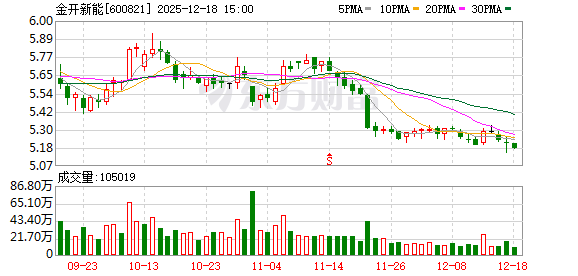
Group 1 - The core viewpoint of the article highlights the transformation of Jin Kai New Energy into a model of "central-local collaboration" in mixed ownership reform, focusing on clean power, low-carbon products, and digital synergy [2] - Since the completion of its restructuring in 2020, the company has divested its traditional retail assets and shifted towards investments, construction, and operation of renewable energy projects such as photovoltaics and wind power, which has led to significant financial recovery and growth [2] - During the 14th Five-Year Plan period, the company raised a total of 45.21 billion yuan through three rounds of targeted issuance and 30 billion yuan through seven phases of green medium-term notes [2] Group 2 - From 2021 to 2024, the company achieved an average return on equity of 10.15%, with total operating revenue reaching 14.77 billion yuan and total profit amounting to 4.13 billion yuan, reflecting compound annual growth rates of 24% and 31% respectively [3] - The company has prioritized shareholder returns through various methods, including share buybacks and cash dividends, with a total dividend payout of 1.11 billion yuan [3] - Looking ahead to the 15th Five-Year Plan, the company aims to align with national carbon neutrality goals and energy security strategies, while establishing a modern corporate governance structure and market-oriented operational mechanisms [3]

推动经济社会发展全面绿色转型——七论学习贯彻中央经济工作会议精神
Bei Jing Ri Bao Ke Hu Duan· 2025-12-18 14:39
推进碳达峰碳中和是我们对国际社会的庄严承诺,也是推动经济结构转型升级、形成绿色低碳产业竞争 优势,实现高质量发展的内在要求。要深入推进重点行业节能降碳改造,大力发展绿色低碳产业,使发 展建立在高效利用资源、严格保护生态环境、有效控制温室气体排放的基础上。要推动传统行业工艺、 技术、装备升级,实现绿色低碳转型。能源是经济社会运行的基础和动力,也是绿色转型和"双碳"工作 的主战场。要制定能源强国建设规划纲要,加快能源结构调整,深化能源体制机制改革,加快新型能源 体系建设,扩大绿电应用,抓好能源领域降碳。要加强全国碳排放权交易市场建设,推动建成更加有 效、更有活力、更具国际影响力的碳市场。 绿水青山就是金山银山。绿水青山和金山银山决不是对立的,要正确处理好生态环境保护和发展的关 系,让绿水青山充分发挥经济社会效益。高水平保护是高质量发展的重要支撑,生态优先、绿色低碳的 高质量发展只有依靠高水平保护才能实现。要实施固体废物综合治理行动,深入打好蓝天、碧水、净土 保卫战,强化新污染物治理,以高品质生态环境支撑高质量发展。要加大生态系统保护力度,深入推进 大规模国土绿化行动,扎实推进"三北"工程攻坚战,实施自然保护地整合 ...