能源安全战略

Search documents
欧洲户储市场跟踪调研
2026-03-26 13:20
Summary of Key Points from Conference Call Records Industry Overview - The European household storage market is shifting from economic arbitrage to energy security strategies, with an expected market growth rate exceeding 30% by 2026 [1] - Distributed energy storage is becoming a necessity due to grid vulnerabilities, negative electricity prices, and virtual power plant (VPP) scheduling [1] - The supply chain is predominantly led by Chinese companies, with a high market share in battery cells, where price and industry reputation are critical competitive factors [1] - Mature markets like the Netherlands are seeing increased demand for energy storage due to the cancellation of net metering subsidies, leading to significant growth in existing solar photovoltaic (PV) installations [1] - Emerging markets in Asia, Africa, and Latin America show substantial potential, driven by zero tariffs in Brazil and urgent needs in Pakistan and Africa [1] Core Insights and Arguments - The recent Middle East conflict has stimulated demand for household storage, similar to the effects of the Russia-Ukraine conflict, as geopolitical events raise energy prices and influence electricity costs [2] - Europe's energy transition from centralized to distributed generation is a long-term trend, with increasing renewable energy proportions leading to greater grid instability [2][3] - The core drivers for household storage have evolved from purely economic considerations to strategic energy security, emphasizing the need for resilience in the face of potential crises [3] - Government policies are crucial in promoting storage installations through subsidies, tax reductions, and low-interest loans, as seen in Australia [2][3] Market Dynamics and Predictions - The growth of the household storage market in Europe is expected to continue, driven by the need for energy independence and the transition to renewable energy sources [3][8] - The competitive landscape in the European household storage market is dominated by Chinese companies, with significant players including Huawei, BYD, and others, while local brands struggle to compete on price [9] - The market is currently cautious regarding inventory strategies due to past experiences with stockpiling during geopolitical tensions, leading to a more measured approach in response to the current Middle East conflict [7] Investment and Financial Considerations - The investment payback period for household storage systems typically ranges from 6 to 8 years, influenced by local electricity prices and household consumption levels [16] - Financial solutions, such as low-interest loans and subsidies, are key catalysts for increasing market penetration [1][5] Emerging Markets and Global Trends - Emerging markets in Asia, Africa, and Latin America are showing significant growth potential for household storage, with governments recognizing the importance of distributed energy storage [10][18] - Countries like Brazil are implementing favorable policies to encourage market development, while regions with unstable electricity supplies, such as parts of Africa, are expected to see explosive growth in storage needs [11][18] Additional Insights - The current European household storage systems typically have capacities between 5 to 10 kWh, with costs influenced by various factors including installation and equipment [14] - The demand for household storage is increasingly driven by existing solar PV users adding storage capabilities, particularly in markets like the Netherlands where net metering policies have changed [17] - The competitive edge in the market is shifting towards price and industry reputation, as product differentiation diminishes [12][13]
煤化工行业重大事项点评:油价中枢上涨,战略性看多煤化工板块
Huachuang Securities· 2026-03-20 06:04
Investment Rating - The report maintains a "Recommended" rating for the coal chemical industry, expecting the industry index to outperform the benchmark index by over 5% in the next 3-6 months [16]. Core Insights - The report highlights a strategic bullish outlook on the coal chemical sector due to rising oil prices, with Brent crude oil futures surpassing $104 per barrel and WTI crude oil futures exceeding $97 per barrel, indicating a significant increase in profitability for coal chemical products when oil prices rise above $80 per barrel [8]. - The report emphasizes the strategic value of coal in China's energy security, noting that coal consumption accounts for 51.4% of total energy consumption, with domestic coal production projected to reach 4.85 billion tons in 2025, a 1.4% increase year-on-year [8]. - The report identifies key products to focus on, including coal-to-olefins, coal-to-methanol, and PVC produced via the calcium carbide method, recommending specific companies such as Baofeng Energy, Satellite Chemical, and Hualu Hengsheng for investment [8]. Company Summaries - **Baofeng Energy (600989.SH)**: Expected EPS of 2.04 RMB in 2026, with a PE ratio of 16.02 and a strong buy rating [4]. - **Satellite Chemical (002648.SZ)**: Expected EPS of 2.10 RMB in 2026, with a PE ratio of 12.57 and a strong buy rating [4]. - **Hualu Hengsheng (600426.SH)**: Expected EPS of 1.96 RMB in 2026, with a PE ratio of 18.57 and a strong buy rating [4]. - **Yuntu Holdings (002539.SZ)**: Expected EPS of 1.13 RMB in 2026, with a PE ratio of 12.51 and a recommendation rating [4]. - **Guanghui Energy (600256.SH)**: Expected EPS of 0.35 RMB in 2026, with a PE ratio of 20.19 and a strong buy rating [4].


中国化学20260316
2026-03-17 02:07
Summary of China Chemical's Conference Call Company Overview - **Company**: China Chemical - **Industry**: Coal Chemical Industry - **Market Share**: 70% in coal chemical sector [2][3] Core Insights and Arguments - **Investment Cycle**: The coal chemical industry is entering a new investment expansion cycle due to energy security strategies and rising oil prices (>100 USD), which enhance the cost advantages of coal chemical processes [2][3] - **Profit Recovery**: The price of caprolactam has rebounded by 50% from its 2025 low to 12,400 RMB/ton, with a projected profit contribution of 800 million RMB from industrial operations in 2026 [2][4] - **Xinjiang Investment**: Xinjiang's coal chemical investment is projected to reach 900 billion RMB, with 700 billion RMB expected to be confirmed during the 14th Five-Year Plan, leading to an annual bidding peak of 100 billion RMB from 2026 to 2028 [2][9] - **Business Model**: The company has a superior business model compared to traditional infrastructure, with sufficient prepayments and no interest-bearing debt. The operating cash flow/net profit ratio from 2018 to 2024 is 1.33, indicating strong cash flow [2][5] - **Dividend Potential**: The current dividend rate is 20%, which has significant room for improvement compared to peers with rates above 50% [5] Financial Projections - **Profit Estimates**: Expected profits of 6.4 billion RMB in 2025 and 7.3 billion RMB in 2026, with a target market value of approximately 80 billion RMB [6] - **Valuation Metrics**: Current price-to-book (PB) ratio is 0.95, indicating it is at a historical low and below comparable companies [7] Industry Dynamics - **Driving Factors**: The coal chemical industry is driven by energy security needs and improved economic viability, with a significant increase in investment expected [8] - **Market Share in Xinjiang**: China Chemical is expected to capture 60% of the EPC market share in Xinjiang, translating to approximately 250 billion RMB in orders during the 14th Five-Year Plan [10] Competitive Landscape - **Other Beneficiaries**: Other notable companies in the coal chemical sector include Donghua Technology and 3D Chemical, which are also positioned to benefit from rising chemical prices and the overall industry boom [11] Additional Insights - **Resource Advantages**: Xinjiang has significant coal reserves (22 trillion tons, 40% of national total) and lower extraction costs, enhancing its attractiveness for coal chemical projects [8][9] - **Project Phasing**: The 900 billion RMB investment plan in Xinjiang is categorized into three tiers based on certainty, with the first tier (4 billion RMB) being highly certain and expected to be operational during the 14th Five-Year Plan [9]

电力设备行业点评报告:“十五五”规划纲要解读-“未来能源”锚定新能源行业发展趋势
Zhong Guo Yin He Zheng Quan· 2026-03-14 08:24
Investment Rating - The report maintains a "Recommended" rating for the electric power equipment industry [3]. Core Insights - The "14th Five-Year Plan" emphasizes the development of future energy sectors, including hydrogen and nuclear fusion, marking a significant policy direction for sustainable energy [1]. - The report highlights the rapid growth potential of xBC technology and perovskite-silicon tandem solar cells, with the latter achieving a certified efficiency of 34.85% [2]. - China's nuclear power capacity is projected to reach approximately 70 million kilowatts by 2025 and 150 million kilowatts by 2035, with a compound annual growth rate (CAGR) of 13% from 2025 to 2035 [5]. - The hydrogen energy industry in China is expected to produce over 37 million tons by 2025, with green hydrogen capacity exceeding 250,000 tons per year [5]. - The domestic photovoltaic (PV) market is anticipated to add 315.1 GW of new capacity by 2025, reflecting a year-on-year growth of 14% [5]. Summary by Sections Future Energy Development - The report identifies future energy as a sustainable energy strategy distinct from traditional fossil fuels, focusing on nuclear energy, hydrogen, and biomass [1]. - The implementation of a comprehensive future energy system is emphasized, including the development of new solar cells and energy storage technologies [1]. Nuclear Energy - China leads in global nuclear power construction, with 74 reactors under construction and a net installed capacity of 76.4 GWe as of December 2025 [5]. - The approval rate for new nuclear units remains high, with 11 new units approved in 2024 and 10 in 2025 [5]. Hydrogen Energy - The report notes that the hydrogen sector is becoming increasingly significant in high-energy-consuming industries, supporting industrial decarbonization [5]. - The demand for electrolyzers is projected to grow significantly, with a 155.6% year-on-year increase in bidding volume expected by 2025 [5]. Photovoltaic Industry - The report anticipates a stable high demand for the photovoltaic industry, driven by favorable policies and market conditions [5]. - The average annual new installed capacity for PV during the "14th Five-Year Plan" is projected to be between 238 GW and 287 GW [5].
能源安全战略框架下的确定性环节及标的推荐
2026-03-06 02:02
Summary of Key Points from Conference Call Records Industry and Company Involvement - **Industry**: Renewable Energy, Distributed Energy, Green Hydrogen, and Power Equipment - **Companies Mentioned**: Four-way Co., Oriental Cable, Goldwind Technology, Deleja, Huadian Technology, and others Core Insights and Arguments 1. **Distributed Energy Demand**: Geopolitical conflicts have intensified the demand for distributed energy, particularly in Europe, where household storage is expected to see a resurgence similar to the high demand during the 2022 crisis. The capacity for 100Ah battery cells is currently insufficient for the first half of 2025 [1][2] 2. **Green Hydrogen Economics**: Rising oil prices enhance the economic viability of green hydrogen, with green methanol costs estimated between 2,700-4,000 RMB/ton, making it a strategic alternative to traditional fuels priced at around 4,000 RMB/ton [1][8] 3. **Infrastructure Shift**: The construction of computing infrastructure is returning to domestic markets, driving demand for integrated green electricity and computing solutions, with Four-way Co. having over five years of experience in solid-state transformer (SST) technology [1][11] 4. **Market Valuation**: Oriental Cable is projected to have a dynamic PE of approximately 20 times by 2026, significantly lower than the 30-50 times average in the grid sector, indicating a high safety margin [1][13] 5. **Wind Power Market Dynamics**: The wind power gearbox market is characterized by a duopoly between Deleja and China High-Speed Transmission, with Deleja expected to achieve over 30% growth through overseas brand certifications [1][15] 6. **Green Fuel Acceleration**: Goldwind Technology plans to gradually produce green methanol from 2025 to 2027, while Huadian Technology has secured nearly 1 billion RMB in equipment orders, establishing a leading position in the market [1][9] Additional Important Insights 1. **Short-term Demand Surge**: The short-term impact of rising natural gas prices in Europe has led to a significant increase in demand for distributed energy equipment, particularly household storage and solar storage systems [2][4] 2. **Long-term Renewable Energy Growth**: The long-term outlook suggests a shift from fossil fuels to renewable energy sources, with a focus on green fuels and space photovoltaic applications [2][3] 3. **Financial Performance Risks**: Companies with exposure to the Middle East may face delivery disruptions in 2026, but long-term demand for renewable energy is expected to drive growth [5][6] 4. **Investment Recommendations**: Key recommended stocks include Four-way Co., Oriental Cable, Keli Co., and Deleja, with a focus on their performance in 2026 [1][17] 5. **Green Methanol Production**: Goldwind Technology's green methanol projects are set to produce significant volumes by 2027, with additional projects planned in the Inner Mongolia region [9][12] This summary encapsulates the critical insights and projections from the conference call, highlighting the evolving landscape of the renewable energy sector and the strategic positioning of key companies within it.


未知机构:能源的饭碗端在自己手里远比油价短期涨跌更重要1即便不考虑本-20260304
未知机构· 2026-03-04 02:45
Summary of Conference Call Notes Industry Overview - The focus is on the coal industry, particularly in the context of China's energy security and supply dynamics [1][2]. Key Points and Arguments 1. **Coal Inventory and Price Trends**: Since January, coal inventories at ports have decreased more than expected, leading to a significant rise in coal prices post-holiday, confirming the domestic supply contraction logic emphasized since September of the previous year [1][2]. 2. **Indonesian Coal Production Cuts**: Although the exact reduction in Indonesian coal production is not finalized, a substantial cut is clearly indicated. The intention is to convert coal resource advantages into cost advantages for high-energy-consuming industries, with a definitive policy to reduce exports [2]. 3. **Future Coal Imports and Pricing**: It is anticipated that coal imports to China will significantly decline after April, with the domestic supply-demand structure expected to revert to 2023 levels. The price of coal is likely to stabilize in the range of 800–1000 RMB per ton [2]. 4. **Impact of Global Oil Prices**: The unpredictability of the end of the conflict and the extent of oil price increases is acknowledged. However, it is clear that rising oil prices will drive up the prices of methanol and other chemical products. China is uniquely positioned with coal chemical alternatives. Following the rise of oil prices above $70 per barrel before the Spring Festival, coal chemical operating rates have increased against the trend [2]. 5. **Energy Security Strategy**: The ongoing conflict will further reinforce China's domestic energy security strategy, elevating the strategic historical status of coal [3]. Additional Important Insights - The emphasis on energy independence is highlighted, with a clear directive that "the energy bowl must be held in our own hands," indicating a shift in policy to prioritize domestic energy production and security [2]. - The acceleration of approvals for coal chemical projects has been noted, with growth rates exceeding 10% over the past three years [2].
预感到什么?俄罗斯伊朗大打价格战,大批低价石油加紧运往中国
Sou Hu Cai Jing· 2026-02-28 04:16
Group 1 - In February, India's crude oil imports from Russia decreased by over 40% compared to January, with daily imports dropping to only 600,000 barrels [1] - The reduction in Russian oil imports by India has led to a reallocation of this crude oil to the Chinese market, intensifying price competition with Iranian oil [1] - Russian Ural crude is currently priced at a discount of $12 per barrel compared to Brent crude in Chinese ports, with this discount narrowing by $2 since January [1] Group 2 - The accumulation of Russian oil in floating storage and tankers waiting for buyers in the Yellow Sea is a rare occurrence, indicating a mismatch between Russian Ural crude and Chinese refinery needs [3] - Chinese refineries prefer ESPO crude from Russia's Far East due to its lower sulfur content and shorter transportation time, making Ural crude less attractive without significant discounts [3] Group 3 - Iran's economic situation is dire due to long-term sanctions, with rising inflation and currency devaluation, making it increasingly reliant on China as a buyer of its oil [5] - The price war for oil has become a matter of survival for Iran, as the number of buyers willing to purchase Iranian oil without fearing U.S. pressure has dwindled [5] Group 4 - China's oil consumption is projected to reach 762 million tons by 2025, reflecting a 1.1% increase from the previous year, driven by strong demand across various sectors [7] - China's strategy of diversifying its energy imports aims to mitigate geopolitical risks and ensure a stable energy supply, moving beyond reliance on traditional suppliers [7] - By maintaining large-scale oil imports, China supports international oil prices and establishes itself as a reliable long-term customer, enhancing its standing in the global energy market [7]


中加敲定重磅合同,特朗普对华能源围堵落空,卡尼直接瓦解其布局
Sou Hu Cai Jing· 2026-02-24 13:45
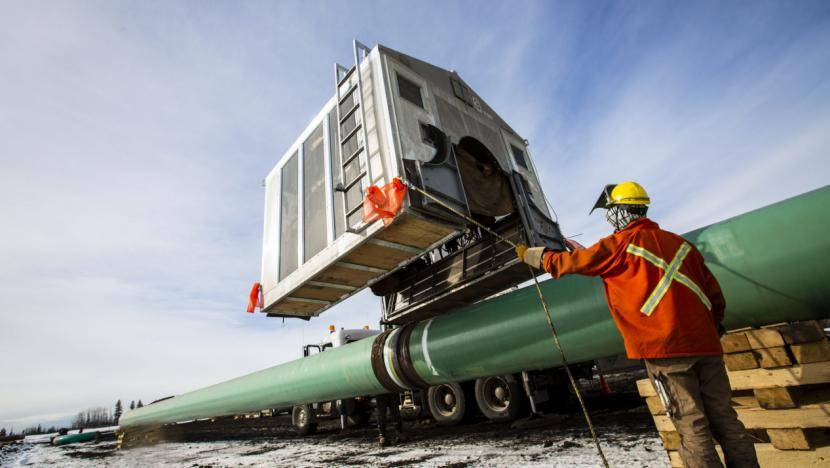
Group 1 - Canadian Prime Minister Carney's visit to China has resulted in significant outcomes, enhancing Canada-China economic cooperation and sending a positive signal to other Western countries [1] - The first "China-Canada Economic and Trade Cooperation Roadmap" outlines eight key areas and twenty-eight cooperation measures, addressing trade issues concerning electric vehicles and agricultural products [1] - Canada will provide China with an annual quota of 49,000 electric vehicles and grant most-favored-nation tariff treatment, while China will adjust anti-dumping measures on canola seeds, achieving mutual benefits [1] Group 2 - The energy cooperation between China and Canada has garnered significant attention, as China is the world's largest energy consumer and importer, while Canada is the fourth-largest oil producer [4] - Canada's energy exports have long relied on the U.S. market, but the need for diversification has become more pressing due to geopolitical tensions, particularly with the U.S. imposing tariffs on Canadian energy products [4][5] - The expansion of the Trans Mountain pipeline, set to be completed by 2025, will enable Canada to export oil directly to Asia, with initial exports to China and India projected to increase significantly [5] Group 3 - The cooperation between China and Canada in the energy sector aligns with China's energy security strategy, providing a counterbalance to U.S. efforts to control global oil pricing and exert geopolitical influence [5] - Disrupting Canada-China cooperation would be costly for the U.S., as Canada is a key ally, and undermining this relationship could lead to dissatisfaction among allies [6] - Canada is leveraging its cooperation with China to gain more negotiating power with the U.S., moving away from a previously passive stance under tariff threats [6]
中国已经发出禁令,委内瑞拉石油不能靠岸,特朗普这才察觉不对劲
Sou Hu Cai Jing· 2026-02-04 13:53
Core Viewpoint - The article discusses the shift in the energy dynamics between the U.S. and China regarding Venezuelan oil, highlighting China's strategic decision to halt purchases in response to U.S. attempts to impose new trading rules, which China views as a violation of sovereign agreements [1][3][5]. Group 1: U.S. Actions and Responses - The U.S. introduced a new "export license" system requiring buyers to settle through designated accounts and accept a new price of $45 per barrel, nearly 50% higher than the original price [3]. - Trump's sudden shift in tone, inviting China to continue purchasing Venezuelan oil and suggesting price negotiations, indicates U.S. anxiety over unsold oil and rising inventory levels [5][7]. - The U.S. strategy of leveraging resource control to compel China back to negotiations has failed, as China is no longer reliant on a single oil source [7]. Group 2: China's Strategic Position - China's decision to suspend all related transactions is a calculated response to reject U.S. imposed rules, emphasizing that it will not engage in a framework that undermines its energy security [5][9]. - As of 2025, Venezuela's share in China's crude oil imports has decreased to 2.3%, with China diversifying its sources from countries like Russia, Saudi Arabia, and Iraq [9][11]. - The penetration of electric vehicles in China has surpassed 53%, leading to a decline in fuel vehicle sales and a shift in domestic oil demand [11]. Group 3: Implications for Global Energy Dynamics - The article suggests that the global energy landscape is shifting, with the true power now lying with those who accept the rules rather than those who control resources [17]. - China's ability to bypass the U.S. dollar system through alternative payment channels, such as the CIPS, demonstrates its strategic independence in energy trade [11][15]. - The situation illustrates that if major buyers like China withdraw, the new trading rules proposed by the U.S. become ineffective, leaving resources stranded [17].

中美是战是和?中国高层明确表态,美媒:中国已3个月没买美国油。美国这下彻底急了
Sou Hu Cai Jing· 2026-01-26 13:12
Core Viewpoint - China has stopped importing American crude oil for three consecutive months, significantly impacting the U.S. energy suppliers and reflecting a long-term energy security strategy by China [1][2]. Group 1: Energy Import Dynamics - China’s crude oil imports from the U.S. accounted for only 1.7% of its total imports in 2024, making the U.S. the 11th largest supplier to China [1]. - China has established stable long-term cooperation with countries like Russia, Saudi Arabia, and Iran, creating a more secure energy supply network [1]. - The import volume from Canada is projected to reach 7.3 million barrels per month by March 2026, forming a new supply corridor [2]. Group 2: Economic Considerations - The decision to stop importing U.S. crude oil is a rational market choice, as the breakeven cost for U.S. shale oil is between $60-$62 per barrel, while Middle Eastern oil extraction costs only $19.68 per barrel [2]. - Transportation costs further diminish the competitiveness of U.S. crude oil, with shipping costs from the Gulf of Mexico to China being approximately 40% higher than from the Persian Gulf [2]. - The use of the renminbi for oil purchases from Russia, Saudi Arabia, and Iran enhances convenience and security compared to dollar transactions [2]. Group 3: Geopolitical Implications - The reduction in U.S. crude oil imports by China is expected to severely impact the U.S. shale oil industry, leading to oversupply and increased inventory levels, which in turn pressures prices downward [3]. - China's actions contribute to the de-dollarization trend in global oil trade, as countries like Russia and Iran are also reducing their reliance on the U.S. dollar [3]. - The shift in energy trade dynamics is accelerating the multipolarization of the global energy landscape, with Canada becoming a significant new supplier for China [3]. Group 4: Historical Context and Strategic Insights - Historical experiences, such as the 1973 oil crisis, highlight the importance of energy autonomy and diversification, which China is actively pursuing [4]. - The transition from resource control to technology leadership in energy is becoming a key factor in great power competition, with China's advancements in renewable energy potentially shaping future global energy orders [4][5].