
去中心化金融

Search documents
沈建光:厘清稳定币的四重属性
Di Yi Cai Jing· 2025-07-13 11:40
Core Insights - Stablecoins are a composite of crypto assets, central bank digital currencies (CBDCs), third-party payments, and money market funds, leveraging blockchain and distributed ledger technologies for decentralized transactions [1][3] - The discussion around stablecoins has intensified, with various opinions on their nature and implications, highlighting the need for clarity on their development and regulatory frameworks [2][3] Group 1: Technical Architecture and Operational Model - Stablecoins are issued on public blockchains to ensure decentralization and anonymity, with USDT as a primary example, utilizing multiple blockchain platforms [4] - The operational model of stablecoins involves a centralized issuance process where users deposit fiat currency to receive stablecoins, which can then be freely traded [5] - The stability of stablecoins relies on strict management of reserve funds, which are audited and publicly reported to maintain value stability [6][7] Group 2: Comparison with Crypto Assets - Both stablecoins and crypto assets are based on blockchain technology, but stablecoins are designed to maintain a stable value, primarily serving as payment tools rather than investment products [8][10] - The issuance and management of stablecoins are centralized, contrasting with the decentralized nature of native crypto assets like Bitcoin and Ethereum [9] Group 3: Comparison with CBDCs - Stablecoins and CBDCs both represent the tokenization of fiat currency, but stablecoins require 100% reserve backing and do not create new money, unlike CBDCs which can involve monetary creation [11][12] - The underlying technologies differ, with CBDCs often relying on centralized systems while stablecoins utilize decentralized blockchain technology for transactions [13] Group 4: Comparison with Third-Party Payments - Stablecoins and third-party payment systems like WeChat Pay serve similar payment functions, both pegged to fiat currency, but stablecoins operate on decentralized networks [16][18] - The investment scope of reserve funds for stablecoins is broader than that of third-party payment systems, which are limited to central bank deposits [18] Group 5: Comparison with Money Market Funds - Both stablecoins and money market funds aim to maintain value stability through limited investment scopes, primarily in high-quality, liquid financial assets [20] - The revenue-sharing mechanisms differ, with stablecoin issuers retaining investment income while money market fund investors bear the risks and rewards [22] Group 6: Market Growth and Future Outlook - The market size of stablecoins has rapidly increased from $125 billion in mid-2023 to over $260 billion, with projections suggesting it could reach $3.7 trillion by 2030 [23] - The evolving regulatory frameworks across various countries are expected to enhance the stability and acceptance of stablecoins in the global financial system [23]
美股最新消息:纳指标普再创历史新高,XBIT平台重塑投资生态
Sou Hu Cai Jing· 2025-07-13 06:24
Group 1: Market Performance - The US stock market continues to show strong momentum, with major indices reaching new historical highs, including the Nasdaq and S&P 500 [1] - On July 11, the Nasdaq index rose by 0.09%, the S&P 500 increased by 0.27%, and the Dow Jones Industrial Average climbed by 0.43% [1] - Tesla rebounded strongly by 4.7%, while Netflix saw a decline of over 2% [1] Group 2: Digital Asset Sector - Digital asset-related stocks performed notably well, with Coinbase rising over 4% [1] - The XBIT.Exchange decentralized trading platform offers a revolutionary trading experience, allowing users to trade without providing personal information, aligning with the core principles of decentralized finance [1][3] - XBIT's asset self-management mechanism provides top-tier security, ensuring users independently hold their private keys and control their digital assets [3] Group 3: Regulatory Developments - A proposed tax law by Senator Cynthia Lummis aims to establish a $5,000 annual tax exemption for digital asset transactions and eliminate the current double taxation system [5] - This policy change signifies a shift towards a more open and pragmatic regulatory stance from the US government regarding the digital asset industry [5] - The evolving regulatory environment is expected to accelerate the compliance process for digital assets in the US [5] Group 4: Future Outlook - As regulatory frameworks improve and technology applications deepen, decentralized trading platforms are anticipated to play a more significant strategic role in the global financial landscape [6] - The current investment environment presents unprecedented opportunities for market participants, combining robust growth in traditional markets with the rapid adoption of blockchain technology [5][6]

加密货币获5000美元免税额,XBIT平台迎政策利好
Sou Hu Cai Jing· 2025-07-12 14:50
Group 1 - The U.S. government is making significant progress in cryptocurrency tax policy, aiming for fairer tax treatment for the industry, which presents new development opportunities for decentralized trading platforms [1][3] - Senator Cynthia Lummis has introduced a new cryptocurrency tax proposal that eliminates the unfair double taxation system on digital assets, creating a more equitable competitive environment for the industry [1][3] - The proposal includes a $5,000 annual tax exemption threshold, allowing users to enjoy small tax-free benefits when using cryptocurrencies for everyday payments [3] Group 2 - Bitcoin has recently surpassed $118,000, marking a 4.17% increase within 24 hours, reflecting strong market confidence in the long-term value of cryptocurrencies amid a friendlier U.S. policy environment [4] - The surge in Bitcoin's price has led to a significant increase in trading volume on decentralized platforms like XBIT, with users focusing on mainstream digital assets with long-term investment potential [4] Group 3 - U.S. tariff revenue has exceeded $100 billion for the first time, with June's revenue reaching $27 billion, a 301% year-on-year increase, providing more fiscal resources to support emerging industries, including cryptocurrency [6] - The improved fiscal situation of the U.S. government is expected to bolster regulatory reforms in the cryptocurrency sector, aiding in the establishment of a more comprehensive digital asset regulatory framework [6] Group 4 - The XBIT decentralized trading platform highlights its advantages, including no KYC requirements and user-controlled private keys, ensuring asset security and control for users [8] - XBIT operates on a decentralized, trustless trading mechanism through smart contracts, significantly reducing transaction costs and offering near-free trading experiences [8] - The platform's anonymity features protect user privacy, making it well-suited to adapt to changing regulatory environments in the U.S. cryptocurrency landscape [8]

政策支持推动加密市场,比特币突破116,000美元新高
Sou Hu Cai Jing· 2025-07-11 09:27
Group 1 - Bitcoin surged to a historic high, surpassing $116,000, while Ethereum broke above $2,900, driven by improved global risk sentiment and accelerated institutional inflows into the crypto market [1] - The rebound in the cryptocurrency market is significantly supported by the Trump administration's public backing of digital assets, including plans to establish a strategic Bitcoin reserve to enhance the U.S.'s long-term competitiveness in decentralized finance [2] - The total market capitalization of cryptocurrencies has approached $3.45 trillion, with 97 out of the top 100 cryptocurrencies experiencing price increases [4] Group 2 - The upcoming U.S. Senate review of new digital asset legislation could profoundly impact the regulatory environment, focusing on crypto tax guidelines, custody rules, and the structure of spot Bitcoin ETFs, potentially opening greater space for institutional investment [5] - Bitcoin's price movements remain highly correlated with major U.S. stock indices, with a correlation coefficient of approximately 0.87, indicating that macroeconomic factors will continue to significantly influence the performance of the crypto market [5] - From a technical perspective, Bitcoin has broken through its previous historical high of $112,000, confirming bullish momentum and paving the way for a potential rise towards the psychological level of $125,000 [7][9] Group 3 - Ethereum is also showing strong upward momentum, currently trading above $2,800, which was a key resistance level, and if it maintains this level, it is expected to rise further in the short term [12] - The technical outlook for both Bitcoin and Ethereum remains broadly positive, supported by growing institutional demand and a favorable risk environment [12]
防范披着“稳定币”马甲的骗局
Jing Ji Ri Bao· 2025-07-10 22:23
Core Viewpoint - The rise of stablecoins has led to an increase in illegal fundraising activities, with fraudulent entities exploiting public ignorance about stablecoins to attract investments through misleading claims and scams [1][2]. Group 1: Characteristics of Illegal Fundraising - Lack of qualifications: Entities involved in illegal fundraising do not have the necessary approvals or registrations from the State Council's financial management departments [2]. - Conceptual packaging: Fraudsters use terms like "stablecoin," "decentralized finance," and "Web 3.0" to create confusion and mislead investors [2]. - False promises: These entities often make exaggerated claims of guaranteed returns, high fixed income, and capital protection to lure investors [2]. - Fund pool operation: The operational model relies on attracting new investors to pay returns to earlier investors, creating a risk of significant losses if the funding chain breaks [2]. Group 2: Regulatory and Preventive Measures - Continuous monitoring: Authorities need to strengthen dynamic supervision of illegal fundraising and fraud activities, providing early warnings [2]. - Administrative enforcement: There is a need to explore administrative enforcement models to eliminate illegal fundraising at an early stage [2]. - Criminal prosecution: Regulatory bodies should enhance the connection between financial regulation and criminal prosecution, ensuring timely legal action against suspected criminal activities [2]. Group 3: Investor Awareness - Caution against false advertising: Investors should be wary of high-return promises and remember that high returns are often associated with high risks [3]. - Verification of legitimacy: It is crucial for investors to verify the legal qualifications of institutions and products through official channels before investing [3]. - Reporting illegal activities: Investors are encouraged to report any illegal fundraising activities related to stablecoins to law enforcement to protect their assets [3].
比特币升破11.2万美元,刷新历史新高!超10万人爆仓
Sou Hu Cai Jing· 2025-07-10 01:40
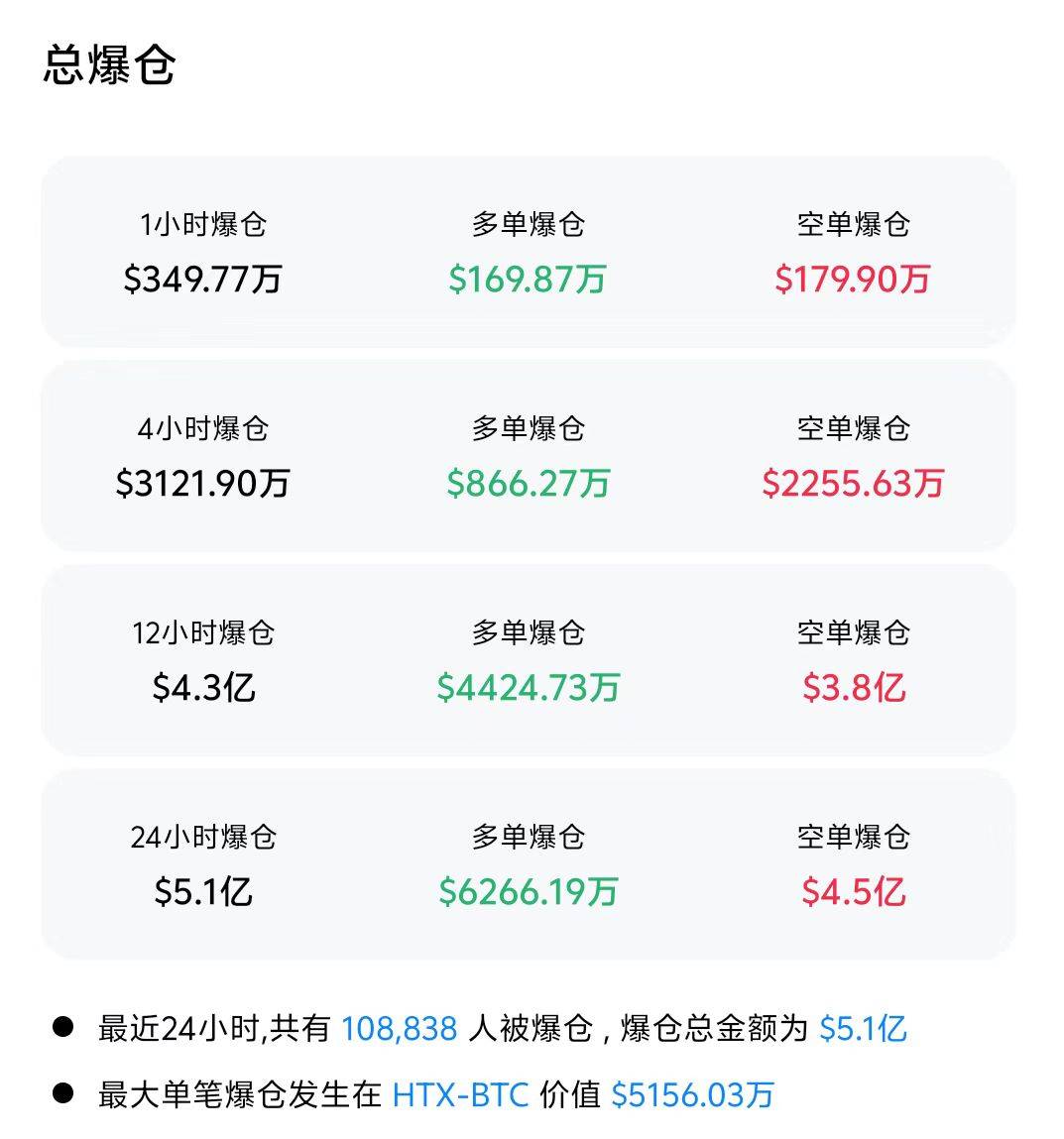
Group 1 - Bitcoin reached an all-time high of $112,000, with a maximum intraday increase of 3% and a year-to-date increase of approximately 19% [1] - In the last 24 hours, 108,800 traders were liquidated, resulting in a total liquidation amount of $510 million [1] - The liquidation data shows that in the last 24 hours, long positions accounted for $626.6 million and short positions for $450 million [2] Group 2 - The new chair of the U.S. SEC, Paul Atkins, is expected to introduce a new regulatory framework for crypto assets by July-August, aiming to balance financial innovation with investor protection [3] - The narrative around Bitcoin has shifted from being seen as a digital currency to being viewed as a reserve asset or "digital gold" [3] - The recovery in Bitcoin prices is anticipated to benefit the Bitcoin mining industry chain, as noted by Guosheng Securities [3] Group 3 - The BTC price movements are closely aligned with the global M2 money supply growth, indicating that BTC prices tend to rise during M2 expansion periods [4] - Short-term liquidity drops during M2 expansion cycles may affect BTC prices temporarily, but the long-term upward trend remains intact [4]
21Shares Responds to FCA Consultation on Retail Access to Crypto ETNs, Warns Against Overly Restrictive Framework
Globenewswire· 2025-07-08 12:30
Core Viewpoint - 21Shares supports the FCA's proposal to lift the ban on cETNs for retail clients but calls for a more inclusive and innovation-friendly regulatory framework that aligns with international best practices [2][6]. Group 1: Regulatory Concerns - The proposed framework is seen as overly restrictive, limiting retail access to cETNs only listed on UK RIEs and ignoring equivalent products on overseas regulated venues [6]. - There is a concentration risk as the framework may centralize power with the London Stock Exchange, which currently only admits Bitcoin and Ethereum, potentially pushing retail investors towards unregulated alternatives [6]. - 21Shares argues against classifying cETNs as Restricted Mass Market Investments (RMMIs), as they already meet robust listing and disclosure standards, and such classification could reduce liquidity and hamper innovation [6]. Group 2: Recommendations - 21Shares recommends recognizing regulated cETNs from overseas exchanges to enhance investor choice [6]. - The company advocates for a transparent eligibility framework for a broader range of cryptoassets to be used as underlyings for cETNs [6]. - It is suggested that cETNs should be treated as Readily Realisable Securities (RRS) rather than RMMIs to promote better market conditions [6]. Group 3: Company Background - 21Shares is a leading provider of cryptocurrency exchange-traded products, offering the largest suite of crypto ETPs in the market [4]. - The company aims to bridge the gap between traditional finance and decentralized finance, having launched the world's first physically-backed crypto ETP in 2018 [4]. - Backed by a specialized research team and deep capital markets expertise, 21Shares focuses on delivering innovative and cost-efficient investment solutions [4].

赵鹞:稳定币热潮下的新思考
3 6 Ke· 2025-07-01 12:08
Core Insights - The article discusses the rapid expansion of stablecoins globally, particularly USDT and USDC, and raises the question of whether China should develop its own stablecoin amidst the global digital currency wave [2][3] - The People's Bank of China emphasizes the need for stablecoins to reshape traditional payment systems and the challenges they pose to financial regulation [2][3] Market Overview - The global stablecoin market has grown from under $5 billion in early 2020 to approximately $250 billion, with dollar-pegged stablecoins making up 99% of this market [3] - USDT accounts for about 70% of the dollar stablecoin market, followed by USDC, indicating a high concentration in the stablecoin market compared to traditional finance [3] Opportunities - Stablecoins offer significant advantages in cross-border payment efficiency, enabling instant settlements and reducing transaction times [3][4] - The cost of cross-border transactions using stablecoins can be over 90% lower than traditional financial systems, primarily due to the elimination of various regulatory and operational costs [4] Challenges - The widespread use of stablecoins may challenge monetary policy transmission mechanisms and increase financial stability risks, particularly if issuers mismanage reserves [5] - The dominance of dollar-pegged stablecoins raises concerns about "dollarization" and its potential impact on emerging market economies [5] Issuance Models - Stablecoin issuance can be categorized into three models: privately issued stablecoins (e.g., USDT, USDC), bank deposit tokens (e.g., JP.M Coin), and a "wholesale-retail" dual-layer system supported by central bank digital currencies (CBDCs) [6][7] - The "wholesale-retail" model allows for regulatory oversight and maintains the integrity of the existing financial system while providing a framework for stablecoin issuance [7][8] Regulatory Considerations - The article suggests that China should carefully evaluate the implications of issuing a stablecoin, considering its unique financial system and the need for effective regulation [10][12] - The potential for offshore RMB stablecoins is highlighted, with caution advised regarding interest rate differentials that could lead to arbitrage risks [12] Global Context - The article notes that the focus on retail cross-border payments may overlook the importance of wholesale payments, which are crucial for the international monetary system [13] - The "wholesale-retail" dual-layer system is presented as a comprehensive approach to reforming the global cross-border payment system, balancing the needs of both wholesale and retail transactions [13]

加密市场冰火两重天!比特币狂飙 山寨币退潮
智通财经网· 2025-06-30 06:51
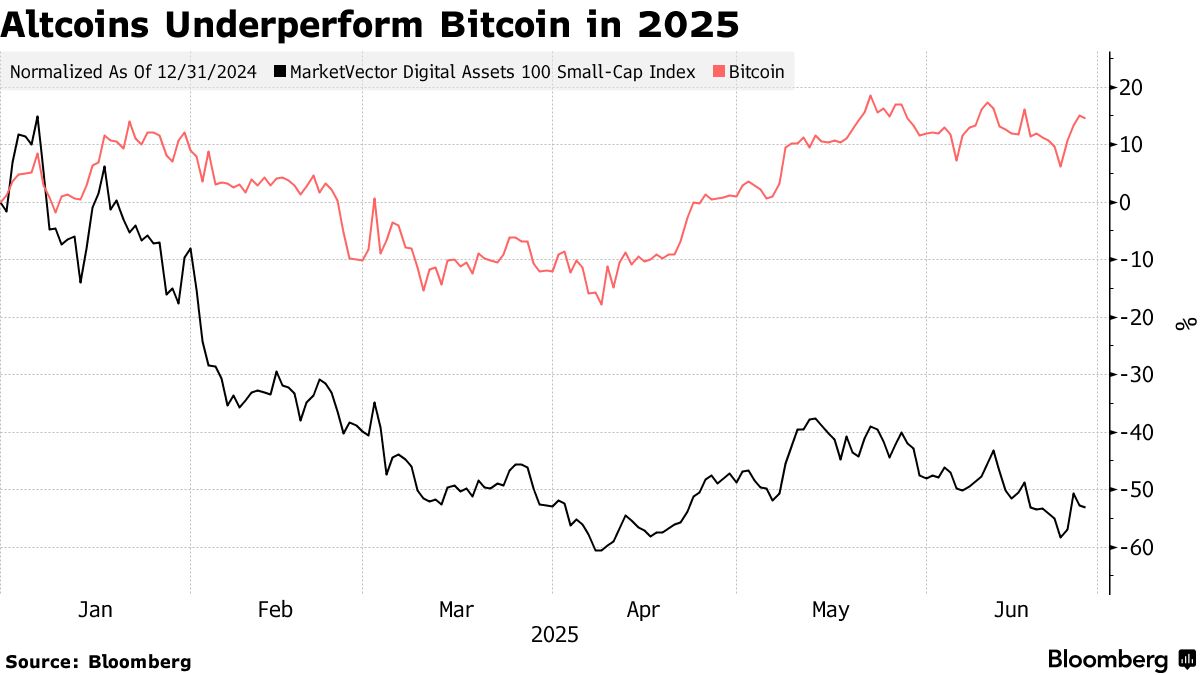
Core Viewpoint - The cryptocurrency market is experiencing a significant shift, with Bitcoin dominating and altcoins facing severe declines, leading to a potential "extinction" of many lesser-known tokens [1][6][9] Market Dynamics - Bitcoin's market share has increased by 9 percentage points this year, reaching 64%, the highest since January 2021 [3] - The MarketVector index tracking the lower half of the top 100 digital assets has dropped approximately 50% since the beginning of 2025 [3] - Over $300 billion in market capitalization has evaporated from altcoins, indicating a broader market downturn [1] Institutional Involvement - Major institutions are increasingly focusing on Bitcoin, with significant investments being made, including a $4 billion fund associated with Tether and SoftBank [8] - The Trump family has also entered the Bitcoin space, raising $2.3 billion for Bitcoin reserves through their media technology group [8] Regulatory Environment - The cryptocurrency industry is moving towards a more regulated and institutionally-led market, with stablecoins emerging as the only tokens likely to fulfill payment functions due to reduced price volatility [7] - The potential approval of ETFs backed by tokens like Solana could lead to broader adoption, driven by optimistic regulatory expectations [8] Altcoin Performance - Some altcoins linked to active DeFi protocols, such as Maker and Hyperliquid, have shown significant gains this year [8] - However, many altcoins are struggling, with experts predicting that a large number will ultimately fail due to a lack of practical application and reliance on speculation [9]
中金:稳定币的经济学分析
中金· 2025-06-30 01:02
Investment Rating - The report does not explicitly provide an investment rating for the stablecoin industry Core Insights - Stablecoins are private currencies pegged to fiat currencies, with US dollar stablecoins dominating the market due to their liquidity and established network effects [1][4] - The demand for stablecoins is driven by their utility in facilitating cross-border payments and trading in cryptocurrencies, despite their lack of interest income [1][12] - The report highlights the potential for stablecoins to lower transaction costs in cross-border payments compared to traditional banking systems, although they face competition from existing digital payment platforms [12][14] - The growth of US dollar stablecoins is linked to the dollar's status as the world's primary reserve currency, which provides a competitive advantage over other currencies [22][24] Summary by Sections Macroeconomic Perspective - The report discusses the economic implications of stablecoins, particularly US dollar stablecoins, and their role in the international monetary system [1][3] - It emphasizes the need for regulatory frameworks to address the challenges posed by the rapid development of stablecoins and digital assets [3][36] What are Stablecoins? - Stablecoins are defined as cryptocurrencies designed to maintain a stable value by being pegged to specific assets, primarily high liquidity assets like the US dollar [4][8] - The report focuses on US dollar stablecoins, which account for over 90% of the total stablecoin market capitalization [4][5] Cost Reduction Potential - Stablecoins can reduce transaction costs in cross-border payments due to their digital nature and competitive market structure [12][14] - However, they do not inherently lower costs associated with currency exchange between different fiat currencies [15] Supply Elasticity and Demand - The supply of stablecoins is highly elastic, primarily driven by demand, as issuers earn income from the interest rate differential between their assets and liabilities [17][21] - The report notes that the market capitalization of US dollar stablecoins has surged from billions in 2020 to over $220 billion by early 2025, driven by rising short-term interest rates [17][18] Future Development Potential - The report suggests that the growth potential of stablecoins is closely tied to the dollar's international currency status and their ability to serve as a medium of exchange in cross-border transactions [22][25] - It also highlights the risks associated with stablecoins, including their reliance on private institutions and potential vulnerabilities in their operational mechanisms [26][28] Policy Implications - The report concludes with policy recommendations, emphasizing the need for regulatory oversight to balance the private profit motives of stablecoin issuers with the public good of a stable payment system [34][36]