
粮食安全

Search documents
农发行满洲里市支行以金融之力绘就口岸振兴新图景
Xin Lang Cai Jing· 2025-12-28 20:29
口岸基建加码边贸振兴。该行立足地方"口岸经济升级"战略和中俄农产品贸易核心节点的区位优势,提 供政策性资金支持,累放口岸基础设施建设贷款4.3亿元,支持领域包含农产品仓储设施、冷链仓储设 施、进口粮食监管仓、中俄互市贸易免税区及林产品进口贸易等,以基建赋能推动边贸产业升级,实 现"金融赋能产业、产业带动区域经济"的良性循环,助力乡村振兴与口岸经济深度融合。 聚焦主业服务普惠小微。该行持续优化普惠金融服务,根据市场特点、行业特点、客户特点、项目特点 开展差异化营销,全面了解企业经营计划和发展规划,掌握客户的金融服务需求,优化办贷流程、降低 融资成本,投放700万元贷款,努力破解小微企业"融资难、融资贵"等问题。 "十五五"的画卷已徐徐展开,农发行满洲里市支行将始终坚守政策性金融定位,以更坚定的决心、更务 实的举措、更优质的服务,持续为满洲里市乡村振兴、粮食安全和口岸经济发展注入强劲金融动能,书 写更多精彩篇章,以实际行动诠释农发行人的使命与担当。(刘佳) "十四五"以来,农发行满洲里市支行始终坚守政策性银行的初心使命,立足满洲里"边境口岸+农牧业腹 地"的独特区位优势,将金融活水精准滴灌到粮食安全、外贸产业、绿 ...
以制度完善筑牢粮食安全防线
Xin Lang Cai Jing· 2025-12-28 16:22
《办法》的修订体现了创新强粮导向,进一步完善了省级储备粮管理体制机制。一是将储备企业划分为 承储企业和代储企业两种类型。二是制定储备企业行为规范。三是改进省级储备粮轮换管理。四是改进 储备粮定价机制。五是严格省级储备粮质量安全管理。 在储备粮轮换管理方面,省级储备粮轮换以储存品质指标为依据、储存年限为参考,实行均衡轮换制 度。每年轮换的数量一般为省级储备粮储存总量的25%至40%;在操作层面实行市场化运作机制,通过 规范的粮食交易中心以公开竞价交易方式进行,也可以采取直接收购、邀标竞价销售等方式进行。 本次《海南省省级储备粮管理办法》修订的内容包含以下方面:调整政府相关部门的管理职责、调整储 备企业的分类和职责、调整储备企业选取办法、调整省级储备粮的轮换周期、调整省级储备粮的轮换架 空期、调整成品粮储备的入库加工时限和质检流程、调整储备粮交易方式,以及改进省级储备粮管理费 用补贴标准调整机制。 本报讯 12月26日,省新闻办公室举行新闻发布会对《海南省省级储备粮管理办法》进行详细解读。据 了解,今年12月17日省政府办公厅印发了修订后的《海南省省级储备粮管理办法》,自明年2月1日起施 行。 省发展改革委党组成 ...
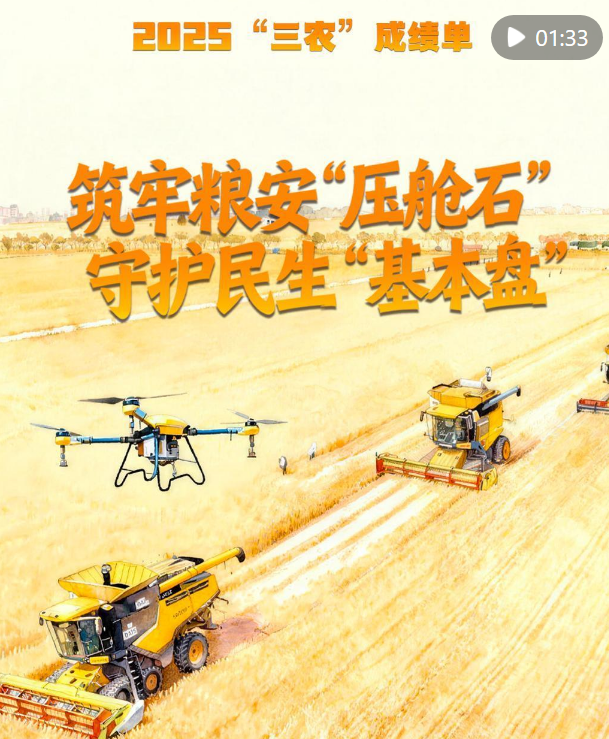
2025“三农”成绩单|筑牢粮安“压舱石” 守护民生“基本盘”
Xin Hua She· 2025-12-28 11:49
粮食安全,是"国之大者"。 10月23日,在北大荒集团黑龙江格球山农场有限公司一烘干厂,工人驾驶铲车在管理烘干的玉米。新华社发(陆文祥摄) 回望即将过去的2025年,我国粮食生产遭遇了春季干旱、高温伏旱、秋季连阴雨等灾害影响。 这背后的重要支撑是国家健全粮食生产支持政策体系,推动粮食播种面积提升,各地进一步扩大粮食单产提升工程实施规模,加大合理增密、 水肥一体化等技术推广力度,促进粮食单产水平持续增长。 各地各部门积极保面积、提单产,全力以赴保障农业生产,提升收储效能,让粮食更好入库归仓,减少粮食损耗,耕好"无形良田"。 0:00 编导:王洪流 记者:刘宇轩、吴飞座、宿传义、梁爱平、薛晨 海报:梁思语 新华社音视频部制作 责编:李驿达、卢思宇 国家粮食和物资储备局12月27日发布数据 从田间地头,到大国粮仓,再到千家万户的餐桌,全链条发力共同端牢14亿多人的饭碗,这里有国计民生,有对美好生活的向往,更有守护天 下粮食安全的大国担当。 ...


2025“三农”成绩单丨筑牢粮安“压舱石” 守护民生“基本盘”
Xin Hua Wang· 2025-12-28 11:15
粮食安全,是"国之大者"。 10月23日,在北大荒集团黑龙江格球山农场有限公司一烘干厂,工人驾驶铲车在管理烘干的玉米。新华社发(陆文祥摄) 回望即将过去的2025年,我国粮食生产遭遇了春季干旱、高温伏旱、秋季连阴雨等灾害影响。 编导:王洪流 记者:刘宇轩、吴飞座、宿传义、梁爱平、薛晨 海报:梁思语 新华社音视频部制作 这背后的重要支撑是国家健全粮食生产支持政策体系,推动粮食播种面积提升,各地进一步扩大粮食单产提升工程实施规模,加大合理增密、水 肥一体化等技术推广力度,促进粮食单产水平持续增长。 从田间地头,到大国粮仓,再到千家万户的餐桌,全链条发力共同端牢14亿多人的饭碗,这里有国计民生,有对美好生活的向往,更有守护天下 粮食安全的大国担当。 各地各部门积极保面积、提单产,全力以赴保障农业生产,提升收储效能,让粮食更好入库归仓,减少粮食损耗,耕好"无形良田"。 ...
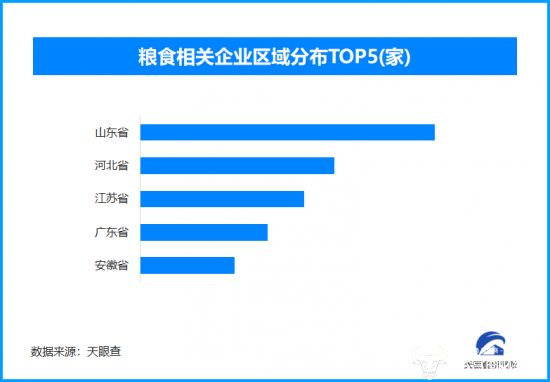
2025全国粮食再丰收 现存粮食相关企业超22万家
Xin Lang Cai Jing· 2025-12-28 07:03
国家统计局数据显示,2025年全国粮食产量达14297.5亿斤,比去年增加167.5亿斤,增长1.2%,稳定在 1.4万亿斤以上。粮食播种面积持续增加,2025年达17.91亿亩,连续6年增长。这得益于各地强化耕地保 护和质量提升,优化种植结构,推进土地综合整治等。 尽管部分地区受灾,但全国大部农区气象条件良好,单产水平持续提升。多数省份粮食增产,主产区作 用明显,内蒙古、黑龙江等地合计增产近七成。 在粮食产业从生产、收储、加工到流通的全链条中,涉及大量企业与经济主体。无论是寻找稳定的粮源 供应商还是进行供应链金融或产业投资,全面、准确的企业信息都至关重要。天眼查所提供的一站式企 业信息查询与风控工具,为政府部门、科研机构、产业链企业及金融机构等参与者,提供了透明的数据 支持和决策辅助,有助于提升产业链各环节的协同效率与风险管理能力,共同守护国家粮食安全的生命 线。 在深入合作或投资前,通过天眼风险监测,可以识别目标企业是否存在经营异常,保障交易安全。对于 希望洞察企业资本背景与实控情况的用户,股东信息查询结合股权全景穿透图,能够精准定位最终受益 人,理解企业的实际控制权归属。粮食安全是"国之大者",其背后是 ...
纪检监察机关紧盯秋粮收储全流程 跟进监督守护粮食安全
Zhong Yang Ji Wei Guo Jia Jian Wei Wang Zhan· 2025-12-28 01:30
Core Insights - The article emphasizes the importance of ensuring food security through effective supervision and management of grain purchasing, storage, and sales processes [1][7] Group 1: Grain Purchasing and Supervision - The autumn grain purchasing work is being conducted orderly across various regions in China, with a focus on preventing corruption in the grain purchasing and sales sector [1] - Jiangsu Province's Zhangjiagang City has implemented a three-party verification mechanism involving farmers, agricultural cooperatives, and agricultural service centers to ensure transparency and accuracy in grain purchasing [2] - Local supervisory bodies are closely monitoring the purchasing process to address issues such as price manipulation and ensure that farmers' rights are protected [2][3] Group 2: Storage Management and Oversight - Grain storage enterprises play a crucial role in maintaining food safety, and recent inspections in Gansu Province have focused on enhancing facility management and monitoring grain quality [4] - In Anhui Province, a case of poor grain storage management led to significant losses, prompting local authorities to strengthen oversight and improve storage practices [5] - Continuous supervision and checks are being conducted to prevent corruption and ensure the quality of stored grain [5] Group 3: Long-term Governance and Mechanisms - The article highlights the need for long-term mechanisms to ensure food security, with local authorities focusing on addressing systemic issues revealed through past corruption cases [6] - Educational initiatives and recommendations for improving internal controls are being implemented to strengthen the governance framework in the grain sector [6] - The establishment of regular risk assessments and internal auditing processes is being emphasized to enhance the integrity of grain management [6]
农发行巴彦淖尔市分行以政策性金融之笔绘就乡村振兴斑斓画卷
Xin Lang Cai Jing· 2025-12-27 18:42
转自:内蒙古日报 (来源:内蒙古日报) 城乡融合"幸福图",描绘出繁荣发展的魅力河套。该行锚定巴彦淖尔"城乡一体化"发展,以政策性金融 活水润泽城乡脉络。"十四五"期间,累放贷款54亿元,催生出产业能级跃升、民生福祉增进的生动图 景。围绕"乡"的提升,投放贷款6.4亿元,支持乌拉特后旗100万千瓦风储基地保障性及全域水资源综合 利用、乌拉特前旗河道防洪减灾及水源涵养、甘其毛都口岸加工园区集中供热等重点项目,促进乡村产 业提质增效。围绕"城"的提升,投放贷款3.8亿元,支持临河区新能源装备制造标准化厂房建设项 目、"温暖工程"项目建设、绿色交通基础设施建设,推动城市品质显著提升。 生态文明"和谐图",描绘出和美共生的绿色河套。该行坚定不移贯彻绿色发展理念,"十四五"期间,累 放绿色贷款41亿元,支持绿色信贷项目25个,涵盖生态治理修复、水利建设、清洁能源、节能环保、环 境改善等重点领域,持续擦亮"绿色银行"品牌形象。全力服务黄河流域生态保护等国家重大战略,投放 水利建设贷款19.6亿元,加大对水利工程和民生水利项目的信贷支持力度。运用"生态中标贷"等信贷模 式,投放贷款0.8亿元支持"三北"两个重点生态工程建设 ...
临沂:粮食安全赋能革命老区振兴发展
Xin Lang Cai Jing· 2025-12-27 17:39
Core Viewpoint - Since the beginning of the 14th Five-Year Plan, Linyi City in Shandong Province has taken strong measures to ensure food security, improve food storage and circulation tasks, and enhance the quality of the food industry, thereby injecting strong momentum into the revitalization of the Yimeng revolutionary old area. Group 1: Food Security and Storage System - The local food reserve scale has been stabilized, and the structure of varieties has been optimized, forming a food regulation mechanism primarily driven by market adjustments, with government support [1][2] - Encouragement for large-scale food processing enterprises to establish social responsibility reserves has been implemented, leading to a more diversified and layered food reserve system [1] Group 2: Food Circulation and Infrastructure - A robust food purchase and sales circulation system has been established, with an annual food circulation volume exceeding 20 million tons [2] - Continuous improvement of food circulation infrastructure has been achieved, with 100% application rates of mechanical ventilation and grain condition monitoring technologies in local state-owned food reserve enterprises [2] Group 3: Monitoring and Emergency Response - A comprehensive monitoring and early warning system has been established, with 11 national monitoring points and 79 provincial monitoring points covering 12 counties and districts [3] - The city has set up 175 emergency supply points, achieving full coverage at the township and street level, and has 264 various emergency guarantee enterprises [3] Group 4: Legal Compliance and Quality Control - The city has implemented a special action plan for administrative law enforcement in the grain and reserve industry, conducting over 500 inspections annually from 2021 to 2025 [3] - Strengthening of food quality safety monitoring has been emphasized, with the local grain quality testing center recognized as a national grain and oil standard verification work station [3] Group 5: Food Processing Industry Development - Linyi City has focused on the integrated development of the entire grain processing chain, achieving a total processing output value of 226.364 billion yuan from 2021 to 2024, ranking fourth in the province [4] - The city promotes the "Yimeng Peanut Oil" regional public brand, with significant market presence, including five famous trademarks and products exported to over 50 countries and regions [4]
报告:中国对中亚国家投资猛增
Xin Lang Cai Jing· 2025-12-27 02:13
Core Insights - The report by the Eurasian Development Bank indicates a significant decline in global foreign direct investment (FDI) by approximately 11% year-on-year, contrasting with the continuous growth of Chinese investments in Eurasian countries such as Russia, Kazakhstan, and Uzbekistan [1] - China's cumulative investment stock in these Eurasian countries is projected to reach around $66 billion by mid-2025, marking an 80% increase over the past decade, with a direct investment growth of approximately $7.4 billion in the last 18 months [1] - Kazakhstan remains the largest recipient of Chinese investments in Central Asia, attracting about $11.4 billion, while Uzbekistan has emerged as a new growth engine with approximately $10.4 billion in investments [1] Industry Focus - Chinese investors are particularly interested in sectors such as manufacturing, energy (including renewable energy), transportation and logistics, and agriculture in the mentioned regions [2] - This interest reflects a structural transformation within the Eurasian economy and highlights China's strategic focus on maintaining leadership in high-tech industries, diversifying value chains, developing green energy and low-carbon transportation, and ensuring food security [2]
24.1万吨!西宁2025年粮食总产量创新高
Xin Lang Cai Jing· 2025-12-26 21:02
Core Viewpoint - During the "14th Five-Year Plan" period, Xining's total grain production has shown a stable growth trend, maintaining over 230,000 tons for three consecutive years, with a peak of 241,000 tons in 2025, an increase of 28,000 tons compared to 2021 [1] Group 1 - Xining has strictly implemented farmland protection and food security responsibilities, effectively curbing the "non-agriculturalization" of farmland and preventing "non-grain" cultivation [1] - The annual average sown area for grain in Xining from 2021 to 2025 is 914,000 acres, with the sown area consistently remaining above 900,000 acres [1] - The promotion of advanced agricultural practices and technologies has led to increased planting areas and enhanced grain production potential, with the per-acre yield reaching 263.2 kg in 2025, the highest during the "14th Five-Year Plan" [1] Group 2 - The grain planting structure in Xining is relatively sound, with grain area and production levels maintained at high levels [1] - The area of grains, including wheat, barley, and miscellaneous grains, consistently accounts for around 70% of the total planting area, making them the primary food crops [1]