绿色经济

Search documents
江苏锂电池、光伏组件、风电叶片等持续热销海外
Sou Hu Cai Jing· 2025-11-24 02:31
原标题:锂电池、光伏组件、风电叶片等持续热销海外 江苏发力填补世界"绿色缺口" 江苏制造为世界持续提供优质实惠的"绿色产品",让越来越多的消费者买得起、用得起。11月3日,宿 迁阿特斯阳光能源科技有限公司生产的一批太阳能光伏组件产品快速通关,发往巴基斯坦。企业不断加 大技术研发力度、扩大产能布局规模。"2024年我们成功拓展了巴基斯坦市场,2025年前三季度出口超4 亿元,是2024年全年的3倍。"该公司关务苏茜说。 江苏不断深化与共建"一带一路"国家绿色经济等领域合作,携手推动绿色低碳可持续发展。日前,远景 能源有限公司江阴叶片工厂生产的15支风电叶片在江阴综合保税区完成集货后,将通过海运方式发往埃 及,这是2025年该企业发往共建"一带一路"国家的第15票风电叶片。"前9个月,公司出口共建'一带一 路'国家风机设备总值超过1.8亿元,在手订单已排至2026年12月。"江阴叶片工厂负责人黄伟告诉《新 华日报》记者。 在绿色经济出海的浪潮中,绿色装备的足迹不仅遍布全球风电赛场,更在新能源汽车产业链上加速延 伸。11月3日,安费诺汽车连接系统(常州)有限公司近500类新能源车辆连接器产品陆续下线,随后出 口至塞 ...
今年以来“江苏造”新能源产品出口表现亮眼
Sou Hu Cai Jing· 2025-11-23 23:32
原题:锂电池、光伏组件、风电叶片等持续热销海外 江苏发力填补世界"绿色缺口" 江苏制造为世界持续提供优质实惠的"绿色产品",让越来越多的消费者买得起、用得起。11月3日,宿 迁阿特斯阳光能源科技有限公司生产的一批太阳能光伏组件产品快速通关,发往巴基斯坦。企业不断加 大技术研发力度、扩大产能布局规模。"2024年我们成功拓展了巴基斯坦市场,今年前三季度出口超4亿 元,是去年全年的3倍。"该公司关务苏茜说。 江苏不断深化与共建"一带一路"国家绿色经济等领域合作,携手推动绿色低碳可持续发展。日前,远景 能源有限公司江阴叶片工厂生产的15支风电叶片在江阴综合保税区完成集货后,将通过海运方式发往埃 及,这是今年该企业发往共建"一带一路"国家的第15票风电叶片。"前9个月,公司出口共建'一带一 路'国家风机设备总值超过1.8亿元,在手订单已排至明年12月。"江阴叶片工厂负责人黄伟告诉记者。 在绿色经济出海的浪潮中,绿色装备的足迹不仅遍布全球风电赛场,更在新能源汽车产业链上加速延 伸。11月3日,安费诺汽车连接系统(常州)有限公司近500类新能源车辆连接器产品陆续下线,随后出口 至塞尔维亚。目前该企业连接器每天出货量有数十 ...
锂电池、光伏组件、风电叶片等持续热销海外江苏发力填补世界“绿色缺口”
Xin Hua Ri Bao· 2025-11-23 23:03
Group 1 - Jiangsu's new energy products, including energy storage lithium batteries, solar photovoltaic modules, and wind turbine blades, have shown strong export performance in 2023, contributing to filling the global "green gap" [1][2] - Shanghai Wendi New Energy Technology Co., Ltd. exported lithium battery products worth 17.6 million yuan from January to October, nearly doubling year-on-year, with a total export value of 2.57 billion yuan for lithium products from Kunshan, up 31.5% [1] - Suqian Canadian Solar Technology Co., Ltd. expanded its market in Pakistan, exporting over 400 million yuan in solar photovoltaic modules in the first three quarters, three times the total of the previous year [2] Group 2 - Yancheng Energy Co., Ltd. exported wind turbine blades to Egypt, marking the 15th shipment to Belt and Road Initiative countries this year, with total exports exceeding 180 million yuan in the first nine months [2] - Amphenol Automotive Connectors (Changzhou) Co., Ltd. exported nearly 500 types of new energy vehicle connectors to Serbia, achieving an export value of 314 million yuan in the first three quarters, up 5.7% year-on-year [3] - The company is actively entering the Belt and Road market and has opened new markets in Central and Eastern Europe this year [3]
中国同中亚深化多领域合作
Huan Qiu Shi Bao· 2025-11-23 22:48
Core Insights - Central Asian countries view China as the most reliable and trustworthy partner for cooperation, emphasizing mutual needs and benefits in their relationships [1] - The recent visit by Chinese Foreign Minister Wang Yi to Kyrgyzstan, Uzbekistan, and Tajikistan highlights China's commitment to deepening regional partnerships and enhancing political trust amid complex international dynamics [1][2] Group 1: Bilateral Relations - China and Kyrgyzstan initiated their first strategic dialogue, signing a cooperation outline for 2026-2027, which aims to strengthen bilateral cooperation [2] - The bilateral trade volume between China and Kyrgyzstan is expected to reach historical highs for two consecutive years, supported by infrastructure projects like the China-Kyrgyzstan-Uzbekistan railway [2] - Tajikistan and China reaffirmed their comprehensive strategic partnership, focusing on cooperation in digital economy, e-commerce, and green economy [3] Group 2: Economic Cooperation - China has become a crucial trade partner and investment source for Central Asian countries, with significant benefits for the local populations [2] - In Uzbekistan, bilateral trade is projected to reach $14 billion in 2024, with around 5,000 joint ventures established [3] - Chinese investments in Uzbekistan have approached $15 billion this year, with total technical cooperation projects nearing $90 billion [3]
中欧专家呼吁加强人工智能领域务实合作
Xin Hua She· 2025-11-22 12:07
Core Insights - The forum held in Paris emphasized the strong complementarity between China and Europe in artificial intelligence innovation, governance, and sustainable development, advocating for practical cooperation to contribute to global AI governance [1][2] Group 1: Forum Overview - The Global AI Sustainable Development Innovation Cooperation Forum was co-initiated by the China Electronics Chamber of Commerce AI Professional Committee and the Zhejiang New Era Industry-Finance Collaborative Innovation Research Institute, with strategic partners including HEC Paris and its alumni association [1] - The forum featured keynote speeches and roundtable discussions focusing on global AI governance, sustainable development pathways, industrial collaboration, and ethics [1] Group 2: Perspectives on Cooperation - Emmanuel Goffi, a professor of AI ethics at HEC Paris, noted a cognitive contradiction in Europe regarding AI, where there is an emphasis on regulation alongside complaints about insufficient development, suggesting a need for a more pragmatic view of cooperation with China [1] - Anis Ben Mahamoud, head of the French branch of the United Robotics Group, argued that competition in AI should not hinder collaboration, indicating that China and Europe will likely depend on each other in AI technology exploration for a considerable time, benefiting mutual development [1] Group 3: Joint Projects and Agreements - During the roundtable discussion themed "Integration of AI and Green Energy: Innovation, Efficiency, and Governance," former French ambassador to Nepal, Gilles Henry Garo, highlighted potential joint project areas such as green economy, energy transition, and smart cities for China-Europe collaboration [2] - A cooperation memorandum was signed between the China Electronics Chamber of Commerce AI Professional Committee and the HEC Paris Innovation and Entrepreneurship Ecosystem Center to jointly advance the establishment of a global AI sustainable development innovation cooperation center in Paris and Hangzhou [2] - Wang Ning, president of the China Electronics Chamber of Commerce, stated that China and Europe possess complementary advantages in AI innovation, ethical governance, and industrial collaboration, with China's vast application scenarios and Europe's strengths in standards, regulation, and basic research expected to create a positive interactive mechanism in the future [2]
2025中阿青年发展论坛在伊拉克开幕
Zhong Guo Qing Nian Bao· 2025-11-22 11:20
Core Viewpoint - The 2025 China-Arab Youth Development Forum opened in Baghdad, Iraq, focusing on enhancing green economic cooperation through innovation and entrepreneurship among youth from China and Arab countries [1][2]. Group 1: Forum Overview - The forum is co-hosted by the China National Youth Federation, the Arab League's Youth and Sports Department, and the Iraqi Ministry of Youth and Sports, with nearly 70 youth representatives from China, the Arab League, and nine Arab countries participating [1]. - This is the third edition of the forum, which was first proposed by President Xi Jinping at the inaugural China-Arab Summit in 2022, and it is the first time the forum is held in an Arab country [2]. Group 2: Key Statements - The Deputy Secretary-General of the National Youth Federation, Dong Xia, emphasized that youth are both beneficiaries and drivers of China-Arab development, urging youth organizations to lead development agendas and enhance green innovation capabilities [1]. - Lina Aziz Sinabi, an advisor from the Arab League's Youth and Sports Department, highlighted the importance of youth innovation in advancing the green economy and expressed a willingness to collaborate with China to empower youth [1]. - Ahmed Saad, Director-General of Regional Affairs at the Iraqi Ministry of Youth and Sports, noted Iraq's large youth population and their role as key players in innovation and transformation, looking forward to collaborative efforts in green economic initiatives [1].
世界儿童日主题活动在京举行 青少年创新方案助力绿色未来
Huan Qiu Wang· 2025-11-22 01:40
原标题:中国48个城市携手青少年庆祝世界儿童日,响应"敢作气候担当"的行动 11月20日, "敢作气候担当,点亮儿童未来"世界儿童日主题活动在北京科技职业大学举行。今年 的世界儿童日主题活动聚焦于青少年从校园到国际舞台为应对气候变化所采取的积极行动。 在主题活动现场,参加了"2025年中国青少年应对气候变化倡导活动"的青少年代表分享了他们的创 新解决方案,并介绍了他们展示这些方案的经历。 11月20日, "敢作气候担当,点亮儿童未来"世界儿童日主题活动在北京科技职业大学举行。今年 的世界儿童日主题活动聚焦于青少年从校园到国际舞台为应对气候变化所采取的积极行动。 在主题活动现场,参加了"2025年中国青少年应对气候变化倡导活动"的青少年代表分享了他们的创 新解决方案,并介绍了他们展示这些方案的经历。 在世界儿童日到来之际,中国48个市县以及30多所联合国儿童基金会项目学校在联合国儿童基金会 的支持下,举办了丰富多彩、富有创意的活动,彰显了对实现儿童权利的承诺。为响应今年世界儿童日 的主题,这些市县和项目学校组织儿童青少年利用生活中产生的可回收物品创作并展示了"气候朋友"艺 术作品及手工作品,或通过其他形式的活动 ...
2030年河内和胡志明市公共交通工具全部使用清洁能源
Shang Wu Bu Wang Zhan· 2025-11-21 15:22
Core Viewpoint - The Vietnamese government has approved a national action plan for air pollution control and atmospheric quality management for the period of 2026-2030, aiming to improve air quality in key economic areas, particularly in Hanoi and Ho Chi Minh City, while promoting sustainable growth and public health protection [1][2] Group 1 - The action plan focuses on controlling and gradually improving air pollution in major economic regions, specifically targeting Hanoi, Ho Chi Minh City, and surrounding provinces [1] - By 2030, the air quality across the country is expected to be gradually controlled and improved, with urban transportation infrastructure being significantly enhanced [1] - Public transportation in Hanoi and Ho Chi Minh City will transition to using clean energy, green energy, and environmentally friendly energy sources by 2030 [1] Group 2 - The plan outlines nine key tasks and measures, including improving the policy and legal framework for air quality management, enhancing technological research and application, and controlling industrial emissions [2] - It emphasizes the need for strict management of construction activities, public area sanitation, and the reduction of open burning of agricultural by-products and waste [2] - The plan also aims to enhance monitoring, early warning, and forecasting capabilities, and to strengthen international cooperation and public information dissemination [2]
国网浙江电力深入践行“千万工程”推动乡村振兴
Xin Hua Cai Jing· 2025-11-21 09:21
连城乡让乡村生活与城市同频 从"七山一水二分田"的先天约束,到富庶鲜活的一方热土,在这变化背后,离不开浙江持之以恒实施了 20余年的"千万工程"。 聚焦乡村人居环境改善,20余年间,"千万工程"持续丰富新内涵,并从浙江走向全国,由一项民生工程 转化为推动乡村振兴的一项战略工程。11月18日至19日,全国学习运用"千万工程"经验推进乡村全面振 兴现场会在浙江嘉兴召开。作为较早一批投身"千万工程"建设的单位,国网浙江电力20余年的赋能之路 清晰可见。 自2016年桐乡农创园建设之初,当地供电公司便量身定制电网升级方案:投建8台400千伏安配电变压 器,新建及改造线路7.6公里,满足了育苗恒温控制、冷链存储、直播设备高负荷运转等复合需求。客 户经理定期上门用电"体检",排查线路老化、设备过载等隐患,用专业服务筑牢产业发展的电力底盘。 在20多年前的浙江,一道城乡之间的"不等式"亟待破解。地区生产总值虽实现较快增长,但从1997年至 2003年,浙江城乡居民收入比却从2∶1扩大到2.43∶1,城乡人居环境、基础设施的差距肉眼可见。仅从用 电看,当时的"无电户"、无电人口大都位于偏远山区和偏僻海岛。 2003年"千万工 ...
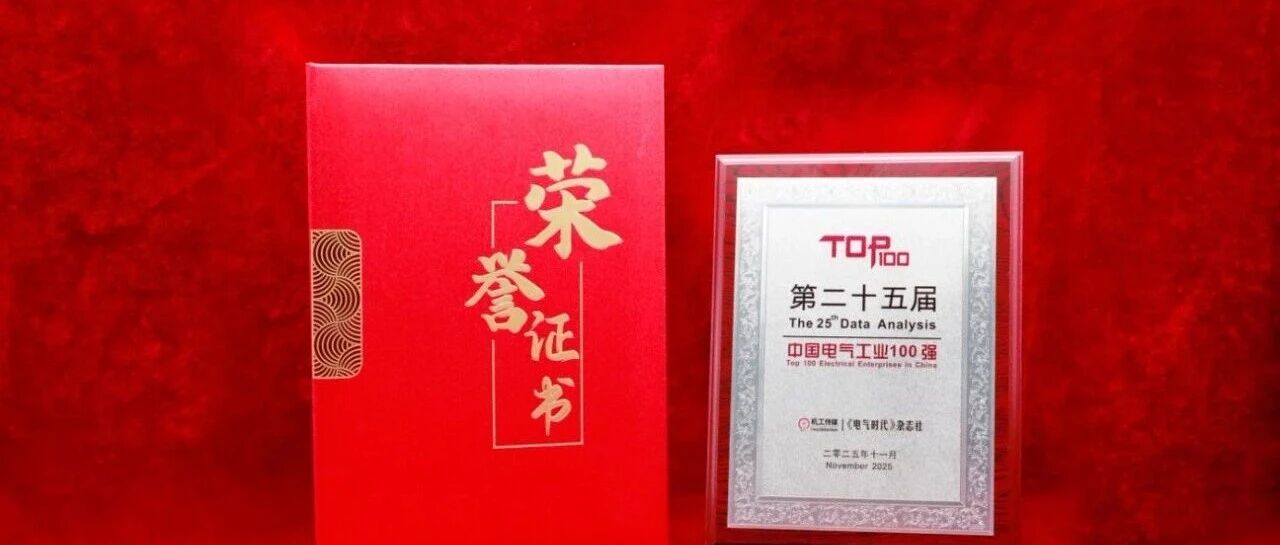
海博思创荣膺“中国电气工业100强” 引领储能产业高质量发展
海博思创· 2025-11-21 08:18
Core Viewpoint - The article highlights the recognition of Haibo Sichuang as one of the "Top 100 Chinese Electrical Industry" companies, emphasizing its strong performance and technological foundation in the energy storage sector [1][3]. Group 1: Industry Overview - The "Top 100 Chinese Electrical Industry" ranking has been established for 25 years and serves as a significant reference for observing trends and structural changes in China's electrical equipment manufacturing industry [3]. - The forum is organized by the Machinery Industry Information Research Institute and has broad industry recognition, indicating the credibility of the evaluation process [3]. Group 2: Company Performance - In 2024, Haibo Sichuang achieved an operating revenue of 8.27 billion yuan, reflecting a year-on-year growth of 18.44%, showcasing strong growth resilience [4]. - In the first three quarters of 2025, the company reported an operating revenue of 7.91 billion yuan, marking a year-on-year increase of 52.23% [4]. - The company has deployed over 45 GWh of energy storage systems across more than 400 projects globally, demonstrating its strong operational capabilities and market acceptance [4]. Group 3: Strategic Positioning - Haibo Sichuang has focused on the energy storage sector for 14 years, evolving from demonstration applications to large-scale development [3]. - The company has developed a diversified application model in independent energy storage stations, integrated energy systems, and various other sectors, exploring innovative business models [3]. - With five intelligent manufacturing bases across China, the company has established a nationwide production network, ensuring efficient delivery and management of large-scale energy storage systems [4].