空气污染治理

Search documents
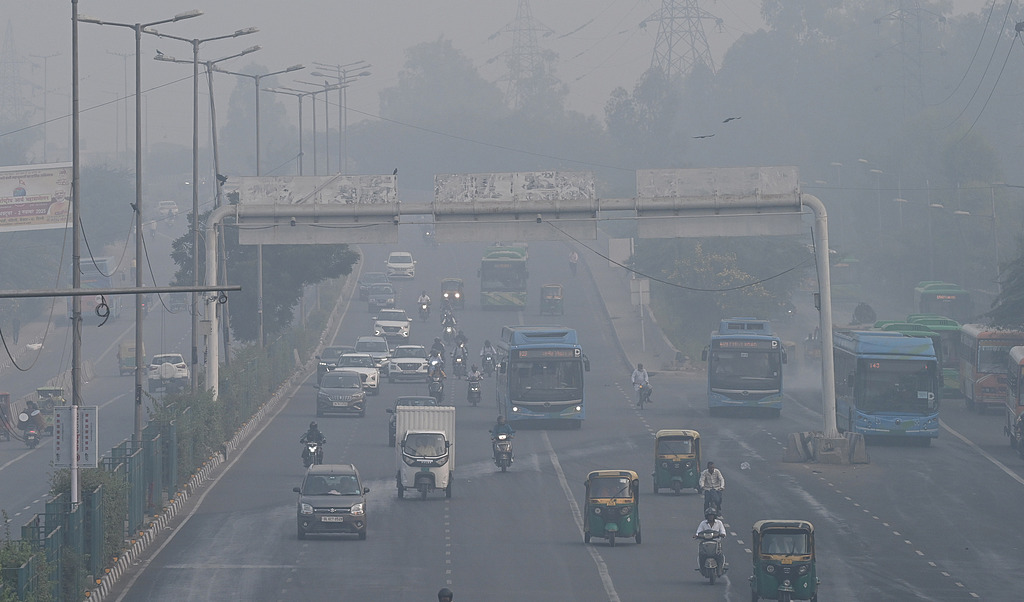
新德里空气污染严重,外交官分享中国经验
Huan Qiu Shi Bao· 2025-12-18 22:54
Core Viewpoint - The article highlights the severe air pollution situation in New Delhi and discusses the Chinese Embassy's sharing of China's experiences in air pollution management, which has garnered attention from Indian netizens [1]. Group 1: Air Pollution Management - The spokesperson from the Chinese Embassy, Yu Jing, emphasized that both China and India face challenges in managing air pollution amid rapid urbanization, noting significant improvements in China over the past decade due to persistent efforts [1]. - Yu Jing outlined a comprehensive pollution management model that includes strict vehicle emission standards, shutting down high-pollution factories, reducing coal usage, promoting clean energy, and regional collaborative planning [1]. - One of the recommendations made was to implement strict emission controls for vehicles in New Delhi, suggesting standards similar to China's "National VI" standard, which targets nitrogen oxides and other pollutants [1]. Group 2: Public Response - Many Indian netizens expressed support and gratitude in response to Yu Jing's posts, with comments highlighting the visible improvements in air quality in Beijing compared to previous years [2]. - Some netizens noted that effective air pollution management requires political will and decisive action [2].
越南首都深陷重度雾霾 政府敦促工厂减产
Yang Shi Xin Wen· 2025-12-13 04:53
Group 1 - Hanoi is experiencing severe air pollution, with an Air Quality Index (AQI) of 243 on December 11, ranking it as the fourth most polluted city globally [1] - The PM2.5 concentration in Hanoi may be up to 50 times higher than the World Health Organization's recommended standard of 5 micrograms per cubic meter [1] - The city has frequently topped the list of the most polluted cities in the world this week [1] Group 2 - The Vietnamese Ministry of Health has urged reductions in production from power, steel, and chemical plants to combat pollution [1] - Starting mid-2026, Hanoi will implement a ban on gasoline motorcycles in certain city center areas, with plans to gradually expand this ban to fuel-powered cars [1] - Motorcycles are the primary mode of transportation in Hanoi, with approximately 7 million motorcycles and over 1 million cars in the city [1]
阿联酋媒体:印度治理空气污染可向中国学三个经验
Huan Qiu Shi Bao· 2025-12-01 10:03
Core Viewpoint - India is facing severe air pollution issues, particularly in northern cities like Delhi and Mumbai, and lacks the political will to treat this as a public health emergency, which exacerbates the situation. The country can learn valuable lessons from China's approach to tackling air pollution, particularly in promoting electric vehicles and public transportation electrification [1][2]. Group 1: Key Lessons from China - India should develop a long-term comprehensive action plan rather than reactive measures that only respond to deteriorating air quality. This requires better coordination between state and central governments [2]. - More efforts are needed to control vehicle emissions and promote clean fuels, as the public transportation system in most Indian cities does not meet expectations. Increased funding is necessary to address these gaps [2]. - Accurate data is crucial for building public trust. The Delhi government's poor handling of pollution data has eroded citizen confidence, making it difficult to trust that effective measures will be taken to address the crisis [2]. Group 2: Challenges in Implementation - India's progress in addressing air pollution is hindered by weak enforcement and competing priorities, unlike China's strict regulations and promotion of clean energy [2]. - The existing system in India is flawed, with loose assessments and ineffective enforcement. Stronger actions are required to achieve significant improvements similar to those seen in China [3].
2030年河内和胡志明市公共交通工具全部使用清洁能源
Shang Wu Bu Wang Zhan· 2025-11-21 15:22
Core Viewpoint - The Vietnamese government has approved a national action plan for air pollution control and atmospheric quality management for the period of 2026-2030, aiming to improve air quality in key economic areas, particularly in Hanoi and Ho Chi Minh City, while promoting sustainable growth and public health protection [1][2] Group 1 - The action plan focuses on controlling and gradually improving air pollution in major economic regions, specifically targeting Hanoi, Ho Chi Minh City, and surrounding provinces [1] - By 2030, the air quality across the country is expected to be gradually controlled and improved, with urban transportation infrastructure being significantly enhanced [1] - Public transportation in Hanoi and Ho Chi Minh City will transition to using clean energy, green energy, and environmentally friendly energy sources by 2030 [1] Group 2 - The plan outlines nine key tasks and measures, including improving the policy and legal framework for air quality management, enhancing technological research and application, and controlling industrial emissions [2] - It emphasizes the need for strict management of construction activities, public area sanitation, and the reduction of open burning of agricultural by-products and waste [2] - The plan also aims to enhance monitoring, early warning, and forecasting capabilities, and to strengthen international cooperation and public information dissemination [2]
印度要重见蓝天,中国经验是“良方”
Huan Qiu Shi Bao· 2025-11-18 00:36
Core Insights - The article discusses the severe air pollution issues faced by India, particularly in Delhi, and highlights China's willingness to share its air quality management experiences to help India overcome these challenges [1][2]. Group 1: Air Pollution in India - India is currently experiencing a dual crisis of aerosol pollution leading to short-term cooling and a health crisis, compounded by the risk of accelerated future warming [2]. - The industrial emissions, urban traffic, dust, and crop burning in the Indo-Gangetic Plain contribute to some of the worst air pollution globally [2]. - Predictions indicate that India's warming rate may double in the coming decades, leading to extreme heat, disrupted monsoons, and agricultural interruptions [2]. Group 2: China's Air Quality Management Experience - China's air quality management began in earnest in 2013, resulting in a 57% reduction in PM2.5 average concentration and a 92% decrease in heavy pollution days from 2013 to 2022, while GDP grew by 69% [1]. - The Chinese approach emphasizes prioritizing the closure of inefficient pollution sources and strict emission standards to quickly address residents' health issues [2]. - China has demonstrated that pollution control and carbon reduction can be synergistic, providing a model for other developing countries [3]. Group 3: Global Implications and Cooperation - The article suggests that China's experience serves as a guide for other developing nations facing similar development and environmental challenges [3]. - China's commitment to sharing renewable energy technology and financial support with countries like India contrasts with the politicalization of climate issues by some nations [3]. - The overarching theme is that pollution management and climate change response should be integrated into a single governance framework, emphasizing a human-centered and systematic approach [3].
印度新德里多次人工降雨失败引争议
Huan Qiu Shi Bao· 2025-11-03 22:49
Group 1 - The core issue is the limited effectiveness of artificial rain experiments conducted in New Delhi to combat severe winter air pollution, leading to controversy and criticism [1][3] - New Delhi's PM2.5 concentration recently exceeded the World Health Organization's recommended limit by 20 times, highlighting the severity of the air quality crisis [1] - A study from the Indian Institute of Technology, Delhi, indicates that the dry winter climate in New Delhi is not conducive for sustained artificial rain, and any temporary effects would last only 1 to 3 days [3] Group 2 - The report emphasizes that artificial rain is costly and scientifically uncertain, and it does not address the root causes of pollution, suggesting it should not be the primary method for air quality management in New Delhi [3] - Experts recommend that the government focus on promoting clean fuel usage, improving waste management, and enforcing stricter emission regulations to effectively reduce pollution levels [3]

今年前8个月北京PM2.5平均浓度同比下降17.2%
Zhong Guo Xin Wen Wang· 2025-09-15 08:08
Group 1: Air Quality Improvement - In the first eight months of this year, Beijing's average PM2.5 concentration decreased by 17.2% year-on-year, reaching 25.6 micrograms per cubic meter, with 198 days classified as good air quality, an increase of 20 days compared to the previous year [1] - The average PM2.5 concentration in August was recorded at 16.7 micrograms per cubic meter [1] Group 2: Promotion of New Energy Vehicles - Beijing has implemented policies to promote the replacement of old vehicles, including over 5,000 applications for "oil-to-electric" subsidies for outdated trucks and buses [2] - The city has prioritized the passage of new energy logistics vehicles within the Fifth Ring Road, encouraging the electrification of delivery trucks [2] - The total number of new energy vehicles in Beijing has exceeded 1.16 million [2] Group 3: Green Enterprise Initiatives - Beijing is utilizing measures such as clean production audits and tailored governance to enhance green practices in key industries [3] - In the first eight months, 832 new green enterprises were established, raising the proportion of green enterprises to 32%, surpassing the annual target [3] - A total of 699 boiler units completed environmental performance ratings, exceeding the annual task and further promoting nitrogen oxide reduction [3] Group 4: Seasonal Pollution Control - Beijing has launched special actions to address summer volatile organic compounds (VOCs) issues, implementing 16 key measures [4] - The city has promoted the use of low-temperature asphalt and completed upgrades for 1,027 catering units to improve oil fume management [4] - Ongoing enforcement actions are being taken to ensure stable compliance with pollution emission standards across various sources [4] - Future efforts will focus on a comprehensive approach to pollution control during the autumn and winter seasons [4]
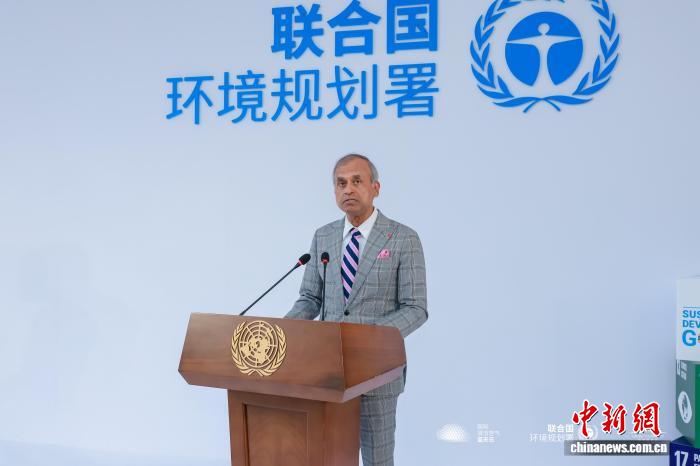
联合国官员:北京空气污染治理为世界提供宝贵经验
Zhong Guo Xin Wen Wang· 2025-09-04 13:48
Group 1 - The air pollution control efforts in Beijing provide valuable experience for cities and countries worldwide striving for clean air [1][3] - Beijing's air quality has significantly improved over the decades, with a 2024 annual average concentration of PM2.5 at 30.5 micrograms per cubic meter, a 6.2% decrease year-on-year [3] - The proportion of days with good air quality in Beijing reached 79.2%, an increase of 19 days compared to the previous year [3] Group 2 - Continuous investment, strong policies, and a firm political will are cited as key factors behind Beijing's progress in air quality improvement [3] - The United Nations emphasizes the urgent need for collective action to address air pollution globally [3][4] - The theme for this year's International Clean Air Blue Sky Day is "Racing for Air," highlighting the importance of clean air and the need for improved air quality to protect human health [4]
第一作者兼通讯作者,我国学者发表Science论文,揭示我国城市空气污染的独特化学机制
生物世界· 2025-09-01 10:30
Core Viewpoint - Air pollution is a global environmental issue with significant impacts on air quality, climate, ecosystems, and human health. China's severe smog pollution, characterized by high PM2.5 concentrations, has shown improvement since 2013 due to regulatory measures [2][3]. Group 1 - The unique formation mechanism of smog in China involves both high-intensity primary pollutant emissions and efficient secondary transformation processes [2][3]. - The current stage in China is marked by a mix of agricultural and industrial societies, leading to high emissions of secondary aerosol precursors from various sources, including ammonia from agricultural activities and nitrogen oxides from industrial activities [3][4]. - A recent review published in the journal Science highlights the complex interactions of multiple atmospheric factors contributing to the unique formation mechanism of secondary organic aerosols (SOA) in urban China [4][10]. Group 2 - Despite significant progress in environmental pollution control over the past decade, uncertainties remain regarding the precursors, formation processes, and impacts of SOA on radiation budgets and human health in Chinese cities [6][9]. - The substantial decrease in PM2.5 concentrations in urban China has led to a significant increase in ground-level ozone concentrations, which facilitates SOA formation [6][9]. - Understanding the sensitivity of ozone-nitrogen oxides-volatile organic compounds in urban areas is crucial for developing economically effective strategies to control precursors that lead to high concentrations of both SOA and ozone [6][9]. Group 3 - The study identifies that high atmospheric oxidation capacity in winter results from various factors, including high concentrations of gas-phase nitrous acid photolysis and nitrogen oxides participating in olefin ozonolysis [7][9]. - The increase in nitrate proportions has also enhanced the liquid water content of aerosols, further promoting the generation of liquid-phase SOA [7][9]. - Future research should focus on exploring unknown oxidation pathways, characterizing precursors and multi-generation oxidation products at the molecular level, and understanding the corresponding generation and aging mechanisms [7][9]. Group 4 - The paper summarizes the scientific status of SOA formation in urban China, emphasizing the dominant role of anthropogenic precursors, the main mechanisms of SOA formation, and the importance of multi-pollutant and multiphase processes in SOA evolution [9][10]. - This research deepens the understanding of the formation mechanisms of haze pollution in China and provides a reference for global atmospheric pollution studies, offering important scientific basis for future air pollution control and policy-making [10].