RCEP

Search documents
今年前7个月我省进出口规模创历史同期新高 外贸进出口额同比增长22.3%
He Nan Ri Bao· 2025-08-16 23:33
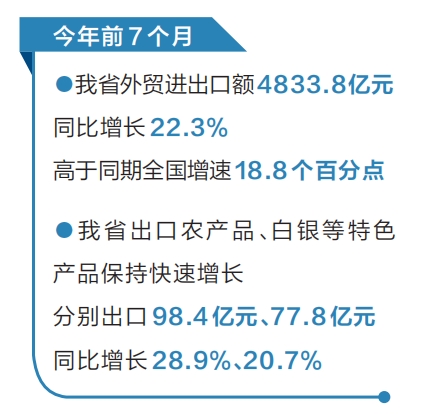
Group 1 - The province's foreign trade maintained resilient growth in the first seven months of the year, with total import and export value reaching 483.38 billion yuan, a year-on-year increase of 22.3%, surpassing the national growth rate by 18.8 percentage points, marking a historical high for the same period [2] - Exports amounted to 324.31 billion yuan, growing by 32.8%, while imports were 159.07 billion yuan, increasing by 5.4% [2] - Processing trade and bonded logistics accounted for over 50% of the total import and export value, with general trade reaching 216.57 billion yuan, up 18.5%, and processing trade and bonded logistics combined at 265.04 billion yuan, growing by 25.6%, representing 54.8% of the total [2] Group 2 - The vitality of foreign trade entities has increased, with private enterprises becoming the main engine for foreign trade growth, and foreign-invested enterprises showing the fastest growth rate [3] - The number of foreign trade enterprises with import and export performance reached 12,200, an increase of 1,200 year-on-year, with private enterprises accounting for 356.06 billion yuan in imports and exports, a growth of 17.7%, representing 73.7% of the province's total foreign trade [3] - The export markets have diversified, with significant growth in trade with the EU, South Korea, and ASEAN, with respective increases of 28.7%, 16.6%, and 8.4% [3]

加快共建RCEP区域共同大市场(观象台)
Ren Min Ri Bao Hai Wai Ban· 2025-08-15 21:29
Core Viewpoint - The article discusses the profound changes in the global geopolitical and economic landscape, emphasizing the shift towards regional economic integration in Asia as a response to challenges posed by the "America First" policy and the need for a unified market under the RCEP framework [1]. Group 1: Regional Economic Integration - The dependency of Asian economies on intra-regional trade reached 57.4% in 2022, with Asian service trade achieving a surplus of $40.55 billion [1]. - By 2024, the GDP of Asian economies is projected to account for nearly half of the global economy, highlighting the significance of regional economic integration for sustainable development [1]. Group 2: RCEP Development - The RCEP is at a critical juncture, facing challenges such as low utilization rates and weak governance mechanisms since its signing in November 2020 [2]. - Upgrading RCEP from version 1.0 to 2.0 is essential for creating a more competitive and unified market, which could potentially increase global trade by $500 billion [1][2]. Group 3: RCEP 2.0 Objectives - RCEP 2.0 aims to transform from a traditional tariff reduction agreement to a platform for deep economic integration, enhancing the flow of regional resources and better connecting supply chains [3]. - The initiative includes facilitating cross-border movement of people, particularly in sectors like healthcare and education, and strengthening the use of local currencies in financial markets [3]. Group 4: Expansion and Cooperation - RCEP should pursue expansion by inviting new members such as Hong Kong, Chile, and Sri Lanka, and establishing high-level coordination mechanisms to ensure mutual benefits for ASEAN countries [4]. - The signing of a free trade agreement between China, Japan, and South Korea is expected to play a pivotal role in advancing RCEP from 1.0 to 2.0, fostering a "RCEP+" effect that enhances regional cooperation [4].
前7月长三角外贸创新高,这些增长尤为迅猛
第一财经· 2025-08-15 11:22
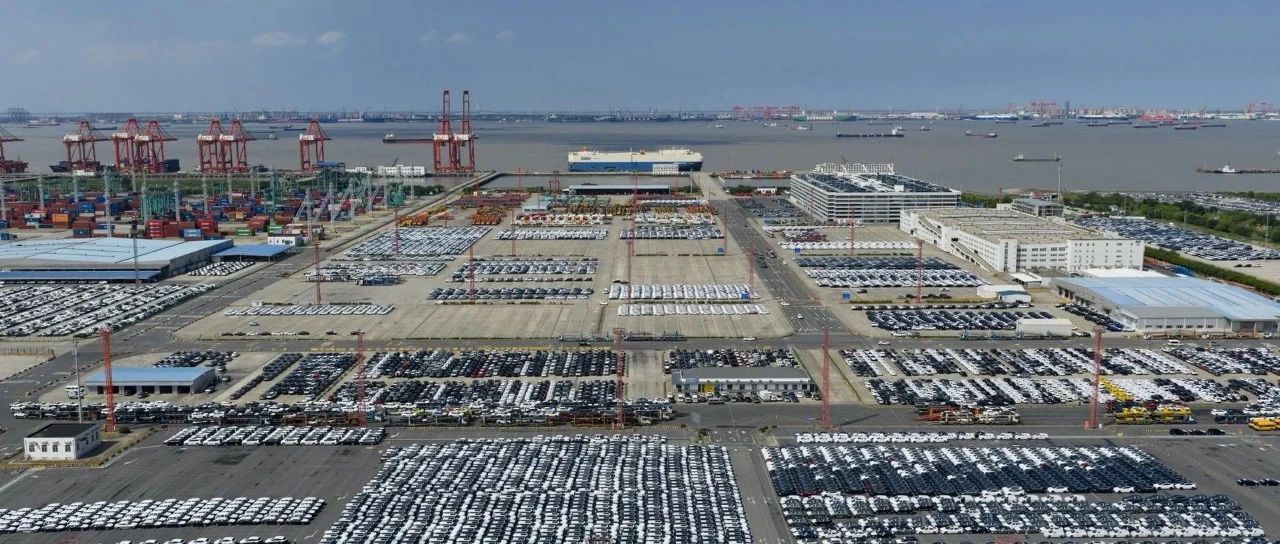
Core Viewpoint - The Yangtze River Delta region has achieved a record high in foreign trade, with a total import and export value of 9.59 trillion yuan in the first seven months of the year, marking a year-on-year growth of 5.4% and accounting for 37.3% of the national total [3]. Summary by Sections Export Growth - Mechanical and electrical products remain the mainstay of exports, with a total export value of 3.64 trillion yuan, up 9.4% year-on-year. Notable growth was seen in electric vehicles (43.9%), high-end equipment (10.2%), and integrated circuits (20.1%) [5]. - Jiangsu province exported mechanical and electrical products worth 1.52 trillion yuan, a growth of 10.7%, contributing 7.3 percentage points to the province's overall export growth [6]. - Anhui province's mechanical and electrical product exports reached 260.15 billion yuan, growing 16.2% and accounting for 71.3% of the province's total exports [6]. - Zhejiang province's mechanical and electrical product exports grew by 9.7%, making up 46.8% of the province's total exports, with high-tech product exports increasing by 14.3% [6][7]. Private Enterprises' Role - Private enterprises in the Yangtze River Delta have significantly contributed to foreign trade, with a total import and export value of 5.35 trillion yuan, up 9.5% year-on-year, representing 55.8% of the total [9]. - In Ningbo, private enterprises' imports and exports grew by 7.1%, contributing 5.4 percentage points to the city's total foreign trade [9]. - Anhui province's private enterprises saw a 16.7% increase in imports and exports, while Jiangsu's private enterprises grew by 3% [9]. Trade Relationships - The Yangtze River Delta has diversified its trade relationships, with imports and exports to ASEAN growing by 17.5%, and to countries involved in the Belt and Road Initiative increasing by 10.3% [10]. - Zhejiang's exports to the EU and ASEAN grew by 9.4% and 15.6%, respectively, with significant increases in emerging markets [10][11]. - Anhui province's trade with ASEAN increased by 35.7%, while Jiangsu's trade with Belt and Road countries rose to nearly 50% [11].
前7个月长三角地区实现进出口逾9万亿元
Xin Hua Wang· 2025-08-15 10:59
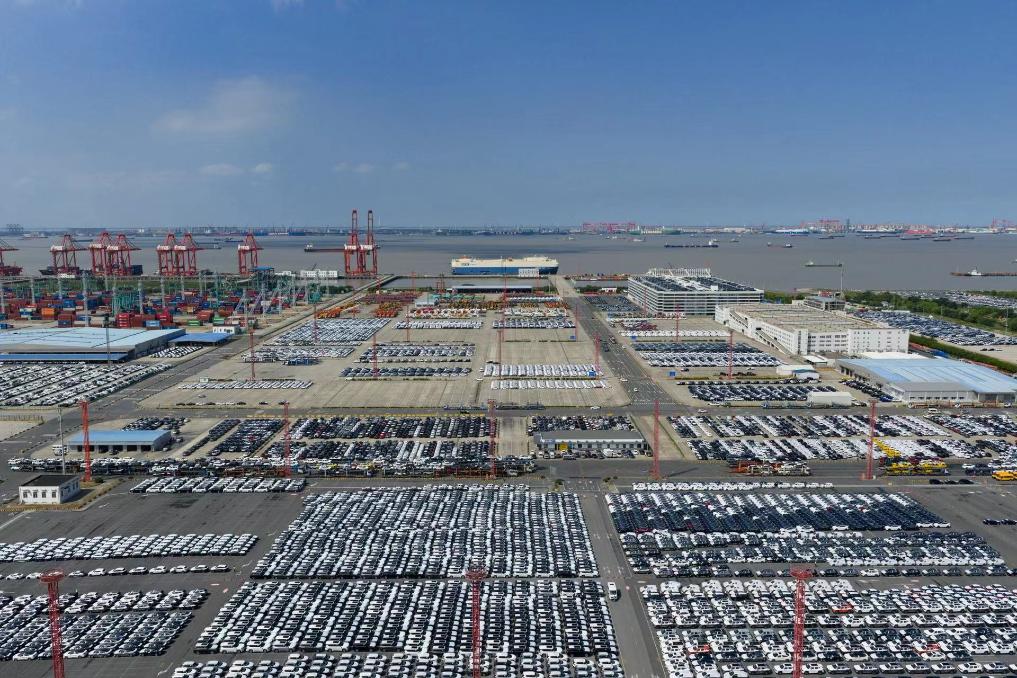
Core Insights - The Yangtze River Delta region achieved an import and export value of 9.59 trillion yuan in the first seven months of the year, representing a year-on-year growth of 5.4% and accounting for 37.3% of the national total, an increase of 0.7 percentage points compared to the same period last year [1] Group 1: Export Performance - In the first seven months, the Yangtze River Delta exported electromechanical products worth 3.64 trillion yuan, a year-on-year increase of 9.4% [3] - Exports of electric vehicles, high-end equipment, and integrated circuit products grew by 43.9%, 10.2%, and 20.1% respectively [3] Group 2: Import Trends - The region saw imports of food, medical instruments and devices, and daily chemical products increase by 4.8%, 10.1%, and 1.9% respectively in the first seven months [3] Group 3: Trade with Specific Regions - The Yangtze River Delta's trade with ASEAN reached 1.51 trillion yuan, up 17.5% year-on-year; trade with Belt and Road countries was 4.77 trillion yuan, up 10.3%; trade with other RCEP member countries was 3.02 trillion yuan, up 8.9%; and trade with African countries was 499.47 billion yuan, up 15.2% [5] Group 4: Role of Private Enterprises - Private enterprises in the Yangtze River Delta played a significant role in foreign trade, achieving an import and export value of 5.35 trillion yuan, a year-on-year increase of 9.5%, accounting for approximately 55.8% of the total trade value, an increase of 2.1 percentage points compared to the same period last year [5]
RCEP经贸合作座谈会成功召开 共商区域合作新机遇
人民网-国际频道 原创稿· 2025-08-15 10:11
人民网北京8月14日电 (记者李欣怡)由RCEP产业合作委员会主办的RCEP经贸合作座谈会于8月 13日在北京举行。与会者开展深度对话与务实交流,共同探索区域经济一体化新路径,为RCEP协定全 面落地注入新动能。 会议由RCEP产业合作委员会秘书长刘欣主持,RCEP产业合作委员会主席许宁宁出席会议,并结 合当前形势从落实高层共识促进合作、不断优化完善各省市RCEP工作计划、积极发挥行业商协会作 用、借助RCEP产业合作委员会建立的行业合作机制及常态化信息共享机制助力各有关方参与RCEP实 施等几方面提出建议。 来自RCEP成员国驻华使馆的商务官员及代表积极发言并参与交流。 澳大利亚驻华大使馆经济公使衔参赞樊思明表示,经济合作是澳中关系的重要基础,澳方始终将 RCEP视为推动经济一体化、拓展其在本地区商业利益的重要动力,澳方欢迎与中国及其他RCEP成员 在RCEP实施方面继续合作。 马来西亚驻华大使馆商务公使衔参赞尼克曼表示,中国与东盟国家的经济合作及贸易成果显著。对 于独家经营企业占据主导的马来西亚来说,无论是在制造业等传统领域还是新兴领域都蕴含广阔合作商 机。 韩国驻华大使馆商务公使衔参赞朴大圭介绍了韩国目 ...
今年前7个月长三角地区进出口9.59万亿元 同比增长5.4%
Zhong Guo Xin Wen Wang· 2025-08-15 09:29
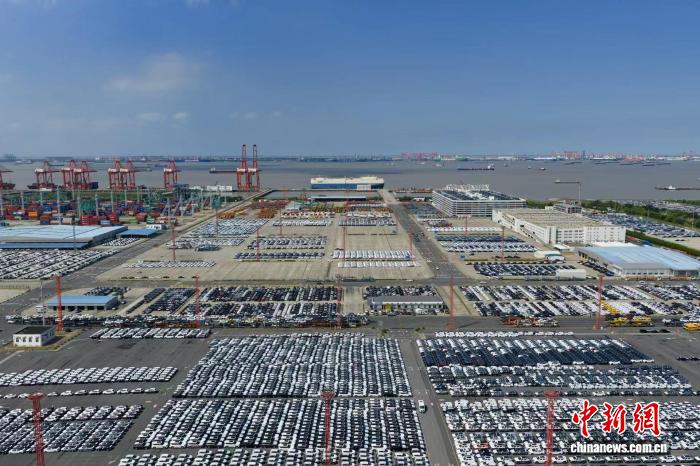
Core Viewpoint - The Yangtze River Delta region has shown a robust performance in foreign trade, with a total import and export value of 9.59 trillion yuan in the first seven months of the year, marking a year-on-year growth of 5.4% and accounting for 37.3% of the national total [1][2]. Group 1: Export Performance - Mechanical and electrical products remain the main export category for the Yangtze River Delta, with exports reaching 3.64 trillion yuan, a year-on-year increase of 9.4% [2]. - Notable growth in specific sectors includes electric vehicles (43.9%), high-end equipment (10.2%), and integrated circuit products (20.1%) [2]. Group 2: Import Trends - Imports related to daily life, such as food, medical instruments, and daily chemical products, have seen year-on-year growth of 4.8%, 10.1%, and 1.9%, respectively [2]. Group 3: Trade Relationships - The Yangtze River Delta's trade with ASEAN has reached 1.51 trillion yuan, a year-on-year increase of 17.5%, making ASEAN the largest trading partner for the region [2]. - Trade with Belt and Road Initiative countries totaled 4.77 trillion yuan, growing by 10.3% year-on-year [2]. - Trade with other RCEP member countries reached 3.02 trillion yuan, reflecting an 8.9% year-on-year increase [2]. - Trade with African countries amounted to 499.47 billion yuan, with a year-on-year growth of 15.2% [2]. Group 4: Role of Private Enterprises - Private enterprises in the Yangtze River Delta have played a significant role in foreign trade, with imports and exports totaling 5.35 trillion yuan, a year-on-year increase of 9.5%, accounting for 55.8% of the total trade value, up by 2.1 percentage points from the previous year [2].
前7个月长三角地区进出口总值同比增长5.4%
Xin Hua Cai Jing· 2025-08-15 06:32
Core Insights - The Yangtze River Delta region achieved an import and export value of 9.59 trillion yuan in the first seven months of this year, marking a 5.4% increase compared to the same period last year, and accounting for 37.3% of the national total, an increase of 0.7 percentage points year-on-year [1] Group 1: Export Performance - The export value of electromechanical products from the Yangtze River Delta reached 3.64 trillion yuan, reflecting a year-on-year growth of 9.4% [1] - Exports of electric vehicles, high-end equipment, and integrated circuit products increased by 43.9%, 10.2%, and 20.1% respectively [1] Group 2: Import Trends - Imports of food, medical instruments and equipment, and daily chemical products related to people's livelihoods grew by 4.8%, 10.1%, and 1.9% respectively in the first seven months [1] Group 3: Trade Partnerships - The Yangtze River Delta's trade with ASEAN reached 1.51 trillion yuan, a year-on-year increase of 17.5%, making ASEAN the largest trading partner [1] - Trade with countries involved in the Belt and Road Initiative amounted to 4.77 trillion yuan, up 10.3% year-on-year [1] - Trade with other members of the Regional Comprehensive Economic Partnership (RCEP) totaled 3.02 trillion yuan, reflecting an 8.9% increase [1] - Trade with African countries reached 499.47 billion yuan, showing a year-on-year growth of 15.2% [1] Group 4: Role of Private Enterprises - Private enterprises in the Yangtze River Delta played a significant role in foreign trade, with an import and export value of 5.35 trillion yuan, a year-on-year increase of 9.5%, accounting for approximately 55.8% of the total trade value, an increase of 2.1 percentage points from the previous year [1]
挖掘区域增长新潜力 RCEP经贸合作座谈会在京召开
Zhong Guo Xin Wen Wang· 2025-08-15 04:09
Core Viewpoint - The RCEP (Regional Comprehensive Economic Partnership) is recognized as the largest free trade agreement globally, increasingly benefiting economic cooperation and development among member countries since its implementation [1][2]. Group 1: RCEP Implementation and Achievements - Over the past four years, various provinces in China have introduced RCEP action plans, achieving results in tariff reductions, utilization of origin rules, and trade facilitation, injecting new momentum into regional cooperation [1]. - The recent China-ASEAN Foreign Ministers' meeting yielded positive outcomes, including the completion of negotiations for the China-ASEAN Free Trade Area 3.0 and an agreement on a five-year action plan for the comprehensive strategic partnership [1]. Group 2: Opportunities and Challenges - RCEP member countries, including Malaysia, Australia, South Korea, Vietnam, Indonesia, the Philippines, Japan, and Cambodia, shared insights on the opportunities brought by regional openness and trade investment cooperation with China since RCEP's implementation [2]. - The meeting emphasized the importance of effectively executing the RCEP agreement to promote regional open cooperation and development, which is crucial for the stability and growth of member countries [2].
乌海海关前7月RCEP签证货值同比增长190.74%
Nei Meng Gu Ri Bao· 2025-08-15 03:06
Group 1 - The core viewpoint highlights the positive impact of the RCEP (Regional Comprehensive Economic Partnership) on the export of fumed silica products from a company in Wuhai, with significant growth in the issuance of origin certificates and export value [1][2] - The company has applied for 41 RCEP certificates this year, with a total export value exceeding 3 million yuan, indicating a strong trend in international market expansion [1] - From January to July, Wuhai Customs issued 142 RCEP origin certificates, with a total export value of 176 million yuan, reflecting an 18.33% increase in the number of certificates and a 190.74% increase in export value year-on-year [1] Group 2 - Wuhai Customs has implemented various measures to help companies fully benefit from RCEP policy advantages, including direct communication and tailored service plans [2] - The introduction of a "one-stop service package" and "customs officials delivering policies" has improved understanding of origin rules and tariff reductions among businesses [2] - The self-service printing rate for origin certificates has reached 73.86%, significantly enhancing the efficiency of certificate processing and ensuring quick customs clearance for export products [2]
云台会吸引台胞台企抢抓RCEP机遇
Ren Min Ri Bao Hai Wai Ban· 2025-08-13 23:05
Group 1 - The 13th Yuntai Conference in Kunming, Yunnan, aims to promote cross-strait cooperation and attract more Taiwanese youth to invest in the region, highlighting the potential for a "cross-strait symbiotic forest" [1] - The conference theme "Sharing RCEP New Opportunities and Promoting New Development of Yuntai Integration" emphasizes the benefits of RCEP policies for Taiwanese businesses, particularly in accessing the South Asian and Southeast Asian markets [2][3] - Yunnan's unique resources and active port economy provide a strong foundation for collaboration with Taiwanese industries in sectors like electronics, precision manufacturing, and biotechnology [2] Group 2 - Taiwanese entrepreneurs in Yunnan share their success stories, such as the establishment of avocado plantations and the integration of health and wellness projects into local communities [3][5] - The supportive business environment and warm services in Yunnan are significant factors for Taiwanese companies choosing to stay and invest in the region [5] - The Yunnan provincial government has approved 1,247 Taiwanese-funded enterprises, with actual utilized capital reaching $2.176 billion, showcasing the ongoing investment trend [7]