
农业新质生产力

Search documents
岁稔年丰 乡村和美——2025,共绘乡村振兴新“丰”景
Xin Hua She· 2025-12-29 23:10
Core Insights - China's grain production has reached a historical high of 14.2975 trillion jin, an increase of 1.675 billion jin compared to the previous year, despite facing various natural disasters [3] - The comprehensive mechanization rate of crop farming has reached 76.7%, indicating significant advancements in agricultural technology [6] - The rural economy is thriving, with per capita disposable income for rural residents reaching 17,686 yuan, a real increase of 6.0% year-on-year [8] Group 1: Grain Production - Grain production in China has stabilized at over 1.4 trillion jin, overcoming challenges such as drought and heavy rainfall [1][3] - The increase in grain production is supported by enhanced agricultural policies, expanded planting areas, and improved crop yields [3] - The soybean planting area has remained above 15 million acres for four consecutive years, with production continuing to exceed 20 million tons [4] Group 2: Agricultural Technology - The implementation of smart agriculture has accelerated, with significant improvements in efficiency and productivity through technology [5][6] - Agricultural technology contributions have surpassed 64%, with over 95% of crop varieties being self-bred [6] - The integration of smart management systems in aquaculture has led to innovative farming models, enhancing productivity [5] Group 3: Rural Development - The rural revitalization strategy has led to the establishment of 2 to 3 dominant industries in 832 poverty alleviation counties, connecting nearly three-quarters of the impoverished population with new agricultural entities [7][10] - The transformation of rural areas has been marked by improved living conditions and increased economic activity, as seen in villages like Wangxiang [9][10] - The construction of rural infrastructure has been prioritized, ensuring access to essential services and enhancing the quality of life for residents [10]
汗水农业向智慧农业加速迈进,今年农业科技相关企业注册量创新高
Qi Cha Cha· 2025-12-29 03:26
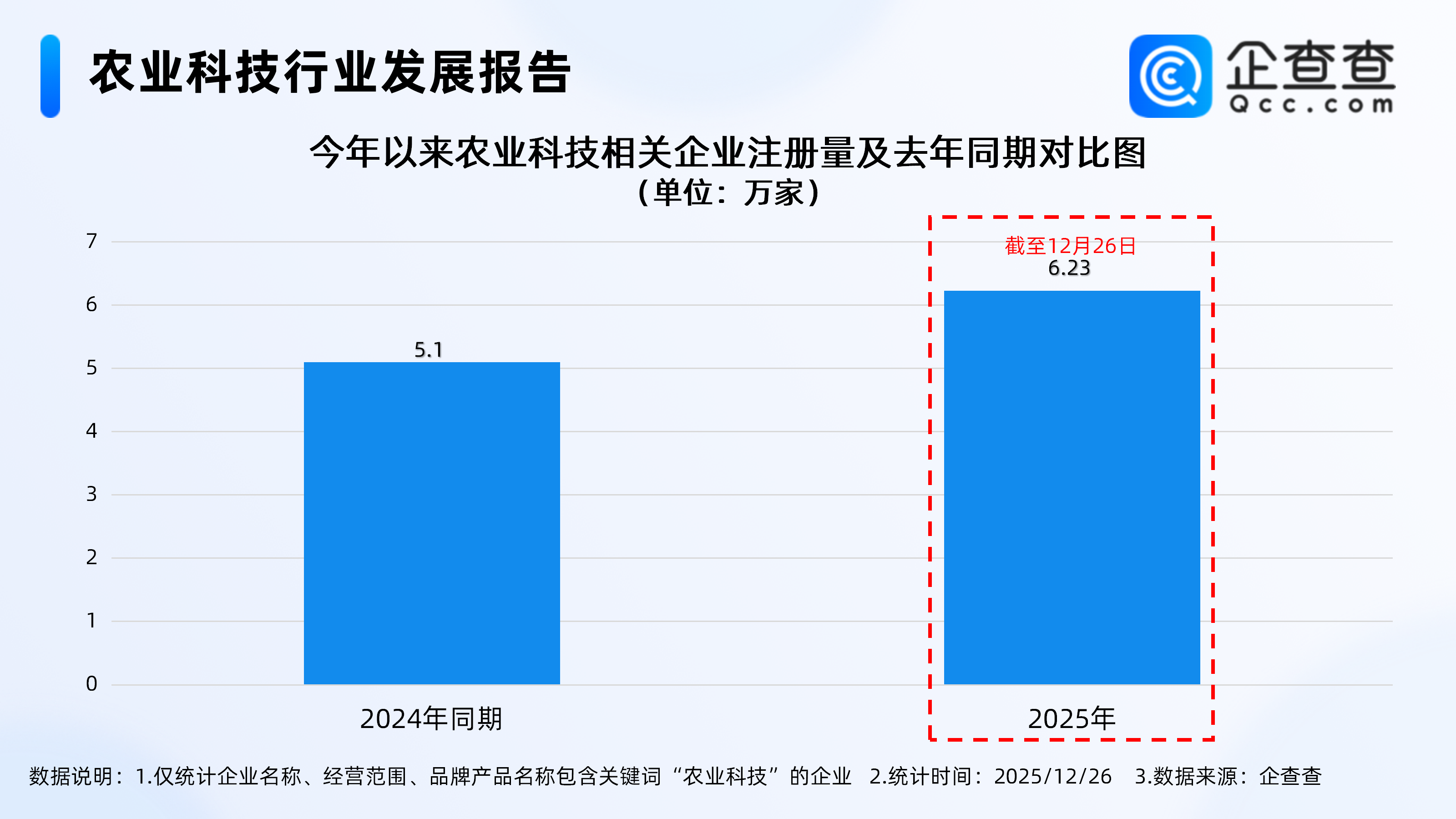
Core Viewpoint - The National Development and Reform Commission emphasizes the development of new agricultural productivity and the promotion of agricultural technology to enhance innovation and efficiency in the sector [1] Group 1: Agricultural Technology Development - The government aims to strengthen the agricultural technology innovation system and enhance the overall effectiveness of agricultural technology [1] - There is a focus on implementing actions to address shortcomings in agricultural machinery and promoting the development of high-end and regionally suitable agricultural equipment [1] - The initiative includes the construction of smart agriculture, expanding the application of big data, agricultural robots, and artificial intelligence in rural areas [1] Group 2: Agricultural Technology Enterprises - As of December 26, there are 430,000 existing agricultural technology-related enterprises in China [5][7] - The registration of agricultural technology enterprises has shown a significant increase, with 62,300 new registrations in 2023, marking a 22.12% year-on-year growth and the highest in the past decade [2][5] - The majority of these enterprises (31.94%) have been established for 5-10 years, while those established for 1-3 years and 3-5 years account for 21.29% and 18.44%, respectively [7] Group 3: Regional Distribution and Industry Classification - Agricultural technology enterprises are primarily concentrated in the East China region, accounting for 27.12% of the total [9] - Over 60% of these enterprises belong to the scientific research and technical services sector, with 65.11% classified under this category [11] - Other classifications include agriculture, forestry, animal husbandry, and fishery (22.03%) and wholesale and retail (7.39%) [11]


年终话“三农”|岁稔年丰 乡村和美——2025,共绘乡村振兴新“丰”景
Xin Hua She· 2025-12-29 01:08
Core Insights - In 2025, China's agricultural sector has shown resilience, achieving a grain production of over 1.4 trillion jin, despite facing various natural disasters [1][3] - The development of smart agriculture has accelerated, with a comprehensive mechanization rate of 76.7% for crop farming [1][7] - The rural revitalization strategy has been effectively implemented, with significant improvements in living conditions and income for farmers [1][9] Agricultural Production - Grain production reached 1.42975 trillion jin, an increase of 16.75 billion jin from the previous year [3] - The area for soybean cultivation has remained above 150 million mu for four consecutive years, with production exceeding 20 million tons [4] - The livestock sector has seen a production of 73.12 million tons of meat, a year-on-year increase of 3.8% [4] Smart Agriculture - The implementation of smart agriculture has led to enhanced efficiency, with agricultural technology contribution rates exceeding 64% [7] - The use of unmanned machinery in sugarcane harvesting has significantly improved operational efficiency [7] - The integration of technology in aquaculture has resulted in a successful model for multi-species farming [6] Rural Development - The average disposable income for rural residents reached 17,686 yuan, reflecting a real growth of 6.0% year-on-year [9] - The village of Wangxiang has transformed its environment and economy, achieving a collective income of 3.166 million yuan and an individual income of 51,000 yuan, up 6.5% [10][11] - The government has focused on improving rural infrastructure, ensuring all towns and villages have access to essential services [11][12]
年终话“三农”丨岁稔年丰 乡村和美——2025,共绘乡村振兴新“丰”景
Xin Hua She· 2025-12-29 00:18
Core Insights - In 2025, China's agricultural production has shown resilience against various natural disasters, achieving a grain output of 14.2975 trillion jin, an increase of 1.675 billion jin from the previous year [3] - The implementation of smart agriculture has accelerated, with the comprehensive mechanization rate for crop farming reaching 76.7% [7] - The rural economy is thriving, with per capita disposable income for rural residents reaching 17,686 yuan, reflecting a real growth of 6.0% year-on-year [9] Agricultural Production - Grain production in China has stabilized above 1.4 trillion jin, overcoming challenges such as drought and excessive rainfall [1][3] - The increase in grain output is supported by enhanced agricultural policies, expanded planting areas, and improved crop yields, particularly in the Northeast region [3] - The soybean planting area has remained above 15 million acres for four consecutive years, with production exceeding 20 million tons [4] Smart Agriculture - The integration of technology in agriculture has led to significant advancements, such as the use of unmanned machinery for sugarcane harvesting, improving efficiency [7] - The development of smart farming practices, including real-time monitoring of soil moisture and crop growth, has been emphasized [2][6] Rural Development - The rural revitalization strategy has led to the establishment of key industries in 832 poverty-stricken counties, fostering economic growth and reducing poverty [8][12] - Villages like Wangxiang have undergone significant transformations, enhancing their appeal and increasing collective economic income [10][11] Infrastructure and Living Conditions - Continuous improvements in rural infrastructure have been made, with all eligible towns and villages now having access to paved roads and basic utilities [12] - The focus on enhancing rural living conditions has contributed to a more vibrant rural culture and improved the overall quality of life for farmers [12]
数览中国脉动|科技赋能!“汗水农业”向“智慧农业”加速迈进
Xin Lang Cai Jing· 2025-12-28 06:02
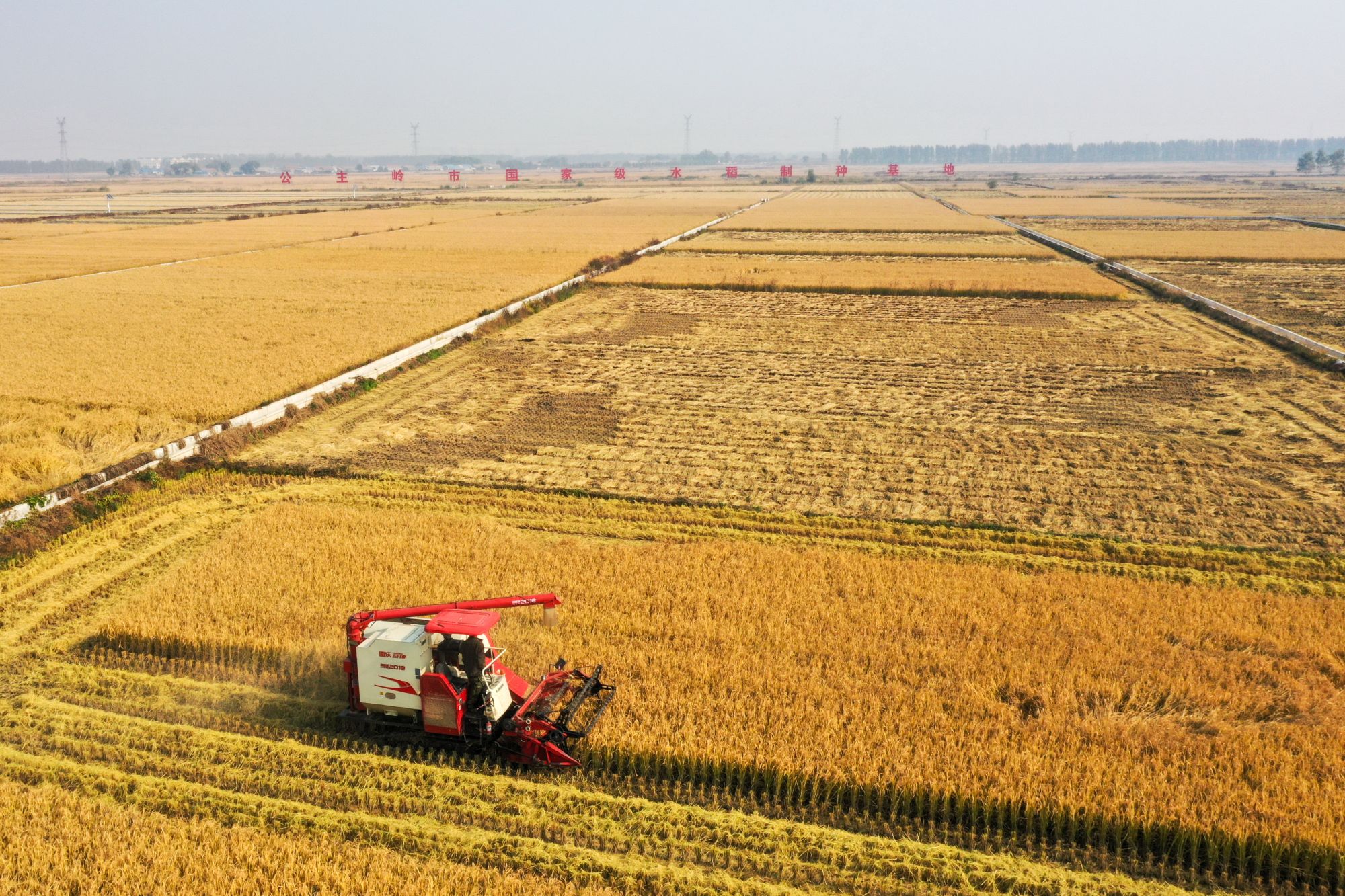
Group 1 - The core viewpoint emphasizes the importance of agricultural mechanization and intelligence as crucial supports for agricultural modernization [1] - China is accelerating the development of new agricultural productivity, leveraging technology to empower the entire chain of grain production, storage, and processing, transitioning from "labor-intensive agriculture" to "smart agriculture" [2] - Current data indicates that China has over 200 million agricultural machinery units, with over 2.2 million units of Beidou terminal equipment, total agricultural power exceeding 1.1 billion kilowatts, and a mechanization rate of over 75% [3] Group 2 - The application of advanced technologies such as AI, IoT, and big data in agriculture is increasing, reflecting the growth of the digital economy [6] - Significant achievements have been made in reducing food waste during processing, with the grain processing loss rate reduced to 0.8% and transportation loss rate to 0.08% [8] - Since the 14th Five-Year Plan, China's agricultural technology innovation has reached a leading position globally, with substantial improvements in the overall effectiveness of the agricultural technology innovation system and rapid breakthroughs in key core technologies [9]
数览中国脉动丨科技赋能!“汗水农业”向“智慧农业”加速迈进
Xin Hua She· 2025-12-28 05:40
Group 1 - The core viewpoint emphasizes the importance of agricultural mechanization and intelligence as crucial supports for agricultural modernization, with a focus on accelerating the transition from "labor-intensive agriculture" to "smart agriculture" through technological empowerment in the entire food production chain [1] Group 2 - Current data indicates that China's agricultural machinery ownership exceeds 200 million units, with over 2.2 million units of Beidou terminal devices applied, total agricultural power exceeding 11 billion kilowatts, and a mechanization rate of over 75%, demonstrating the efficient service of agricultural machinery to production [2] Group 3 - The application of advanced technologies such as AI, IoT, and big data is increasingly prevalent in the agricultural sector, reflecting the robust development of the digital economy [4] Group 4 - Significant achievements have been made in reducing food waste during processing, with the grain processing loss rate reduced to 0.8% and transportation loss rate to 0.8‰, showcasing effective efforts in the food circulation sector [6] Group 5 - Since the 14th Five-Year Plan, China's agricultural technology innovation has reached a leading position globally, with significant improvements in the overall effectiveness of the agricultural technology innovation system and rapid breakthroughs in key core technologies [8]
科技赋能!“汗水农业”向“智慧农业”加速迈进
Xin Hua She· 2025-12-28 03:08
Group 1 - The core viewpoint emphasizes the importance of agricultural mechanization and intelligence as crucial support for agricultural modernization, with a focus on developing new productive forces in agriculture through technology [1] - The current agricultural machinery ownership in China exceeds 200 million units, with over 2.2 million units of Beidou terminal devices applied, total agricultural power exceeding 11 billion kilowatts, and a mechanization rate of over 75% [2] - The application of advanced technologies such as AI, IoT, and big data is increasingly prevalent in the agricultural sector, contributing to the transformation towards "smart agriculture" [4] Group 2 - Significant achievements have been made in reducing food waste during processing, with the grain processing loss rate reduced to 0.8% and transportation loss rate to 0.8‰ [6] - Since the 14th Five-Year Plan, China's agricultural technology innovation has reached a leading position globally, with substantial improvements in the overall effectiveness of the agricultural technology innovation system and rapid breakthroughs in key core technologies [8]
奋进“十五五”开局起好步|以发展现代化大农业为主攻方向着力夯实粮食安全根基
Xin Lang Cai Jing· 2025-12-27 20:46
Core Viewpoint - The provincial economic work meeting emphasizes the importance of grasping current opportunities and making detailed plans for the upcoming year, aiming for a strong start to the "14th Five-Year Plan" [1] Group 1: Economic Development Strategies - The meeting outlines the main tasks for next year's economic work, focusing on solidifying food security, promoting technological, green, quality, and brand agriculture, and implementing a plan to increase grain production by ten million tons [2] - The province aims to enhance its role as a national grain security "ballast stone" by building a significant commodity grain production base and improving overall production capacity [2] Group 2: Agricultural Modernization - The province seeks to be a leader in agricultural modernization by promoting new technologies, equipment, and business models, and aims to achieve the "five modernizations" in agriculture [3] - Initiatives include developing smart agriculture, establishing a national AI application pilot base in agriculture, and creating a modern seed industry province [3] Group 3: Quality and Safety in Agriculture - The province plans to build a model for comprehensive green transformation in agriculture, ensuring food safety and expanding the market influence of high-quality agricultural products [3] - Efforts will be made to enhance the quality of agricultural products and expand the scale of customized agriculture [3] Group 4: Rural Development and Poverty Alleviation - The meeting emphasizes the need to prevent large-scale poverty and establish a robust monitoring and support system for at-risk populations [4] - Plans include improving rural living conditions, promoting high-quality agricultural processing, and enhancing rural governance [4] Group 5: Agricultural Innovation and Economic Growth - The province aims to stimulate agricultural and rural development by advancing land reform, enhancing collective economic strength, and establishing modern agricultural service centers [4]
北京首农食品集团财务公司董事长赵兵: 金融支持农业新质生产力
Zhong Guo Jing Ying Bao· 2025-12-27 00:19
Core Viewpoint - The introduction of "new quality productivity" in agriculture represents a significant trend in modern agricultural development, emphasizing the integration of advanced technology and innovative management to enhance production efficiency, product quality, and sustainability [1] Group 1: Agricultural Technology and Innovation - The Shou Nong Cuihu Factory in Beijing exemplifies advanced agricultural technology, featuring a 200,000 square meter greenhouse with innovations such as soilless cultivation, drip irrigation, and fully automated harvesting [2] - Shou Nong Food Group has established a complete industrial ecosystem covering breeding, cultivation, processing, distribution, and retail, ensuring stable supply and quality safety for urban consumers [3] Group 2: Financial Support for New Quality Productivity - The financial company of Shou Nong Food Group is committed to supporting the cultivation of new quality productivity through targeted financial services, including project loans tailored to specific technological needs [5] - Significant financial backing includes a 1.5 billion yuan credit support for the dairy breeding sector and 700 million yuan for advancements in pig breeding technology, highlighting the company's role in driving agricultural modernization [5] Group 3: Technological Leadership - Shou Nong Food Group maintains a leading position in breeding technology, with its duck breeding techniques recognized globally and its chicken breeding ranking among the top three worldwide [4] - The company has achieved breakthroughs in cell-cultured meat technology and launched the first high-melatonin functional dairy product in China, showcasing its commitment to innovation in the food industry [4]
科技赋能,品牌增效:威海“十四五”乡村富民产业发展成效显著
Qi Lu Wan Bao· 2025-12-26 12:56
Core Viewpoint - Since the "14th Five-Year Plan," Weihai City has focused on the construction of a refined city and the goal of promoting common prosperity for farmers, using the development of "refined agriculture" as a key strategy to advance high-quality development of rural characteristic industries and effectively broaden farmers' income channels [1][2] Group 1: Industrial Structure - Weihai has pioneered the "refined agriculture" development concept nationwide, issuing the "Implementation Opinions on Accelerating the Development of Refined Agriculture," establishing a development pattern of "four modernizations and one high" [1] - The city emphasizes cultivating twelve major advantageous characteristic industries, represented by "five golden flowers": apples, American ginseng, figs, peanuts, and tea, promoting industrial cluster development according to the "six ones" standard [1] Group 2: Modernization of Industrial Foundation - The city actively implements the "1+3" project for new agricultural productivity, focusing on modern seed industry innovation to drive the coordinated development of facilities, smart, and ecological circular agriculture [1] - Weihai has established a leading domestic virus-free apple seedling breeding system, independently cultivating and introducing numerous excellent varieties, becoming a national "Apple Silicon Valley" [1] - The establishment of 52 provincial-level smart agriculture application bases has strengthened the technological and equipment foundation for industrial development, providing robust momentum for industrial upgrades [1] Group 3: Value Chain Development - Weihai strengthens processing transformation by implementing special subsidy policies to extend agricultural products into deep processing fields such as juice, fruit wine, and cosmetics, with the number of scale agricultural processing enterprises reaching 375 [2] - The city cultivates well-known brands and creates an overall brand image of "Thousand Miles of Mountains and Seas Fresh Seasonal Products," continuously promoting slogans like "China's Apple Industry Looks to Weihai" [2] - Enterprises are organized to participate in exhibitions in key cities such as Beijing, Shanghai, Hong Kong, and Macau, enhancing market recognition and premium capability of Weihai agricultural products [2] Group 4: Future Development - Weihai City will continue to deepen the development of refined agriculture, further extend the industrial chain, and enhance the value chain to provide solid support for comprehensive rural revitalization and sustained income growth for farmers [2]