
现代化大农业

Search documents
2025年吉林新建高标准农田910万亩
Ren Min Ri Bao· 2026-02-01 22:14
Core Insights - Jilin Province plans to establish 9.1 million acres of high-standard farmland by 2025, which will account for 66.25% of the permanent basic farmland [1] - The province aims to accelerate the development of modern agriculture, with protective tillage area reaching 41.79 million acres [1] - Significant growth in agricultural practices includes a 61.2% increase in "water and fertilizer integration + dense planting" covering 11.38 million acres, and a 44% increase in "one spray multiple promotion" covering 3.83 million acres [1] Agricultural Production Highlights - Jilin's beef slaughter and processing volume has exceeded 800,000 heads, marking a 54% increase [1] - The ecological fishery output value has surpassed 35 billion yuan, achieving a doubling effect [1] - The total output value of the ginseng industry chain has exceeded 100 billion yuan [1] Future Agricultural Strategies - Jilin will continue to promote protective tillage, deep plowing, and organic fertilizer return as key technical measures [1] - The province will focus on water and fertilizer integration, smart agriculture, agricultural product branding, and financial services in 20 counties for active exploration [1]
巴彦 大幅增产增收 迎来高质量丰收年
Xin Lang Cai Jing· 2026-01-12 22:07
Core Insights - In 2025, Bayannaoer County focuses on modern agricultural development, emphasizing green agriculture and implementing a comprehensive agricultural revitalization plan, resulting in a grain output of 4.0856 billion jin, marking a year of high-quality harvest [1][2] Group 1: Agricultural Production - The total area of grain crops in the county is 3.4242 million acres, with an average yield of 1,193.2 jin per acre, representing a 6.3% increase from 2024 [1] - The total grain output is 4.0856 billion jin, which is a 6.29% increase compared to 2024 [1] - Corn yield is measured at 1,373.9 jin per acre, up 7.37% from 2024, with a total production of 3.39352 billion jin, a 5.03% increase [1] - Soybean yield is 428.6 jin per acre, showing a 12.8% increase, with total production reaching 241.01 million jin, a 23.89% increase [1] - Rice yield is 1,158.3 jin per acre, up 7.11%, with total production of 446.71 million jin, an 8.02% increase [1] Group 2: Agricultural Technology and Practices - In 2025, Bayannaoer County applied for a demonstration county for yield improvement, promoting large ridge planting over 302,000 acres, including 143,279 acres of soybeans and 158,721 acres of corn [2] - Average soybean yield using large ridge planting is 432.7 jin per acre, with an increase of 41.3 jin compared to traditional methods, resulting in an additional income of 82.6 yuan [2] - Average corn yield using large ridge planting is 1,412.5 jin per acre, with an increase of 117.4 jin compared to traditional methods, resulting in an additional income of 125.03 yuan [2] - The county has established 1.4045 million acres of high-standard farmland, enhancing land quality and agricultural production capacity [2] Group 3: Agricultural Collaboration and Management - Agricultural cooperatives and enterprises are taking the lead, replacing smallholder farming, allowing small farmers to benefit from modern large-scale agriculture [3] - The collaboration in land cultivation is deepening, and the benefits of scale management are becoming increasingly evident [3]
集贤 农产品营收超60亿元
Xin Lang Cai Jing· 2026-01-12 22:06
Core Insights - The main focus is on the development of modern agriculture in Jixian County, aiming to establish 50 agricultural processing enterprises by 2025, with a processing volume exceeding 2.26 million tons and revenue surpassing 6 billion yuan [1] Group 1: Agricultural Development Goals - By 2025, Jixian County plans to complete the construction of 205,000 acres of high-standard farmland [1] - The county will implement an innovative "one main, four packages" land reclamation cooperation model, with the area promoted increasing by 778% year-on-year [1] Group 2: Agricultural Processing Industry - The target is to cultivate 6 leading agricultural industrialization enterprises at the provincial and municipal levels [1] - The total number of agricultural processing enterprises is expected to reach 50, with a processing volume of over 2.26 million tons and revenue exceeding 6 billion yuan [1] Group 3: Financial Support and Achievements - Jixian County aims to secure 42.0162 million yuan in rural comprehensive reform transfer payment funds, ranking first in the province [1] - A total of 19.14 million yuan will be invested from central and provincial financial support for rural revitalization, with all 17 projects completed and recognized by the provincial government [1]

奋进“十五五”开局起好步|以发展现代化大农业为主攻方向着力夯实粮食安全根基
Xin Lang Cai Jing· 2025-12-27 20:46
Core Viewpoint - The provincial economic work meeting emphasizes the importance of grasping current opportunities and making detailed plans for the upcoming year, aiming for a strong start to the "14th Five-Year Plan" [1] Group 1: Economic Development Strategies - The meeting outlines the main tasks for next year's economic work, focusing on solidifying food security, promoting technological, green, quality, and brand agriculture, and implementing a plan to increase grain production by ten million tons [2] - The province aims to enhance its role as a national grain security "ballast stone" by building a significant commodity grain production base and improving overall production capacity [2] Group 2: Agricultural Modernization - The province seeks to be a leader in agricultural modernization by promoting new technologies, equipment, and business models, and aims to achieve the "five modernizations" in agriculture [3] - Initiatives include developing smart agriculture, establishing a national AI application pilot base in agriculture, and creating a modern seed industry province [3] Group 3: Quality and Safety in Agriculture - The province plans to build a model for comprehensive green transformation in agriculture, ensuring food safety and expanding the market influence of high-quality agricultural products [3] - Efforts will be made to enhance the quality of agricultural products and expand the scale of customized agriculture [3] Group 4: Rural Development and Poverty Alleviation - The meeting emphasizes the need to prevent large-scale poverty and establish a robust monitoring and support system for at-risk populations [4] - Plans include improving rural living conditions, promoting high-quality agricultural processing, and enhancing rural governance [4] Group 5: Agricultural Innovation and Economic Growth - The province aims to stimulate agricultural and rural development by advancing land reform, enhancing collective economic strength, and establishing modern agricultural service centers [4]
大国五年丨山海协同陆海联动,绘就万里山河新画卷
Xin Hua She· 2025-12-10 00:46
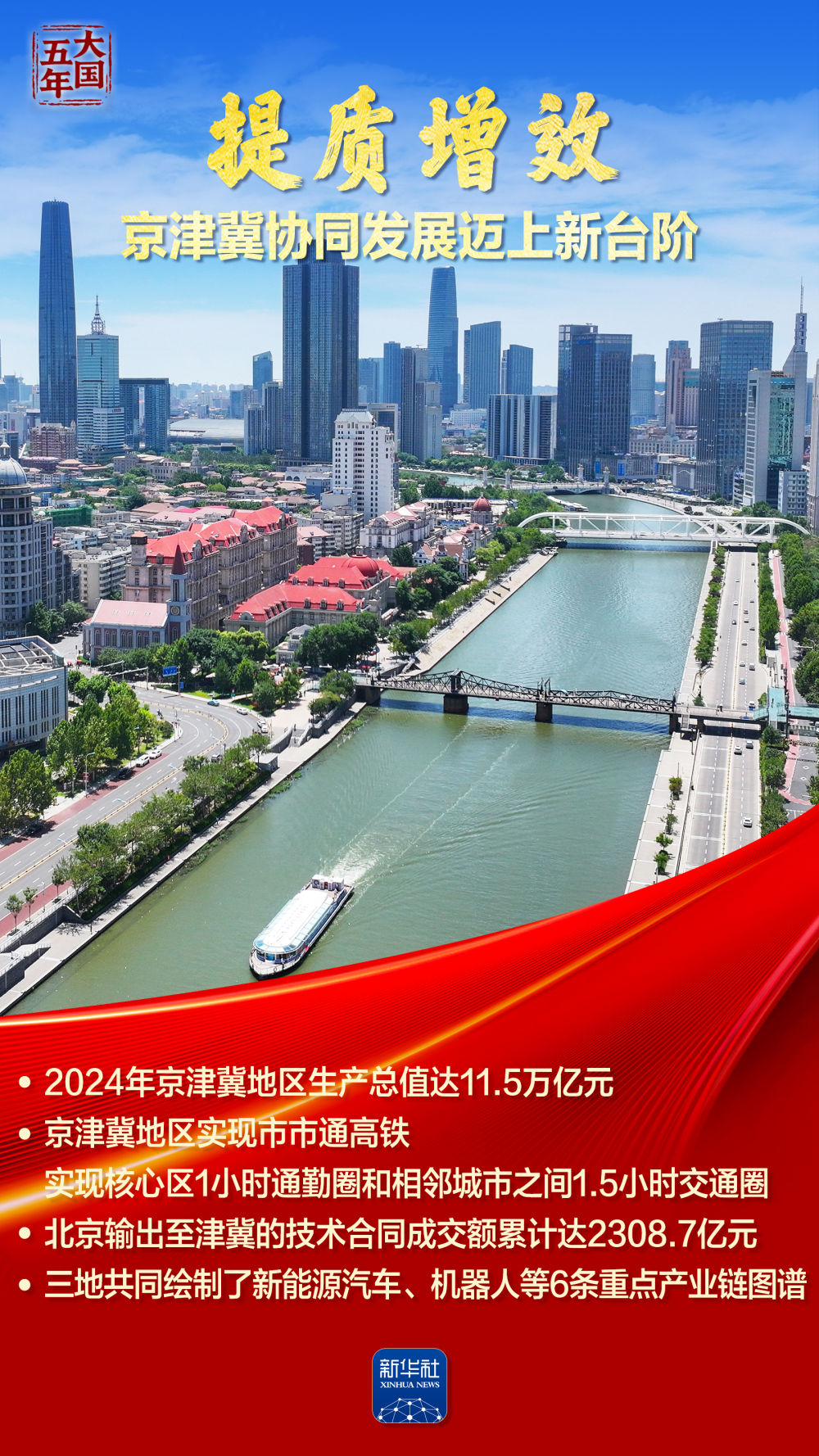
Group 1: Economic Development and Regional Coordination - The economic output of the Beijing-Tianjin-Hebei, Yangtze River Delta, and Guangdong-Hong Kong-Macao Greater Bay Area is expected to exceed 40% of the national total by 2024 [1] - The Northeast region's grain production accounted for 25.3% of the national total last year, indicating a strong strategic support for the region [12] - The "West-East Power Transmission" capacity has surpassed 300 million kilowatts, while the computing power of the "East Data West Calculation" eight major hub nodes accounts for approximately 70% of the national total [16] Group 2: Industry and Innovation - The Yangtze River Delta has a research and development expenditure accounting for 3.34% of its GDP, exceeding the national average by nearly 0.7 percentage points [7] - The economic total of the Guangdong-Hong Kong-Macao Greater Bay Area has surpassed 14 trillion yuan, with the "Shenzhen-Hong Kong-Macao" innovation cluster ranking first globally [8] - The Northeast region is focusing on developing modern agriculture and constructing a modern industrial system with distinctive advantages [12] Group 3: Infrastructure and Connectivity - The Beijing-Tianjin-Hebei region has achieved high-speed rail connectivity between all cities, creating a one-hour commuting circle in the core area and a 1.5-hour transportation circle between neighboring cities [4] - The high-speed rail mileage in the Greater Bay Area exceeds 3,000 kilometers, making the one-hour living circle a reality [10] - Over 60% of the national expressway main lines and high-speed rail main corridors pass through the central region, accelerating the construction of major transportation hubs [14]

我国将持续推动农垦改革
Ren Min Ri Bao· 2025-12-06 00:33
Core Viewpoint - The article emphasizes the importance of modernizing agriculture in China during the "14th Five-Year Plan" period, focusing on the role of agricultural reclamation in achieving agricultural modernization [1] Group 1: Agricultural Modernization Goals - The "14th Five-Year Plan" period is identified as a crucial stage for consolidating and expanding the achievements of agricultural reclamation reform and accelerating the development of modern agriculture [1] - The Ministry of Agriculture and Rural Affairs has outlined key tasks for this period, including promoting the transformation and upgrading of agricultural industries and enhancing the quality and branding of agricultural products [1] Group 2: Reform and Development Strategies - The meeting highlighted the need to focus on the goal of developing modern agriculture, advancing the corporate reform of reclamation areas, and innovating agricultural management systems [1] - Emphasis was placed on increasing technological investment, promoting green development, and accelerating the upgrade of leading agricultural industries [1] Group 3: Production Targets - By 2024, China's agricultural reclamation grain output is expected to exceed 800 billion jin, contributing significantly to the national grain increase [1] - The article notes that the yield per unit area of major grain and oil crops is steadily improving, which is vital for national food security [1]
“十五五”时期我国将持续推动农垦改革
Xin Hua She· 2025-12-03 14:51
Core Viewpoint - The core focus during the "14th Five-Year Plan" period is the development of modern agriculture, emphasizing the importance of agricultural reform and the role of agricultural reclamation in the overall modernization of agriculture [1] Group 1: Agricultural Reform and Development - The Ministry of Agriculture and Rural Affairs held a national conference to summarize the achievements of agricultural reclamation reform and outline key tasks for the "14th Five-Year Plan" period [1] - The "14th Five-Year Plan" period is identified as a crucial stage for consolidating and expanding the results of agricultural reclamation reform, accelerating the development of modern agriculture, and transforming agriculture into a modern industry [1] Group 2: Key Tasks and Goals - The conference emphasized the need to focus on the goal of developing modern agriculture, advancing the corporate reform of reclamation areas, innovating agricultural management systems, and enhancing technological investment [1] - There is a strong push for green development, upgrading the entire industrial chain of leading industries, and fostering industrial clusters [1] Group 3: Achievements and Future Projections - Over the past decade, significant progress has been made in agricultural reclamation reform, leading to profound changes in the system and an increase in comprehensive agricultural production capacity [1] - In 2024, China's grain output from agricultural reclamation is expected to exceed 800 billion jin, with steady improvements in the yield of major grain and oil crops, contributing significantly to national grain production [1]
“十四五”期间长春现代化大农业发展实现多点突破
Zhong Guo Xin Wen Wang· 2025-12-02 10:25
Core Viewpoint - During the "14th Five-Year Plan" period, Changchun has made significant progress in modern agriculture, aiming to establish itself as a national demonstration area for modern agricultural development, focusing on food security, county economic growth, industrial integration, and poverty alleviation achievements [1][2]. Group 1: Agricultural Production - All six counties (cities and districts) under Changchun have entered the top 100 grain-producing counties in the country, with Yushu, Nong'an, and Gongzhuling ranking among the top five grain-producing counties nationwide [1]. - The total grain output in Changchun increased from 24.73 billion jin at the beginning of the "14th Five-Year Plan" to an expected 25.992 billion jin in 2024, with a target of reaching 26.5 billion jin by the end of this year [1]. Group 2: Technological Advancements - Changchun has launched a "black soil granary" technology campaign, maintaining over 12 million acres of protective tillage, the largest area in Northeast China, with the highest soil quality rating in Jilin Province [1]. - The city has established 13.91 million acres of high-standard farmland, with nearly 60% of permanent basic farmland modernized for irrigation and drainage [1]. Group 3: Agricultural Innovation and Mechanization - The city has developed 936 crop varieties with independent intellectual property rights and achieved a 96% level of agricultural mechanization, earning the title of "National Major Crop Production Full Mechanization Demonstration City" [2]. - Changchun is transitioning its agricultural focus from "increasing production" to "improving quality" [2]. Group 4: Agricultural Processing and Industry Development - In agricultural processing, Changchun has cultivated advantageous industrial chains in corn chemicals, beef cattle, pork, and rice, aiming for a gross output value of 78.7 billion yuan in 2024, representing over a 50% increase from 2020 [2]. - The area for facility horticulture production reached 216,000 acres, the largest in Jilin Province, and the integrated rice-fish farming area has increased to 2.6 times that of 2020 [2]. Group 5: Economic Growth and Industrial Structure - The county economy in Changchun is expected to reach a GDP of 184 billion yuan in 2024, an increase of 32.3 billion yuan from 2020 [2]. - The main industries identified include auto parts, equipment manufacturing, and healthcare, with the output value of leading industries reaching 37.14 billion yuan, accounting for 50.7% of the county's industrial output [2].
黑龙江累计建成高标准农田1.17亿亩
Xin Hua She· 2025-11-13 13:41
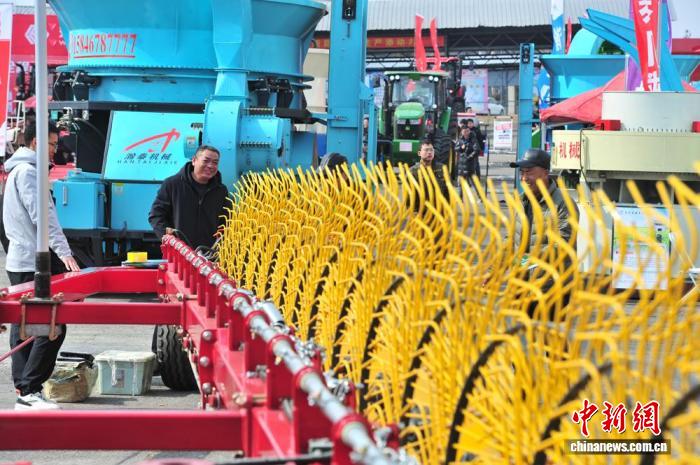
Core Viewpoint - Heilongjiang Province is focusing on modern agricultural development as a primary strategy, aiming to enhance agricultural infrastructure and food security through various initiatives and policies [1] Group 1: Agricultural Development Initiatives - Since the beginning of the 14th Five-Year Plan, Heilongjiang Province has implemented an agricultural revitalization plan, targeting the development of modern agriculture [1] - By the end of 2024, the province aims to have built a total of 1.17 million hectares of high-standard farmland [1] Group 2: Policy and Infrastructure - The province has introduced multiple policy documents to strengthen high-standard farmland construction, with the goal of converting all permanent basic farmland into high-standard farmland [1] - The focus is on enhancing the eight elements of agricultural infrastructure: fields, soil, water, roads, forests, electricity, technology, and management [1] Group 3: Future Goals and Production Capacity - Heilongjiang Province plans to implement a new round of grain production increase, aiming for a comprehensive grain production capacity of 200 billion jin by 2030 [1] - The province intends to enhance its agricultural disaster prevention and mitigation capabilities to ensure the supply of important agricultural products [1] Group 4: Technological Advancements - The province will accelerate the construction of a pilot area for high-end intelligent agricultural machinery research and manufacturing, promoting integrated trials for agricultural machinery development and application [1] - The goal is to significantly improve overall agricultural production capacity and position Heilongjiang as a leader in agricultural modernization [1]
寒地“热土”正奋进:东北绘就振兴新图景
Xin Hua Wang· 2025-10-19 00:50
Core Viewpoint - The Northeast region of China is undergoing significant development and revitalization, focusing on transportation integration, modern agriculture, and cross-border trade to enhance its strategic importance in national security and economic growth [1][4][7]. Group 1: Transportation Development - The Northeast region has made strides in transportation integration, enhancing both passenger and freight efficiency, which is crucial for regional development [2]. - The opening of the Shenbei High-speed Railway has reduced travel times significantly, connecting key areas and facilitating integration with the Beijing-Tianjin-Hebei and Bohai Rim regions [2]. - The G331 border tourism corridor in Jilin has been fully opened, contributing to the national "14th Five-Year Plan" and promoting inter-city collaboration [2]. Group 2: Modern Agriculture - The Northeast is focusing on modern agriculture to ensure national food security while extending the agricultural value chain, aiming to transform raw products into higher-value goods [4]. - Black soil regions are experiencing record harvests, with significant advancements in agricultural technology and mechanization, leading to an average yield of over 720 jin per mu, a 26.7 jin increase from the end of the "13th Five-Year Plan" [4][6]. - The ginseng market in Jilin is thriving, with over 600 ginseng products being exported to more than 30 countries, and the total industry chain transaction value expected to reach 18.6 billion yuan in 2024 [5]. Group 3: Cross-Border Trade and Investment - Border cities like Suifenhe are witnessing a surge in foreign visitors, contributing to local tourism and commerce, with a 36.9% increase in tourist numbers during the recent holiday period [7]. - The cross-border e-commerce sector in Jilin is expanding rapidly, with a projected import-export volume of 5.2 billion yuan in 2024, and a 68.3% year-on-year growth in the first half of this year [7][8]. - The Liaoning International Investment and Trade Fair attracted numerous global enterprises, resulting in significant foreign investment growth of 126.3% in the first half of the year [8].