折叠屏

Search documents
恒铭达(002947)2025年半年报点评:大客户模切主业驱动25Q2高速增长 数通业务成长可期
Xin Lang Cai Jing· 2025-08-21 10:38
Core Viewpoint - The company reported strong revenue and profit growth in the first half of 2025, driven primarily by its consumer electronics business, with expectations for continued growth due to favorable market conditions and strategic partnerships [1][2]. Financial Performance - In H1 2025, the company achieved revenue of 1.244 billion yuan, a year-over-year increase of 32.18% [1] - The net profit attributable to shareholders was 234 million yuan, reflecting a year-over-year growth of 43.01% [1] - The gross margin for H1 2025 was 31%, up 1.07 percentage points year-over-year, while the net profit margin was 18.90%, an increase of 1.4 percentage points [1] - In Q2 2025, revenue reached 596 million yuan, a year-over-year increase of 15.38% [1] - The net profit attributable to shareholders in Q2 2025 was 126 million yuan, up 34.96% year-over-year [1] Business Segments - The precision flexible structural components segment (consumer electronics) generated revenue of 1.031 billion yuan in H1 2025, a year-over-year increase of 38.6% [2] - The precision metal components segment (Huayang Tong) achieved revenue of 195 million yuan, a year-over-year increase of 5.34% [2] - The company has established strong relationships with major clients, including Apple and Google, positioning itself well for future growth in the die-cutting market [2] Market Trends and Opportunities - The company is poised to benefit from a new growth cycle in the die-cutting market, driven by AI terminal layouts and expectations for foldable screens [2] - Upgrades in computing chips and storage are expected to drive demand for heat dissipation and shielding components, contributing to a new growth phase in the die-cutting industry [2] - Huayang Tong is well-positioned to capitalize on the AI development trend, providing precision metal components for servers and switches, which are critical for high-density layouts and stability [3] Investment Outlook - The consumer electronics business is entering a harvest phase, while Huayang Tong's expansion into data communication, charging piles, and energy storage is progressing well [3] - The company has adjusted its net profit forecasts for 2025-2027 to 700 million, 945 million, and 1.229 billion yuan, respectively [3] - Based on comparable companies, a target price of 68.3 yuan is set, with a maintained "strong buy" rating [3]

iPhone 17量产,机构密集调研,苹果产业链迎“黄金窗口期”
Zheng Quan Zhi Xing· 2025-08-21 08:40
Core Viewpoint - The Apple supply chain is experiencing heightened interest from institutional investors, driven by strong expectations for the new iPhone 17's production cycle and upgrades in components and modules [1][2]. Group 1: iPhone 17 Production and Upgrades - iPhone 17 has entered large-scale production, with major manufacturer Foxconn ramping up hiring in anticipation of peak season [1]. - The iPhone 17 series is expected to see a price increase of approximately $50 compared to the previous generation, with the iPhone 17 starting at $799, the iPhone 17 Pro at $1,049, and the iPhone 17 Pro Max at $1,249 [1]. - Analysts predict significant upgrades in components such as SoC chips, cooling systems, and battery technology, driven by enhanced AI capabilities [2]. Group 2: Institutional Interest in Supply Chain Companies - Over 50 institutions have conducted research on key Apple supply chain companies, including Crystal Optoelectronics, Industrial Fulian, and Lens Technology [2]. - Crystal Optoelectronics reported a total revenue of 1.482 billion yuan in Q1 2025, a year-on-year increase of 10.2%, and a net profit of 221 million yuan, up 23.67% [3]. - Industrial Fulian, Apple's largest contract manufacturer, achieved total revenue of 360.76 billion yuan in H1 2025, a 35.58% year-on-year growth, with a net profit of 12.113 billion yuan, up 38.61% [3]. Group 3: Future Innovations and Market Trends - Lens Technology, a major supplier of glass covers and metal casings for Apple, reported Q1 2025 revenue of 17.063 billion yuan, a 10.1% increase, and a net profit of 429 million yuan, up 38.71% [4]. - The true "second curve" for the Apple supply chain may lie in breakthroughs in foldable screens and AI glasses, with predictions for the first foldable iPhone to launch in September 2026 at a price of $1,999 [4]. - Analysts suggest that the Apple supply chain could enter a valuation recovery phase as concerns over AI innovation and tariffs dissipate, with a focus on core suppliers and new product opportunities [5].


红宝书20250820
2025-08-21 04:45
Summary of Conference Call Records Industry Overview Micro Pump Liquid Cooling Technology - Huawei's upcoming Mate 80 RS is expected to feature a proprietary micro pump cooling chip, marking a potential first in commercial-grade technology integration within the smartphone industry [1] - The micro pump liquid cooling system consists of a liquid cooling drive chip, piezoelectric micro pump, and flexible liquid cooling membrane, which efficiently dissipates heat through a closed-loop system [1] - Major manufacturers like Huawei, Xiaomi, and Vivo are adopting this technology, with the liquid cooling module valued over 50 yuan per unit, indicating a market potential exceeding 10 billion yuan [1] Key Companies - **Rifeng Co., Ltd.**: Reportedly the main supplier of liquid cooling plates for Huawei's micro pump liquid cooling phone cases, also involved in 5G base station power and communication cables [1] Low-Power High-Voltage Piezoelectric Micro Pump - Aiwei Electronics has developed a low-power high-voltage 180Vpp piezoelectric micro pump liquid cooling product, set for mass production in Q4 2025 [2] - Related companies include Nanchip Technology and Zhihua Power, both advancing liquid cooling solutions [2] Foldable Screen Technology - Apple is anticipated to launch its first foldable screen phone in late 2026, with production expected to start in Q3 2025 [2] - The foldable phone market is projected to grow, with an estimated 12 billion USD market value for hinges by 2025 [2] Key Companies - **Yian Technology**: Allegedly a supplier of liquid metal hinges for Apple's foldable screens [2] Market Opportunities Liquid Cooling Ecosystem - Intel has established a universal quick connector (UQD) interoperability alliance, aiming to innovate liquid cooling technology [4] - The GB300 UQD connector's size has been reduced to one-third, with a projected market size of 80 billion yuan by 2026 [4] Key Companies - **Chuanhuan Technology**: Engaged in liquid cooling pipeline and UQD supply [4] - **Yingwei Technology**: A certified partner in Intel's UQD alliance [4] Potassium Hexafluorophosphate (KPF6) - A breakthrough in KPF6 allows for cooling across a wide temperature range, from room temperature to -269°C, making it the only solid-state phase change cooling material [6] - The market for KPF6 is estimated to reach 8-12 billion yuan in the short term and over 50 billion yuan by 2030 [7] Key Companies - **Tianji Co., Ltd.**: A leading manufacturer of lithium hexafluorophosphate and related products [7] Financial Performance Jinbai Ze - Industrial Fulian's stock surged, with a market capitalization nearing 1 trillion yuan, driven by a 60% year-on-year revenue growth in AI server sales [9] Renhe Pharmaceutical - The company has developed the world's first brain-machine interaction smart glasses, targeting a market exceeding 300 billion yuan for youth myopia prevention [11] Jilin Chemical Fiber - The company holds over 30% market share in artificial silk production, with a significant focus on viscose filament and carbon fiber [12] Huasheng Co., Ltd. - The company is acquiring Shenzhen Yixin Technology, which specializes in energy-saving technologies for data centers [14] Risk Warning - The information provided is subject to change and should not replace independent judgment or decision-making by investors [20]


用工旺季催化消费电子板块大涨 折叠屏手机今年出货或达1980万台
2 1 Shi Ji Jing Ji Bao Dao· 2025-08-20 23:41
Core Viewpoint - The consumer electronics sector in A-shares is experiencing a strong performance, driven by the upcoming peak season and Apple's advancements in foldable phone technology [1][2][3] Group 1: Market Performance - As of August 20, several companies in the consumer electronics sector, including Zhihui Power and Huizhou Technology, saw significant stock price increases, with some hitting the daily limit [1] - The Consumer Electronics ETF rose by 2.57%, indicating positive market sentiment [1] - Companies in Apple's supply chain, such as Luxshare Precision and Industrial Fulian, reported strong performance in the first half of the year, contributing to the overall positive trend in the sector [3] Group 2: Employment Trends - Foxconn is ramping up hiring in Zhengzhou, with high wages offered for various positions, reflecting the demand for labor as the peak season approaches [2] - The recruitment strategy includes competitive salaries and bonuses, with potential earnings for workers reaching up to 23,000 yuan over three months [2] Group 3: Apple’s Product Developments - Apple has officially entered mass production of the iPhone 17, signaling the start of the traditional peak season for consumer electronics [2] - The anticipated launch of Apple's foldable phone in the second half of 2026 is expected to significantly increase the penetration rate of foldable phones from 1.6% in 2025 to over 3% by 2027 [1][5] Group 4: Industry Innovations - The introduction of foldable phones is seen as a key innovation in the consumer electronics market, with Apple expected to lead this trend [5][7] - The development of new materials and technologies for foldable devices, such as liquid metal and titanium alloy 3D printing, is anticipated to enhance manufacturing efficiency and cost control [6][7] - Companies like Linyi Intelligent Manufacturing are already producing components that meet the requirements for foldable devices, indicating a shift towards advanced materials in the industry [6]
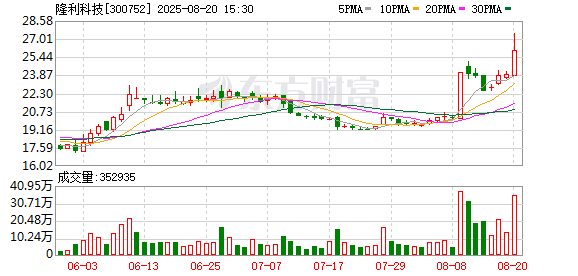
隆利科技:公司布局了应用于OLED折叠屏铰链的研发,目前正处于研发阶段
Mei Ri Jing Ji Xin Wen· 2025-08-20 11:35
每经AI快讯,有投资者在投资者互动平台提问:请问贵公司有没有折叠屏方面的产品研发? 隆利科技(300752.SZ)8月20日在投资者互动平台表示,公司积极布局了应用于OLED折叠屏铰链的研 发,目前正处于研发阶段。 (文章来源:每日经济新闻) ...


用工旺季催化消费电子板块大涨,折叠屏今年出货或达1980万台
2 1 Shi Ji Jing Ji Bao Dao· 2025-08-20 10:24
21世纪经济报道记者 张赛男 8月20日,A股消费电子板块走强。截至当日收盘,智动力(维权)(300686.SZ)"20CM"涨停,惠威 科技(002888.SZ)、安洁科技(002635.SZ)、三安光电(600703.SH)"10CM"涨停,芯原股份 (688521.SH)、星星科技(维权)(300256.SZ)、乐鑫科技(688018.SH)、水晶光电(002273.SZ) 纷纷大涨。消费电子ETF(159732.SZ)上涨2.57%。 消息面上,随着9月消费电子旺季即将来临,电子信息产业又到用工旺季,郑州富士康招工再现"长 龙",苹果iPhone 17进入大规模量产阶段。而最让市场期待的是苹果折叠屏手机的进展。据TrendForce 集邦咨询最新研究,苹果预计于2026年下半年推出折叠产品,将助力折叠手机渗透率从2025年的1.6% 提升至2027年的3%以上。 每每苹果折叠屏产品进展发布,总能引发产业链相关环节异动,铰链概念股宜安科技(300328.SZ)、 科森科技(603626.SH)已连续两日大涨。机构普遍认为,折叠屏手机作为消费电子创新的重要方向, 正逐步从高端市场向主流消费群体渗透。 消费 ...
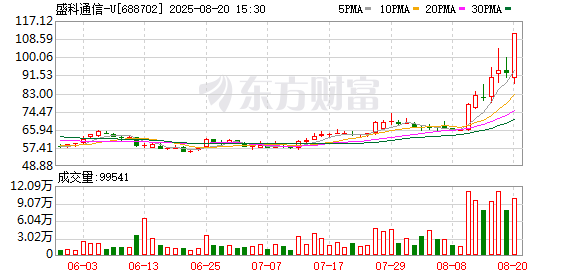
688702 午后20%涨停!半导体 大爆发!
Zheng Quan Shi Bao· 2025-08-20 09:28
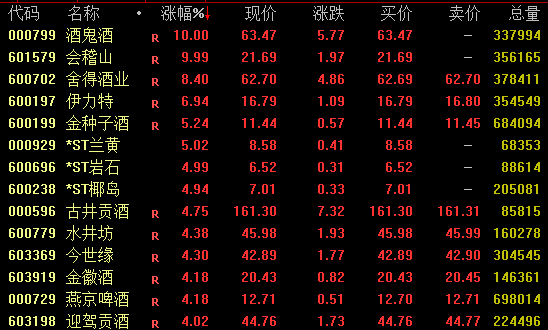
Market Overview - A-shares experienced a significant rally on August 20, with the Shanghai Composite Index rising over 1% to reach a 10-year high of 3766.21 points, while the ChiNext Index increased by 0.23% to 2607.65 points [2] - The total trading volume across the Shanghai, Shenzhen, and Beijing exchanges was 24.489 trillion yuan, a decrease of over 190 billion yuan compared to the previous day [2] Sector Performance Alcohol Sector - The alcohol sector saw a strong performance, with stocks like JiuGuiJiu and Kuaijishan hitting the daily limit, and SheDeJiuYe rising over 8% [5][7] - The sector is expected to enter a recovery phase due to improved supply-demand dynamics and supportive government policies aimed at boosting consumption [7] Semiconductor Sector - The semiconductor sector experienced a robust rally, with stocks like ShengKeTongXin and AiWeiDian rising by 20% and over 15% respectively [9][10] - Analysts remain optimistic about the semiconductor industry's growth, driven by AI and domestic substitution trends, with expectations of a strong performance in Q3 [10] Consumer Electronics Sector - The consumer electronics sector was active, with stocks like ZhuoZhaoDianJiao rising nearly 20% and AiWeiDian increasing over 15% [12][13] - The smartphone market is projected to recover due to the return of Huawei and the maturation of new concepts like foldable and AI smartphones, while wearable devices are also expected to see significant growth [14]


688702,午后20%涨停!半导体,大爆发!
Zheng Quan Shi Bao· 2025-08-20 09:16
Market Overview - A-shares rose across the board on August 20, with the Shanghai Composite Index increasing by over 1%, reaching a 10-year high at 3766.21 points [1] - The ChiNext Index rose by 0.23%, while the STAR Market Index surged by over 3% [1] - The total trading volume in the Shanghai and Shenzhen markets was 24.489 billion yuan, a decrease of over 1.9 billion yuan from the previous day [1] Sector Performance Financial and Semiconductor Sectors - The financial and semiconductor sectors drove the market rally, with notable gains in stocks such as Shengke Communication, which hit a 20% limit up, and Chipone Technology, which also reached a 20% limit up [1][7] - The semiconductor sector showed strong performance, with several companies like Aiwei Electronics and Chipone Technology seeing increases of over 15% [7][8] Alcohol Sector - Alcohol stocks experienced a significant surge, with companies like JiuGuiJiu and Kweichow Moutai seeing gains of around 1% [3][5] - The sector is expected to enter a recovery phase, supported by favorable policies and improving supply-demand dynamics [5] Consumer Electronics - The consumer electronics sector was active, with stocks like Zhuozhao Adhesive rising nearly 20% and Aiwei Electronics increasing over 15% [9][10] - The smartphone segment is anticipated to see a recovery in sales due to the return of Huawei and the maturation of new concepts like foldable and AI smartphones [11] Notable Stock Movements - Pop Mart's stock surged over 12%, surpassing 300 Hong Kong dollars, marking a historical high with a market capitalization of 424.4 billion Hong Kong dollars [2] - The stock of Hongyuan Co., which recently listed on the Beijing Stock Exchange, skyrocketed by 358% to 42 yuan per share, with an intraday increase exceeding 420% [1]
688702,午后20%涨停!半导体,大爆发!
证券时报· 2025-08-20 09:14
Market Overview - A-shares experienced a strong rally on August 20, with the Shanghai Composite Index rising over 1% to reach a 10-year high of 3766.21 points, while the ChiNext Index increased by 0.23% to 2607.65 points [1] - The total trading volume in the Shanghai and Shenzhen markets was 24.489 billion yuan, a decrease of over 1.9 billion yuan from the previous day [1] Sector Performance Alcohol Sector - The alcohol sector saw significant gains, with stocks like JiuGuiJiu and Kuaijishan hitting the daily limit, and SheDeJiuYe rising over 8% [4][6] - The sector is expected to enter a recovery phase due to improved supply-demand dynamics driven by government policies aimed at boosting domestic consumption [6] Semiconductor Sector - The semiconductor sector experienced a strong surge, with stocks like ShengKeTongXin and XinYuanGuoJi reaching their daily limit, and HanWuJi rising nearly 10% [8][10] - Analysts remain optimistic about the semiconductor industry's growth, driven by AI and domestic substitution trends [10] Consumer Electronics Sector - The consumer electronics sector was active, with stocks like ZhuoZhaoDianJiao rising nearly 20% and AiWeiDianZi increasing over 15% [12][14] - The smartphone market is expected to recover due to the return of Huawei and the maturation of new technologies like foldable and AI smartphones [14]

补贴退潮,暗战升级:2025,手机江湖进入硬核时刻
3 6 Ke· 2025-08-19 01:17
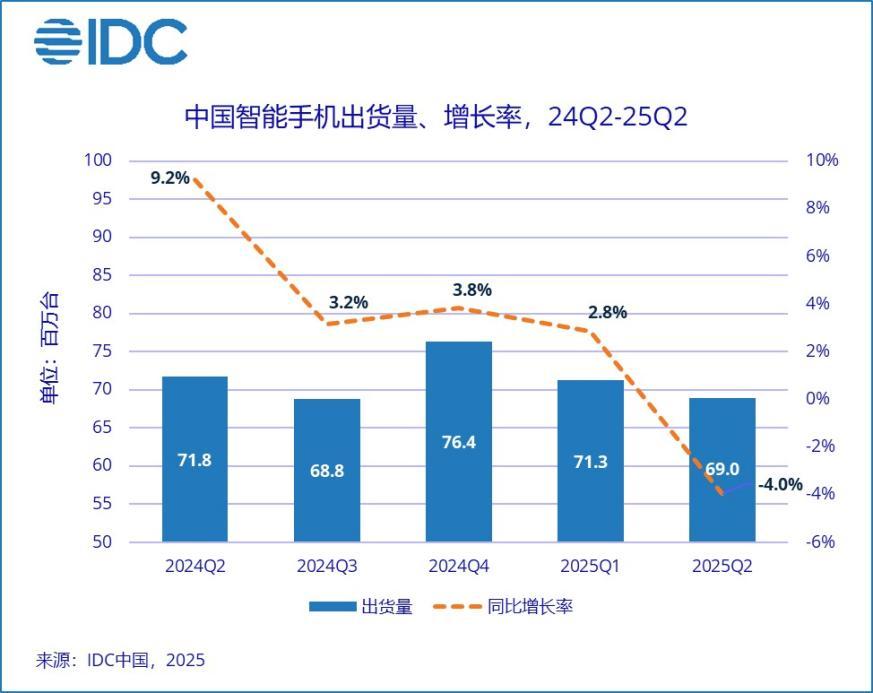
Core Viewpoint - The Chinese smartphone market in the first half of 2025 shows resilience with a slight year-on-year decline in shipments, but the second quarter experienced a notable drop, indicating a shift towards competition based on product value rather than subsidies [1][3]. Market Overview - In the first half of 2025, China's smartphone shipments reached 140 million units, a year-on-year decrease of 0.6%, with a significant 4% decline in the second quarter, breaking a six-quarter growth streak [1][3]. - Huawei regained the top market share in Q2 2025 with 18.1%, followed closely by vivo (17.3%) and OPPO (15.5%), while Xiaomi (15.1%) and Apple (13.9%) rounded out the top five [6][7]. Price War Dynamics - The smartphone market is experiencing intensified price wars, particularly in the mid-range segment (2000-4000 yuan), with major brands like Apple, Huawei, OPPO, and Xiaomi significantly reducing prices to clear inventory [4][5]. - Apple's iPhone 16 series saw price cuts exceeding 1,000 yuan, while other brands also implemented various promotional strategies to attract consumers [4]. Consumer Behavior Changes - The average smartphone replacement cycle has extended to around three years, reflecting a shift in consumer expectations towards durability and long-term value rather than just price [5]. - Consumers are now more discerning, requiring detailed comparisons and information before making purchases, indicating a deeper focus on product experience [5]. Competitive Landscape - The competition among the top five smartphone manufacturers is tight, with minimal differences in market share, making any misstep potentially impactful [6]. - Huawei's market share recovery is attributed to the return of its Kirin chips and the unique features of its HarmonyOS, while its Q2 shipments still fell by 3.4% year-on-year [8]. Brand Strategies - Vivo's focus on imaging technology has been a key strategy, but it faced a significant 10.1% decline in shipments in Q2 due to a concentrated product strategy [8]. - OPPO's dual-brand strategy aims to cover various price segments, but it also experienced a 5% decline in shipments, highlighting challenges in brand differentiation and market positioning [9]. - Xiaomi is the only top-five brand to show growth, driven by cross-industry synergies and channel expansion, although it still faces challenges in translating its technological advancements into consumer-perceived benefits [10]. Emerging Technologies - The foldable smartphone market is still niche, with a 14% year-on-year decline in shipments, but brands like Huawei lead with a 72.6% market share in this segment [11][14]. - AI integration is becoming a focal point for smartphone manufacturers, with companies like Huawei and Xiaomi enhancing their operating systems to improve user experience through AI capabilities [17][20]. Conclusion - The smartphone industry is undergoing a fundamental shift from hardware specifications to user experience and technological innovation, with a focus on addressing consumer pain points and enhancing product value [20].