数据安全

Search documents
加快数字郑州建设全力打造数智强市 为高质量发展和高效能治理提供有力支撑
Zheng Zhou Ri Bao· 2025-11-27 00:53
Core Points - The meeting focused on advancing the construction of a higher-level digital Zhengzhou, emphasizing the importance of digital infrastructure and governance for high-quality development [1][2][3] - Key tasks include the promotion of "Artificial Intelligence + Government Affairs" applications, planning for city-wide digital transformation by 2026, and establishing a national pilot for trusted data spaces [1][2] - The meeting highlighted the need for enhanced network capabilities, data market reforms, and the integration of various digital technologies to improve social governance and public services [3] Group 1 - The meeting was chaired by An Wei, who emphasized the need for a strong digital infrastructure to support the city's development [1][2] - The focus is on aligning with national and provincial strategies while considering local realities to drive the digital transformation of Zhengzhou [2] - The meeting discussed the progress of various projects, including the establishment of a public service platform for industrial internet and the construction of a national data industry cluster [1][3] Group 2 - An Wei stressed the importance of activating the value of data elements and promoting the digitalization of industries [3] - The integration of government networks, visual networks, and the Internet of Things is crucial for expanding smart application scenarios [3] - The meeting called for optimizing policy support and fostering innovation to create a collaborative environment for advancing digital Zhengzhou [3]
AI 智能体“全能开挂”,2025数商大会普陀分会场热议筑牢数据安全防火墙
Di Yi Cai Jing· 2025-11-26 12:55
AI智能体在企业流程自动化、数据价值挖掘及多元场景适配方面展现全能优势,但也面临数据泄露和 模型攻击等安全风险。 上能帮企业自动化处理流程、解锁数据价值,下能适配多元场景降低数字化门槛,如今的AI智能体堪 称数字时代的"全能选手"。但超能力也需配上"安全铠甲",智能体在跨域调用数据、联动各类系统的同 时,也让数据泄露、模型攻击等风险暗藏其中——安永和上海赛博网络安全产业创新研究院联合推出的 《2025全球可信AI治理与数据安全报告》显示,74%的受访企业对AI应用满心期待,却仍被合规风险揪 着心。 这意味着对数据安全的更高要求,以及还需破解实践中的多重困境。网络安全公司也在提出以AI智能 体为核心的解决方案,通过对接企业静态数据库与动态流量,自动化完成数据资产识别、分类分级与风 险监测,再联动防火墙等现有安全组件实现闭环处置。 从积极的角度来看,安全防护体系的升级与AI智能体的发展正呈现双向赋能态势。这种顾虑催生了"AI For Security"与"Security For AI"的双向奔赴模式:一方面,AI技术赋能安全防护,通过威胁预测、智能 合规、自动化响应等功能提升风险管控效率;另一方面,针对AI特有 ...
性能损耗压至1/3以下,立体密算破解“安全与算力两难”
2 1 Shi Ji Jing Ji Bao Dao· 2025-11-26 10:48
Core Viewpoint - The "Three-Dimensional Secret Computing System" integrates domestic chips, national encryption algorithms, and trusted computing to create an endogenous security protection framework that covers the entire link of computing power, data, and AI, reducing performance loss to less than one-third of traditional solutions [1][2]. Group 1: Technological Breakthroughs - The system represents a paradigm shift from "point defense" to "systematic endogenous security," addressing the limitations of traditional security solutions [2]. - It combines domestic chips, national encryption algorithms, and trusted computing 3.0 to create a comprehensive security space that protects every stage of data processing [2]. - The system's architecture includes five layers, from computing and encryption capabilities to trusted AI computing, ensuring full trust from hardware to cloud platforms [2]. Group 2: Cost and Efficiency - The CPU endogenous security technology is promoted at no cost, addressing the issue of high expenses [3]. - The distributed encryption resource pool technology enhances efficiency by allowing local CPU encryption, reducing network latency and avoiding plaintext transmission risks [3]. - The system achieves performance loss reduction to less than one-third compared to traditional encryption solutions, alleviating the pressure of security investments on business performance [2][3]. Group 3: Industry Applications - The system is initially applied within the company's 50 cloud computing centers, which support critical government and large enterprise operations [4]. - It has been deployed in sensitive sectors such as transportation, public security, and finance, with plans for broader applications [4]. - In transportation, the system has been implemented in a smart highway project, enhancing data security and traffic efficiency [4]. Group 4: Cross-Domain Challenges - The system addresses cross-entity identity authentication challenges in the transportation sector, ensuring active certification and identity unification for cross-platform data sharing [5]. - In public security and finance, it tackles the security issues of cross-regional data transmission, significantly improving safety and efficiency [5]. Group 5: Ecosystem Collaboration - The company aims to build an open collaborative ecosystem to promote the large-scale adoption of the Three-Dimensional Secret Computing System [6]. - It positions itself as a "security operating system" within the AI open architecture, enabling seamless integration with mainstream AI frameworks [6]. - The company plans to collaborate with research institutions to establish industry standards, addressing the fragmentation and compatibility issues of current security technologies [7]. Group 6: Future Outlook - The company will focus on deepening the application of the system in smart highways, smart road networks, and other sectors from 2024 to 2026 [5]. - The integration of security capabilities into practical productivity is emphasized, with the system likened to a "highway" for trust in the digital economy [8].
神州信息:公司在智能数据治理和数据安全方面做出了更深入尝试
Zheng Quan Ri Bao Wang· 2025-11-24 09:44
Core Insights - The company has made deeper attempts in intelligent data governance and data security, serving various banking clients including state-owned banks and several joint-stock banks [1] - The company has implemented its data middle platform solution and integrated product "Liuhe Shangjia" in multiple provincial rural credit cooperatives [1] - The company collaborated with Hengfeng Bank to publish a research report on "Financial Data Asset Valuation and Trading" [1] Group 1 - The company focuses on building capabilities in data assets, intelligent data governance, and data security [1] - The company is actively involved in the reform of rural credit institutions, providing tailored solutions [1] - The collaboration with Hengfeng Bank indicates a commitment to advancing financial data asset management [1]

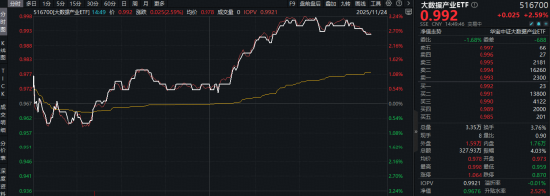
阿里巴巴概念拉升,石基信息、数据港双双涨停!大数据产业ETF(516700)盘中猛拉3.2%
Xin Lang Ji Jin· 2025-11-24 06:57
Core Viewpoint - Alibaba's AI assistant Qianwen App has achieved over 10 million downloads within a week of its public beta, surpassing competitors like ChatGPT, Sora, and DeepSeek, marking it as the fastest-growing AI application in history [3] Group 1: Stock Performance - Alibaba-related stocks, including Shiji Information and Data Port, have seen significant price increases, with both stocks hitting the daily limit up [3] - The Big Data Industry ETF (516700), which focuses on data security, has risen over 3.2% during intraday trading, currently up 2.59% [1] Group 2: AI Investment Opportunities - CITIC Securities highlights the expanding investment opportunities in AI, particularly in the computing power industry chain and AI applications, predicting a potential replication of the long bull market seen in the US stock market since 2023 [3] - The report anticipates a local explosion of opportunities in AI applications, driven by the rapid implementation of AI across various sectors [3] Group 3: Data Security and Technology Independence - The Big Data Industry ETF (516700) passively tracks the CSI Big Data Industry Index, focusing on sectors such as data centers, cloud computing, and big data processing, with key holdings in leading companies like Inspur Information and China Software [3] - Investors interested in technology independence should focus on three catalysts: 1. High-level calls for "technology to take the lead," which may break new ground in new productivity directions 2. The top-level design of Digital China, which aims to activate digital productivity and accelerate the process of domestic substitution 3. The momentum of the Xinchuang wave, with Xinchuang 2.0 expected to accelerate, presenting a broad outlook for technology independence [3]




供应商遭黑客攻击,或致摩根大通(JPM.US)、花旗(C.US)、摩根士丹利(MS.US)客户数据泄露
Zhi Tong Cai Jing· 2025-11-24 02:49
近期为房地产贷款机构提供服务的技术供应商SitusAMC遭遇网络攻击,或导致一些美国大型银行的敏 感客户数据遭到泄露。此次入侵事件于11月12日首次被发现,影响了与居民住房抵押贷款相关的信息。 由于涉及社会安全号码等个人数据,该事件构成了重大威胁。 SitusAMC表示,受影响的数据包括与部分客户同该公司业务往来相关的企业信息,例如会计文件和法 律合同等。 SitusAMC的声明称,此次事件已得到控制,服务完全正常运行,并补充说明此次攻击不涉及加密恶意 软件。 SitusAMC首席执行官迈克尔.弗朗哥在一份声明中表示:"我们继续专注于分析任何可能受影响的数 据。"他还补充说,公司已通知执法部门。该公司与全美众多银行签有合约,目前正在持续评估泄露事 件的影响范围,并提供每日进展更新。 作为对此次事件的回应,美国联邦调查局正与受影响组织紧密合作。 受影响的银行包括摩根大通(JPM.US)、花旗(C.US)和摩根士丹利(MS.US),SitusAMC已就可能存在的数 据泄露风险通知了所有这些银行。尽管没有银行遭到直接黑客攻击,但由于该供应商在贷款和抵押贷款 的发起及资金收集中扮演核心角色,此次入侵事件已引起金融机构 ...
卫星导航定位基准站将统一监管
Jing Ji Ri Bao· 2025-11-23 23:13
近年来,全国卫星导航定位基准站应用需求不断涌现,应用场景也不断扩展。 《办法》明确自然资源部会同有关部门制定全国基准站建设布局规划,引导基准站建设合理布局,避免 重复和无序建设。全国基准站建设应当符合国土空间规划,纳入国土空间规划实施监督信息系统。基准 站建设应当符合国家相关建设标准,并对观测环境、地质构造、安全防护等条件进行评估。需要办理用 地手续的,按照土地管理有关法律法规的规定办理。《办法》同时明确了进行基准站建设的单位和运行 维护单位的具体资质要求,进一步规范基准站建设和运行维护活动。 此外,《办法》明确,卫星导航定位基准站数据实行分类分级管理,并对建设单位、运行维护单位、使 用卫星导航定位基准站数据的单位应当依法承担的数据安全保密责任进行了规定,要求上述单位建立数 据安全保障制度,依法采取相应的技术措施、保密措施等,对收集、存储、使用、加工、传输、提供的 数据进行全流程数据安全保护。 建设单位、运行维护单位还应当定期对数据安全开展风险评估,提供涉密数据时应当按照涉密测绘成果 管理有关规定执行。为推进数据资源共享利用,建设单位可以依据国家有关规定开展卫星导航定位基准 站相关数据产权登记、流通交易等活动 ...
Banks, FBI Assessing Hack of Real Estate Finance Tech Vendor
MINT· 2025-11-23 19:05
Core Insights - A data breach at SitusAMC Group Holdings has raised concerns among major American banks and mortgage lenders regarding the potential impact on their operations [1][3] - The breach involved the compromise of client data, including accounting records and legal agreements, with the company stating that the situation is now contained [1][4] - The FBI is investigating the incident but has reported no operational impact on banking services [3] Company Summary - SitusAMC Group Holdings confirmed the hack on November 15 and began notifying its residential mortgage customers about the potential impact [3] - The CEO of SitusAMC stated that the breach is contained and the company is focused on analyzing affected data [4] Industry Impact - Major banks, including JPMorgan Chase and Citigroup, received notifications regarding the breach but have not disclosed specific details about their involvement [1][2] - The incident is being investigated by the FBI, indicating a broader concern within the financial services sector regarding third-party vendor security [3]



英方软件跌0.80%,成交额4.05亿元,后市是否有机会?
Xin Lang Cai Jing· 2025-11-21 07:47
Core Viewpoint - The company, Yingfang Software, specializes in data replication and has made significant strides in the domestic software market, particularly in data security and disaster recovery solutions. Company Overview - Yingfang Software, established on August 12, 2011, is located in Shanghai and was listed on January 19, 2023. The company focuses on providing data replication software, integrated hardware-software solutions, and related services. Its revenue composition includes 60.37% from software products, 20.57% from software-related services, 15.97% from integrated hardware-software products, and 3.09% from other sources [9]. Product and Technology - The company has developed nearly 30 standardized products based on three core technologies: dynamic file byte-level replication, database semantic-level replication, and volume block-level replication. These products are categorized into four main product lines: disaster recovery, backup, big data, and cloud disaster recovery [3]. - Yingfang Software's products are widely used in various sectors, including financial institutions, government agencies, healthcare, and telecommunications, ensuring data security and business continuity while facilitating digital transformation [4]. Market Position and Performance - As one of the top three suppliers in the domestic data replication and protection software market, Yingfang Software has received recognition from the Shanghai Data Exchange as a "Data Delivery Service Provider" [3]. - For the period from January to September 2025, the company achieved a revenue of 132 million yuan, reflecting a year-on-year growth of 11.26%. However, the net profit attributable to the parent company was a loss of 14.71 million yuan, although this represented a 53.56% improvement compared to the previous year [9]. Recent Developments - On November 14, 2024, the company announced its support for the Huawei Euler operating system and its active participation in the openEuler community, indicating a commitment to promoting domestic software innovation and self-sufficiency [2]. - The company's data replication software has been successfully implemented in numerous core business systems of domestic securities firms, banks, insurance companies, and asset management companies, showcasing its strong performance in the financial sector [4].

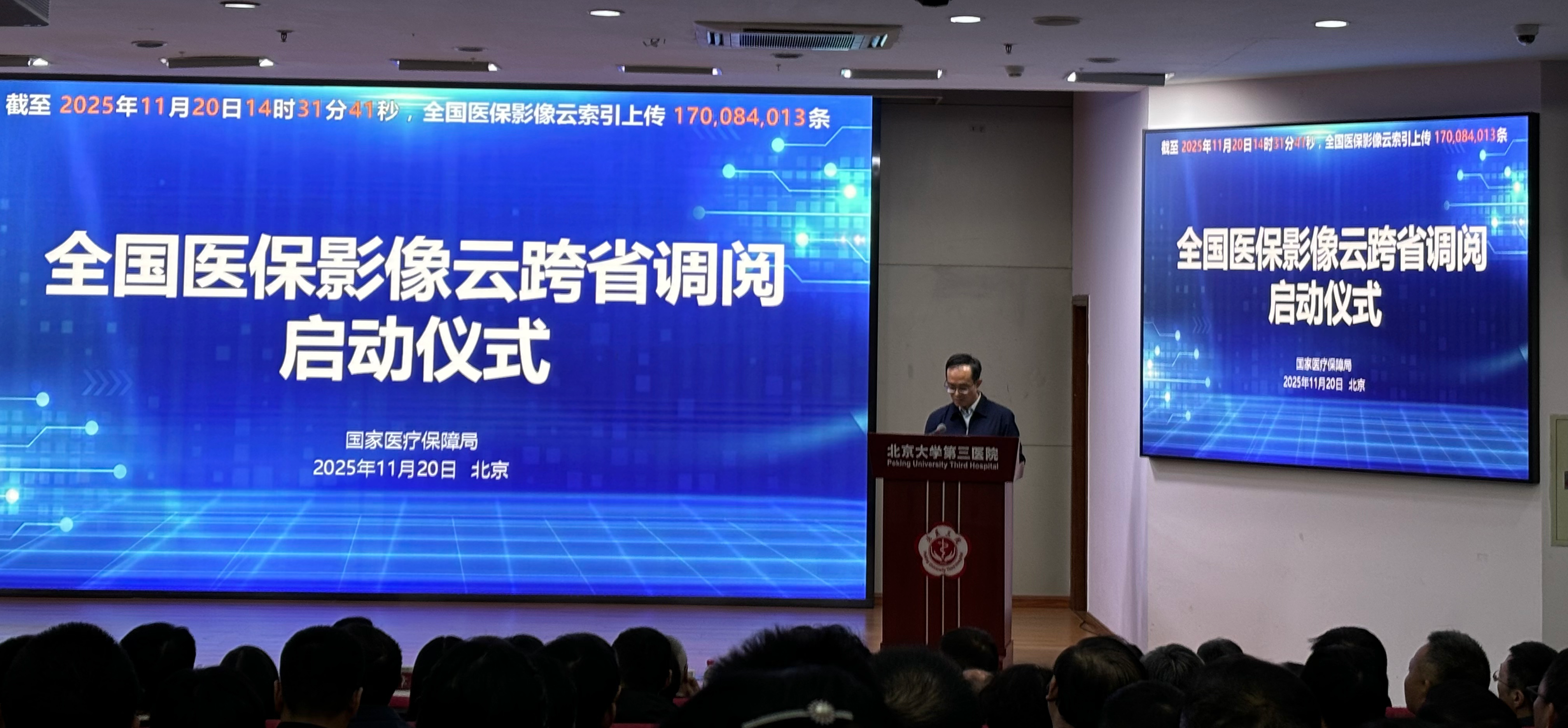
医保影像云跨省调阅启动,如何守住数据安全底线?
Di Yi Cai Jing· 2025-11-21 02:32
Core Viewpoint - The national medical insurance imaging cloud has officially launched cross-province retrieval, aiming to create a unified network by the end of 2027, allowing patients to access their medical imaging data without carrying physical films [1][4]. Group 1: Launch and Implementation - The cross-province retrieval of the national medical insurance imaging cloud was initiated on November 20, with several hospitals already capable of accessing imaging data from various provinces [1]. - As of now, 24 provinces and regions, including Beijing and Hebei, have completed the deployment of the imaging cloud software, enabling cross-province retrieval capabilities [4]. Group 2: Patient Experience and Benefits - Patients will no longer need to carry physical films, as they can access their historical data through their mobile devices, significantly improving convenience [4]. - The retrieval of historical imaging data will enhance diagnostic accuracy by allowing doctors to track the progression of diseases more effectively [4]. Group 3: Data Security and Privacy - Patient authorization is required for cross-province retrieval of imaging data to ensure privacy, with two methods of authorization available [5]. - The national medical insurance bureau emphasizes data security as a fundamental requirement, with ongoing efforts to establish a robust data security mechanism [5][6]. Group 4: Future Potential - The medical insurance imaging cloud has the potential to empower various stakeholders, including medical institutions and insurance companies, by leveraging vast amounts of medical imaging data [6].