Trade war

Search documents
Apple: Trump Blinked First And That Presents An Opportunity
Seeking Alpha· 2025-04-15 10:55
Apple (NASDAQ: AAPL ) has been one of the stocks that suffered significantly from the trade war that has been building up over the past week or so. The US and China have seemingly kept increasing tariffs on each other withI’m an independent investor with a passion for exploring opportunities in options trading, analyzing dark pool activity, and understanding macroeconomic trends. With years of hands-on experience, I’ve developed a keen interest in identifying market trends and translating them into actionab ...



JPMorgan's James Dimon warns US faces ‘considerable turbulence' amid trade war threats
New York Post· 2025-04-11 11:43
Core Viewpoint - JPMorgan Chase CEO Jamie Dimon has expressed concerns about the US economy facing "considerable turbulence" due to potential trade wars initiated by President Trump [1][2]. Economic Outlook - The economy is experiencing considerable turbulence influenced by geopolitics, with both positive factors such as tax reform and deregulation, and negative factors including tariffs, ongoing inflation, high fiscal deficits, and elevated asset prices and volatility [2]. - Dimon emphasized the need for the firm to prepare for a wide range of economic scenarios while hoping for the best [2]. Company Performance - JPMorgan Chase reported a 9% increase in profits for Q1 2025, achieving a net income of $14.6 billion, up from $13.4 billion in the same period the previous year, surpassing analyst expectations of $13.6 billion [3].


Nvidia stock eyes return to $100
Finbold· 2025-04-08 12:38
Nvidia (NASDAQ: NVDA) is edging closer to recapturing the key $100 mark, recovering from a sharp sell-off last week that pushed the chipmaker’s shares below the threshold for the first time since September 2024.The drop came on April 4, triggered by President Donald Trump’s Liberation Day tariffs, which rattled markets and reignited fears of a full-blown trade war.Yet despite the recent sell-off, Nvidia shares are showing signs of recovery. After closing at $97.64 on April 7, the stock climbed 3.75% in pre- ...

Apple's 3-day loss in market cap swells to almost $640 billion
CNBC· 2025-04-07 20:06
Core Viewpoint - Apple is facing significant challenges due to President Trump's tariffs, leading to a substantial decline in its stock price and market capitalization [1][2]. Group 1: Stock Performance - Apple experienced a three-day stock decline of 19%, resulting in a loss of $638 billion in market capitalization [2]. - On a recent trading day, Apple lost 3.7%, contributing to its ongoing struggles compared to other tech giants [1][3]. Group 2: Tariff Impact - Analysts indicate that Apple is highly exposed to the trade war, primarily due to its reliance on China, which is subject to 54% tariffs [2]. - Although Apple has production facilities in India, Vietnam, and Thailand, these countries are also facing increased tariffs under the new trade policies [2]. Group 3: Price Adjustments and Earnings - Analysts predict that Apple may need to raise prices or absorb additional tariff costs, with estimates suggesting that the highest-end iPhone could see a price increase of about $350, or around 30% [4]. - Barclays analyst Tim Long anticipates a potential 15% cut to Apple's earnings per share if price adjustments are not made [5]. - There is a possibility for Apple to rearrange its supply chain to source imports from countries with lower tariffs [5].

Apple's highest-end iPhone could see $350 price hike in U.S. on Trump tariffs, analyst predicts
CNBC· 2025-04-07 19:27
Core Viewpoint - The implementation of President Trump's reciprocal tariffs is expected to significantly increase the retail prices of Apple's iPhone models, particularly the iPhone 16 Pro Max, which could see a price hike of up to $350 in the U.S. market, raising concerns about consumer purchasing power and Apple's market valuation [1][3]. Price Impact - The iPhone 16 Pro Max currently retails for $1,199, and UBS analysts predict a nearly 30% price increase for units manufactured in China [2]. - The iPhone 16 Pro, priced at $999, may experience a smaller price increase of $120 if produced in India [2]. Market Reaction - Apple's shares have dropped 20% over the last three trading days, resulting in a loss of over $675 billion in market capitalization due to fears surrounding the impact of the tariffs on pricing and consumer demand [3]. Cost Absorption and Production Challenges - Analysts from Morgan Stanley estimate that Apple could absorb additional tariff costs of approximately $34 billion annually, but the diversification of production to other countries may not provide the expected flexibility due to potential tariffs on those locations as well [7]. - UBS analysts highlighted uncertainty regarding how increased costs will be shared with suppliers and the extent to which these costs can be passed on to consumers [4]. Global Pricing Strategy - JPMorgan Chase analysts predict a potential global price increase of 6% for Apple products to offset U.S. tariffs, while Barclays analysts suggest that without price adjustments, Apple could face a 15% reduction in earnings per share [6]. - Morgan Stanley estimates that Apple may raise prices across its product lines in the U.S. by 17% to 18% following the tariff announcement [8]. Production Location Considerations - Apple, heavily reliant on manufacturing in China, faces significant exposure to trade tensions, with a potential incoming tariff rate of 54% on products manufactured there [5]. - The feasibility of relocating iPhone production to the U.S. is deemed nearly impossible by supply chain experts, with predictions that such a move could result in an iPhone costing as much as $3,500 [6].

China Hit With 54% "Reciprocal Tariff" Rate Following Trump Address. 3 Things Pinduoduo Stock Investors Should Know
The Motley Fool· 2025-04-05 22:51
Group 1: Impact of Tariffs on China - The 54% tariffs imposed by the U.S. will significantly affect the Chinese economy, prompting companies like Nike to relocate production to countries with lower tariffs, such as Vietnam [4] - In 2024, U.S. imports from China totaled $438.9 billion, and the trade war could exacerbate weaknesses in the Chinese economy by increasing the cost of goods, impacting e-commerce operators like PDD Holdings [5] Group 2: PDD Holdings Overview - PDD Holdings generated $54 billion in revenue in 2024, with its gross merchandise volume (GMV) likely exceeding $5 billion in the U.S., driven by its low-cost platform Temu [7] - The company reported a 24% revenue growth in the fourth quarter, outperforming competitors like Alibaba and JD.com, and has a price-to-earnings ratio of just 11, indicating strong fundamentals [9] Group 3: Market Dynamics and Investor Behavior - U.S. investors, including billionaire David Tepper, have been rotating into Chinese stocks, viewing them as undervalued compared to U.S. counterparts, which could benefit PDD Holdings if U.S. tariffs lead to a recession [8] - PDD Holdings has made significant strides in the digital advertising market, increasing competition and market share against other e-commerce companies [6]


Canada's Retaliatory Tariffs Fuel Trump's Trade War, Roil Auto Sector
ZACKS· 2025-04-04 15:00
Group 1: Tariff Implementation and Impact - The U.S. has implemented a 25% tariff on foreign auto imports and a 10% baseline tariff on imports, with exemptions for Canada and Mexico [2][4] - Canada retaliated with a 25% tariff on American-made vehicles not complying with the U.S.-Mexico-Canada Agreement, affecting trade dynamics [3][4] Group 2: Effects on Auto Manufacturers - Major automakers like Ford, General Motors, and Stellantis experienced significant stock declines, with Ford dropping nearly 6% and Stellantis down 9.4% [5] - Stellantis announced a temporary shutdown of its Windsor, Ontario plant for two weeks, impacting around 900 workers, and also suspended operations at its Jeep plant in Mexico [6] - Ford is cutting prices to maintain sales, while GM is increasing U.S. pickup truck production and adding jobs to offset potential losses from Canadian plants [7] Group 3: Future Outlook and Industry Challenges - Analysts expect weaker results for automakers in upcoming quarters due to challenges in maintaining sales and margins, with Ford and GM yet to incorporate the latest tariffs into their 2025 guidance [8] - The integrated supply chain of North America's auto industry is under strain from aggressive trade policies, leading to increased costs and potential job insecurity for workers [8]



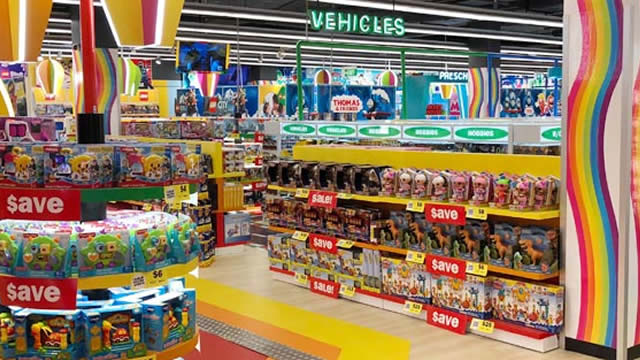
Toy prices could jump 50% following Trump's tariffs on China, Vietnam
CNBC· 2025-04-04 12:38
Core Insights - The U.S. toy industry is facing significant challenges due to increased tariffs imposed by President Trump, with a 10% baseline tariff affecting nearly all countries and much higher tariffs on China (54%) and Vietnam (46%) [3][5][6] - The tariffs are expected to lead to substantial price increases for consumers, with estimates suggesting potential hikes of 35% to 50% on toys [8][9] - Major toy companies like Hasbro and Mattel are already experiencing stock declines, with Mattel shares dropping over 16.5% and Hasbro losing more than 12% following the tariff announcements [7] Industry Impact - Approximately 77% of toys imported into the U.S. come from China, with Vietnam being a significant secondary source [4] - The tariffs are causing toy companies to scramble for solutions, including potential production shifts to other countries, but these alternatives are also facing tariffs [5][6] - Analysts predict that companies will attempt to renegotiate contracts and alter packaging to mitigate costs, but ultimately, consumers will bear the burden of the increased tariffs [7][8] Consumer Effects - The Toy Association anticipates that price hikes will align with the back-to-school season, disproportionately affecting lower-income consumers [9] - The industry's profit margins are already thin, making it difficult for companies to absorb the tariff costs without passing them on to consumers [8]


Alibaba Could Be a No-Brainer Buy in April
The Motley Fool· 2025-04-03 15:55
Core Viewpoint - Alibaba's stock may appear negatively impacted by U.S. tariffs, but the reality suggests it could be a strong investment opportunity following the recent pullback in its stock price [3][6]. Group 1: Stock Performance - Alibaba has been one of the best-performing stocks this year, with a market cap of $310 billion and a 56% surge in the first three months of 2024 [4][5]. - Despite being down approximately 60% from its all-time highs in late 2020, Alibaba's stock has nearly doubled since hitting a low 15 months ago [6]. Group 2: Business Operations - Alibaba's international e-commerce business generated $5.2 billion in sales, accounting for 13% of its total revenue of $38.2 billion, with a growth rate of 32% compared to a 5% increase for its domestic business [7]. - The company's domestic operations still represent over 85% of sales and more than 100% of profitability, indicating a strong reliance on its home market [6]. Group 3: Market Dynamics - The new trade war may solidify Alibaba's trade channels outside the U.S., potentially alleviating the negative impact of tariffs on its international operations [9]. - Alibaba's diverse business model, including platforms like Taobao and Tmall, positions it well to navigate the challenges posed by U.S. tariffs [10]. Group 4: Valuation Metrics - Alibaba is currently trading at 14 times this year's adjusted earnings target and less than 13 times next year's forecast, which are considered low multiples for a company with a history of consistent revenue growth [11].


Why Rocket Lab, Planet Labs, and AST SpaceMobile Stocks All Dropped on Monday
The Motley Fool· 2025-03-31 17:48
Tariffs are just the start of the answer to why these three space stocks are going down today. Investors sold off tech stocks hard on Monday, with the Nasdaq down 1.5% through 11:30 a.m. ET, versus drops of only 0.6% for the broader S&P 500, and actually a tiny gain for the Dow Jones Industrial Average. Volatile space stocks are getting hit particularly hard, with Rocket Lab (RKLB -5.37%) shares down 4.5%, and both Planet Labs (PL -2.89%) and AST SpaceMobile (ASTS -5.36%) stocks off 4%. And why? The consens ...