借壳上市

Search documents
又一企业跨界储能!
起点锂电· 2025-06-19 10:18
Group 1 - The event theme is "Battery Swap City, Smart Two-Wheelers," organized by Qidian Lithium Battery, Qidian Sodium Battery, Qidian Two-Wheelers, and Battery Swap [2] - The event will take place on July 10-11, 2025, at the DENGXILU International Hotel in Bao'an, Shenzhen [2] - Qidian Lithium Battery reported that Taihe Intelligent plans to acquire 100% equity of Anhui Sunshine Yuchu, a subsidiary of Sunshine New Energy, for approximately 45.8 million yuan [2][3] Group 2 - Taihe Intelligent is primarily engaged in intelligent sorting and packaging equipment, while Sunshine Yuchu focuses on industrial and commercial energy storage investment and operation [2][3] - The acquisition is seen as a cross-industry move, with Taihe Intelligent lacking experience in energy storage, which poses significant operational risks [2][3][8] - Both companies have poor financial conditions, with Sunshine Yuchu reporting revenue of approximately 19.8 million yuan and a net loss of about 6.13 million yuan in 2024 [4][5] Group 3 - Taihe Intelligent's net profit has been declining from 87.46 million yuan in 2017 to 11.31 million yuan in 2023, with three consecutive years of losses from 2021 to 2023 when considering non-recurring profits [5] - However, Taihe Intelligent's performance showed signs of recovery in 2024, with net profit increasing to 21.47 million yuan [6] - The acquisition raises questions about how Taihe Intelligent will manage operations without prior experience and the responsibilities it will assume post-acquisition [8] Group 4 - Sunshine New Energy recently became a major shareholder of Taihe Intelligent, acquiring 10.24% of its shares in October 2022, leading to a restructuring of Taihe Intelligent's board [3][9] - The acquisition is perceived as a resource integration strategy amid fierce competition in the energy storage industry [3][7] - There are concerns regarding the potential for a backdoor listing, although Sunshine New Energy has stated that it has not indicated intentions to use Taihe Intelligent for this purpose [9]


震安科技实控人欲2.72亿元转卖控制权,新主“卖身”失败存“借壳”预期
Tai Mei Ti A P P· 2025-06-18 11:57
Core Viewpoint - The announcement of a change in control at Zhenan Technology (震安科技) following the signing of a share transfer agreement between its controlling shareholder Huachuang Sanxin and Shenzhen Dongchuang Technology Co., Ltd. has led to significant market reactions, including a 20% increase in stock price despite the company's declining performance and revenue [2][3][4]. Group 1: Company Performance - Zhenan Technology has raised over 840 million yuan through three rounds of fundraising since its IPO, but these investments have not yielded expected returns, resulting in a cumulative loss of 22.95 million yuan from its six major projects by the end of 2024 [3][4]. - The company's revenue has halved from 897 million yuan in 2022 to 417 million yuan in 2024, with a record net loss of 144 million yuan, attributed to adjustments in sales and collection policies [4][5]. - The stock price has shown a "V" shaped decline, dropping from a peak of 105.62 yuan in October 2021 to around 10 yuan in recent months, reflecting ongoing financial struggles [4][5]. Group 2: Share Transfer and Control Change - The share transfer involves Shenzhen Dongchuang acquiring 100% of Huachuang Sanxin for 616 million yuan, while the current actual controller Li Tao relinquishes voting rights on 12% of his shares, retaining 5.28% voting rights [3][4]. - Following the transaction, Shenzhen Dongchuang will indirectly control 18.12% of Zhenan Technology, with new controllers Ning Huaxiang and Zhou Jianqi taking over [3][4]. Group 3: Market Reactions and Expectations - The market has reacted positively to the news of the control change, with Zhenan Technology's stock hitting the daily limit up, indicating investor optimism about potential restructuring or revitalization under new management [2][5]. - There are strong expectations of a "backdoor listing" as Shenzhen Dongchuang enters Zhenan Technology, given its previous failed attempts to sell itself and the lack of success in its IPO efforts [5][6].


孙宇晨旗下加密平台拟进行IPO,波场代币TRX暴涨526%
Hua Xia Shi Bao· 2025-06-17 12:50
Core Insights - Tron is planning to go public through a reverse merger with SRM Entertainment, following the suspension of investigations by U.S. regulators [2][7] - The announcement has led to significant price increases for both Tron’s TRX token and SRM’s stock, with TRX reaching $0.295 and SRM experiencing a peak increase of 526.21% [2][5] Company Overview - Tron, founded by Justin Sun in September 2017, is a decentralized blockchain platform that supports smart contracts and decentralized applications, with over 313 million global user accounts and a total transaction count exceeding 10.6 billion as of June 2025 [3] - Tron is the largest blockchain network for the stablecoin USDT, accounting for over 50% of its global supply, with a total stablecoin market value of $79.373 billion on the platform [3] SRM Entertainment Actions - SRM has taken several steps in response to the merger rumors, including appointing Justin Sun as a company advisor, planning to rebrand as Tron Inc., and signing a $100 million equity financing agreement [5][6] - The company has also seen changes in its board, with three members resigning and new appointments made, including Weike Sun as chairman [5] Regulatory Context - The merger comes after a period of legal scrutiny for Justin Sun and Tron, with the SEC previously filing a lawsuit against them for alleged securities violations [7] - The recent regulatory environment has shifted favorably for crypto projects, coinciding with the political landscape changes in the U.S. [7][8] Trump Family Involvement - Justin Sun has established a close relationship with the Trump family, being involved in projects associated with them and receiving public endorsements from Eric Trump [8][9] - The merger transaction is reportedly being facilitated by Dominari Securities, linked to members of the Trump family [8]

暴涨80%,姚劲波一次罕见出手
投中网· 2025-06-14 07:02
Core Viewpoint - Recent trends show that prominent figures are increasingly acquiring control of listed companies to gain financial benefits, with notable examples including Yao Jinbo's acquisition of a stake in Yiming Pharmaceutical [1][2][14]. Group 1: Acquisition Details - Yiming Pharmaceutical announced that Beijing Fuhao plans to invest 662 million yuan to acquire 23% of shares from the current controlling shareholder, Gao Fan [1]. - Following the announcement, Yiming Pharmaceutical's stock price surged, achieving a cumulative increase of 84.32% in June, reaching a market value of 4.281 billion yuan [1][15]. - The acquisition price is set at 15.1 yuan per share, indicating that Yao Jinbo has already realized a floating profit before the deal's completion [2]. Group 2: Company Performance - Yiming Pharmaceutical specializes in treatments for chronic diseases and has seen a decline in both revenue and net profit over the past two years, with projected revenues of 667 million yuan and 652 million yuan for 2023 and 2024, respectively, reflecting a year-on-year decrease of 2.27% [5]. - The company's flagship product, Miglitol tablets, accounts for over 70% of its revenue, but the company faces challenges as it has terminated a key partnership for another significant product, Guo Laopi injection [5][6]. Group 3: Performance Guarantees - To mitigate risks associated with the acquisition, Yao Jinbo has signed a performance guarantee agreement with Yiming Pharmaceutical, stipulating that the company must achieve a minimum revenue of 600 million yuan and a net profit of at least 30 million yuan annually from 2025 to 2027 [9][10]. Group 4: Market Trends - The trend of acquiring control of listed companies is not limited to industry leaders; even government entities are reportedly engaging in "shell buying" [3][16]. - Recent policies have encouraged this trend, leading to increased activity in the market for control of listed companies, with various buyers including private equity firms and government-backed funds [17][19][21].
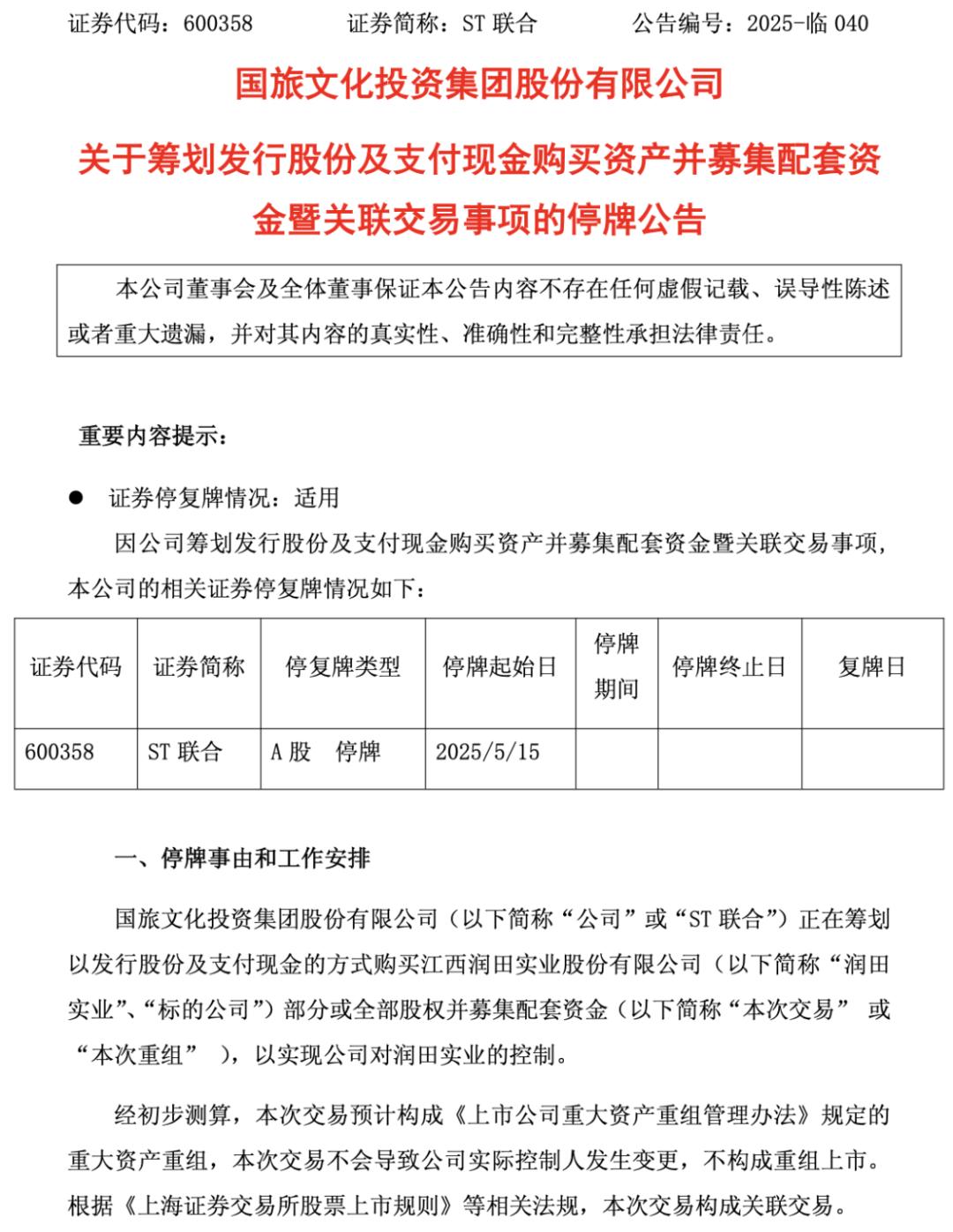
一年狂揽超12亿,30年没涨价,江西“一元水王”借壳上市
3 6 Ke· 2025-06-13 02:05
Core Viewpoint - The article discusses the strategic acquisition of Jiangxi Runtian Industrial Co., Ltd. by ST United, which is seen as a crucial move for both companies to navigate their respective challenges in the competitive bottled water market in China [1][5][17]. Company Overview - Runtian, a regional brand in Jiangxi, has a strong market presence with a reported market share of 58% in the province, despite the competitive landscape dominated by major players like Nongfu Spring and Wahaha [5][22]. - The company has been operational since 1994, initially gaining traction with a pricing strategy of 1 yuan per bottle, which allowed it to penetrate the market effectively [6][8]. Financial Performance - Runtian's revenue for 2023 is projected to be 12.6 billion yuan, with a net profit of approximately 1.77 billion yuan, indicating steady growth despite the challenges faced [12][14]. - ST United, on the other hand, has been struggling financially, with declining revenues and net losses, making the acquisition a potential lifeline for both companies [17][19]. Market Dynamics - The bottled water market in China is highly competitive, with major brands controlling significant market shares. Runtian's strategy of focusing on low pricing and deep market penetration has been effective in its home region but poses challenges for national expansion [5][20][22]. - The article highlights the ongoing price wars in the industry, which have intensified competition and squeezed profit margins for smaller players like Runtian [20][22]. Strategic Implications - The acquisition is viewed as a "back against the wall" move for Runtian, providing a potential pathway to public listing and greater market access, while also helping ST United avoid delisting risks [6][17]. - Runtian's future success will depend on its ability to leverage the acquisition to enhance its competitive position, expand its market reach, and improve operational efficiencies [23].

原西凤酒董事长被提名非独立董事,*ST步森却再度辟谣西凤酒“借壳”
Hua Xia Shi Bao· 2025-06-12 12:44
Core Viewpoint - The speculation surrounding the potential reverse merger of *ST Bosen with Xifeng Liquor has intensified following the proposal for a board reshuffle, despite the company's repeated clarifications that there is no connection between the two events [2][4][8]. Group 1: Company Background and Current Situation - *ST Bosen, established in 1985, is a large apparel enterprise primarily focused on men's clothing, with its main brand being "Bosen Men's Wear" [11]. - The company has faced significant operational challenges, reporting continuous losses since 2022, with net losses of 78.45 million yuan, 67 million yuan, and 51.4 million yuan from 2022 to 2024 [11][12]. - As of the end of 2024, *ST Bosen had only 205 stores remaining nationwide, indicating a decline in its retail presence [11]. Group 2: Recent Developments - The proposal for a temporary shareholders' meeting to elect a new board and supervisory committee has been put forward by the controlling shareholder, Fangwei Tongchuang [2][3]. - Notably, several candidates for the new board have backgrounds linked to Xifeng Liquor, which has fueled speculation about a potential reverse merger [4][10]. - The company has publicly denied any connection between the board reshuffle and a reverse merger with Xifeng Liquor, emphasizing that there are no related restructuring plans [2][4][8]. Group 3: Financial Performance and Risks - *ST Bosen's stock has been marked with "delisting risk warning" due to its financial performance, with the company failing to meet certain profitability and revenue thresholds [10][12]. - The company reported a revenue of 32.345 million yuan in the first quarter of 2025, with a net loss of 4.166 million yuan [12]. - The ongoing financial struggles and the need for a turnaround are critical, as the company faces a limited timeframe to improve its financial health before potential delisting [12].


又一巨头暴雷!338亿总资产,99.91%转移美国,15万股民恐打水漂
Sou Hu Cai Jing· 2025-06-10 08:06
Core Viewpoint - The company, Xinchao Energy, has shifted its focus to the U.S. market, leading to significant asset growth while the domestic parent company struggles with debt and operational issues, causing frustration among shareholders [3][5][29]. Group 1: Company Transformation and Financial Performance - In 2015, Xinchao Energy sold all domestic operations and raised 12.4 billion yuan to acquire oil fields in the U.S., resulting in its U.S. subsidiary's assets growing to 33.8 billion yuan by 2023 [3][5]. - The U.S. subsidiary has reported over 7 billion yuan in net profits over three years, while the domestic parent company has accumulated 2.4 billion yuan in debt without any dividends for shareholders [5][9]. Group 2: Corporate Governance and Internal Conflicts - In 2021, a power struggle within the board led to the chairman resigning and transferring control to his brother, who then registered a shell company in the U.S. to gain control over the U.S. assets [7][9]. - The internal conflict has resulted in a chaotic governance structure, with the domestic entity being left as a shell company while the U.S. operations thrive [9][15]. Group 3: Financial Reporting and Audit Issues - Since 2022, the company has faced challenges with its financial reporting, leading to the resignation of multiple accounting firms and the inability to provide a clear annual report for 2024 [11][13]. - Auditors have struggled to access financial data, with only 18% coverage during audits, raising concerns about transparency and compliance with U.S. laws [11][13]. Group 4: Acquisition Interests and Market Dynamics - Several energy companies have shown interest in acquiring Xinchao Energy, particularly targeting its U.S. subsidiary, which holds valuable shale oil assets [16][19]. - Notably, Huili Group attempted to acquire a significant stake in Xinchao Energy but faced regulatory hurdles, highlighting the competitive landscape for the company's assets [16][19]. Group 5: Historical Context and Company Evolution - Xinchao Energy originated as a textile factory and underwent significant transformations over the years, including a shift to diversified operations and a name change in 1996 when it went public [25][27]. - The company experienced a drastic decline in profitability in 2007, setting the stage for the current operational and governance challenges [27][29].
姚劲波A股首秀6.6亿拿下易明医药 58同城掉队分拆上市不顺引借壳猜想
Chang Jiang Shang Bao· 2025-06-08 23:15
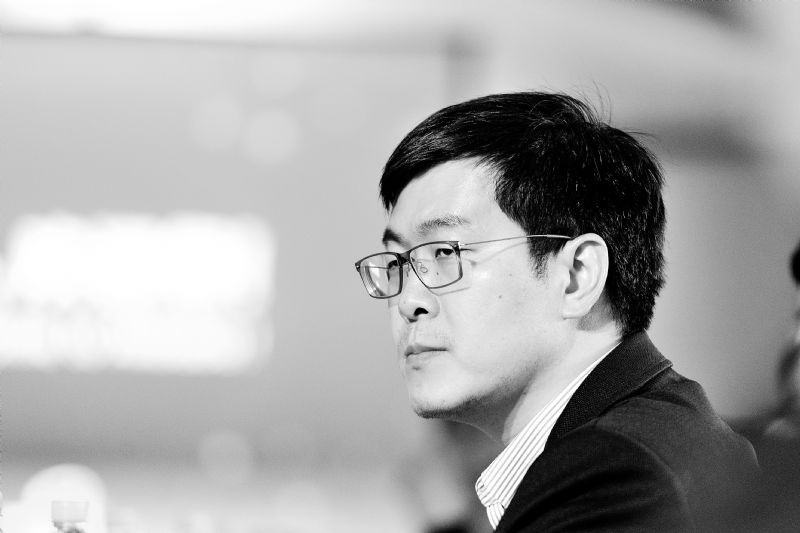
Core Viewpoint - Yao Jinbo, a pioneer in the internet industry, has become the new actual controller of A-share company Yiming Pharmaceutical (002826.SZ) by investing 6.62 billion yuan, leading to a significant surge in the company's stock price with three consecutive trading limits reached [3][5][6]. Group 1: Investment and Acquisition Details - Yao Jinbo's acquisition of Yiming Pharmaceutical marks his debut in the A-share market, with the stock price rising due to his involvement [3][5]. - The acquisition involved a share transfer agreement where Beijing Fuhai, owned by Yao and his wife, purchased 23% of the company's shares at a price of 15.10 yuan per share, representing a 24% premium over the last closing price before suspension [6][7]. - Yao Jinbo's investment strategy includes a commitment from the previous controller, Gao Fan, to ensure that Yiming Pharmaceutical's revenue remains above 6 billion yuan and net profit above 300 million yuan from 2025 to 2027 [7][8]. Group 2: Company Performance and Market Position - Yiming Pharmaceutical has shown stable but modest performance, with revenues around 700 million yuan and net profits fluctuating around 40 million yuan from 2020 to 2024 [9]. - The company's main product, Miglitol tablets, accounted for 72.72% of its revenue in 2024, while other products, such as the Gua Lou Pi injection, have seen significant declines in revenue [9][10]. - The company has terminated its collaboration with Shanghai Pharmaceuticals regarding the Gua Lou Pi injection, indicating potential shifts in its product strategy [10]. Group 3: Market Speculation and Future Prospects - There is speculation that Yao Jinbo may consider a reverse merger to list 58 Group's assets through Yiming Pharmaceutical, as the latter is viewed as a valuable shell resource [4][18]. - Yao's previous ventures, including 58.com, have faced challenges in the competitive landscape, with various assets underperforming, raising questions about the viability of injecting these assets into Yiming Pharmaceutical [21][23]. - The competitive pressures from companies like BOSS Zhipin, Meituan, and JD.com are significant, and Yao Jinbo must optimize his assets to regain market competitiveness [26][25].
一场涉资百亿的“买壳”争夺战,最终被鄂尔多斯前首富拿下
3 6 Ke· 2025-06-02 23:45
Core Viewpoint - The acquisition battle for ST Xinchao has concluded with Yitai B shares successfully acquiring 50.10% of ST Xinchao's total shares, marking a significant event in the capital market despite ST Xinchao's troubled status as a company facing delisting risks [1][5]. Group 1: Acquisition Details - Yitai B shares announced a purchase price of 3.40 yuan per share, totaling approximately 11.792 billion yuan for the acquisition of ST Xinchao [4]. - The acquisition process involved multiple competitors, including Guo Jinshu of Huineng Haitou and Jindi Petroleum, with the latter offering a lower price of 3.15 yuan per share [3][5]. - The acquisition by Yitai B shares was completed after other offers failed to meet the necessary conditions for acceptance [5]. Group 2: Company Background - ST Xinchao is primarily engaged in oil and gas exploration and production, with significant assets located in the United States, particularly in the Permian Basin [8]. - The company has faced operational challenges, including a lack of a controlling shareholder and internal control deficiencies, leading to its current ST (Special Treatment) status [8][9]. - Despite its troubled financial state, ST Xinchao possesses valuable assets that make it an attractive target for acquisition [8][10]. Group 3: Strategic Implications - For Yitai Group, acquiring ST Xinchao represents a strategic move to diversify into the overseas energy market, particularly in light of the current easing of energy policies between China and the U.S. [10]. - The acquisition is seen as a potential platform for future capital operations, including asset injections and financial explorations, which could enhance Yitai's market presence and financing capabilities [10][11]. - The deal is positioned as a way for Yitai to optimize its business structure and address financing challenges faced by its coal and chemical projects [10][12].


借壳上市需要什么条件?快速融资还是资本游戏?
Sou Hu Cai Jing· 2025-06-02 13:08
Core Viewpoint - Shell listing is a controversial method for companies to access capital markets, viewed as both a shortcut and a circumvention of regulatory rules [2] Group 1: Conditions for Shell Listing - Shell listing requires two core elements: change of control and asset injection [2] - Non-listed companies must acquire control of a listed company through acquisition or asset swap, followed by asset injection within 36 months [2][5] - Asset injection is not merely a numerical exercise; any one of the total assets, revenue, or net assets must reach 100% of the corresponding metrics of the shell company from the previous year to trigger shell listing recognition [2][6] Group 2: Quality of Shell Companies - The quality of the shell company is crucial for success, characterized by low debt, low liabilities, low related-party transactions, and stable profitability [2] - Many companies fail due to choosing poor-quality shell companies, leading to significant financial risks [2] Group 3: Regulatory Environment - Regulatory scrutiny on shell listings has intensified, with the SEC extending the lock-up period from 6 months to 12 months and requiring immediate full disclosure post-listing [3] - Domestic regulations have also tightened, aligning shell listing requirements with IPO standards in terms of profitability, asset quality, and operational compliance [3][6] - The rise of "quasi-shell" models allows companies to circumvent the 100% asset scale requirement through staggered transactions [3] Group 4: Industry Trends - Shell listings are polarizing; traditional manufacturing and resource-based companies favor them, while tech companies prefer direct IPOs [3] - The preference for direct IPOs among tech firms is due to the uncertainty that shell listings can introduce, especially if core business operations frequently change [3] Group 5: Risks and Opportunities - Investors should be cautious of "empty shell restructuring" traps, as illustrated by cases where companies saw stock price surges followed by forced delisting due to fraudulent activities [4] - Companies must balance the short-term benefits of shell listings against long-term governance costs and public scrutiny from frequent restructuring [4]