农业现代化

Search documents
农发行四川旺苍县支行:深植红色文化沃土 赋能革命老区高质量发展
Zhong Guo Jin Rong Xin Xi Wang· 2025-10-13 09:37
Core Viewpoint - The Agricultural Development Bank of China has significantly contributed to the economic development of Wangcang County by providing various loans totaling 1.272 billion yuan, enhancing local agricultural productivity and infrastructure [1] Group 1: Financial Contributions - The bank has issued a total of 1.272 billion yuan in loans across four major sectors, with a current loan balance of 4.7 billion yuan, reflecting a net increase of 1.02 billion yuan [1] - A specific allocation of 500 million yuan has been directed towards the construction of high-standard farmland across 14.8 million mu in 19 towns, improving soil quality and agricultural infrastructure [2] - An additional 180 million yuan has been allocated for the development of a modern agricultural industrial park in Bai Shui Town, focusing on enhancing the value chain of agricultural products [2] Group 2: Infrastructure Development - The bank has invested 120 million yuan in road repairs and upgrades in the Shuanghui Town area, transforming poor road conditions into improved access routes that facilitate local industry [3] - A further investment of 156 million yuan has been made for municipal road construction in Jia Chuan Town, aimed at accelerating urban-rural integration [3] Group 3: Cultural and Heritage Preservation - The bank has allocated 280 million yuan for the restoration of infrastructure in ten traditional villages, enhancing the cultural heritage and living conditions in these areas [5] - Innovative projects have been introduced to promote educational tourism and leisure activities around historical sites, thereby stimulating local economies [6]


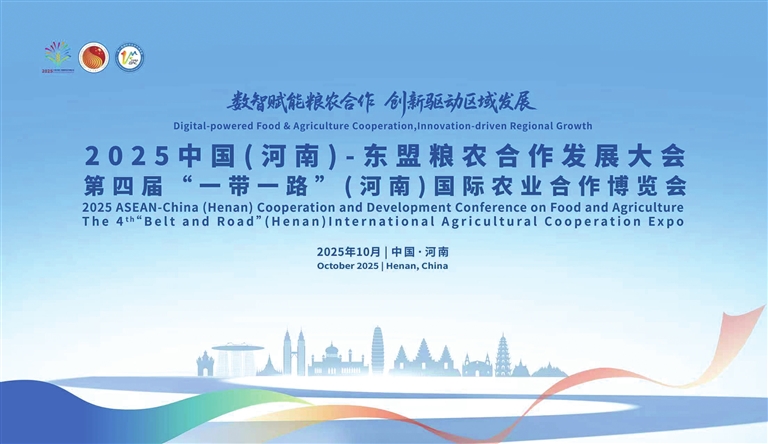
2025中国(河南)-东盟粮农合作发展大会暨第四届“一带一路”(河南)国际农业合作博览会在郑州启幕 数智赋能粮农合作 创新驱动区域发展
He Nan Ri Bao· 2025-10-12 23:36
Core Insights - The Central Plains region, particularly Henan, plays a crucial role in China's agricultural landscape, contributing over 65 million tons of grain annually, which accounts for 10% of the national total [2] - Henan is recognized as a "grain warehouse" and is a leading producer of wheat, oilseeds, mushrooms, and pork, with a total agricultural output value projected to reach 1.06 trillion yuan in 2024 [2] - The upcoming 2025 China (Henan)-ASEAN Agricultural Cooperation Development Conference aims to enhance international agricultural collaboration and promote digital agriculture [3][4] Agricultural Production and Economic Impact - Henan's agricultural production includes over 30 million tons of raw grain and processed products annually, reinforcing its status as a key player in ensuring national food security [2] - The province's agricultural exports have consistently ranked among the top ten in the country for five consecutive years, showcasing the global reach of "Yunong Superior Products" [2] - The total agricultural output value positions Henan as the second highest in China, highlighting its economic significance [2] Conference Overview - The conference will take place from October 12 to 14, 2025, in Zhengzhou, focusing on themes such as food security, agricultural modernization, and smart agriculture [3][4] - High-profile attendees, including government officials, experts, and industry leaders, will discuss major agricultural issues and share the latest developments [3][4] - The event will feature various activities, including signing agreements between Chinese and foreign enterprises, emphasizing the potential for deepened cooperation with ASEAN countries [4][5] Exhibition and Engagement - The exhibition will cover nearly 30,000 square meters, showcasing innovations across the agricultural supply chain, including smart agriculture and agricultural technology [5][6] - Attendees will have the opportunity to experience local cuisine and traditional crafts, fostering cultural exchange alongside agricultural discussions [6] - The event aims to create an interactive experience that combines agricultural technology with public engagement, enhancing understanding of modern agricultural practices [6] Strategic Importance - The conference is part of Henan's strategy to strengthen its position as a core agricultural production area and enhance international cooperation [7] - By sharing agricultural technology and promoting trade, Henan aims to solidify its role as a cornerstone of national food security and agricultural modernization [7] - The event is expected to facilitate collaboration between China and ASEAN countries, contributing to global agricultural development and food security [7]
发挥合作经济优势助力乡村振兴
Jing Ji Ri Bao· 2025-10-12 22:05
Core Insights - The United Nations has declared 2025 as the second International Year of Cooperatives since 2012, with the theme "Cooperatives Build a Better World" [1] - Cooperative economic organizations are essential for social governance and serve to overcome individual limitations through collective efforts, democratic control, and shared benefits [1] Group 1: Agricultural Development - Cooperative economic organizations in China have enhanced agricultural social service capabilities, improved service networks, and significantly increased service efficiency, acting as an "accelerator" for rural endogenous motivation [1] - These organizations help organize farmers for collective production, effectively addressing the contradiction between small-scale production and large markets, thus promoting agricultural scale, standardization, and modernization [1] - By introducing advanced technologies, promoting quality varieties, and conducting skills training, these organizations continuously improve farmers' technological literacy and production capacity [1] Group 2: International Experience - Global cooperative green development concepts and standardized practices provide valuable lessons for China, as many countries' cooperatives have achieved increased agricultural production and income through green production methods and certifications [1] Group 3: Future Directions - To further leverage cooperative economic organizations, there is a need to integrate agricultural production with ecological construction, optimize resource allocation, and shift agricultural development from "quantity accumulation" to "quality leap" [2] - Strengthening the organizational foundation involves scientific planning based on local resources and farmer needs, improving internal governance, and enhancing operational professionalism [2] - Building a skilled workforce is crucial for cooperative economic development, necessitating collaboration with research institutions and professional training to cultivate leadership and cooperative awareness among members [2] Group 4: Cooperative Models and Support - Exploring diverse cooperative models such as shareholding cooperation, resource integration, leasing operations, and entrusted services can help strengthen rural collective economies [3] - Encouraging farmers to participate in various stages of the industrial chain and utilizing digital technologies can expand markets and innovate services [3] - External support for cooperative economic organizations should be precise and sustainable, with targeted technical, market, and brand resource alignment, alongside innovative rural finance solutions [3]
刘宁王凯会见参加2025中国(河南)—东盟粮农合作发展大会暨第四届“一带一路”(河南)国际农业合作博览会的重要外宾
He Nan Ri Bao· 2025-10-12 10:50
Core Insights - The meeting in Zhengzhou highlighted the importance of agricultural cooperation between Henan and ASEAN countries, emphasizing mutual benefits and complementary strengths in agricultural resources and industry development [1][2] - The event aims to deepen collaboration in agricultural trade, technology, and sustainable development, contributing to food security and the construction of a closer China-ASEAN community [1][2] Group 1: Key Points from the Meeting - Henan is recognized as a significant agricultural province in China, focusing on modernizing its agricultural systems and increasing farmers' income [1] - The representatives from ASEAN countries acknowledged Henan's rich agricultural resources and its role in ensuring food security and promoting agricultural trade [2] - The meeting emphasized the need for practical cooperation in the entire agricultural value chain, including smart agriculture and green development [2]
“一条鱼”游出的产业革命
Qi Lu Wan Bao Wang· 2025-10-09 06:24
Group 1 - A "blue revolution" is taking place in Shandong, transforming the aquaculture industry through a comprehensive innovation chain from seedling to breeding to promotion [1][2] - The traditional model of "southern fish raised in the north" is evolving into a more sophisticated approach that emphasizes quality and local production rather than mere relocation [1][2] - Advanced technologies such as digital workshops and closed-loop farming systems are significantly improving water management and fish farming efficiency, achieving a fivefold increase in stocking capacity [1][2] Group 2 - The success of aquaculture relies heavily on quality seed stock, with breakthroughs in artificial breeding of over twenty marine fish species achieved through collaboration between Mingbo Aquaculture and research institutions [2] - The introduction of local varieties like "Yellow River No. 1" crab demonstrates the effectiveness of technology in adapting species to local conditions, enhancing resilience and quality [2] - The integration of land and sea operations, along with a closed-loop promotion system, is creating a sustainable development model for aquaculture that increases industry value [2][3] Group 3 - Agricultural modernization is characterized by a systemic revolution that requires deep collaboration between enterprises and research institutions, as well as supportive policies and market dynamics [3] - The journey of southern fish adapting to northern environments and local species gaining recognition globally reflects a significant shift in the industry from following to leading [3] - Shandong's full-chain aquaculture model has the potential to become a new benchmark for modern agriculture in China, contributing to food security and industry revitalization [3]
新型农业经营主体 金融需求更待关注
Jin Rong Shi Bao· 2025-10-09 02:12
Core Insights - The agricultural sector in China has achieved significant milestones during the "14th Five-Year Plan" period, with grain production expected to exceed 1.4 trillion jin in 2024, ensuring food security and self-sufficiency [1] - The transformation from smallholder farming to large-scale, intensive agricultural production is essential for building a strong agricultural nation, influenced by policy support and market demand [2] Group 1: Agricultural Development Achievements - China's grain production has reached a new level, with per capita grain availability at 500 kg, ensuring basic self-sufficiency and absolute food security [1] - Over 2 million farmer cooperatives and more than 4 million family farms have been established, with over 1.1 million agricultural social service entities providing services across 2.29 billion acres [1] Group 2: New Agricultural Operating Entities - The shift towards new agricultural operating entities is driven by changes in market demand, requiring these entities to adapt their business models from simple production to value-added processing and brand development [2] - New agricultural entities are increasingly sensitive to market changes, necessitating financial institutions to adjust credit strategies to support their transformation needs [3] Group 3: Financial Support and Challenges - The demand for funding among new agricultural entities is rising, particularly for investments in environmental improvements and product quality enhancement [4] - Financial institutions are encouraged to tailor their services to meet the specific needs of agricultural operators, especially in green credit and loan conditions [4] Group 4: Labor Force and Demographics - The agricultural labor force is aging, with an average age of 57-58.6 years, leading to a structural challenge in the workforce [5] - There is a pressing need to cultivate new agricultural operating entities to address the aging workforce and enhance market competitiveness through financial support [5]
“有中国朋友的地方,就有希望的田野”(新时代中非合作) ——中国企业助力埃及乡村脱贫与畜牧业振兴
Ren Min Ri Bao· 2025-10-07 21:56
Core Viewpoint - Chinese enterprises are significantly contributing to the revitalization of Egypt's agriculture by providing quality feed, advanced technology, and job opportunities, fostering a narrative of cross-border cooperation over the past decade [1][5]. Group 1: Training and Employment - A training program initiated by the Chinese Embassy in Egypt and New Hope Liuhe aims to equip 100 women in the Manufiya province with skills for poultry farming, thereby helping impoverished families achieve sustainable income [2][3]. - The program has resulted in women like Amina gaining the ability to improve their household income through chicken farming, showcasing the impact of skill acquisition on poverty alleviation [2][3]. - New Hope Liuhe has created over 1,200 direct jobs in Egypt, with a local employee's monthly income reaching approximately 40,000 EGP (around 6,000 RMB) [4]. Group 2: Agricultural Development - Since entering Egypt in 2011, New Hope Liuhe has established four feed factories and one breeding company, with projected sales of 700,000 tons of feed and 25 million chicks in 2024 [3][4]. - The introduction of biological feed and scientific management techniques has improved the feed-to-meat ratio from 1.8 to as low as 1.4, and increased poultry survival rates to 95%, enhancing the overall industry standards [3][4]. - Local farmers have scaled their operations from 3,000 to hundreds of thousands of poultry, significantly increasing their income and confidence in the industry [4][5]. Group 3: Community Impact and Future Prospects - The initiatives by Chinese companies are not only enhancing agricultural productivity but also injecting vitality into Egypt's agricultural modernization efforts, serving as a model for poverty alleviation [5][6]. - New Hope Liuhe extends its impact beyond production by offering free courses and on-site guidance to hundreds of farmers annually, focusing on poultry management and disease prevention [5]. - The collaboration between Chinese enterprises and local communities is seen as a pathway to shared development and prosperity, with local media highlighting the hope brought by these initiatives [5].

“有中国朋友的地方,就有希望的田野”(新时代中非合作)
Ren Min Ri Bao· 2025-10-07 21:51
Core Insights - Chinese companies are significantly contributing to the agricultural development in Egypt, providing high-quality feed, advanced technology, and job opportunities, which fosters hope for local communities [1][5]. Group 1: Training and Employment - A training program initiated by the Chinese Embassy in Egypt and New Hope Liuhe aims to empower women in rural areas by providing them with skills for poultry farming, thereby aiding poverty alleviation [2][3]. - The program has successfully trained women, enabling them to generate income independently, which has improved their living standards [2][3]. - New Hope Liuhe has created over 1,200 direct jobs in Egypt, with a high localization rate, where more than half of the management staff are Egyptians [4]. Group 2: Agricultural Impact - Since entering Egypt in 2011, New Hope has established four feed factories and one breeding company, with plans to sell 700,000 tons of feed and 25 million chicks in 2024 [3][4]. - The introduction of biological feed and scientific management techniques has improved the feed-to-meat ratio from 1.8 to as low as 1.4, and increased poultry survival rates to 95% [3][4]. - The local poultry farmers have scaled their operations significantly, with some increasing their flock size from 3,000 to hundreds of thousands, leading to enhanced profitability [4][5]. Group 3: Broader Economic Contributions - The presence of Chinese companies like New Hope is revitalizing Egypt's agricultural sector, injecting vitality into agricultural modernization and creating wealth and value [5]. - Local media have recognized the positive impact of Chinese investments on the confidence of Egyptian farmers and the overall agricultural productivity [4][5]. - The Egyptian Minister of Investment and Foreign Trade has expressed support for such investments, highlighting their role in creating economic opportunities [4].
秋收进度近三成 现代化农机助丰收
Yang Shi Wang· 2025-10-04 22:37
Core Insights - The Ministry of Agriculture and Rural Affairs reports that nearly 30% of the national autumn grain harvest has been completed, indicating significant progress in the agricultural sector [1] Group 1 - The influx of various modern agricultural machinery is aiding in the efficient harvesting of grain and oil crops, contributing to the successful collection of produce [1]
小滩羊变“品牌羊” 金融助写养殖致富经|丰收新图景
经济观察报· 2025-10-02 04:55
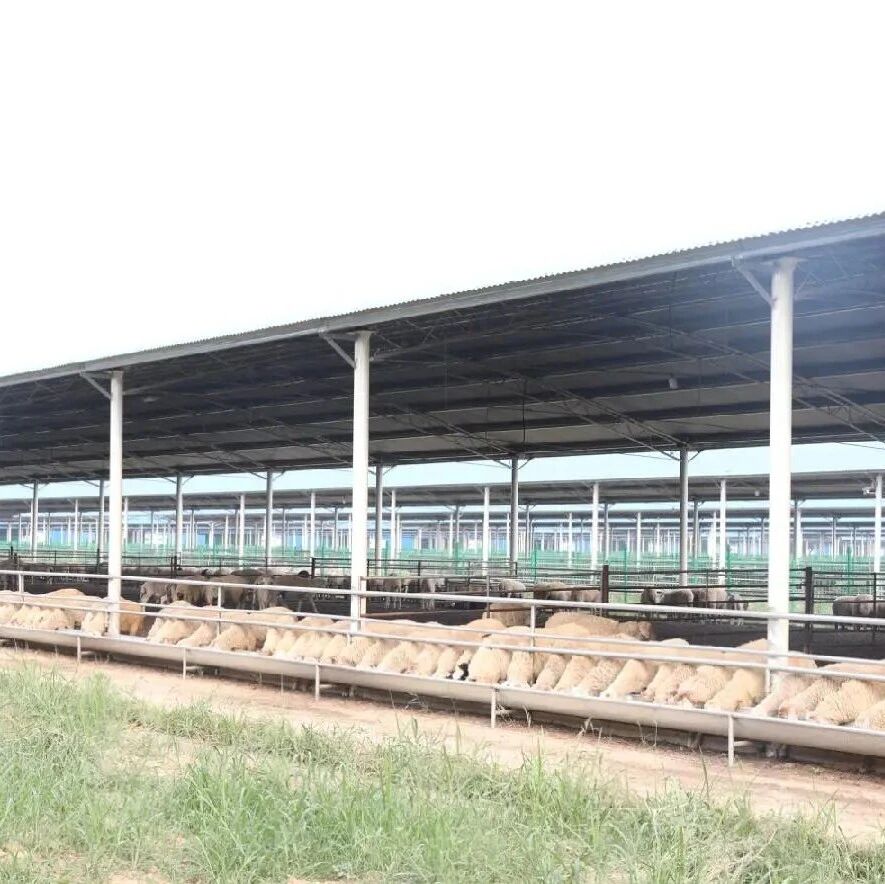
Core Viewpoint - The article highlights the transformation of traditional sheep farming into a modern, large-scale, and standardized industry, exemplified by the Huanghekou Tanyang Industrial Park, which has become a model for agricultural modernization in China [3][5][13]. Group 1: Industry Transformation - The Huanghekou Tanyang Industrial Park, located in Dongying City, Shandong Province, represents a shift from small-scale family farming to a more organized and industrialized approach to sheep farming [3][5]. - The park covers a planned area of 10,000 acres with a total investment of 2.86 billion yuan, aiming to enhance the local sheep farming industry by providing standardized facilities and services [5][13]. - The introduction of modern farming practices, including online sales and standardized breeding, has significantly improved the efficiency and output of sheep farming in the region [3][10]. Group 2: Financial Support and Growth - Local farmers, such as Lao Ji, have benefited from new loan products offered by agricultural banks, which facilitate the expansion of their farming operations without the need for complex collateral requirements [6][7]. - The Agricultural Bank of China has provided approximately 380 million yuan in loans to nearly 400 farmers, enabling them to scale their operations and improve their financial stability [8][12]. - The financial support has allowed farmers to rent standardized sheep pens and invest in necessary equipment, leading to increased production capacity and profitability [6][8]. Group 3: Value Addition and Branding - The transformation of traditional sheep farming has led to the emergence of "Huanghekou Tanyang" as a recognized brand, included in the national directory of quality agricultural products [13]. - The establishment of a comprehensive supply chain, including breeding, feed processing, and meat processing, has enhanced the value of the sheep products and improved market access for local farmers [12][13]. - The industrial park has become a significant contributor to the local economy, with over 420,000 sheep currently housed and an annual output of 1.1 million sheep, making it the largest standardized sheep farming facility in the country [13].