反洗钱

Search documents
事关存钱取钱央行等三部门向社会征求意见
Yang Shi Xin Wen· 2025-08-12 03:39
Core Points - The People's Bank of China, along with the National Financial Regulatory Administration and the China Securities Regulatory Commission, has drafted a consultation paper for a new management method regarding customer due diligence and the preservation of customer identity information and transaction records [1] - The consultation draft does not mention the previous requirement for individuals to register the source of funds for cash deposits or withdrawals exceeding 50,000 RMB [1] - Financial institutions are required to conduct customer due diligence for one-time financial services with transaction amounts exceeding 50,000 RMB or equivalent to 10,000 USD, and to retain copies of valid identification documents [1] - The management method emphasizes the use of electronic means for high-quality preservation of customer data and transaction records, mandating that such records be kept for at least 10 years after the end of the business relationship or transaction [1] Related Information - The People's Bank of China is enhancing risk-based anti-money laundering regulatory requirements [2] - The central bank plans to revise the rules for the RMB cross-border payment system [2] - Starting from August 1, cash purchases of gold exceeding 100,000 RMB will need to be reported [2]
金融领域反洗钱政策持续优化
Zheng Quan Ri Bao· 2025-08-11 16:29
Core Viewpoint - The People's Bank of China, along with other regulatory bodies, has released a draft regulation aimed at improving customer due diligence and transaction record-keeping for financial institutions, which notably removes the requirement for individuals to disclose the source or purpose of cash transactions exceeding 50,000 RMB, indicating a shift towards a risk-based regulatory approach [1][2][4]. Group 1: Regulatory Changes - The new regulation provides clear operational guidelines for financial institutions regarding customer due diligence, identity verification, and transaction record retention [2]. - The removal of the previous requirement for cash transactions over 50,000 RMB or equivalent in foreign currency to disclose the source or purpose is a significant change aimed at enhancing customer experience and operational efficiency [2][3]. - The regulation mandates that financial institutions conduct due diligence for cash transactions exceeding 50,000 RMB or equivalent in foreign currency, ensuring proper identification and documentation of customers [3]. Group 2: Impact on Financial Institutions - The regulation encourages financial institutions to transition from passive compliance to proactive risk management, necessitating the development of a customer risk grading system [3][5]. - Financial institutions are expected to leverage technology to optimize service processes for low-risk customers while implementing enhanced due diligence for high-risk clients [3][5]. - The introduction of this regulation is part of a broader effort to strengthen anti-money laundering measures and improve the effectiveness of due diligence practices across various financial sectors [4]. Group 3: Broader Context and Implications - The regulation aligns with the Anti-Money Laundering Law of the People's Republic of China and aims to meet international assessment requirements for anti-money laundering [4]. - The recent surge in anti-money laundering policies reflects a commitment to refining the regulatory framework and enhancing risk management capabilities within financial institutions [4]. - The comprehensive approach to risk prevention across different sectors, including finance and precious metals, is expected to bolster the overall stability and sustainability of the financial market [4].
金融管理部门征求意见,四大问题解读
Shang Hai Zheng Quan Bao· 2025-08-11 14:16
近期,中国人民银行、金融监管总局、中国证监会研究起草了《金融机构客户尽职调查和客户身份资料 及交易记录保存管理办法(征求意见稿)》(以下简称《管理办法》),以落实新修订的反洗钱法要 求。 围绕《管理办法》涉及的四大关键问题,记者采访了业内专家。 问题一:最新监管规则对于个人存取现金超过5万元有什么要求? 问题三:在我国金融业的反洗钱实践中存在哪些挑战? 业内专家:2007年反洗钱法施行以来,金融机构持续健全反洗钱内控制度,依法开展客户尽职调查工 作,完善洗钱预防措施。但近年来出现的洗钱风险案例暴露出部分金融机构尽职调查有效性不足的问 题。 有的机构对不同风险状况的客户采取"一刀切"的尽职调查措施,有的对业务存续期间的风险变化视而不 见,造成资源错配,产生风险隐患。 问题四:《管理办法》如何更好筑牢"反洗钱"防线? 问题二:制定《管理办法》的主要背景是什么? 业内专家:制定《管理办法》是落实反洗钱法和迎接国际评估的必然之举。 2024年11月修订通过的《中华人民共和国反洗钱法》已经于今年1月1日起正式施行。反洗钱法专门明确 了基于风险开展客户尽职调查的原则,要求金融机构开展客户尽职调查应当根据客户特征和交易活动 ...
实施近三年半时间后,“存取现金超5万要登记来源或用途”的规定要改?以后或无需再登记,央行等三部门发文征求意见
Sou Hu Cai Jing· 2025-08-11 09:39
《办法》规定,商业银行、农村合作银行、农村信用合作社、村镇银行等金融机构为自然人客户办理人 民币单笔5万元以上或者外币等值1万美元以上现金存取业务的,应当识别并核实客户身份,了解并登记 资金的来源或者用途。 近日,中国人民银行、金管总局、证监会联合发布《金融机构客户尽职调查和客户身份资料及交易记录 保存管理办法(征求意见稿)》,面向社会公开征求意见。该征求意见稿已于8月4日起向社会公开征集 意见,截止日期为9月3日。 值得注意的是,此次征求意见稿中取消了在此前监管规则中关于个人办理单笔5万元以上现金存取业务 需"了解并登记资金来源或用途"的硬性要求。 此次征求意见稿还对于金融机构使用电子化手段高质量保存客户资料及交易记录提出明确要求。明确客 户身份资料及交易记录自业务关系或交易结束后至少保存10年;金融机构要逐步实现以电子化方式保存 客户身份资料及交易信息。 金融界8月11日消息 实施近三年半时间后,存款取款单笔超5万元需要说明"来源"和"用途"的硬性要求要 改了! 个人办理单笔5万元以上现金存取业务需"了解并登记资金来源或用途"的硬性要求出自人民银行、银保 监会、证监会2022年1月26日联合印发的《金融机 ...
事关存钱取钱,央行等三部门发文征求意见
Sou Hu Cai Jing· 2025-08-11 08:46
Group 1 - The core viewpoint of the article is the introduction of a draft regulation aimed at enhancing the prevention and control of money laundering and terrorist financing activities in China [1] - The draft regulation requires financial institutions to conduct customer due diligence for transactions exceeding RMB 50,000 or the equivalent of USD 10,000, and to retain copies of customer identification documents [3] - Financial institutions are mandated to electronically store customer identity information and transaction records for a minimum of 10 years after the business relationship or transaction ends [5]

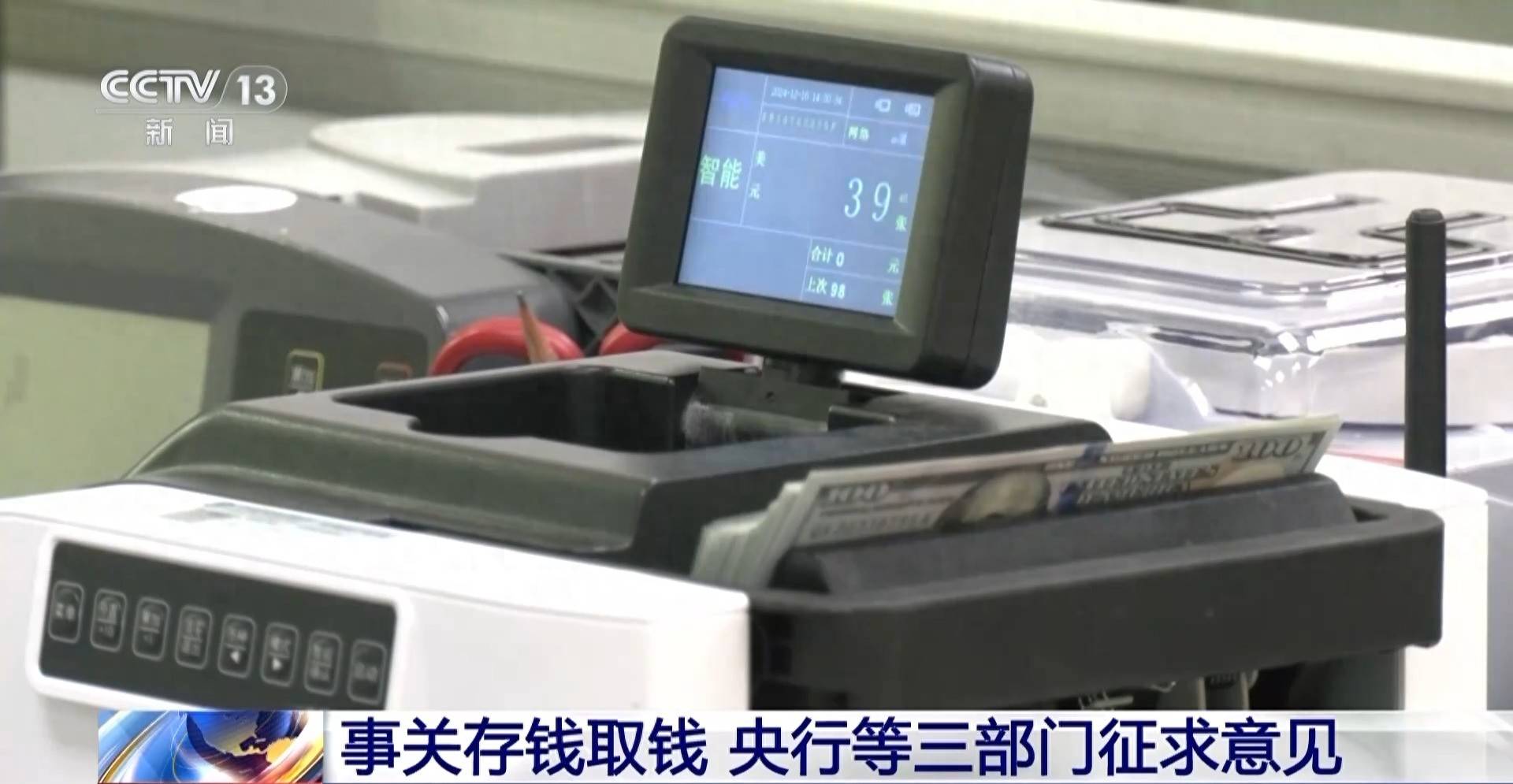
事关存钱取钱 央行等三部门向社会征求意见
第一财经· 2025-08-11 08:44
Core Viewpoint - The article discusses the draft of the "Management Measures for Customer Due Diligence and Customer Identity Information and Transaction Record Keeping by Financial Institutions," aimed at preventing money laundering and terrorist financing activities while regulating customer due diligence and record-keeping practices in financial institutions [1] Group 1 - The draft does not mention the previous requirement for individuals to register the source of funds for cash withdrawals exceeding 50,000 RMB [1] - Financial institutions are required to conduct customer due diligence for one-time financial services with transaction amounts exceeding 50,000 RMB or equivalent to 10,000 USD, and to record basic customer identity information [1] - Financial institutions must retain copies of valid identification documents or other proof of identity for customers [1] Group 2 - The draft specifies that customer identity information and transaction records must be retained for at least 10 years after the business relationship or transaction ends [1] - Financial institutions are encouraged to gradually implement electronic methods for high-quality preservation of customer information and transaction records [1]

存取款单笔超5万元 或不用说明“来源”和“用途”
Guang Zhou Ri Bao· 2025-08-11 08:39
Core Points - The People's Bank of China, along with the National Financial Regulatory Administration and the China Securities Regulatory Commission, has released a draft regulation for public consultation regarding customer due diligence and the management of customer identity information and transaction records [1][2] - The draft regulation aims to implement anti-money laundering laws and prepare for international assessments [2] Summary by Category Regulatory Changes - The new draft regulation removes the strict requirement from the 2022 version that mandated financial institutions to understand and record the source or purpose of cash transactions exceeding 50,000 RMB for individual clients [2] - Financial institutions, including policy banks, commercial banks, rural cooperative banks, and others, are required to conduct customer due diligence for transactions over 50,000 RMB or equivalent to 10,000 USD, and to retain copies of valid identification documents [2] Historical Context - The previous regulation issued in January 2022 required financial institutions to identify and verify the identity of individual clients for cash transactions exceeding 50,000 RMB, including understanding and recording the source or purpose of funds [2]
大额现金存取拟“松绑”?央行等三部门征言 个人存取款超5万元或将不再登记 但“批量开户”可能被拒
Mei Ri Jing Ji Xin Wen· 2025-08-11 05:29
Core Viewpoint - The People's Bank of China, along with other regulatory bodies, has drafted a new set of guidelines for customer due diligence and record-keeping, which reflects significant changes from the previous regulations implemented in March 2022 [1][3]. Group 1: Changes in Customer Due Diligence Requirements - The new draft removes the requirement for financial institutions to verify customer identity and understand the source or purpose of funds for cash transactions exceeding 50,000 RMB or equivalent to 10,000 USD [1][4]. - Financial institutions are now required to adapt their customer due diligence measures according to the risk level associated with the customer, ensuring that measures taken are proportionate to the identified risks [3][4]. Group 2: Record-Keeping and Duration - The duration for which customer identity information and transaction records must be retained has been increased from a minimum of 5 years to at least 10 years [5]. Group 3: Measures Against High-Risk Activities - Financial institutions have the authority to refuse account openings if there is suspicion of customers engaging in activities such as opening multiple accounts or other actions indicative of money laundering [6][7]. - The draft emphasizes stricter measures for financial institutions operating in or dealing with high-risk countries, including enhanced social audits and careful consideration before establishing relationships with such entities [6][7]. Group 4: Digital Currency Considerations - The new draft explicitly states that customer due diligence and record-keeping for digital RMB transactions will follow the relevant regulations, which were not previously covered [4].

关于个人存取款,或将有重大调整!
Sou Hu Cai Jing· 2025-08-11 04:21
近日,中国人民银行、国家金融监督管理总局、中国证监会联合发布《金融机构客户尽职调查和客户身份资料及交易记录保存 管理办法(征求意见稿)》(以下简称《管理办法》),面向社会公开征求意见。该征求意见稿已于8月4日起向社会公开征集 意见, 截止日期为9月3日。 中国人民银行 国家金融监督管理总局 中国证券监督管理委员会 征求意见稿 这份新规中最引人注目的变化是:取消了2022年版监管规则中关于个人办理单笔5万元以上现金存取业务需"了解并登记资金来 源或用途"的硬性要求。 此外,在为客户提供现金汇款、实物贵金属买卖等一次性交易金额业务超过5万元的,金融机构仍需开展尽职调查,并登记客户 身份基本信息,留存客户有效身份证件或者其他身份证明文件的复印件或者影印件。 《征求意见稿》第九条 据报道,2022年,针对自然人客户单笔存取5万元以上现金的反洗钱监管规则,曾引发广泛社会争议。 这一规定在当时引发了社会广泛关注,"个人存取现金超5万元需登记资金来源或用途"迅速登上热搜。公众意见呈现分歧:部分 声音认为此举增加了业务办理的繁琐性,甚至担忧可能侵犯个人隐私;而支持者则认为这是打击洗钱犯罪、维护金融安全的必 要手段。 央行相关 ...
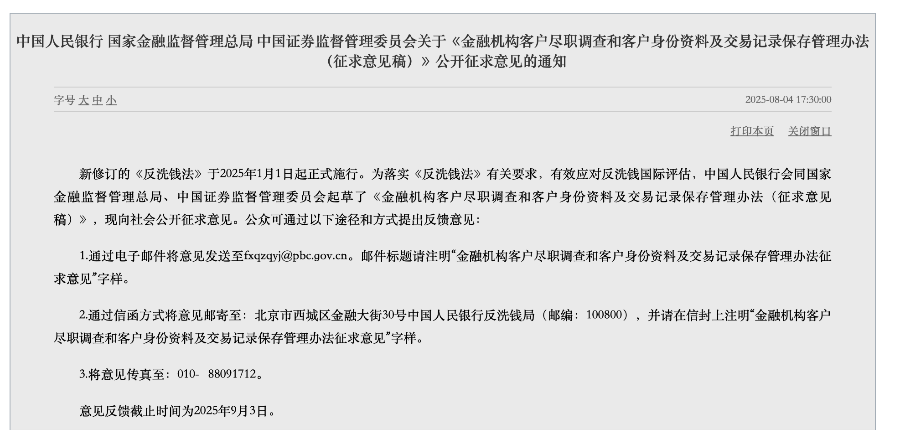
对话肖风:在香港稳定币的沸腾时刻,一些回归常识的冷思考
3 6 Ke· 2025-08-11 03:39
Group 1 - The Hong Kong Stablecoin Regulation officially comes into effect on August 1, 2025, marking the establishment of a regulatory framework focused on fiat-backed stablecoins [1] - There is a growing interest in stablecoins and Real World Assets (RWA) in the Chinese-speaking world, with industry leaders expressing cautious perspectives on the hype surrounding these developments [3][5] - Hong Kong's regulatory authorities are expected to be very strict in issuing licenses for stablecoins, with a focus on anti-money laundering measures and the financial risk management capabilities of applicants [6][7] Group 2 - The regulatory environment in Hong Kong is characterized by a cautious approach, contrasting with the enthusiasm seen in the market, as authorities are concerned about potential money laundering risks associated with stablecoins [6][19] - The discussion around stablecoins in Hong Kong is influenced by international financial trends, with a recognition that the region must maintain its reputation as a global financial center [5][6] - The potential for Hong Kong to become a global center for digital finance is linked to its unique position within the context of China and its common law system, which allows for more flexibility compared to mainland regulations [51][52] Group 3 - The conversation around RWA indicates a multi-stage approach to asset tokenization, starting with fiat currencies, moving to financial assets, and eventually to physical assets, which presents significant challenges [21][24] - The successful implementation of RWA requires addressing technical issues such as ensuring the integrity of off-chain assets and their digital representations on the blockchain [22][24] - The future acceptance of RWA in mainland China is anticipated, as it aligns with the need to support the real economy and respond to global trends in digital asset regulation [17][18] Group 4 - The emergence of stablecoins is seen as a response to the volatility of cryptocurrencies, providing a stable medium for pricing and trading crypto assets [43][44] - The underlying technology of stablecoins and RWAs is based on distributed ledger technology, which offers a new method of accounting and financial infrastructure [39][40] - The potential for stablecoins to facilitate cross-border transactions and their role in the evolving global financial landscape is emphasized, highlighting their significance beyond mere payment systems [41][43]