
粮食安全

Search documents
英媒有点急:挑战来了,中国又一领域跻身高端市场
Xin Lang Cai Jing· 2025-12-23 15:59
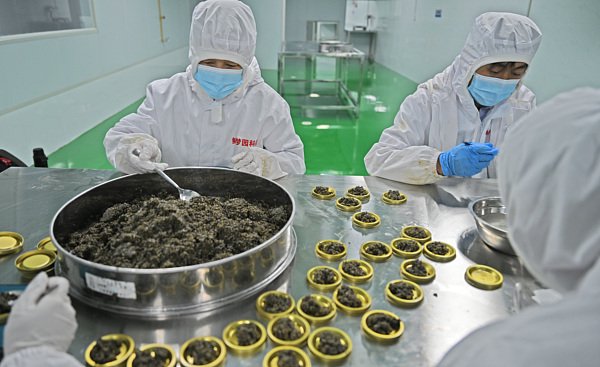
Core Insights - China is transitioning from a high-end food importer to a significant producer and exporter in luxury food sectors such as caviar, foie gras, macadamia nuts, and cherries, driven by local government support, cost advantages, and rising domestic demand [1][3] Group 1: Caviar Industry - China currently dominates global caviar production and export, with the brand Kaluga Queen expected to produce 260 tons in 2024, accounting for 35% of global output [3] - The export value of Chinese caviar has increased from approximately $1.2 million in 2012 to $9.8 million in 2024, rising from 14% to 43% of global exports [3] Group 2: Foie Gras Production - Foie gras production in China has reached several thousand tons annually, with local producers like Li Feng in Anhui County producing around 100 tons for the domestic market [1][4] - The increasing awareness and demand for foie gras among consumers have significantly changed market dynamics [1] Group 3: Macadamia Nuts - China has become the second-largest producer of macadamia nuts globally, surpassing Australia, with production supported by local government initiatives in regions like Yunnan [1][5] - The macadamia nut industry has seen a rise in production from about 3% to 20% of global output from 2016 to 2024 [5] Group 4: Cherry Market - China is the largest cherry consumer globally, with an expected consumption of 1.5 million tons by 2025, of which 900,000 tons will be domestically produced [8] - Shandong province has emerged as the largest cherry-growing area, with local governments encouraging farmers to switch from apple to cherry cultivation [8] Group 5: Agricultural Policy and Support - Local governments in agricultural provinces like Yunnan, Shandong, and Anhui are actively promoting high-value crop cultivation through subsidies and technical support [1][4][5] - The focus on food security has influenced the cultivation strategies and regional distribution of high-end crops like macadamia nuts and cherries [5]

焦点访谈|逆势增产:中国粮食安全的底气从何而来?
Yang Shi Wang· 2025-12-23 13:23
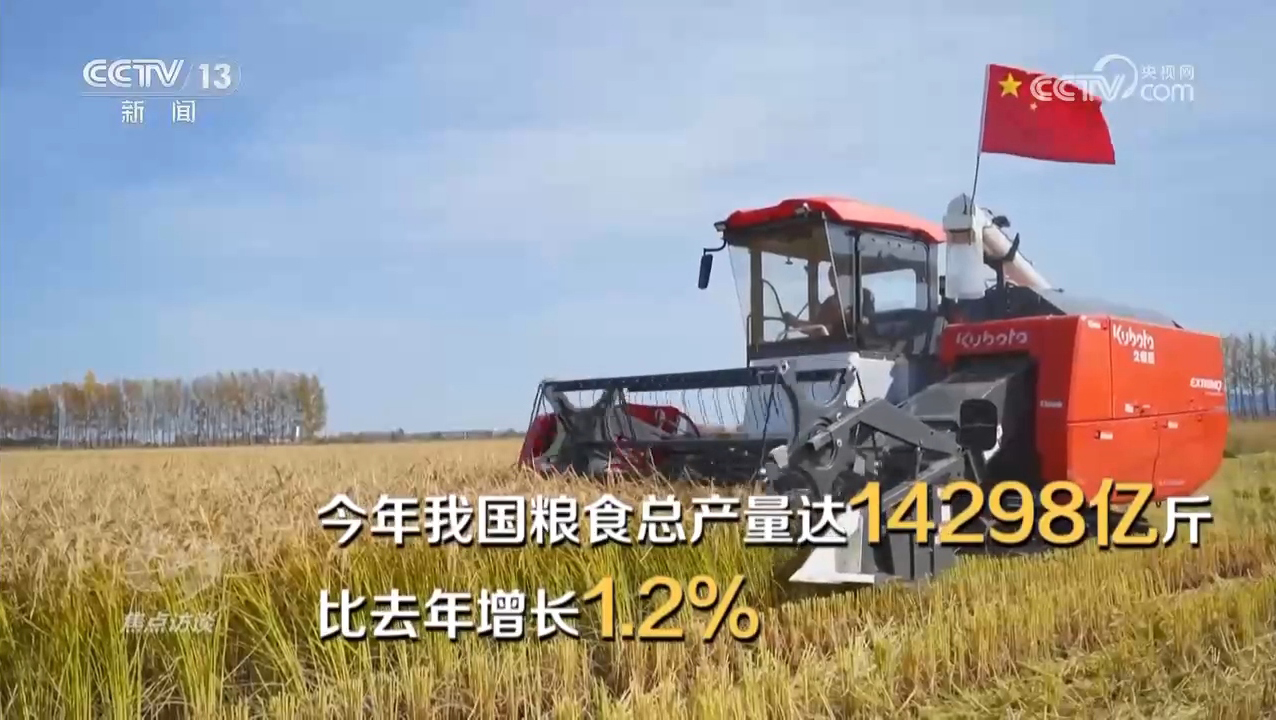
今年我国粮食总产量达14298亿斤,比去年增长1.2%,创历史新高。在今年气象条件复杂多变、粮食生产面临严峻挑战的情况下,这份成绩来得尤为不 易。今年春季,我国多地出现罕见干旱,入夏后7月全国平均气温为1961年以来历史同期最高。 山西洪洞县是干旱最严重的地区之一,当时正是小麦成熟前的灌浆期,是籽粒形成和充实的关键阶段,需水量占整个生育期的30%左右。此时得不到充 足的水分,会导致籽粒干瘪,影响产量。 山西洪洞县锦秀生态种植有限公司负责人吕凌:"墒情差到什么程度?向土里挖四五十厘米都不见墒,很着急。老天不下雨,我们的措施只是拿井水来 浇地,就没有停过,就这样都缓解不了旱情。" 仅仅依靠浇水远远不够,当地在农技专家的指导下,增加了"一喷三防"的次数。也就是喷洒多功能的混合药剂,缓解高温干旱对灌浆的影响,同时补充 营养、降低病虫害发生风险,从而将干旱的影响降到最低。 央视网消息(焦点访谈):12月12日,国家统计局发布2025年粮食产量数据。2025年,全国粮食产量14298亿斤,比上年增加167.5亿斤,增长1.2%。这 也是我国粮食产量自去年首次达到1.4万亿斤后,连续第二年稳定在1.4万亿斤以上。更加难能可 ...
粮食安全看山东”之桓台:深化改革促“粮安
Zhong Guo Fa Zhan Wang· 2025-12-23 08:08
Core Viewpoint - Shandong Province's Huantai County is actively implementing the national food security strategy, focusing on supply-side structural reforms in grain production, ensuring stable development and effective food security measures [1][2]. Group 1: Food Security Strategy Implementation - Huantai County is committed to strict land protection and food security responsibility systems, enhancing policy support and technical services to ensure a positive trend in grain production [1]. - The county is maintaining an appropriate scale of grain reserves, aligning with provincial and municipal government guidelines, and integrating grain reserve management into a legal framework [1]. Group 2: Grain Storage and Purchase Work - The county is focusing on six key areas for grain storage and purchase, including early planning, strict adherence to purchasing policies, and proactive market engagement [2]. - There is an emphasis on monitoring market trends and price changes to provide timely statistical information services [2]. - The county is enhancing supervision during the grain purchasing period to protect farmers' interests and maintain market order [2]. Group 3: Policy Promotion and Farmer Support - Efforts are being made to strengthen policy communication to help farmers understand purchasing policies and set reasonable price expectations, thereby increasing their income from grain production [3].
“粮食安全看山东”之沂源:四聚合力强推进,提效提标保粮安
Zhong Guo Fa Zhan Wang· 2025-12-23 08:04
Core Viewpoint - Shandong Zibo Yiyuan County is focusing on food security by enhancing grain storage capabilities through the construction and operation of a 60,000-ton grain and material reserve project, aiming to create a high-standard smart grain storage system [1] Group 1: Project Construction and Management - The county government emphasizes project construction, ensuring high-quality planning and execution to establish a "century-old granary" [2] - A temporary party branch was established to integrate party work with grain management, enhancing organizational strength and collaboration [2] - The project has adopted advanced technologies and best practices from benchmark units, leading to improved construction standards and efficiency [2] Group 2: Resource Coordination and Financial Support - The project has secured 110 million yuan in policy funds, including local special bonds and central reward funds, ensuring smooth project initiation [3] - Coordination with relevant departments has facilitated the resolution of construction-related issues, such as land use changes [3] Group 3: Smart Management Innovations - The introduction of a centralized smart grain storage management platform aims to enhance operational efficiency through real-time data monitoring and automated controls [4] - The establishment of intelligent grain warehouses allows for real-time monitoring and management of grain conditions, improving storage safety [4] - A model for a three-dimensional intelligent emergency material warehouse has been developed, significantly increasing storage capacity and operational efficiency [4] Group 4: Operational Planning and Community Engagement - The county is proactively planning for the post-construction operation of the grain storage facility, aligning with central reserve grain leasing strategies [6] - Community engagement efforts include providing services to farmers during grain collection, ensuring a smooth operational environment [6] - The project has achieved significant grain collection milestones, with over 40,000 tons collected and a record daily unloading of 3,600 tons [6]
【观察】定调2026年“三农”工作:守牢粮食安全与防返贫两条底线,统筹县域振兴
Xin Lang Cai Jing· 2025-12-23 06:40
Group 1 - The core focus of the Central Economic Work Conference is on eight key tasks for economic work in 2026, emphasizing the importance of urbanization centered around county towns and comprehensive rural revitalization [1] - The meeting highlights the need to maintain the bottom line of food security and prevent large-scale poverty, ensuring that agricultural production remains a priority [1][11] - Current agricultural work is characterized by a "steady progress" approach, focusing on consolidating existing reform achievements and ensuring that reforms continue in the right direction [2] Group 2 - The emphasis on maintaining the arable land red line is crucial for food security, as arable land is essential for grain production [3] - As of November 2025, China imported nearly 130 million tons of grain, indicating a growing demand for food while domestic arable land resources are limited [4] - The construction of high-standard farmland is vital for improving arable land quality and enhancing overall grain production capacity, with 35.88% of surveyed villages engaged in such construction [6] Group 3 - High-standard farmland shows significant productivity advantages, with an average yield of 633.56 kg per mu, which is 16.1% higher than non-high-standard farmland [6] - There are challenges in the management and maintenance of high-standard farmland, with 30.59% of villages lacking regular maintenance and professional management [7] - The need for tailored technical solutions for different regions is emphasized, as soil improvement priorities vary significantly across areas [8] Group 4 - The conference calls for a balance between arable land protection and county-level urbanization, suggesting that these can be harmonized through integrated development [9] - Recommendations include strengthening planning and spatial control to prioritize arable land protection while promoting efficient land use [9] - The establishment of a market for land factor allocation is necessary to reconcile high-quality development with high-level protection [10] Group 5 - The meeting also stresses the importance of maintaining reasonable prices for key agricultural products, which should be dynamically formed based on various factors [10] - Continuous efforts to consolidate and expand the achievements of poverty alleviation are crucial, with a focus on preventing large-scale poverty risks [11]
湖北将培育省级以上农业龙头企业1500家
Chang Jiang Shang Bao· 2025-12-23 00:13
Core Viewpoint - The 14th Five-Year Plan proposals approved by the 20th Central Committee and the Hubei Provincial Committee aim to accelerate agricultural modernization and rural revitalization, providing a clear direction for building a strong agricultural nation and province [1] Group 1: Agricultural Development Goals - Hubei aims to focus on the construction of "Four Zones" to create a modern "land of fish and rice," contributing to the central region's strategic development by fostering the agricultural sector [1] - By 2030, Hubei plans to cultivate 1,500 provincial-level agricultural leading enterprises and develop 100 city and county brands along with 100 enterprise brands, with an agricultural technology progress contribution rate reaching 72% [1] Group 2: Food Security and Quality - The province aims to ensure food security by increasing total grain production to over 57 billion jin by 2030, while maintaining quality standards and establishing over 53 million mu of high-standard farmland [1] - The strategy includes a focus on production capacity, ecological production, and income growth to enhance food security contributions [1] Group 3: Modern Industrial System - Hubei plans to create a leading area for agricultural industrialization, targeting a total output value of over 1.5 trillion yuan in agricultural product processing by 2030 [1] - The strategy emphasizes market-driven approaches, strengthening leading enterprises, and fostering brand development in key sectors such as aquaculture, livestock, and horticulture [1] Group 4: Agricultural Innovation - The province aims to cultivate new agricultural productivity by integrating scientific research with industry innovation, targeting a 72% contribution rate from agricultural technology by 2030 [2] - Initiatives include the promotion of seed industry revitalization and the establishment of leading enterprises in key sectors like pig farming and freshwater fish, with a goal of achieving an 88% self-sufficiency rate in core seed sources [2] Group 5: Rural Living Standards - Hubei is focused on enhancing rural living conditions by improving infrastructure such as water, electricity, roads, and internet access, aiming for comprehensive coverage of modern amenities [2] - The approach includes a phased and categorized strategy for rural revitalization to ensure that rural areas meet modern living standards [2]
农业农村部国际交流服务中心累计承担94个农业援外专家派遣项目
Ren Min Ri Bao· 2025-12-22 22:27
本报北京12月22日电 (记者牟宗琮)由农业农村部国际交流服务中心主办的2025年农业援外专家派遣 工作总结会日前在京举行。 据悉,20年来,农业农村部国际交流服务中心已累计承担94个农业援外专家派遣项目,向41个国家派出 941人次专家,承担45个项目的可研规划和28个项目的检查验收任务。农业农村部国际交流服务中心主 任顾卫兵表示:"中心指导专家组着力帮助受援国增强内生发展动力,推动农业援助由'输血型'向'造血 型'转变,有效提高了其可持续发展能力。" 《 人民日报 》( 2025年12月23日 03 版) (责编:白宇、卫嘉) 当前,全球粮食安全形势依然严峻,特别是非洲地区农业基础薄弱、抗风险能力不足,粮食安全问题尤 为突出。与会各方在回顾过去农业援外工作成效的同时,也充分交流了经验,明确了下一步农业援外工 作重点发展方向。 ...
一曲黑土地上的时代交响(文艺评论)
Ren Min Ri Bao· 2025-12-22 22:27
Core Viewpoint - The article highlights the significance of the symphonic chorus "Grain Security for All," which focuses on food security and the development of Heilongjiang as a major grain-producing region in China, showcasing the spirit of the pioneers in the "Northeast China" area [1][2]. Group 1: Performance and Audience Engagement - The performance has been well-received, with a total of 16 shows since its premiere in April, attracting over 100,000 online and offline viewers [1]. - The innovative combination of "national symphony + chorus" has garnered recognition and appreciation from audiences [1]. Group 2: Historical Context and Themes - The work narrates the arduous journey of the pioneers in Heilongjiang over the past 70 years, emphasizing their resilience and dedication to transforming barren land into productive farmland [1]. - The lyrics and musical composition evoke the emotional connection to the sacrifices made by those who cultivated the "Northeast China" region, highlighting the rich agricultural heritage [1]. Group 3: Modern Agricultural Innovations - The piece transitions to depict the vibrant scene of modern smart agriculture on the black soil, using traditional music elements to illustrate the transformation of farming practices [2]. - The incorporation of electronic music with symphonic elements simulates contemporary agricultural technologies, such as drone seeding and satellite monitoring, showcasing the impact of technology on rural revitalization [2]. Group 4: Future Aspirations and National Importance - The concluding segments of the performance celebrate Heilongjiang's role as a "ballast stone" in ensuring national food security, reflecting the enduring spirit of the pioneers [2]. - The overarching message emphasizes the commitment to producing quality grain for the nation, encapsulating a vision for the future of agriculture in China [2].
各地抢抓黄金施工期多维度发力 保障高标准农田建设筑牢粮食安全的良田根基
Yang Shi Wang· 2025-12-22 09:31
Core Viewpoint - The construction of high-standard farmland is crucial for strengthening the foundation of grain production and enhancing agricultural productivity in Chongqing, with a focus on timely completion before the 2026 spring plowing season [1]. Group 1: High-Standard Farmland Construction - High-standard farmland construction is a key measure to solidify the foundation of grain production and improve agricultural efficiency [5]. - Chongqing's Rongchang District plans to renovate 35,200 acres of high-standard farmland by 2025, focusing on land consolidation, irrigation systems, and road improvements [5]. - The renovation of high-standard farmland optimizes land layout, enhances supporting facilities, reduces labor intensity and production costs for farmers, increases land utilization and grain output, and strengthens resilience against natural disasters [8]. Group 2: Current Progress and Future Plans - Six large machines are currently working collaboratively at the construction site in the Emei community of Fenggao Street, transforming small fields into larger ones and leveling sloped land [9]. - In recent years, Chongqing has newly built and renovated 6.98 million acres of high-standard farmland, reaching a cumulative total of 18.88 million acres, resulting in an average increase of 100 pounds of grain per acre and a cost reduction of 200 yuan [11]. - The next steps for Chongqing include focusing on planning, site selection, quality control, and financial supervision to strengthen the foundation for national food security [11].
“粮食安全看山东”之淄博市淄川区:“三位一体”探索管粮模式,“五维驱动”推动产业升级
Zhong Guo Fa Zhan Wang· 2025-12-22 06:55
Core Viewpoint - Food security is a national priority, and effective law enforcement and high-quality industrial development are the two main pillars ensuring food security. The Zichuan District of Zibo City has implemented a "three-in-one" model of service, supervision, and law enforcement, resulting in a more than 30% improvement in enforcement efficiency [1]. Group 1: Law Enforcement and Supervision - The establishment of a collaborative law enforcement mechanism led by the development and reform department, involving market supervision and comprehensive law enforcement, has clarified responsibilities and enhanced regulatory effectiveness [2]. - Increased supervision and inspection efforts in grain circulation, utilizing innovative methods such as classified regulation to address issues effectively [2][3]. - Implementation of a dual random and public inspection approach to enhance enforcement deterrence, focusing on key areas such as grain quantity, quality, and storage safety [3]. Group 2: Industry Development and Upgrading - Investment in intelligent storage upgrades has improved storage operation efficiency by over 30%, addressing outdated equipment issues [5]. - The establishment of the "Qilu Grain and Oil" brand through policy guidance and market promotion has driven high-quality development in the grain industry [4]. - The introduction of green storage upgrades and advanced equipment has significantly enhanced labor efficiency and eliminated reliance on outsourcing [5]. Group 3: Emergency Supply and Information Security - The enhancement of the emergency supply network with 16 new supply points ensures rapid response capabilities in emergencies, meeting basic resident needs [5]. - Completion of information security assessments for local reserve grain storage facilities has strengthened data security and protection against cyber threats [6][7].