
股权激励

Search documents
盐津铺子:拟向激励对象授予300万股限制性股票
Mei Ri Jing Ji Xin Wen· 2025-12-17 12:56
(记者 王晓波) 2025年1至6月份,盐津铺子的营业收入构成为:食品制造业占比100.0%。 每经AI快讯,盐津铺子(SZ 002847,收盘价:70.7元)12月17日晚间发布2025年限制性股票激励计划 (草案)的公告称,本激励计划授予的激励对象总人数157人,涉及的标的股票来源为公司从二级市场 回购的股票;因本激励计划拟向激励对象授予300万股限制性股票,公司所有在有效期内的股权激励计 划所涉及的标的股票总数累计约540.32万股,约占本激励计划草案公告日公司股本总额的1.98%;限制 性股票的授予价格为每股35.18元,即满足授予条件后,激励对象可以每股35.18元的价格购买公司A股 普通股股票,有效期自限制性股票授予登记完成之日起至激励对象获授的限制性股票全部解除限售或回 购注销之日止,最长不超过48个月。 每经头条(nbdtoutiao)——海南封关政策红利全解析:零关税、低个税、投资准入放宽、跨境资金自 由、创业扶持…… 截至发稿,盐津铺子市值为193亿元。 ...
瑞德智能(301135) - 2025年12月17日投资者关系活动记录表
2025-12-17 08:32
Group 1: Robotics Sector Investments - The company primarily invests in the robotics field through self-owned funds, focusing on partnerships and industry collaboration [1] - Investments include Shenzhen Yutuo Intelligent Co., which has developed a comprehensive capability in hardware, software, and data, serving major power generation groups [1] - The company has also invested in Shenzhen Lingcha Yunkong Technology Co., specializing in core robotic components, with significant performance metrics and a high shipment volume [1] Group 2: Pet Technology Development - The company recognizes the rapid evolution of the pet economy towards smart, refined, and emotional products, indicating substantial market potential [3] - A range of smart products, including smart fish tanks and pet feeders, has been mass-produced, supported by ongoing R&D investments [3] - Future plans include further innovation in pet technology to provide diverse and reliable smart control products [3] Group 3: Global Expansion and Production Capacity - The company established a research and production base in Vietnam in August 2024, which has reached full capacity since its launch [4] - Plans for capacity expansion are underway, including the search for new facilities and optimization of production lines to enhance efficiency [4] - The expansion aims to support increasing order demands and strengthen overseas customer resources [4] Group 4: Employee Incentives and Shareholder Value - The company has implemented two phases of equity incentive plans to align the interests of shareholders, the company, and core team members [5] - These incentives have positively impacted employee stability and sense of belonging, with future plans for a more systematic approach to equity incentives [6] - The company emphasizes value management through cash dividends and share buybacks, with a total cash dividend of 12,051.56 million yuan from 2021 to 2024 [6] Group 5: Market Communication and Value Recognition - The company actively engages in market communication through performance briefings and investor relations activities to enhance recognition of its value [6] - It aims to optimize its business structure and target key customers while exploring new growth areas in various sectors, including healthcare, pet technology, and smart home solutions [6] - The focus on operational management and core competitiveness is intended to drive value creation and provide greater returns to investors [6]
上海行动教育科技股份有限公司 第五届董事会第十一次会议决议公告
Zhong Guo Zheng Quan Bao - Zhong Zheng Wang· 2025-12-17 05:07
登录新浪财经APP 搜索【信披】查看更多考评等级 证券代码:605098 证券简称:行动教育 公告编号:2025-036 上海行动教育科技股份有限公司 第五届董事会第十一次会议决议公告 本公司董事会及全体董事保证本公告内容不存在任何虚假记载、误导性陈述或者重大遗漏,并对其内容 的真实性、准确性和完整性承担法律责任。 一、董事会会议召开情况 上海行动教育科技股份有限公司(以下简称"公司")第五届董事会第十一次会议通知于2025年12月11日 以邮件形式通知公司全体董事。会议于2025年12月16日10:20在公司会议室以现场结合通讯方式召开。 本次会议应出席董事7人,实际出席董事7人。会议由董事长李践先生主持,本次会议的召开符合《公司 法》《公司章程》及有关法律、法规的规定。 二、董事会会议审议情况 本次会议经与会董事充分审议,形成如下决议: (一)审议通过了关于《以集中竞价交易方式回购公司股份》的议案 基于对公司未来发展的信心和对公司价值的认可,为完善公司长效激励机制,充分调动公司员工积极 性,提高凝聚力,有效地将股东利益、公司利益和员工利益紧密结合在一起,促进公司稳定、健康、可 持续发展,增强公众投资者对公 ...

金发科技:已实施多轮股权激励
Zheng Quan Ri Bao Wang· 2025-12-16 13:44
证券日报网12月16日讯金发科技(600143)在12月9日至11日回答调研者提问时表示,公司秉持"价值创 造与共享"的人才理念,构建了短期激励、长期绑定与全面保障相结合的立体化激励体系。公司为核心 人才提供具备行业竞争力的薪酬,持续提升公司在人才市场的吸引力。自上市以来,公司已实施多轮股 权激励,2024年,推动子公司增资扩股实施员工持股计划,实现了核心人才与公司发展的深度绑定。在 保障方面,公司提供全方位福利支持,切实解决员工的后顾之忧。每年公司吸引数百名优秀应届毕业生 加入,包含国际及国内名校硕士和博士。由此,公司逐步形成了"以具有竞争力的薪酬吸引人、以股权 激励留住人、以事业平台成就人"的良性循环。 ...

科大讯飞股份有限公司 关于召开2025年第三次临时股东会的通知(下转D39版)
Zheng Quan Ri Bao· 2025-12-16 04:58
Group 1 - The company will hold its third extraordinary general meeting of 2025 on December 31, 2025, with both on-site and online voting options available for shareholders [2][3][6] - The meeting will discuss several key resolutions, including changes to the company's registered capital and amendments to the articles of association [7][50] - The company has set a record date of December 25, 2025, for shareholders eligible to attend the meeting [3][6] Group 2 - The company announced the cancellation of 167,252 stock options from its 2021 stock option and restricted stock incentive plan due to 24 incentive recipients not exercising their options within the valid period [27][40][41] - The decision to cancel the stock options was made during the 17th meeting of the sixth board of directors held on December 15, 2025, and complies with relevant regulations [41][42][43] - The cancellation of stock options is not expected to significantly impact the company's financial status or operational performance [42][44] Group 3 - The company approved changes to its registered capital, increasing it from 2,311,692,581 shares to 2,311,847,493 shares due to stock option exercises [72] - Amendments to the articles of association were made in accordance with the revised Company Law and the 2025 Listing Rules [73]

普冉半导体(上海)股份有限公司 2025年第二期限制性股票计划(草案)摘要公告
Sou Hu Cai Jing· 2025-12-16 00:10
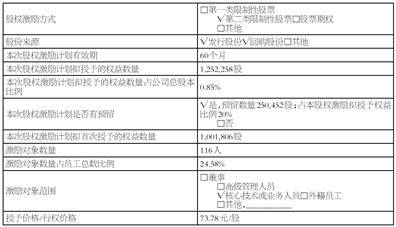
Core Viewpoint - The company is implementing a new stock incentive plan aimed at enhancing corporate governance, attracting and retaining talent, and aligning the interests of shareholders, the company, and core teams to ensure long-term development and strategic goals are met [3]. Group 1: Stock Incentive Plan Overview - The stock incentive plan will grant a total of 1,252,258 shares, representing 0.85% of the company's total equity as of the plan's announcement date [11]. - The plan includes a 60-month validity period, with specific performance targets set for the years 2026 to 2029, including revenue targets of 2.65 billion, 3 billion, 3.5 billion, and 4 billion respectively [33][34]. - The initial grant price for the restricted stock is set at 73.78 yuan per share, which is significantly lower than the average trading prices prior to the announcement [19][20]. Group 2: Implementation and Performance Metrics - The plan will be executed independently of previous incentive plans from 2021, 2022, and 2024, which are still active [3]. - Performance evaluation will be based on both company-level metrics (revenue targets) and individual performance assessments, with a clear structure for how stock grants will vest based on these evaluations [31][34]. - The company aims to ensure that the performance targets are challenging yet achievable, reflecting the company's growth strategy and market conditions [33][34]. Group 3: Eligibility and Distribution - The plan targets 116 individuals, accounting for 24.58% of the total workforce, excluding independent directors and major shareholders [15][16]. - The distribution of shares will be contingent upon meeting specific performance criteria, with a structured vesting schedule over the plan's duration [22][31]. - The plan includes provisions for adjusting the number of shares and grant prices in response to corporate actions such as stock splits or dividends [35][39].


科大讯飞:关于注销股权激励计划部分股票期权的公告
Zheng Quan Ri Bao Zhi Sheng· 2025-12-15 14:21
Core Viewpoint - The company announced the cancellation of stock options due to the failure of 24 incentive recipients to exercise their options within the valid period [1] Group 1 - The company held its 17th meeting of the 6th Board of Directors on December 15, 2025, where the proposal to cancel certain stock options was approved [1] - A total of 167,252 stock options will be canceled as they were not exercised by the recipients within the specified timeframe [1] - The stock options in question were part of the 2021 Stock Option and Restricted Stock Incentive Plan [1]
普冉股份(688766.SH):拟推2025年第二期限制性股票计划
Ge Long Hui A P P· 2025-12-15 11:32
截至本激励计划草案公布日,公司全部在有效期内的股权激励计划所涉及的标的股票总数累计未超过公 司股本总额的20.00%。本激励计划中任何一名激励对象通过全部在有效期内的股权激励计划获授的公 司股票数量累计未超过公司股本总额的1.00%。 格隆汇12月15日丨普冉股份(688766.SH)公布2025年第二期限制性股票计划,本激励计划拟授予激励对 象的限制性股票数量为125.2258万股,约占本激励计划草案公布日公司股本总额的0.85%。其中,首次 授予限制性股票100.1806万股,约占本激励计划草案公布日公司股本总额的0.68%,占本激励计划拟授 予限制性股票总数的80.00%;预留25.0452万股,约占本激励计划草案公布日公司股本总额的0.17%,占 本激励计划拟授予限制性股票总数的20.00%。 ...
荣昌生物拟以2000万元至4000万元回购公司A股股份
Bei Jing Shang Bao· 2025-12-15 10:47
荣昌生物表示,回购股份的目的是基于对公司未来发展的信心和对公司价值的认可,为充分激发公司员 工积极性,持续建立公司长效激励机制,并增强投资者对公司的投资信心,紧密结合公司利益、股东利 益与员工利益,综合考虑公司股价情况、经营情况、财务状况等,继续落实"提质增效重回报"行动方 案。 北京商报讯(记者 丁宁)12月15日晚间,荣昌生物(688331)发布公告称,公司拟通过集中竞价交易 方式回购公司A股股份,回购股份金额不低于2000万元(含),不超过4000万元(含),回购股份将在 未来合适时机用于员工持股计划或股权激励。 ...

盾安环境:完成限制性股票授予登记
Xin Lang Cai Jing· 2025-12-15 10:16
盾安环境公告,公司2025年限制性股票与股票期权激励计划的限制性股票授予登记已经完成,向365名 激励对象授予限制性股票10,075,000股。本次授予的限制性股票是根据公司股东大会及董事会的相关决 议进行,旨在进一步完善公司治理结构,激励核心管理团队及骨干员工,促进公司长期可持续发展。 ...
