
脑机接口技术

Search documents
脑机接口技术加持,抑郁症患者大脑被“解锁”
Di Yi Cai Jing· 2025-07-09 15:24
Group 1 - The technology opens new avenues for treating refractory mental illnesses, including treatment-resistant depression, obsessive-compulsive disorder, and tic disorders [1][3] - A case study from Ruijin Hospital highlights a 32-year-old patient with a 16-year history of depression who benefited from a novel therapy combining deep brain stimulation (DBS) and brain-computer interface (BCI) technology [1] - The innovative treatment involves the implantation of two electrodes with 16 stimulation contacts into the brain's emotional circuit, allowing for precise modulation and breaking the cycle of depression [1][3] Group 2 - The DBS combined with BCI technology is a minimally invasive intervention that avoids the memory loss associated with electroconvulsive therapy and the side effects of long-term medication [3] - This new therapy has already been clinically applied to over 30 cases, providing a new option for treatment-resistant depression patients [3] - Depression is increasingly recognized as a significant mental health issue, particularly among younger populations, with a reported prevalence of 15% to 20% among adolescents in China [3]

喜临门:跨界脑机接口技术,开启睡眠保卫战科技新战场
Sou Hu Wang· 2025-07-08 03:11
Core Insights - Over 300 million people in China suffer from sleep disorders, indicating a significant market opportunity for effective sleep solutions [1] - A strategic collaboration between Xilinmen and Qiangnao Technology has led to the launch of the "Baobao·BrainCo" AI mattress, marking a new era in sleep technology focused on brainwave-level precision intervention [3][9] Group 1: Technology and Innovation - The "Baobao·BrainCo" AI mattress integrates brainwave analysis with sleep solutions, enabling precise interventions to enhance sleep quality [3] - Qiangnao Technology's brain-machine interface technology offers three key advantages: high precision, rapid monitoring, and extensive parameter tracking, facilitating effective sleep interventions [5] - The technology utilizes PSG as a medical gold standard for sleep monitoring, ensuring high accuracy while being user-friendly [6] Group 2: Product Development and Market Strategy - Xilinmen has combined its expertise in material mechanics and environmental optimization with Qiangnao's brain-machine interface technology to create a groundbreaking sleep product [7] - The goal extends beyond a single product; Xilinmen aims to develop a comprehensive sleep ecosystem, including a unified sleep technology app for data synchronization across various scenarios [9] - Future plans include leveraging Xilinmen's presence in the hospitality sector to offer customized sleep solutions for hotel guests, expanding the application of smart sleep technology [9]

心玮医疗20250707
2025-07-07 16:32
Summary of Key Points from the Conference Call Company Overview - **Company**: 新为医疗 (New Medical) - **Industry**: Neurointervention and Brain-Computer Interface (BCI) Core Insights and Arguments 1. **Product Development**: New Medical's invasive brain-computer interface (BCI) collects brain signals via intravascular electrode stents, with plans to start small-scale exploratory clinical trials by the end of 2026, primarily for post-stroke motor function recovery [2][3][5] 2. **Market Potential**: Approximately 1.5 to 2 million new stroke cases occur annually in China, with an estimated 4 to 5 million patients needing rehabilitation training in the next three years, representing a significant potential user base for BCI products [2][5] 3. **Technical Advantages**: The invasive BCI technology offers advantages over non-invasive methods, including less trauma and higher signal strength, although the precise wall-adhesion technology for electrode stents remains a key challenge [2][6] 4. **Financial Projections**: For the first half of 2025, the company expects profits of 15 to 18 million, with a full-year target of 30 million and revenue goals of 380 million, aiming for a long-term gross margin of 65% and a net margin of 15% to 20% [2][20] 5. **Strategic Planning**: The company aims to achieve profitability by 2025, with annual revenue growth of 30% over the next three to five years, leveraging collective procurement and product launches to capture market share [4][27] Additional Important Insights 1. **Clinical Research and Collaboration**: New Medical has partnered with Nankai University for clinical applications in stroke recovery, focusing on motor function restoration [5][18] 2. **Regulatory Environment**: The company is closely monitoring policy developments from regulatory bodies to facilitate product registration and inclusion in medical insurance reimbursement systems [10][12] 3. **Market Expansion**: New Medical is actively pursuing overseas market expansion, currently limited by FDA and EU certification processes [15][21] 4. **Product Pipeline**: The company plans to submit for regulatory review of its self-expanding drug-eluting stent by Q4 2025, with expectations for approval within a year [17] 5. **Industry Trends**: The collective procurement policy has significantly increased the market share of domestic neurointervention products, with projected growth in ischemic and hemorrhagic surgery volumes of 15%-20% and 10%-15%, respectively, in 2025 [4][22] Conclusion - New Medical is positioned to capitalize on the growing demand for neurointervention and BCI technologies, with a robust product pipeline and strategic partnerships aimed at enhancing recovery for stroke patients. The company is focused on achieving profitability and expanding its market presence while navigating regulatory challenges and industry dynamics.
深圳全球招聘博士后,攻关植入式脑机接口技术临床转化
Nan Fang Du Shi Bao· 2025-07-07 13:06
Group 1 - A Shenzhen medical technology company has announced a recruitment for a postdoctoral researcher focused on clinical brain-machine interface (BMI) technology, indicating a new phase in the intersection of neuro-medicine and artificial intelligence in Shenzhen [1][3] - Shenzhen has identified brain-machine interface technology as one of the disruptive technology fields to focus on over the next five years, with significant advancements in clinical applications for patients with disabilities [3][4] - The Shenzhen Second People's Hospital has established a dedicated center for clinical evaluation and research of brain-machine interfaces, aiming to facilitate the transition from research to practical applications [3][4] Group 2 - Shenzhen Weiling Medical Technology Co., Ltd. specializes in the research and development of medical-grade wireless brain-machine interface technology, having achieved breakthroughs in micro-invasive implantation techniques [4] - The hospital has conducted over 500 related surgeries for various neurological disorders, making it one of the few institutions in China capable of large-scale clinical validation in this field [4][5] - The postdoctoral researcher position requires candidates with backgrounds in computer science, computational neuroscience, and biomedical engineering, emphasizing the need for interdisciplinary expertise [5] Group 3 - The role is critical for advancing technology from the laboratory to clinical settings, focusing on high-precision neural signal acquisition and real-time decoding algorithm optimization [5] - The Shenzhen Second People's Hospital is exploring collaborative models that integrate neurosurgery, rehabilitation medicine, and artificial intelligence to enhance patient care [5]
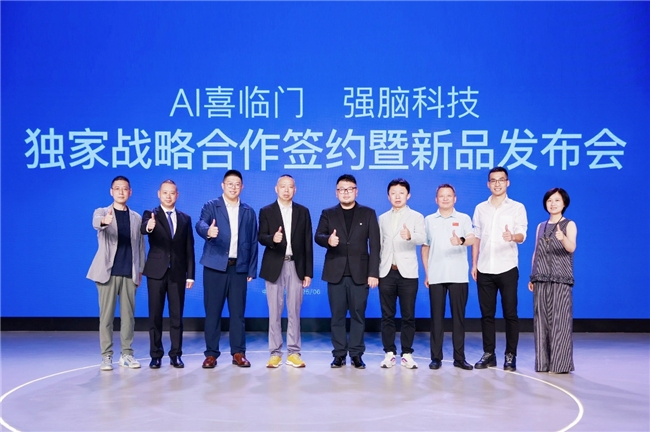
喜临门:与强脑科技战略合作 发布全球首款脑机脑电技术床垫产品
news flash· 2025-07-07 01:54
Core Viewpoint - Strong Brain Technology and Xilinmen (603008) have officially signed an exclusive strategic cooperation agreement and launched the world's first co-branded mattress product "Baobao BrainCo" that incorporates brain-machine and EEG technology [1] Group 1: Strategic Cooperation - The partnership marks Strong Brain Technology's first introduction of cutting-edge brain-machine interface technology into the traditional mattress industry [1] - The collaboration aims to create a new paradigm of AI mattress human-machine interaction [1] Group 2: Future Prospects - Strong Brain Technology plans to open more technological application channels to accelerate the commercialization of brain-machine interface technology in smart home and other fields [1]
深圳脑机接口技术有新进展 首例蓝牙可感知、磁共振兼容的新型脑起搏器植入患者脑中
Shen Zhen Shang Bao· 2025-07-06 16:54
Core Viewpoint - The article highlights the advancements in Parkinson's disease treatment through the use of a new Bluetooth-enabled, MRI-compatible brain pacemaker, which allows for improved patient monitoring and personalized treatment [1][4]. Group 1: Medical Advancements - The Shenzhen Second People's Hospital performed the first surgery in Shenzhen using a new type of brain pacemaker that utilizes brain-computer interface technology to alleviate symptoms of Parkinson's disease [1]. - The new brain pacemaker can emit signals to stimulate dopamine release and collect electrophysiological data from the brain, enhancing personalized treatment and research [1]. - The surgery involved advanced technology, including a robot, intraoperative O-arm imaging, and a deep brain signal recording device, which improved surgical precision [6]. Group 2: Patient Demographics and Challenges - Parkinson's disease is the second most common neurodegenerative disease, with a rising number of patients under 40 years old, now accounting for 10% of total cases [2]. - Factors contributing to early onset include genetics, chemical exposure, pollution, and lifestyle choices such as stress and diet [2]. - The article features two young patients, highlighting their personal experiences and the psychological impact of the disease [3]. Group 3: Healthcare Integration and Support - The deep brain stimulation surgery has been included in the medical insurance directory in Shenzhen since 2014, with a reimbursement rate of up to 90% [4]. - The establishment of the "Brain-Computer Interface Clinical Evaluation and Transformation Center" at Shenzhen Second People's Hospital aims to enhance clinical research and patient care [4]. - The collaboration with leading hospitals and research institutions under the national key research plan indicates a strong commitment to advancing treatment options for Parkinson's disease [6].
申银万国期货早间策略-20250704
Shen Yin Wan Guo Qi Huo· 2025-07-04 05:24
| 申万期货品种策略日报——股指 2025/7/4 | 星期五 | | | | | | | | --- | --- | --- | --- | --- | --- | --- | --- | | 申银万国期货研究所 贾婷婷(从业资格号:F3056905;交易咨询号:Z0016232 )jiatt@sywgqh.com.cn;15921620356 | | | | | | | | | 申银万国期货研究所 柴玉荣 (从业资格号:F03111639;交易咨询号:Z0018586)chaiyr@sywgqh.com.cn;18802979529 | | | | | | | | | 一、股指期货市场 | | | | | | | | | IF当月 IF下月 | | | | | IF下季 IF隔季 | | | | 前两日收盘价 3921.00 3903.20 | | | | | 3894.20 3856.20 | | | | 前日收盘价 3946.60 3928.00 | | | | | 3918.00 3879.00 | | | | 涨跌 27.00 25.80 沪深300 | | | | | 26.20 24.80 | ...
雷军称松果芯片是心中的痛;Grok 4意外提前曝光;董明珠15年来首次落榜《财富》中国商界女性榜
Guan Cha Zhe Wang· 2025-07-04 01:11
Group 1: U.S.-China Relations and Technology - The U.S. government has lifted export restrictions on chip design software to China, allowing companies like Synopsys, Cadence, and Siemens to fully restore access to their software and technology for Chinese clients [1] - The U.S. Commerce Department has not confirmed reports of President Biden planning to lead a business delegation to China, emphasizing the need for mutual respect and cooperation in U.S.-China economic relations [1] Group 2: AI Developments - Grok 4 has been introduced as the latest flagship model by xAI, boasting unparalleled performance in natural language, mathematics, and reasoning, with future support for visual and image generation [2] - The news publishing industry is facing challenges as traffic from AI-driven search results is increasing, leading to a decline in direct visits to news websites, with a significant drop in natural traffic from over 2.3 billion visits to below 1.7 billion [3] Group 3: Medical Device Regulations - The National Medical Products Administration of China is implementing supportive policies for high-end medical devices based on brain-computer interface technology, aiming to optimize the review process for innovative medical devices [5] Group 4: Corporate News - Xiaomi's founder Lei Jun expressed regret over the company's first self-developed chip, Pinecone, during a live stream, indicating a shift in focus to their new chip, Surge O1 [6] - Xiaomi has recently applied for multiple "REDMI" trademarks across various categories, indicating potential expansion into new markets [6] Group 5: Legal and Market Developments - Yongtai Technology has filed a lawsuit against Tianci Materials for defamation, with the case involving a total claim of 57.52 million RMB [7] - Dong Mingzhu, the chairwoman of Gree Electric Appliances, has fallen off the list of the most powerful businesswomen in China for the first time in 15 years, highlighting a shift in recognition towards female entrepreneurs in the AI sector [7] Group 6: Gaming Regulations - Tencent Games has announced that minors will be limited to a total of 27 hours of gaming during the summer vacation, aligning with similar regulations from NetEase Games [7]


美股比特币概念股走高,Circle涨超6%;国家药监局支持高端医疗器械创新发展,脑机接口技术产品支持政策将出台——《投资早参》
Mei Ri Jing Ji Xin Wen· 2025-07-04 00:38
Important Market News - US stock market closed early on Thursday with all three major indices rising; S&P 500 increased by 0.83%, Nasdaq by 1.02%, and Dow Jones by 0.77%, marking the seventh historical closing high for S&P 500 this year and the fourth for Nasdaq [1] - Technology stocks saw widespread gains, with Nvidia rising 1.3% to a historical high and New思科技 increasing by 4.9%; Bitcoin-related stocks also surged, with Circle up over 6% [1] - International oil prices slightly declined, with WTI crude oil down 0.40% to $67.18 per barrel and Brent crude down 0.32% to $68.89 per barrel; COMEX gold futures fell 0.71% to $3336.00 per ounce, while silver futures rose 0.85% to $37.04 per ounce [1] - European stock indices closed higher, with Germany's DAX up 0.61% to 23934.13 points and France's CAC40 up 0.21% to 7754.55 points [1] Industry Insights - On July 3, the National Medical Products Administration of China announced measures to optimize lifecycle regulation to support high-end medical device innovation, including special approval procedures for medical robots and high-end imaging equipment [2] - Brain-computer interface technology is expected to revolutionize human-machine interaction, initially focusing on medical rehabilitation, with potential expansion into education, entertainment, and industrial applications [2] - The solid-state battery industry is accelerating its industrialization process, with solid-state batteries being recognized as the next-generation battery technology, particularly in cost-sensitive fields like humanoid robots and low-altitude applications [3] - China ranks second globally in solid-state battery patent applications, with over 46,000 applications as of May 16, 2025, indicating a rapid catch-up with Japan [3] - The National Cryptography Administration and other agencies released regulations for the management of commercial passwords, effective from August 1, 2025, which will impact key information infrastructure sectors such as energy, finance, and communication [4][5] - The commercial password market in China is projected to grow at a compound annual growth rate of 25%, reaching 140 billion yuan by 2025, driven by the new regulations [5] Company Updates - 中钢洛耐 announced that its shareholder plans to reduce its stake by up to 562,500 shares, representing 0.5% of the total share capital [6] - 曲江文旅 reported that a court will auction 12 million shares held by its controlling shareholder on an online platform [6] - 威唐工业 disclosed plans for its controlling shareholder to reduce their stake by up to 170,000 shares, accounting for 0.9727% of the total share capital [7] - 合盛硅业 intends to participate in an ETF exchange transaction, planning to exchange up to 1,182,210 shares, or 1% of the total share capital [7] - 财富趋势 announced a plan for its actual controller to reduce their stake by up to 768,340 shares, representing 3% of the total share capital [8]
美国取消对中国芯片设计软件的出口限制;我国成功发射试验二十八号B星01星丨数智早参
Mei Ri Jing Ji Xin Wen· 2025-07-03 23:24
Group 1 - China's successful launch of the experimental satellite Tiankong-28B01 demonstrates the country's solid development in space technology, with the Long March 4B rocket completing its 583rd flight [1] - The satellite is primarily used for space environment detection and related technology experiments, reinforcing China's capability in autonomous space technology [1] Group 2 - Siemens announced that the U.S. government has lifted export restrictions on chip design software to China, allowing full access for Chinese customers to Siemens' software and technology [2] - This change indicates a potential easing of trade tensions and could enhance collaboration in the technology sector between the U.S. and China [2] Group 3 - The National Medical Products Administration of China is implementing supportive policies for high-end medical devices based on brain-computer interface technology, aiming to optimize the innovation review process [3] - The initiative includes special reviews for innovative medical devices with significant clinical value, enhancing communication between applicants and review experts [3] - The regulatory framework aims to accelerate the market entry of high-end medical devices, ultimately improving accessibility to advanced medical technologies for patients [3]