3D打印

Search documents
华曙高科(688433.SH):3D打印设备广泛应用于航空航天领域
Ge Long Hui· 2025-12-16 09:53
格隆汇12月16日丨华曙高科(688433.SH)在互动平台表示,公司3D打印设备广泛应用于航空航天领域 (含商业航天),助力终端客户攻克轻量化、复杂异形结构件制造等技术难点,为客户提供全方位的 3D打印解决方案。 ...

3D打印赋能美好生活丨消费新场景看活力·新技术
Sou Hu Cai Jing· 2025-12-16 02:33
Core Insights - The article highlights the innovative applications of 3D printing technology in various sectors, particularly focusing on the achievements of Xinxiang University in developing consumer products and enhancing traditional manufacturing processes [4][5][6]. Group 1: 3D Printing Innovations - Xinxiang University has successfully developed consumer products such as lightweight, foldable shoes through its 3D printing program, showcasing the potential for personalized design and rapid production [5]. - The university's 3D printing academy has established several provincial platforms and collaborations with local government and leading companies, facilitating the integration of cutting-edge technology into educational and research initiatives [5][6]. - Products like the "Jellyfish" series rehabilitation toys and ergonomic lumbar supports have gained popularity due to their customization advantages, demonstrating the market demand for innovative 3D printed items [5]. Group 2: Industrial Applications - In the aerospace sector, Xinxiang University has utilized 3D printing to address safety concerns in aircraft heat exchangers, eliminating risks associated with traditional welding methods [6]. - The university's collaboration with local industrial firms has led to significant cost savings and efficiency improvements in the development of specialized components, bypassing traditional mold-making processes [6][7]. - The partnership with leading material companies has transformed the pricing model for high-performance materials, enhancing their application in 3D printing and contributing to the overall upgrade of the materials industry [7]. Group 3: Entrepreneurial Initiatives - Students from Xinxiang University have launched a tech company focused on developing personalized rehabilitation aids using 3D printing, indicating a shift towards entrepreneurship driven by innovation and market needs [7]. - The university provides essential support through free office space and access to advanced printing equipment, fostering a conducive environment for student-led startups [7].

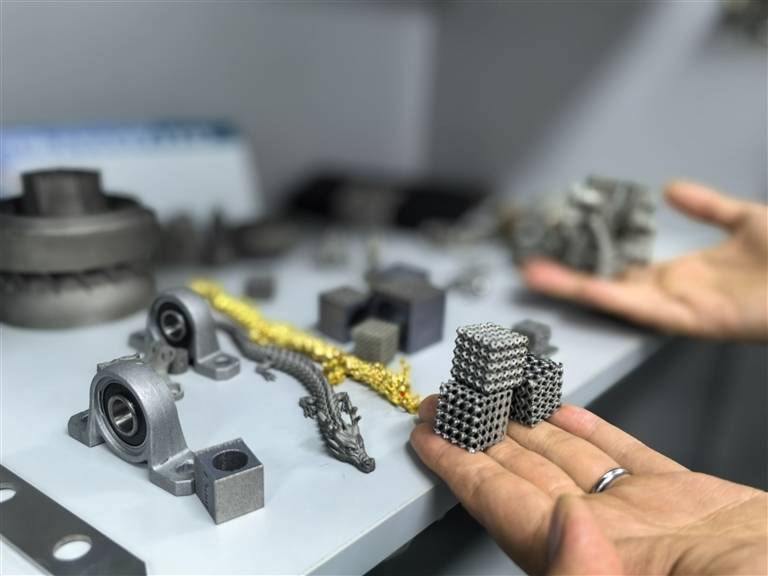
消费新场景看活力·新技术丨3D打印赋能美好生活
He Nan Ri Bao· 2025-12-15 23:39
Core Insights - The article highlights the vibrant consumer market in Henan, showcasing innovations in technology and products that are driving economic resilience [1] Group 1: 3D Printing Innovations - New products such as lightweight, foldable sandals and sneakers from the 3D printing program at Xinxiang University are gaining popularity, demonstrating the potential of 3D printing in consumer goods [1][4] - Xinxiang University has established several provincial platforms for 3D printing technology, collaborating with local government and leading companies to integrate cutting-edge technology into education and research [4][6] - The university's 3D printing technology has been applied in various sectors, including the development of customized rehabilitation toys and ergonomic products, which have received positive market feedback [4][5] Group 2: Industrial Applications - In the aerospace sector, 3D printing has been utilized to create components that eliminate safety risks associated with traditional manufacturing methods, showcasing its critical role in enhancing product safety [5] - The collaboration between Xinxiang University and local companies has led to significant cost savings and efficiency improvements in product development, particularly in the aerospace industry [5][6] - The university's 3D printing technology is facilitating the digital transformation of traditional manufacturing, leading to the emergence of new business models and opportunities [6] Group 3: Entrepreneurial Initiatives - Students from Xinxiang University have launched a tech company focused on personalized rehabilitation aids, supported by the university's resources and facilities, indicating a growing entrepreneurial spirit in the region [6]
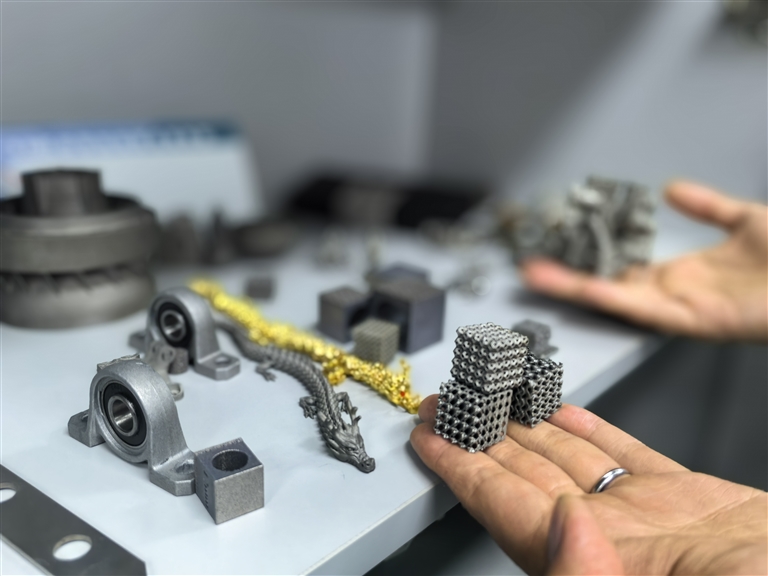
赋能百业、资本追捧 3D打印赛道将迎黄金发展期
Zheng Quan Ri Bao· 2025-12-15 22:56
Core Insights - The transition from "Made in China" to "Intelligent Manufacturing in China" is accelerating, with 3D printing becoming a core variable in various industries, evidenced by a nearly 50% increase in the 3D printing concept index as of December 15 [1] - The 3D printing industry is experiencing a significant transformation, moving from niche applications to becoming a mainstay in manufacturing, driven by policy support and surging market demand [1][2] Industry Growth and Market Dynamics - The production of 3D printing equipment surged by 100.5% year-on-year in November, outpacing other high-end manufacturing categories like industrial robots and electric vehicles [1] - The consumer-grade 3D printing market is expanding rapidly, with a projected market size of $4.1 billion in 2024, expected to grow to $16.9 billion by 2029, reflecting a compound annual growth rate of 33.0% [4] - The price of consumer-grade 3D printers has significantly decreased, with stable mid-range models now priced around 3,000 yuan, comparable to smartphones, down from over 10,000 yuan three years ago [4] Technological Advancements - Innovations in AI modeling and materials are lowering the barriers for consumer-grade 3D printing, making it more accessible and cost-effective [3][4] - Industrial-grade 3D printing is increasingly being adopted across various manufacturing sectors, including automotive, where it facilitates rapid prototyping and reduces development costs [5][7] Capital Influx and Investment Trends - The 3D printing sector has seen a surge in investment, with major tech companies like Tencent and Meituan entering the market, indicating strong future growth potential [8][10] - The A-share market for 3D printing stocks has shown robust performance, with over 80% of companies in the sector experiencing stock price increases this year [9] Consumer Demand and Customization - The rise of personalized consumption is driving demand for 3D printing, particularly in niche markets like cosplay and custom figurines, where consumers seek unique, tailored products [2][3] - The combination of industrial and consumer demands is reshaping the market, with 3D printing technology becoming a critical tool for meeting new manufacturing requirements [7][9]
赋能百业 资本追捧 3D打印赛道将迎黄金发展期
Zheng Quan Ri Bao· 2025-12-15 16:09
当"中国制造"向"中国智造"全速迈进,一场生产方式的深刻变革正伴随着资本热捧之势加速破局。股票 市场上相关概念公司股价的大幅上涨已说明了一切。截至12月15日,同花顺(300033)3D打印概念指 数年内涨幅近50%。 事实上,从火箭发动机涡轮叶片的精密锻造,到定制化医疗假体的精准适配;从工厂车间的模具快速成 型,到创客空间的创意立体呈现——曾被视作"未来技术"的3D打印,如今早已跨越实验室门槛,在航 空航天、医疗健康、工业生产等多领域落地生根,成为搅动制造业格局的核心变量。 政策赋能加码,市场需求狂飙。我国已构建起覆盖国家与地方的3D打印产业"政策矩阵",从技术规 范、市场培育、产业集聚三维度破除发展壁垒。12月15日,国家统计局发布的最新数据更印证产业热 度,11月份3D打印设备产量同比激增100.5%,远超工业机器人、新能源汽车等同类高端制造品类。 一个清晰的趋势已然显现:3D打印正从"小众探索"迈向"产业主力",以技术突破为支点,撬动中国制造 业实现质的飞跃。 告别"小众"标签 个性化消费"零门槛" 3D打印的产业化版图中,消费级赛道正以惊人增速打破"玩具级"偏见。京东数据显示,在今年"双11"购 物 ...
中国3D打印铝合金粉市场发展前景与企业排名研究分析报告
Sou Hu Cai Jing· 2025-12-15 05:40
Core Insights - The evolution of US tariff policies is significantly impacting the global and Chinese 3D printing aluminum alloy powder industry, necessitating urgent internationalization for Chinese companies due to domestic market saturation and global opportunities [3][4]. Policy Analysis - The adjustment of US tariff policies affects global and Chinese supply chains, creating both challenges and opportunities for the 3D printing aluminum alloy powder sector [3]. - The urgency for Chinese companies to internationalize is driven by saturated domestic competition and the potential for global market expansion [3]. Industry Impact Assessment - Future trends in the global and Chinese 3D printing aluminum alloy powder industry are evaluated under optimistic, conservative, and pessimistic scenarios, with projections indicating significant growth potential [3][4]. - The tariff policies impose direct impacts on Chinese companies, including cost pressures and market access challenges, alongside the need for supply chain restructuring [3]. Market Share Analysis - The market share and rankings of major global and Chinese companies in the 3D printing aluminum alloy powder sector are analyzed, highlighting revenue and sales volume trends from 2022 to 2025 [4]. - The report includes detailed sales revenue and market share data for leading companies, providing insights into competitive positioning [4]. Corporate Strategies - Companies are advised to shift from export dependency to establishing localized production networks and optimizing supply chain resilience [3]. - Strategies for market diversification, product innovation, and compliance with regulatory frameworks are recommended to navigate the evolving landscape [3]. Future Outlook - Long-term industry trends suggest a reshaping of the global and Chinese market landscape, with strategic recommendations for companies to adapt to changing conditions [3][4].

3D 打印行业报告:飞入寻常百姓家,行业扩张奇点时刻降临
Orient Securities· 2025-12-13 07:11
Investment Rating - The report maintains a "Positive" outlook on the 3D printing industry, indicating a low current penetration rate and potential for rapid growth driven by the expansion of demand for customized products and the popularization of the 3D farm model [7]. Core Insights - The 3D printing industry is entering a "singularity moment," where growth is driven not just by technological breakthroughs but also by a paradigm shift in industrial manufacturing and a surge in consumer demand for personalized products. Key drivers include agile manufacturing advantages in industrial-grade 3D printing, the ability to produce complex shapes, and the democratization of technology in consumer-grade 3D printing [9][13]. - The global 3D printing market is projected to reach $21.9 billion in 2024, with a year-on-year growth of 9.31%. In China, the market is expected to reach 42.3 billion yuan, with a significant portion of revenue coming from equipment and services [9][69]. Summary by Sections Investment Suggestions and Targets - The report suggests that the 3D printing industry is poised for rapid growth due to low current penetration rates and expanding demand. Key investment targets include: - Consumer-grade 3D printing service operator Huina Technology (300609, not rated) - Industrial-grade metal printing equipment manufacturers Plater (688333, not rated) and Huashu High-Tech (688433, not rated) - 3D printing material suppliers Jialian Technology (301193, not rated) and Youyan Powder Materials (688456, not rated) [4][21]. Industry Overview - 3D printing technology is characterized by its flexibility and high production capacity, allowing for the creation of complex structures with minimal waste. The technology has evolved from traditional subtractive manufacturing to additive manufacturing, enabling significant design freedom and reduced production cycles [22][24]. - The main materials used in 3D printing include plastics and metal powders, with various technological routes such as FDM, SLS, and SLA being commercially viable [31][36]. Market Outlook - The global 3D printing market is experiencing a golden development period, with both consumer and industrial segments expected to expand. The U.S. leads the market, while the Asia-Pacific region is catching up rapidly. The market for 3D printing materials is projected to grow by 35.21% in 2024, with significant growth also seen in 3D bioprinting and metal additive manufacturing [58][62]. - In China, the 3D printing market is expected to reach 42.3 billion yuan in 2024, with a strong focus on equipment and services, which together account for 76% of the market [69][70]. Key Players - The report highlights the differentiation among leading companies in the industrial-grade 3D printing sector, with notable players like Plater and Huashu High-Tech excelling in metal 3D printing. In the consumer-grade sector, Huina Technology is building a supply-demand ecosystem through a combination of scale farms and offline stores [9][20][21].



有研粉材:3D打印行业整体较为火爆,大量企业迅速涌入新市场
Zheng Quan Ri Bao· 2025-12-12 14:09
Group 1 - The 3D printing industry is experiencing significant growth, with many companies rapidly entering the new market [2] - After a period of market competition, weaker companies with less capital and strength are expected to be eliminated, leading to a more stable market structure for 3D printing [2]
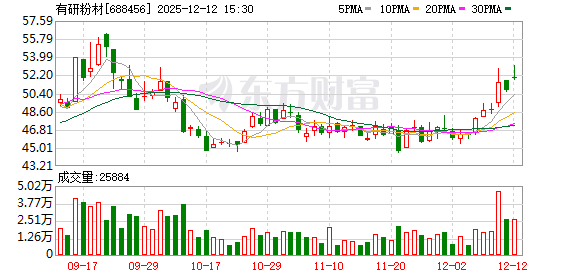
有研粉材:3D打印对粉体流动性、松装密度、空心粉含量、氧含量等均有较高要求
Zheng Quan Ri Bao Zhi Sheng· 2025-12-12 13:08
Core Viewpoint - The company has significant expertise in the preparation technology of spherical metal powders for additive manufacturing, which is crucial for meeting the high requirements of 3D printing materials [1] Group 1: Company Expertise - The company has been engaged in the development of spherical metal powders for additive manufacturing for a considerable time, indicating early involvement in this technology [1] - As a team under China Yuyuan Technology Group, the company possesses extensive experience and technical accumulation in the development of new materials and the low-cost, high-quality preparation of metal powders for additive manufacturing [1] - The company has successfully applied for patents in China, the United States, and the European Union for its aluminum alloy products, showcasing its strong intellectual property position [1] Group 2: Production Capabilities - The company has designed its own equipment for producing aluminum alloy products, which reflects its capability in creating tailored production solutions [1] - The production line is self-built, and the entire production process has been patented, indicating a robust competitive edge in manufacturing [1] - The performance of the aluminum alloy products produced by the company is reported to be excellent, with superior indicators and parameters [1]
89年泉州小伙卖3D打印机:融资数亿,还打破全球纪录
3 6 Ke· 2025-12-12 12:11
Group 1 - Snapmaker, a 3D printing brand, announced the completion of a multi-hundred million RMB Series B financing round on December 10 [1][2] - The financing round was led by Hillhouse Capital and Meituan, with participation from existing investors [2] - Snapmaker's U1 3D printer set a record by raising 150 million RMB on a crowdfunding platform, marking the highest amount ever raised in 3D printing history [2] Group 2 - The consumer-level 3D printing market is expanding, with household users now accounting for 45% of the market, up from less than 20% three years ago [5][6] - Schools and small business owners are also significant buyers, with around 80% of schools planning to introduce 3D printing for STEAM education [5][6] - The global shipment of entry-level 3D printers surpassed 1 million units in Q1 2025, with 95% coming from Chinese suppliers [5][6] Group 3 - The industrial 3D printing market is seeing growth in sectors such as aerospace, medical implants, and automotive parts, with 13.24% of industrial attendees at the 2025 TCT Asia exhibition having procurement budgets over 5 million RMB [20][21] - Companies like Xunyi High-Tech are breaking foreign monopolies in continuous fiber and ceramic 3D printing, directly engaging with clients in aerospace and military sectors [23] - SIRUI Additive is addressing the issue of metal waste in aerospace and medical fields by recycling metal waste into usable powder, significantly reducing costs for companies [24][25] Group 4 - The rapid growth of the 3D printing industry is facing a talent shortage, with companies struggling to fill key technical positions [26][30] - The demand for interdisciplinary talent is high, as expertise in both 3D printing technology and specific industry requirements is necessary [31] - Companies like Snapmaker are investing heavily in talent acquisition to support their technological advancements and global expansion [31]