
3D打印材料

Search documents
FINE2026 轻量化功能化与可持续材料展,火热招展中!6月10-12日 上海
DT新材料· 2026-03-30 16:04
Core Viewpoint - The FINE 2026 exhibition will focus on lightweight, functional, and sustainable materials, showcasing their applications in various industries such as aerospace, automotive, and robotics, while promoting technological innovation and sustainable development [1][3]. Group 1: Exhibition Overview - The FINE 2026 exhibition will take place from June 10-12, 2026, at the Shanghai New International Expo Center, featuring a special section on lightweight, functional, and sustainable materials [1]. - The exhibition aims to create a comprehensive platform for showcasing cutting-edge products and latest achievements in materials, driven by end-user application demands [1]. Group 2: Key Themes and Applications - The exhibition will focus on three core themes: lightweight, functional, and sustainable materials, with applications in automotive, aerospace, low-altitude economy, electronics, and humanoid robotics [3]. - Key application scenarios include components for humanoid robots, structural parts for new energy vehicles, low-altitude flying vehicles, civilian aircraft, electronic components, 3D printing, and wind-solar energy storage equipment [1]. Group 3: Material Categories - Lightweight materials include fiber and composite materials (e.g., carbon fiber, glass fiber), engineering plastics, rubber elastomers, foamed materials, and metal materials (e.g., magnesium alloys, aluminum alloys) [4]. - Functional materials encompass optoelectronic materials, thermal protection materials, thermal conductive materials, conductive materials, electromagnetic and dielectric materials, and other functional materials [4]. - Sustainable materials include recycled materials and CO2-based polyols [5][6]. Group 4: Forums and Events - The exhibition will host over 30 industry conferences, forums, and capital roadshow activities aimed at promoting technology transfer and facilitating connections between exhibitors and industry resources [2][11]. - Notable forums will cover topics such as humanoid robotics innovation, commercial aviation supply chain, lightweight design for civil aircraft, and applications in new energy vehicle batteries [12]. Group 5: Expected Participation - The exhibition anticipates participation from over 100,000 attendees, including industry end-users, investors, and key players in various sectors such as robotics, drones, smart connected vehicles, AI consumer electronics, data centers, and semiconductors [13][14][15]. Group 6: Booth Pricing - Standard booth pricing is set at CNY 16,800 (approximately USD 3,400) for a 3x3 m² space, while indoor raw space starts at CNY 1,580 (approximately USD 320) per square meter [19].


银禧科技,大涨115%
DT新材料· 2026-03-29 16:05
Core Viewpoint - The company reported significant growth in revenue and net profit for 2025, driven by the completion of new production facilities and increased production capacity in the polymer materials sector [2][3]. Financial Performance - In 2025, the company achieved a revenue of 2.197 billion yuan, an increase of 8.67% compared to the previous year [3]. - The net profit attributable to shareholders reached 111 million yuan, marking a substantial growth of 115.23% year-on-year [2][3]. - The net profit excluding non-recurring gains and losses was 106 million yuan, up 108.62% from the previous year [3]. - The net cash flow from operating activities was 206 million yuan, a significant increase of 5,028.52% compared to 2024 [3]. - Basic earnings per share were 0.2415 yuan, reflecting a growth of 114.29% year-on-year [3]. Business Segments - The modified plastics business generated revenue of 1.776 billion yuan, up 9.12% year-on-year, with sales volume of 140,764 tons and production volume of 142,621 tons [3]. - The smart lighting business achieved revenue of 284 million yuan, an increase of 12.49% year-on-year, with expansion into automotive lighting and the establishment of a manufacturing base in Vietnam [4]. Research and Development - The company intensified its R&D efforts in new materials, achieving successful applications of various materials that meet S2 flame retardant requirements [4]. - Special functional materials, including high CTI 800V flame-retardant PA materials and lightweight thermal conductive PC/PA, have entered trial production and batch supply stages with multiple clients [4][5]. Production Capacity and Utilization - The designed capacity for modified plastics is 240,000 tons, with a utilization rate of 59.43% [5]. - The smart lighting products have a designed capacity of 14 million meters for light strips and 4.5 million sets for smart fixtures, with utilization rates of 31.70% and 51.18%, respectively [5].


FINE2026 轻量化功能化与可持续材料展,火热招展中!6月10-12日 上海
DT新材料· 2026-03-21 16:06
Core Viewpoint - The FINE 2026 exhibition will focus on lightweight, functional, and sustainable materials, showcasing their applications in various industries such as aerospace, automotive, and robotics, while promoting technological innovation and industry collaboration [1][3]. Group 1: Exhibition Overview - The FINE 2026 exhibition will take place from June 10-12, 2026, at the Shanghai New International Expo Center, featuring a special section on lightweight, functional, and sustainable materials [1]. - The exhibition aims to create a comprehensive platform for showcasing advanced products and latest achievements in materials, driven by end-user application demands [1]. Group 2: Key Themes - The exhibition will center around three core themes: lightweight, functional, and sustainable materials, with a focus on their current applications and development trends in sectors like automotive, aerospace, and humanoid robotics [3]. - Lightweight materials will include a variety of composites and engineering plastics, while functional materials will cover areas such as optoelectronic, thermal protection, and conductive materials [4]. Group 3: Forums and Events - Over 30 industry conferences, forums, and capital roadshow activities will be organized to facilitate technology transfer and connect exhibitors with industry funds and resources [2][11]. - Notable forums will include topics on humanoid robotics, commercial aviation, lightweight design for civil aircraft, and new energy vehicle battery and body discussions [12]. Group 4: Expected Participation - The exhibition anticipates participation from over 100,000 attendees, including industry leaders from sectors such as intelligent robotics, drones, smart connected vehicles, AI consumer electronics, and data centers [13][14][15]. Group 5: Pricing Information - Standard booth pricing is set at CNY 16,800 (approximately USD 3,400) for a 9 m² space, while indoor space starts at CNY 1,580 (approximately USD 320) per square meter [19].

FINE2026 轻量化功能化与可持续材料展,火热招展中!6月10-12日 上海
DT新材料· 2026-03-05 16:05
Core Viewpoint - The FINE 2026 exhibition will focus on lightweight, functional, and sustainable materials, showcasing their applications in various industries such as aerospace, automotive, and robotics, while promoting technological innovation and sustainable development [1][3]. Group 1: Exhibition Overview - The FINE 2026 exhibition will take place from June 10-12, 2026, at the Shanghai New International Expo Center, featuring a special section on lightweight, functional, and sustainable materials [1]. - The exhibition aims to create a comprehensive platform for showcasing cutting-edge products and latest achievements in materials, driven by end-user application demands [1]. Group 2: Key Themes and Focus Areas - The exhibition will center around three core themes: lightweight, functional, and sustainable materials, with a focus on their current applications and development trends in industries such as automotive, aerospace, low-altitude economy, electronics, and humanoid robotics [3]. - Specific materials highlighted include fiber and composite materials, engineering plastics, foamed materials, and metals, as well as functional materials like optoelectronic, thermal protection, and conductive materials [4]. Group 3: Sustainable Materials - Sustainable materials will include recycled materials such as post-consumer recycled (PCR) materials and chemically recycled materials, emphasizing the industry's shift towards sustainability [5]. Group 4: Industry Forums and Events - The exhibition will host over 30 industry conferences, forums, and capital roadshow activities aimed at facilitating technology transfer and connecting exhibitors with industry funds, government parks, and project resources [2][12]. - Specialized vertical forums will invite industry experts to share insights on cutting-edge technologies, industry trends, and investment strategies [12]. Group 5: Expected Participation - The exhibition anticipates participation from over 70,000 attendees, including companies from humanoid robotics, drones, smart connected vehicles, AI consumer electronics, data centers, and semiconductor industries [15][16]. - Notable companies expected to attend include major players like Huawei, Tesla, Intel, and various venture capital firms [15][16]. Group 6: Booth Pricing - Standard booth pricing is set at CNY 16,800 (approximately USD 3,400) for a 9 m² space, with indoor space starting at CNY 1,580 (approximately USD 320) per square meter [20].
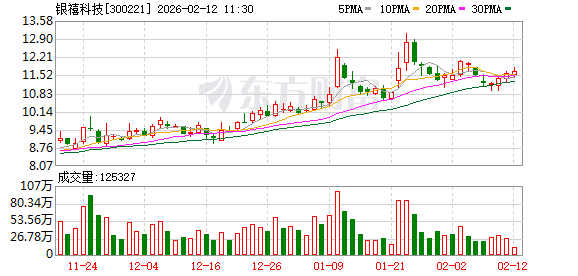
银禧科技(300221.SZ):目前没有应用在金属材料3d打印上的技术和产品
Ge Long Hui· 2026-02-12 07:33
Core Viewpoint - The company, Yinhui Technology, focuses on modified plastic products, particularly in the 3D printing materials sector, and plans to enhance its R&D efforts in this area [1] Product Offerings - The main products include various types of 3D printing materials such as consumer-grade PLA and PETG, with specific offerings like high-speed printing PLA, aesthetic silk, rainbow gradient PLA, and functional modified anti-static PLA [1] - In the industrial sector, the company provides materials like PC, PA, and PPS, including fiber-reinforced variants such as PC-CF, PA-CF, PA-GF, and ABS-CF, along with functional modifications like anti-static ABS, flame-retardant ABS, and toughened PPS [1] Future Development - The company currently does not have technology or products for metal 3D printing but intends to increase R&D investment in 3D printing products moving forward [1]
银禧科技:公司目前没有应用在金属材料3D打印上的技术和产品
Mei Ri Jing Ji Xin Wen· 2026-02-12 03:52
Core Viewpoint - The company, Silver Jubilee Technology (银禧科技), primarily focuses on modified plastic products and has a range of 3D printing materials, but currently does not have technology or products for metal 3D printing. The company plans to enhance its development of 3D printing products in the future [2] Group 1: 3D Printing Materials - The company offers various consumer-grade 3D printing materials, including PLA and PETG, with specific types such as high-speed printing PLA, aesthetic silk, and rainbow gradient PLA [2] - In the industrial sector, the company provides materials like PC, PA, and PPS, including fiber-reinforced variants such as PC-CF, PA-CF, PA-GF, and ABS-CF, along with functionally modified materials like anti-static ABS and flame-retardant ABS [2] Group 2: Future Development - The company has no current applications in metal 3D printing technology or products but intends to increase its research and development efforts in 3D printing products moving forward [2]
西安加速布局“新赛道” 培育新质生产力引领高质量发展
Zhong Guo Xin Wen Wang· 2026-02-04 14:18
Core Insights - Xi'an High-tech Zone has achieved steady economic growth since the 14th Five-Year Plan, with industrial output increasing from 203.5 billion to 421.1 billion, averaging a growth rate of 15% annually [1][2] Economic Performance - The industrial output of Xi'an High-tech Zone rose from 203.5 billion to 421.1 billion, with an annual growth rate of 15% [1] - The zone has ranked among the top ten in the national "High-Quality Development Top 100 Parks" for three consecutive years and is projected to be fifth in the national comprehensive evaluation of high-tech zones in 2024 [1] Technological Innovation - The zone has gathered advanced technologies, including femtosecond lasers and high-precision ground timing systems, and hosts the first national-level innovation platform in the new materials sector [2] - Over 6,000 national-level technology-based SMEs and high-tech enterprises have been cultivated, including 99 national-level specialized and innovative "little giant" enterprises [2] Industry Layout - Advanced manufacturing output has grown at an average rate of 15.6% during the 14th Five-Year Plan, with the digital economy's core industry scale surpassing 280 billion [2] - Emerging industries such as photonics, integrated circuits, new materials, and low-altitude economy are rapidly developing, with the photonics industry alone hosting 183 companies and generating over 20 billion in output [2] Key Sectors - The high-performance integrated circuit sector focuses on chip design and wafer manufacturing, leveraging leading companies like Samsung and ASE, and aims to create a world-class semiconductor industry cluster [2] - The high-end new materials sector, led by institutions like the Shaanxi Nonferrous Institute, aims to develop advanced rare metal materials and 3D printing materials [2] Low-altitude Economy - The low-altitude economy is centered around companies like Inno Aviation and Aerospace Power Research Institute, focusing on technologies such as turbofan engines and drone clusters [3] - The sector aims to establish a nationally influential low-altitude economic industrial cluster [3] High-end Medical Devices - The high-end medical device sector integrates technologies like 3D printing, photonics, and AI, collaborating with companies such as Juzhi Bio and Kangtuo Medical [3] - The goal is to create a comprehensive industrial base that facilitates the last mile of technology transfer [3] Support Measures - Five major support measures have been introduced to ensure the rapid growth of new tracks, including a dedicated mechanism for each track and annual funding of 100 million for future industries [3] - By 2028, the target for annual revenue growth in new tracks is set at 20%, aiming to strengthen technological breakthroughs and enterprise cultivation [3]
未知机构:国金计算机科技华曙高科全球3D打印龙头下游需求临近爆发节点-20260203
未知机构· 2026-02-03 02:10
Summary of Conference Call Records Company and Industry Overview - The company discussed is Huashu High-Tech, a leading player in the global 3D printing industry, particularly in metal and polymer 3D printing equipment [1][2] - The global 3D printing market is projected to reach $21.9 billion in 2024, with an expected compound annual growth rate (CAGR) of 18% over the next decade, potentially exceeding $114.5 billion by 2034 [2] Core Insights and Arguments - The company has established a complete ecosystem that includes equipment, materials, proprietary software, and after-sales services, creating significant competitive barriers [1] - The R&D expense ratio for the company is projected to reach 22.23% in Q1-Q3 2025, indicating a strong commitment to maintaining technological leadership [1] - A joint venture is set to be established by December 2025, focusing on 3D printing services in consumer sectors such as 3C, which is expected to shift the company’s revenue model from solely equipment and materials to a dual-driven model including services [1][3] - The aerospace sector is anticipated to account for nearly 50% of the company's revenue in 2024, with significant contributions from the FS1521M large-scale equipment, which can be configured with up to 32 fiber lasers [2] - The company is actively expanding its 3D printing services in the 3C and automotive industries, with major clients like Apple and Honor adopting 3D printing technology for precision components [2] Additional Important Points - The company is positioned to benefit directly from the explosive demand in the aerospace sector, as evidenced by a core client, Fei Er Kang, purchasing approximately 40 metal 3D printing machines [2] - The investment recommendation suggests a "buy" rating based on the company's technological advantages and the anticipated rapid growth in 3D printing services and equipment [3] - Risks highlighted include potential underperformance in downstream application expansion, fluctuations in raw material prices, technological evolution risks, geopolitical and exchange rate volatility, and risks associated with the unlocking of restricted shares [3]

东北证券:3D打印材料具备成长性 关注国内企业突破
Zhi Tong Cai Jing· 2026-02-02 07:19
Group 1 - The core viewpoint is that the 3D printing materials market in China is expected to exceed 50 billion, driven by the growth of commercial aerospace and the increasing demand for high-value industrial-grade 3D printers [2][4] - In 2019, the scale of China's 3D printing materials industry reached 4.094 billion, a growth of 26.2% compared to 2018, with projections indicating the market could reach approximately 3 billion by 2025 and over 8 billion by 2030 [2][3] - Metal materials account for 39% of the 3D printing materials in China, while non-metal materials make up around 61%, with common applications including titanium alloys, PLA, nylon, ABS, aluminum alloys, and stainless steel [1][2] Group 2 - Domestic high-end metal powder production still relies on imports, with strict requirements for purity, sphericity, particle size, and oxygen content, while the domestic market for mid-to-low-end products is becoming saturated [3][4] - Current mainstream methods for producing 3D printing metal powders include gas atomization, plasma rotating electrode, and plasma atomization, with China making breakthroughs in gas atomization and rotating electrode methods, while the spheronization method is still in the research phase [3][4] - Notable domestic companies in the 3D printing materials sector include AVIC MATE, Fei'er Kang, Selong Metal, Xi'an Ouzhong, Plit, Changsha Weite, Youyan Powder Materials, Jingyan Powder, Hunan Dingli Technology, and Harsen Co., Ltd., which have shown rapid development in recent years [4]

3D打印材料具备成长性,关注国内企业突破
NORTHEAST SECURITIES· 2026-02-02 06:12
Investment Rating - The report rates the industry as "Outperforming the Market" [2][5] Core Insights - The 3D printing materials market is expected to exceed 50 billion, with significant growth potential in metal printing powders. In 2019, China's 3D printing materials industry reached 4.094 billion yuan, a 26.2% increase from 2018. By 2025, the market size is projected to be around 3 billion USD, and by 2030, it may exceed 8 billion USD, driven by continuous technological breakthroughs and the commercial aerospace sector [3]. - High-end metal powders in China still rely on imports, with domestic preparation processes making progress. The production methods for 3D printing metal powders include gas atomization, plasma rotating electrode, and plasma atomization, with China achieving breakthroughs in gas atomization and rotating electrode methods [4]. Summary by Sections Industry Overview - The 3D printing materials are categorized into metal and non-metal types, with metal materials accounting for 39% and non-metal materials for approximately 61% of the market. Common materials include titanium alloys, PLA, nylon, ABS, aluminum alloys, and stainless steel [3]. Market Potential - The global market for 3D printing materials is anticipated to grow significantly, with the metal 3D printing industry developing rapidly. The demand for high-value industrial-grade 3D printers is expected to drive the growth of metal 3D printing powders [3]. Domestic Developments - Domestic companies such as AVIC MATE, Fei'er Kang, and others are rapidly developing in the 3D printing materials sector, while global leaders include EOS, Arcam, and Sandvik [4].