
氢能产业

Search documents
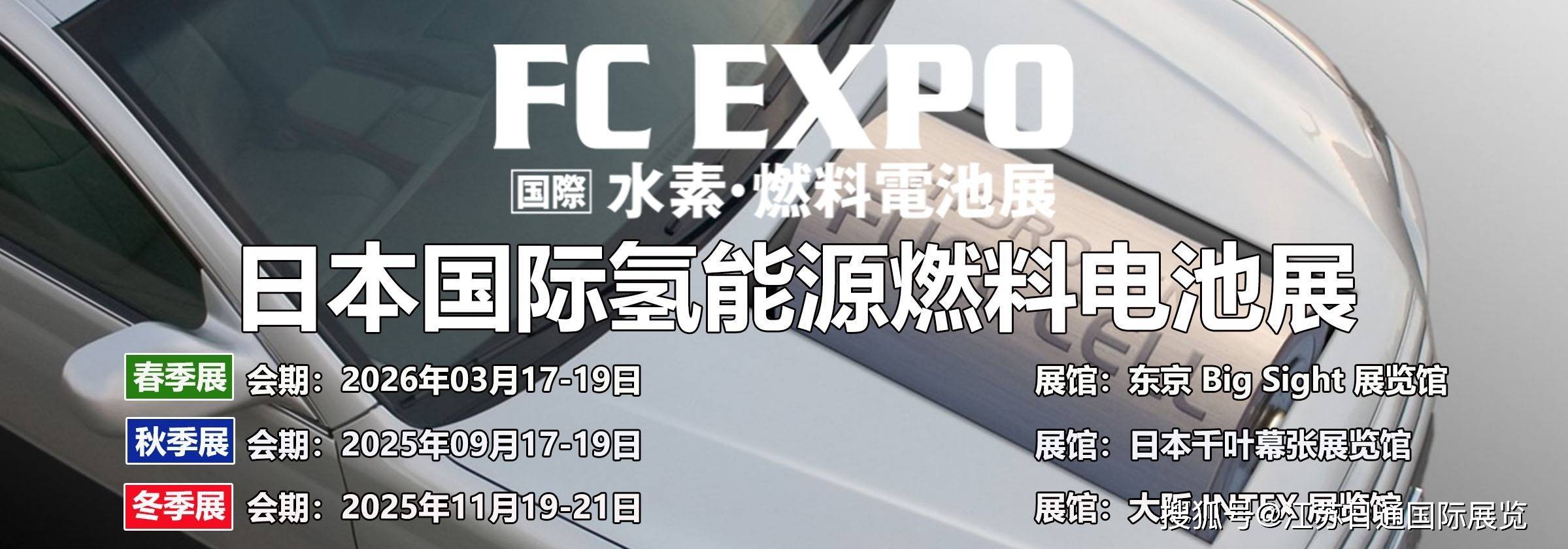
日本国际氢能源燃料电池展2025|FC EXPO
Sou Hu Cai Jing· 2025-08-15 08:08
Core Insights - The Japan International Hydrogen Fuel Cell Expo (FCEXPO) is a significant event in the hydrogen and fuel cell sector, providing a platform for companies to showcase their technologies and products in the Japanese market [1][8] - The 2025 FCEXPO will feature three exhibitions in different cities, attracting manufacturers, suppliers, investors, and industry professionals [1][8] - The previous expo had 450 participating companies and attracted approximately 27,000 visitors, highlighting its importance and influence in the industry [1][8] Exhibition Details - The 2025 exhibition schedule includes a fall event from September 17-19 in Chiba, a winter event from November 19-21 in Osaka, and a spring event from March 17-19, 2026, in Tokyo [1] - The exhibition areas are clearly defined, including sections for fuel cell systems/products, hydrogen production/storage/supply, and fuel cell manufacturing/development [5] - The fuel cell systems/products area showcases next-generation fuel cell systems, automotive fuel cells, residential fuel cells, and cogeneration systems, representing current technological trends and future market solutions [5] Industry Participation - Major international companies such as Toyota, Honda, Suzuki, Panasonic, Toshiba, Air Liquide, and Ballard are among the exhibitors, indicating strong capabilities in hydrogen and fuel cell technology [3] - Attendees come from diverse sectors, including fuel cell manufacturers, automotive manufacturers, electronic manufacturers, and energy-related companies, enriching the content and perspectives of the expo [3] Technological Focus - The hydrogen production, storage, and supply area includes technologies and equipment such as hydrogen production devices, valves, hydrogen transport and storage tanks, compressors, and hydrogen detection devices, showcasing the complete hydrogen energy ecosystem [5] - The fuel cell manufacturing and development area focuses on the technical requirements and innovative directions in the research and production of fuel cells, attracting significant attention from industry professionals [5] Industry Impact - The expo plays a crucial role in promoting the hydrogen industry, which is seen as a vital component of future clean energy solutions across transportation, power generation, and industrial applications [6] - The successful hosting of FCEXPO is expected to enhance public awareness of hydrogen energy, facilitate the commercialization of hydrogen technologies, and promote international cooperation in the hydrogen sector [6][8]




成渝氢走廊跨城氢物流干线显雏形 正打造千亿级产业集群
Zhong Guo Xin Wen Wang· 2025-08-14 11:21
Group 1 - The core viewpoint is that the Chengdu-Chongqing Hydrogen Corridor aims to form a hydrogen energy industry cluster worth 100 billion by 2030, with significant developments in hydrogen logistics and infrastructure since its initiation in late 2021 [1] - Hydrogen energy is recognized as a clean, efficient, and sustainable secondary energy source, with global advancements in hydrogen production, storage, transportation, and fuel cell technologies [1] - The Chongqing Municipal Development and Reform Commission has issued a plan to promote the comprehensive green transformation of the economy and society from 2025 to 2027, emphasizing the development of the entire hydrogen energy industry chain [1] Group 2 - Chongqing is building the "Western Hydrogen Valley," focusing on four key industrial chains: hydrogen production, storage, transportation, and application [2] - By 2035, Chongqing plans to construct 50 new hydrogen refueling stations, bringing the total to 62, with a hydrogen supply capacity of 30,000 tons per year [2] - The goal is to establish a comprehensive hydrogen refueling infrastructure system that supports the large-scale application of hydrogen fuel cell vehicles and the high-quality development of the hydrogen energy industry [2]
(活力中国调研行)成渝氢走廊跨城氢物流干线显雏形 正打造千亿级产业集群
Zhong Guo Xin Wen Wang· 2025-08-13 13:49
Core Insights - The Chengyu Hydrogen Corridor is taking shape, aiming to create a hydrogen energy industry cluster worth 100 billion yuan by 2030, following its initiation in late 2021 [1][2] - Hydrogen energy is recognized as a clean, efficient, and sustainable secondary energy source, with global advancements in hydrogen production, storage, transportation, and fuel cell technologies [1] - The Chongqing Municipal Development and Reform Commission has launched a comprehensive green transformation action plan for 2025-2027, emphasizing the development of the entire hydrogen energy industry chain [1] Group 1 - The Chengyu Hydrogen Corridor is being developed along highway routes, with initial cross-city hydrogen logistics lines established [1] - In addition to the Chengyu Hydrogen Corridor, Chongqing is also promoting the construction of a hydrogen corridor along the Yangtze River Economic Belt, integrating hydrogen energy infrastructure with shipping and urban distribution [1] - The plan includes establishing hydrogen refueling infrastructure at ports and along highways to support hydrogen-powered vessels and shore-based hydrogen supply networks [1] Group 2 - Chongqing is collaborating with provinces and cities along the Western Land-Sea New Corridor to plan hydrogen refueling stations in highway service areas and logistics parks, aiming to create a new hydrogen logistics channel to ASEAN [2] - The city is developing the "Western Hydrogen Valley," focusing on four key industrial chains: hydrogen production, storage, transportation, and application [2] - By 2035, Chongqing plans to build 50 new hydrogen refueling stations, bringing the total to 62, with a hydrogen supply capacity of 30,000 tons per year, to support the large-scale application of hydrogen fuel cell vehicles [2]
格林大华期货铂钯上市专题系列(三):铂金消费需求情况
Ge Lin Qi Huo· 2025-08-13 08:01
Report Industry Investment Rating No relevant content provided. Core Viewpoints of the Report - The listing of platinum and palladium futures and options contracts in China's futures market is a key step in diversification and internationalization, offering new risk - management tools and investment opportunities. The report focuses on platinum's consumption demand [1]. - Platinum demand has shown significant cyclical fluctuations in the past decade. In 2025, total demand is expected to decline by 5% year - on - year, with structural pressure from the automotive and industrial sectors. The market faces a high - level supply - demand gap and price volatility risks [4][5][7]. - Different sectors have different impacts on platinum demand. The automotive sector is under pressure from electrification; the industrial sector is affected by the end of the glass industry's capacity cycle; the jewelry sector is expected to grow moderately; the investment sector may recover due to increased risk - aversion demand; and the hydrogen energy sector is expected to be the core driver of long - term platinum demand growth [12][13][22][27][34]. Summary by Directory 1. Overall Platinum Demand - Platinum has a wide range of applications, and its industry demand structure is relatively dispersed, with automotive demand accounting for 37%, jewelry demand 24%, industrial demand about 30%, and investment demand 8.5% [3]. - In the past decade, global platinum demand has shown cyclical fluctuations. From 2016 - 2019, demand contracted with a CAGR of - 1%. In 2020, total demand dropped by 7%. From 2023 - 2024, the market entered a recovery cycle with a CAGR of 6%. In 2025, total demand is expected to decline by 5% to 7840000 ounces, and the market faces a high - level supply - demand gap [4][5]. 2. Automotive Field - The automotive industry is the largest demand end for platinum, contributing 29% - 42% of global total demand in the past five years. In 2024, automotive platinum demand decreased by 2% year - on - year, and in 2025, it is expected to contract marginally to 3080000 ounces due to factors such as the increase in pure - electric vehicle production and import tariffs [12]. 3. Industrial Field - The industrial field is the second - largest demand end for platinum, accounting for 27% - 36% in the past five years. In 2024, global demand was stable at 2470000 ounces, and in 2025, it is expected to drop by 14% to 2120000 ounces, mainly due to the decline in the glass industry and chemical consumption [13]. - **Chemical Industry**: Platinum is mainly used as a catalyst in the chemical industry. In 2024, demand was 940000 ounces, and in 2025, it is expected to decline by 14% to 810000 ounces [14][17]. - **Petroleum Industry**: Platinum is used as a catalyst in the petroleum refining process. In 2024, the demand was about 707300 ounces, and the growth rate slowed down to 1.5% [17]. - **Electrical and Electronic Industry**: Platinum is used in core components such as HDDs and MLCCs. With the recovery of AI and other demands, the demand for platinum is showing a restorative growth [17]. - **Glass Industry**: Platinum is an irreplaceable material in the glass - making industry. In 2024, demand decreased by 42.97% year - on - year, and in 2025, it is expected to increase by 13.45% [18]. - **Medical Industry**: Platinum is widely used in cancer treatment, implantable devices, and diagnostic equipment. The global demand for platinum in the medical field is expected to expand due to the aging population and the development of precision medicine [19]. 4. Industrial Hydrogen Production - Platinum is a core catalyst material in the hydrogen - energy industry, covering the entire "hydrogen production - storage - utilization" chain. In 2024, demand increased by 92% year - on - year, and in 2025, it is expected to grow by 35%. By 2030, it is expected to become the core incremental engine of global platinum demand [21][22]. 5. Jewelry - Jewelry is an important elastic contribution sector for platinum demand, accounting for about 24% of the total demand. In 2024, global platinum jewelry demand increased by 8% year - on - year, and in 2025, it is expected to grow moderately by 1% - 3% [26][27]. 6. Investment - The investment sector is the most volatile part of the platinum demand structure, with the net investment volume accounting for 8% - 21% of the total demand. In 2024, it showed a pattern of "low physical investment and growing ETF investment", and in 2025, investment demand is expected to continue to recover due to increased risk - aversion demand [31][32][34].
氢能从试点探索迈入有序破局
Jing Ji Ri Bao· 2025-08-12 22:03
Group 1 - The core viewpoint of the articles highlights the rapid development and significant projects in China's hydrogen energy sector, indicating a transition from pilot exploration to a more structured and impactful phase [1][2][3] - Major hydrogen energy projects have been launched this year, including the world's first 30 MW pure hydrogen gas turbine demonstration project and the largest green hydrogen ammonia project in Inner Mongolia, showcasing China's leadership in renewable hydrogen production [1][2] - The National Energy Administration's report indicates that China accounted for over 50% of the global renewable energy hydrogen production capacity, with a projected hydrogen production and consumption scale exceeding 36.5 million tons in 2024, making it the world's largest [1][3] Group 2 - Technological innovation in hydrogen energy is driving breakthroughs across the entire industry chain, with significant advancements in hydrogen production, storage, and application technologies [2][3] - The first commercial operation of a megawatt-level proton exchange membrane electrolyzer and the completion of a long-distance high-pressure pipeline capable of hydrogen blending are notable achievements in hydrogen production and transportation [3] - The hydrogen energy industry is transitioning from being policy-driven to a dual-driven model involving both policy and market forces, necessitating a systematic approach to overcome existing technological and cost challenges [3][4] Group 3 - Recommendations from experts include accelerating the scale-up of technological equipment, establishing green hydrogen certification systems, and promoting cross-border trade rules to enhance innovation and industry development [4] - The establishment of innovation consortia led by major enterprises is encouraged to facilitate the integration of research, technology transfer, and industrial application [4]
夯实燃料电池产业基础 构建绿色氢能产业生态
Xin Hua Wang· 2025-08-12 05:47
Core Insights - Hydrogen energy is a rich, green, low-carbon secondary energy source that plays a significant role in China's clean energy system and achieving carbon neutrality goals [1] - The hydrogen energy industry in China has made significant progress due to effective collaboration among government, industry, academia, and capital [2] - A complete industrial ecosystem covering hydrogen production, storage, transportation, and fuel cell technology has been established, but further efforts are needed for sustainable high-quality development [3] Policy Support - A "1+N" policy framework has been established at both national and local levels to support hydrogen energy development, focusing on core technology research, hydrogen station construction, and fuel cell vehicle applications [4] - There are still bottlenecks in policy execution that need to be addressed, such as supporting hydrogen production in non-chemical parks and promoting green hydrogen derivatives [4] Key Technologies - China has developed core technologies for fuel cells and their key components, establishing an independent intellectual property system, but still lags in basic materials like proton exchange membranes and catalysts [5] - Emphasis on innovation-driven development and customer-oriented approaches is necessary to improve domestic production rates and technology levels [5] Scale of Application - Expanding application fields and market scale is crucial for accelerating technology iteration and reducing costs in the hydrogen energy industry [6] - The construction of hydrogen highways is recognized as a new path for large-scale application of hydrogen transportation, requiring collaboration among government and market players [6] Low-Cost Green Hydrogen - Developing low-cost green hydrogen is essential for sustainable development, requiring technological innovation and infrastructure improvements [7] - Low-cost green hydrogen can enhance the competitiveness of China's low-carbon industry and address international carbon market policies [7] Global Trends - The world is undergoing significant changes, with renewable energy and hydrogen energy development becoming key trends in global energy transition [8] - China's leading position in renewable energy generation and equipment cost-effectiveness provides a solid foundation for the green hydrogen industry [8]

氢能双极板企业云帆氢能获A轮融资
势银能链· 2025-08-11 07:19
Core Viewpoint - The article highlights the recent A-round financing of Yunfan Hydrogen Energy, a developer of PEM fuel cell bipolar plates and PEM electrolysis bipolar plates, which will be used for R&D and industrialization projects in the hydrogen fuel cell sector [2][4]. Group 1: Company Overview - Suzhou Yunfan Hydrogen Energy Technology Co., Ltd. was established in 2022 and focuses on the R&D and manufacturing of PEM fuel cell bipolar plates and PEM electrolysis bipolar plates [4]. - The company possesses complete capabilities for R&D, testing, and mass production of bipolar plates, with products validated through mass operation in the industry [4]. - Yunfan Hydrogen Energy has launched seven types of fuel cell bipolar plates, four types of PEM electrolysis bipolar plates, and two types of AEM electrolysis bipolar plates, forming three major hydrogen energy product lines [4]. Group 2: Product Capabilities - The fuel cell bipolar plates can support water-cooled batteries from 1-300 kW and air-cooled fuel cells from 0.1-30 kW, while the electrolysis bipolar plates can support 1-200 standard cubic meters of PEM electrolysis and 1-100 standard cubic meters of AEM electrolysis [4]. - The company has established its first production line for fuel cell and electrolysis bipolar plates, with an annual production capacity exceeding 100,000 pieces, enabling bulk supply to customers [4]. Group 3: Market Applications - The products are applicable in various fields, including photovoltaic electrolysis, automotive, heavy trucks, ships, drones, two-wheeled vehicles, and hydrogen storage [4].

重塑能源上半年减亏28.7%,收入1.07亿元,氢能产业政策持续完善,6地加入示范城市群
Sou Hu Cai Jing· 2025-08-11 02:56
Core Insights - The hydrogen energy industry is experiencing continuous policy improvements, with Reshaping Energy reporting a revenue of approximately 107 million yuan in the first half of 2025, a decrease of about 9.9% compared to the same period in 2024, and a net loss of approximately 333 million yuan, which is a reduction of about 28.7% from the previous year [1][6] Group 1: Industry Policy and Development - The Chinese hydrogen energy industry ecosystem is accelerating its construction under strengthened policy support, with the National Energy Administration promoting the establishment of hydrogen energy management mechanisms in various regions [3] - Six cities have joined the fuel cell vehicle demonstration city cluster, and over ten provinces and cities have proposed policies for hydrogen vehicle toll exemptions, enhancing the economic viability of hydrogen heavy-duty trucks [3] Group 2: Technological Innovation - Reshaping Energy continues to invest in technology R&D, launching the new Sirius series fuel cell system in the first half of 2025, with reduced raw material costs and manufacturing expenses compared to the previous generation [4] - The company has gained recognition for its key technology layout in the industry chain, and its products have been validated for high operational intensity in bulk transportation and hydrogen highway scenarios [4] Group 3: Application Expansion - The company has made significant progress in promoting the application of hydrogen energy, particularly in medium and long-distance hydrogen heavy-duty trucks, and has expanded into diverse application fields [5] - Revenue from overseas markets increased by approximately 360.3% in the first half of 2025 compared to the same period in 2024, indicating positive results from international market expansion [5] Group 4: Ecosystem Development and Collaboration - Reshaping Energy has achieved key progress in green hydrogen integration projects, signing a strategic cooperation agreement with Beijing Mingyang Hydrogen Energy Technology Co., Ltd. [6] - The company is involved in two major green hydrogen projects that have been included in the second batch of advanced technology demonstration projects by the National Development and Reform Commission [6]

活力中国调研行丨拓展应用练“氢”功 嘉兴加速布局“未来”
Zhong Guo Xin Wen Wang· 2025-08-10 06:52
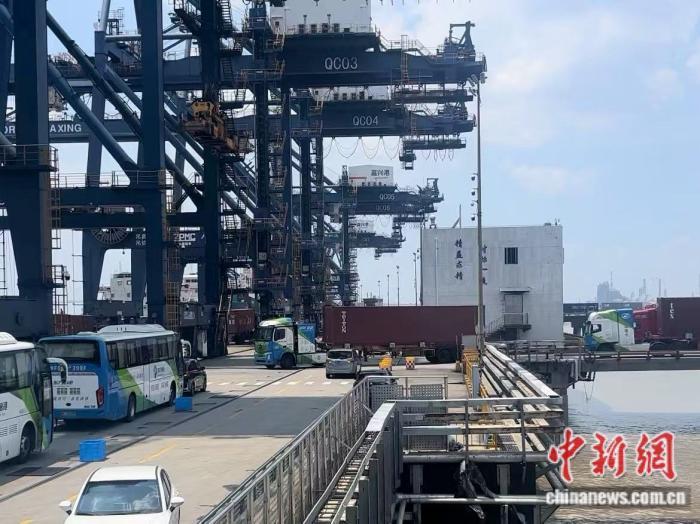
Core Viewpoint - The hydrogen energy industry in China is transitioning from pilot exploration to a more structured development phase, with diverse application scenarios being a key competitive advantage [2][4]. Group 1: Hydrogen Energy Vehicles - The hydrogen energy trucks operating in Jiaxing Port demonstrate impressive performance, with a refueling time of about 10 minutes and a range of approximately 450 kilometers, leading to annual fuel cost savings of around 3 million yuan and a reduction in carbon emissions by nearly 10,000 tons [1]. - Hydrogen vehicles are particularly suitable for commercial applications due to their long range and quick refueling capabilities, making them advantageous in port operations where frequent starts and stops occur [2][4]. - Cold chain logistics is another promising application for hydrogen vehicles, as their long range does not compromise the refrigeration needs, unlike electric vehicles [2]. Group 2: Infrastructure and Market Dynamics - The pricing of hydrogen is a critical barrier to market entry and scalability, with domestic hydrogen prices averaging around 30 yuan per kilogram after subsidies, compared to higher prices in some foreign markets [4]. - The development of sufficient hydrogen refueling stations is essential for the hydrogen energy ecosystem, with only about 500 stations currently available nationwide [4]. - The Jiaxing Port area is a demonstration zone for hydrogen energy, benefiting from abundant industrial by-product hydrogen, which supports the complete hydrogen energy industry chain [5]. Group 3: Future Developments - Jiaxing Port has initiated the development of hydrogen fuel-powered container ships, equipped with two sets of 240 kW hydrogen fuel cell systems, with a planned operational range of about 380 kilometers [5]. - A hydrogen-powered container ship is set to begin operations by the end of August, aimed at establishing a green hydrogen energy inland container transport route [5].
(活力中国调研行)拓展应用练“氢”功 嘉兴加速布局“未来”
Zhong Guo Xin Wen Wang· 2025-08-10 01:46
Group 1 - The hydrogen energy industry in China is transitioning from pilot exploration to a more organized phase, with diverse application scenarios being a core competitive advantage [2] - The pricing of hydrogen is a critical barrier to market entry and scalability, with domestic hydrogen prices averaging around 30 RMB per kilogram after subsidies, compared to higher prices in some foreign markets [2] - The development of sufficient hydrogen refueling stations is essential for the hydrogen energy ecosystem, with only over 500 stations currently available nationwide [2] Group 2 - Jiaxing is one of the first pilot cities in Zhejiang for hydrogen energy development, with the Jiaxing Port area serving as a demonstration zone [3] - The port area is establishing a complete hydrogen energy industry ecosystem, leveraging surplus industrial by-product hydrogen from the chemical new materials sector [3] - A hydrogen-powered container ship, equipped with two 240 kW fuel cell systems and a range of approximately 380 kilometers, is under development and expected to begin operations by the end of August [3] Group 3 - Hydrogen energy vehicles are particularly suited for commercial applications due to their long range and quick refueling capabilities, making them ideal for port operations and cold chain logistics [1] - Hydrogen energy vehicles can save approximately 3 million RMB in fuel costs annually and reduce carbon emissions by nearly 10,000 tons [1] - The complete hydrogen energy value chain, including production, storage, transportation, refueling, and usage, is crucial for the future development of the hydrogen industry [1]