AI推理

Search documents
英特尔288核新至强处理器揭秘:Intel 18A制程,3D堆叠与键合,EMIB封装……
Ju Chao Zi Xun· 2025-08-28 14:16
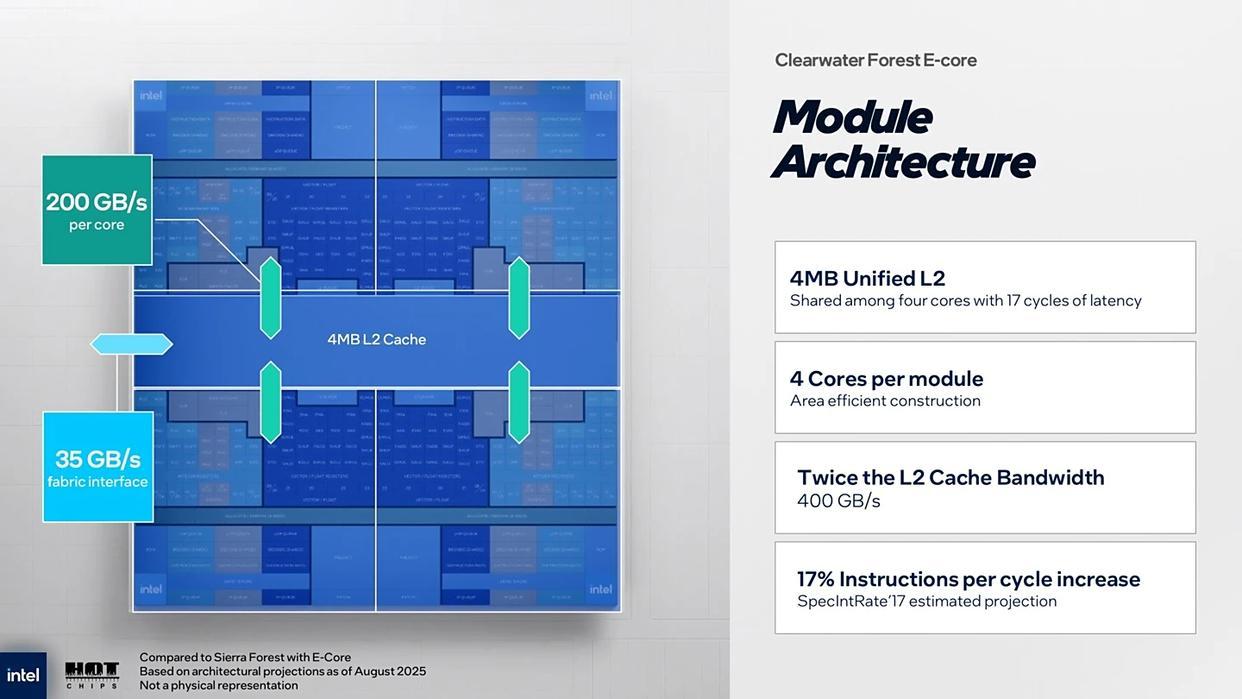
Core Insights - Intel's new generation Xeon processor Clearwater Forest was unveiled at the Hot Chips 2025 conference, marking the first server chip built on the Intel 18A process technology [2] - Clearwater Forest features 288 efficient cores, providing up to 576 cores in a dual-socket configuration, along with over 1152MB of L3 cache, significantly enhancing performance and efficiency [2] Architecture Enhancements - The new Darkmont efficient core architecture includes a wider 3x3 decode engine, deeper out-of-order execution window, and stronger execution ports, resulting in approximately 17% improvement in instructions per clock (IPC) compared to the previous Crestmont core [4] - Clearwater Forest is compatible with the previous generation Sierra Forest processors and supports up to 12 channels of DDR5 RDIMM memory, designed for multi-threaded network services and AI inference tasks [5] Process Technology and Packaging - Clearwater Forest is one of the first products utilizing Intel 18A process technology, which reduces gate capacitance, enhances core logic power efficiency, and achieves over 90% battery utilization [7] - The PowerVia backside power delivery technology and RibbonFET transistors contribute to a 15% performance improvement per watt at the same power level and a 30% increase in chip density at the same area compared to Intel 3 [7] - The 3D architecture of Clearwater Forest, consisting of 12 CPU chiplets based on Intel 18A, integrates high-speed I/O and interconnect structures, showcasing the competitive performance and efficiency of the Intel 18A process node [8]


华为发布AI推理创新技术--UCM推理记忆数据管理器
Zhong Guo Chan Ye Jing Ji Xin Xi Wang· 2025-08-28 00:35
Core Insights - Huawei launched the UCM inference memory data manager at the Financial AI Inference Application Forum, aiming to enhance AI inference experience and cost-effectiveness while accelerating the positive cycle of AI in business [1][2] - The UCM technology is being piloted in collaboration with China UnionPay in typical financial scenarios, showcasing its application in smart finance [1] Technology Overview - The UCM inference memory data manager consists of three main components: a connector for different engines and computing power, a library for multi-level KV Cache management and acceleration algorithms, and a high-performance KV Cache access adapter [1] - The technology enables a 90% reduction in latency for the first token by directly accessing KV cache data, avoiding redundant calculations [2] - UCM allows for a tenfold expansion of the inference context window, addressing long text processing needs by offloading ultra-long sequence cache to external professional storage [2] Performance Improvements - UCM's intelligent hierarchical caching capability allows for on-demand flow among HBM, DRAM, and SSD storage media based on memory heat [2] - The integration of various sparse attention algorithms enhances the collaboration between computation and storage, resulting in a 2 to 22 times increase in TPS (tokens processed per second) in long sequence scenarios, significantly lowering the inference cost per token [2] - In a pilot with China UnionPay, the UCM technology improved large model inference speed by 125 times, enabling precise identification of customer inquiries in just 10 seconds [2] Future Developments - UCM is set to be open-sourced in September 2023, with a unified interface to adapt to various inference engine frameworks, computing power, and storage systems [2] - The company aims to contribute UCM to mainstream inference engine communities, fostering the development of the AI inference ecosystem across the industry [2]
中国电信股价下跌1.17% 参与成立AI推理工作组
Jin Rong Jie· 2025-08-26 16:26
Group 1 - As of August 26, 2025, China Telecom's stock price is 7.58 yuan, down 0.09 yuan or 1.17% from the previous trading day [1] - The trading volume on that day was 1.5598 million hands, with a transaction amount of 1.182 billion yuan [1] - China Telecom is a major state-owned telecom operator in the communication services industry, providing fixed and mobile communication services, internet access, and information services [1] Group 2 - Recently, China Telecom participated in the establishment of the "Advanced Storage AI Inference Working Group," which aims to promote the development of "storage-computing collaboration and ecological co-construction" in the AI inference field [1] - The company showcased its "Wide-area Intelligent Computing Lossless Networking Technology" at the 2025 China Computing Power Conference, which enables efficient collaboration between distant data centers [1] Group 3 - On August 26, 2025, the net outflow of main funds for China Telecom was 206 million yuan, accounting for 0.04% of its circulating market value [1] - Over the past five trading days, the cumulative net inflow of main funds was 2.00496 million yuan [1]

云天励飞:正在推进下一代高性能NPU的研发 将更适合AI推理应用
Mei Ri Jing Ji Xin Wen· 2025-08-26 08:01
Core Viewpoint - The company has been focusing on the research, design, and commercialization of AI inference chips, being one of the first globally to propose and commercialize NPU-driven AI inference chip concepts [1] Group 1 - The company has completed the development of its fourth-generation NPU [1] - The company is currently advancing the research and development of the next generation of high-performance NPU, which will be more suitable for AI inference applications [1]

AI推理芯片爆发 谁将是下一个寒武纪?
Shang Hai Zheng Quan Bao· 2025-08-23 06:56
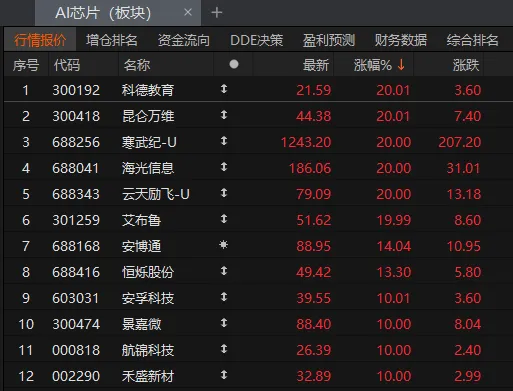
Group 1 - The A-share market for computing chips experienced a surge on August 22, with leading companies like Cambricon, Haiguang Information, and Yuntian Lifei hitting the daily limit, boosting market sentiment [1] - The AI chip sector is witnessing significant growth driven by the accelerating demand for AI inference, positioning domestic AI chips at the forefront of this trend [2][8] - Cambricon's market capitalization has exceeded 500 billion yuan, with its stock price reaching 1243.2 yuan, reflecting the explosive demand for AI training and inference chips [9] Group 2 - The launch of DeepSeek-V3.1 on August 21 is expected to enhance the performance and resource utilization of AI inference chips, leading to increased demand in various sectors such as finance and healthcare [3][6] - Tencent has indicated a sufficient supply of GPU chips for training but is exploring various options to meet the growing AI inference demand [7] - The domestic AI chip market is projected to grow from 142.54 billion yuan in 2024 to 1.34 trillion yuan by 2029, with a compound annual growth rate of 53.7% from 2025 to 2029 [9] Group 3 - Yuntian Lifei, recognized as the "first stock of Chinese AI inference chips," has also seen significant stock price increases, indicating strong market interest [10] - Yuntian Lifei's Deep Edge10 series chips utilize domestic 14nm technology and have adapted to various mainstream models, enhancing their capabilities for AI inference applications [10][11] - Chipone Technology is developing high-performance graphics processors aimed at data centers and GPU-AI computing, targeting FP8 computing capabilities of 40-240 TFLOPs [12]


华为Cloud Matrix 384中需要多少光模块?
傅里叶的猫· 2025-08-21 15:06
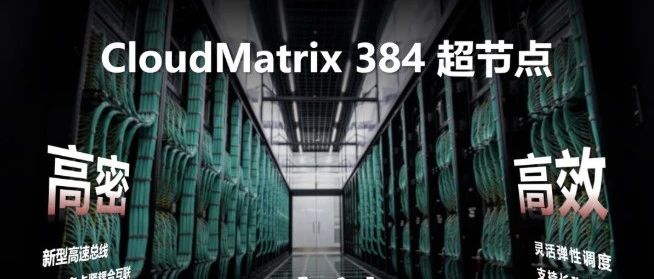
Core Viewpoint - The article discusses the architecture and data flow of Huawei's Cloud Matrix 384, emphasizing the integration of optical and electrical interconnections in its network design [2][3][9]. Group 1: Data Transmission Layers - The Cloud Matrix 384 includes three main data transmission layers: UB Plane, RDMA Plane, and VPC Plane, each serving distinct roles in data processing and communication [5][7]. - The UB Plane connects all NPU and CPU with a non-blocking full-mesh topology, providing a unidirectional bandwidth of 392GB/s per Ascend 910C [7]. - The RDMA Plane facilitates horizontal scaling communication between supernodes using RoCE protocol, primarily connecting NPUs for high-speed KV Cache transfer [7]. - The VPC Plane connects supernodes to broader data center networks, managing tasks such as storage access and external service communication [7]. Group 2: Optical and Electrical Interconnections - Although the Cloud Matrix 384 is often referred to as a purely optical interconnection system, it also utilizes electrical interconnections for short distances to reduce costs and power consumption [9]. - The article highlights the necessity of both optical and electrical connections in achieving efficient data flow within the system [9]. Group 3: Scale-Up and Scale-Out Calculations - For Scale-Up, each server's UB Switch chip corresponds to a bandwidth of 448GBps, requiring 56 400G optical modules or 28 800G dual-channel optical modules per server [12]. - The ratio of NPUs to 400G optical modules in Scale-Up is 1:14, and to 800G modules is 1:7 [12]. - For Scale-Out, a Cloud Matrix node consists of 12 Compute cabinets, and the optical module demand ratio is approximately 1:4 for NPUs to 400G optical modules [14].
【研报金选】AI推理时代催生千亿级增量市场,这些公司或成最大赢家
第一财经· 2025-08-19 13:53
Group 1 - The article highlights the emergence of a trillion-level market driven by performance bottlenecks in the AI inference era, indicating that certain companies may become the biggest winners in the AI operational revolution [1] - It discusses the demand driven by gas turbines in the aviation engine and AI sectors, revealing a hidden champion in high-temperature alloys that has signed long-term agreements with multiple overseas clients, securing benefits from the global supply chain for aircraft engines [1]

8月19日午间涨停分析
Xin Lang Cai Jing· 2025-08-19 03:40
Group 1 - Major stock indices experienced slight increases, with total trading volume exceeding 1.6 trillion yuan in half a day [1] - JinTian Co. achieved a five-day consecutive limit-up, while JiMin Health recorded a four-day consecutive limit-up [1] Group 2 - ShenLian NiuWu has initiated mergers and acquisitions to focus on human-use domains, particularly in mRNA and synthetic biology [3] - FuRui Co. is a leading enterprise in the domestic liver disease treatment sector, with significant clinical trial progress [3] - BoJie Pharmaceutical provides research and production services for pharmaceutical companies, focusing on CRO services [3] Group 3 - The average daily token consumption in China has surpassed 30 trillion, with plans to double computing power in the next five months [6] - JianGao Technology has begun supplying high-speed optical core products to Microsoft, with a projected net profit increase of 60.12% [6] Group 4 - Companies like HongDou Co. and GuoJi JingGong are investing in smart elderly care robots and precision reducer businesses [7] - DaShi Intelligent has successfully implemented medical logistics solutions in hospitals [7] Group 5 - Companies such as HuanDe Technology and LiOu Co. are focusing on liquid cooling systems for data centers and cloud computing [13][14] - The domestic market for optical communication and cooling solutions is expanding, with significant projects underway [12][14] Group 6 - The establishment of the China Fusion Energy Company aims to support ITER international scientific projects [20] - Companies like YuanDong Co. are involved in the development of hydrogen energy and related components [20]



英伟达的“狙击者”
Sou Hu Cai Jing· 2025-08-18 16:22
Core Insights - The AI chip market is currently dominated by Nvidia, particularly in the training chip segment, but the explosive growth of the AI inference market is attracting numerous tech giants and startups to compete for market share [3][4][5] - Rivos, a California-based startup, is seeking to raise $400 million to $500 million, which would bring its total funding since its inception in 2021 to over $870 million, making it one of the highest-funded chip startups without large-scale production [3][4] Market Dynamics - The demand for AI inference is surging, with the inference market projected to grow from $15.8 billion in 2023 to $90.6 billion by 2030, creating a positive feedback loop between market demand and revenue generation [6][8] - The cost of AI inference has dramatically decreased, with costs dropping from $20 per million tokens to $0.07 in just 18 months, and AI hardware costs decreasing by 30% annually [6][7] Competitive Landscape - Major tech companies are increasingly focusing on the inference side to challenge Nvidia's dominance, as inference requires less stringent performance requirements compared to training [9][10] - AWS is promoting its self-developed inference chip, Trainium, to reduce reliance on Nvidia, offering competitive pricing to attract customers [10][11] Startup Innovations - Startups like Rivos and Groq are emerging as significant challengers to Nvidia by developing specialized AI chips (ASICs) that offer cost-effective and efficient processing for specific inference tasks [12][13] - Groq has raised over $1 billion and is expanding into markets with lower Nvidia penetration, emphasizing its unique architecture optimized for AI inference [13][14] Future Considerations - The AI inference market is evolving with diverse and specialized computing needs, moving away from the traditional reliance on general-purpose GPUs, which may not be the only viable solution moving forward [12][14] - The ongoing competition and innovation in the AI chip sector suggest that Nvidia's current monopoly may face challenges as new technologies and players emerge [14]

英伟达的“狙击者”
虎嗅APP· 2025-08-18 09:47
Core Viewpoint - The article discusses the explosive growth of the AI inference market, highlighting the competition between established tech giants and emerging startups, particularly focusing on the strategies to challenge NVIDIA's dominance in the AI chip sector. Group 1: AI Inference Market Growth - The AI inference chip market is experiencing explosive growth, with a market size of $15.8 billion in 2023, projected to reach $90.6 billion by 2030 [7] - The demand for inference is driving a positive cycle of market growth and revenue generation, with NVIDIA's data center revenue being 40% derived from inference business [7] - The significant reduction in inference costs is a primary driver of market growth, with costs dropping from $20 per million tokens to $0.07 in just 18 months, a decrease of 280 times [7] Group 2: Profitability and Competition - AI inference factories show average profit margins exceeding 50%, with NVIDIA's GB200 achieving a remarkable profit margin of 77.6% [10] - The article notes that while NVIDIA has a stronghold on the training side, the inference market presents opportunities for competitors due to lower dependency on NVIDIA's CUDA ecosystem [11][12] - Companies like AWS and OpenAI are exploring alternatives to reduce reliance on NVIDIA by promoting their own inference chips and utilizing Google’s TPU, respectively [12][13] Group 3: Emergence of Startups - Startups are increasingly entering the AI inference market, with companies like Rivos and Groq gaining attention for their innovative approaches to chip design [15][16] - Rivos is developing software to translate NVIDIA's CUDA code for its chips, potentially lowering user migration costs and increasing competitiveness [16] - Groq, founded by former Google TPU team members, has raised over $1 billion and is focusing on providing cost-effective solutions for AI inference tasks [17] Group 4: Market Dynamics and Future Trends - The article emphasizes the diversification of computing needs in AI inference, with specialized AI chips (ASICs) becoming a viable alternative to general-purpose GPUs [16] - The emergence of edge computing and the growing demand for AI in smart devices are creating new opportunities for inference applications [18] - The ongoing debate about the effectiveness of NVIDIA's "more power is better" narrative raises questions about the future of AI chip development and market dynamics [18]