
全球治理倡议

Search documents
新加坡前外长杨荣文接受《环球时报》专访:“中国对世界的影响还会持续扩大”
Huan Qiu Shi Bao· 2025-12-02 22:55
【环球时报报道 记者 李艾鑫 徐嘉彤】11月30日至12月2日,2025年"读懂中国"国际会议在广州举办。 本次会议以"新布局、新发展、新选择——中国式现代化与全球治理新格局"为主题,荟聚全球知名政治 家、学者、业界领袖及国际组织代表等重量级嘉宾,其中包括于2004年至2011年出任新加坡外交部长的 杨荣文。杨荣文在接受《环球时报》记者专访时强调,所有人都能感受到中国发展带来的影响,而且这 种影响未来还会持续扩大。谈及中美关系,他认为两国之间目前存在一种平衡,也存在一种稳定。 " 重要的不仅仅是规划本身,更是制定过程 " 环球时报: 当谈到"读懂中国"时,您认为当今世界最需要读懂中国的哪个核心方面? 杨荣文: 我认为是中华文明。在历史上,中华文明成功整合了最为庞大的人口体系,而且规模远远超过 其他文明。我跟欧洲人这样说:中国的人口大约是欧洲的两倍。中华文明拥有统一的文学经典、英雄人 物,还有一脉相承的文字,一个受过良好教育的中国人仍可以阅读两千年前的文献。这造就了中华文明 非同寻常的连续性,这种深厚底蕴在世界范围内独树一帜。 环球时报: 2025年"读懂中国"国际会议议题涉及中国"十五五"规划建议。在讨论"十 ...
“2025从都国际论坛”在广州开幕
Xin Hua She· 2025-12-02 08:53
Core Viewpoint - The "2025 International Forum" opened in Guangzhou, emphasizing China's role in proposing and implementing global initiatives to address world challenges and promote cooperation [1] Group 1: Global Initiatives - President Xi Jinping has proposed four major global initiatives: global development, global security, global civilization, and global governance, providing Chinese wisdom and solutions to tackle global issues [1] - China is not only the proposer of these initiatives but also an active participant in their implementation, aiming to collaborate with other nations to address risks and challenges [1] Group 2: Forum Participation - The forum featured discussions among 28 former foreign leaders and representatives from 23 countries, focusing on the theme "Working Together for a Win-Win Future" [1] - The event highlighted the importance of unity, openness, and practical actions to foster development and cooperation among nations [1]
李国英率团出席第19届世界水资源大会开幕式并致辞
Shui Li Bu Wang Zhan· 2025-12-02 05:45
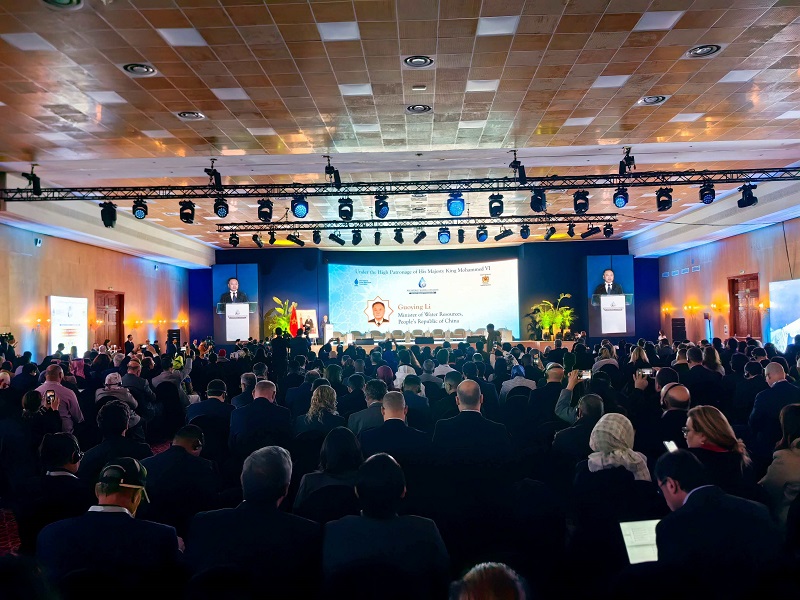
Core Viewpoint - The 19th World Water Resources Conference emphasizes the need for innovation and adaptation in water management amidst global climate change challenges [1][2] Group 1: China's Water Management - China's water resources are characterized by seasonal floods and droughts, with significant regional disparities in water availability [1] - Under the guidance of President Xi Jinping's water management philosophy, China has significantly improved its flood defense, water conservation, and ecological protection capabilities [1] - Historical achievements and transformations in China's water management have been noted, highlighting the progress made in modernizing water governance [1] Group 2: Global Collaboration and Initiatives - The increasing frequency of extreme weather events due to climate change poses serious challenges to global water security, necessitating collaborative efforts [2] - The Chinese Ministry of Water Resources aims to focus on high-quality water development and implement major initiatives outlined in the national economic and social development plan for the next five years [2] - The conference serves as a significant international platform for sharing knowledge on water policy and science, with participation from over 2,000 representatives from more than 80 countries and regions [2]

读懂中国“十五五”规划,中国式现代化彰显共享发展机遇承诺
2 1 Shi Ji Jing Ji Bao Dao· 2025-12-01 12:00
Core Insights - The "Understanding China" International Conference is being held for the 12th year, focusing on the theme of "New Layout, New Development, New Choices - Chinese-style Modernization and the New Global Governance Pattern" [1] - The conference aims to discuss the significance of the 14th Five-Year Plan and its implications for global governance, emphasizing China's role in providing new opportunities for developing countries [2][3] Group 1: Conference Themes and Objectives - The conference introduces two new topics: understanding the 14th Five-Year Plan and the four global initiatives, including the Global Governance Initiative [2] - The 14th Five-Year Plan is seen as a departure from the notion that modernization equals Westernization, offering new choices for developing countries [2][6] - The conference serves as a platform for global South countries to learn from China's modernization experience and to promote the concept of a community with a shared future for mankind [3][7] Group 2: International Cooperation and China's Role - Former Italian Prime Minister Romano Prodi highlights China's increasing importance in international cooperation, contrasting it with the past U.S.-led initiatives [2] - The conference emphasizes the need for collaboration among nations, particularly in the context of global challenges [2][4] - The participation of representatives from 72 countries, with a significant portion from the global South, indicates the growing influence of the conference [3] Group 3: Economic Strategies and Development Plans - The 14th Five-Year Plan focuses on domestic demand and international cooperation as core components of China's modernization strategy [3][6] - The plan aims to integrate economic growth with global cooperation, emphasizing shared opportunities and mutual development [6][7] - The plan includes innovative strategies for technology and industry, aiming to establish new economic growth points [8][9] Group 4: Regional Development and Innovation - The conference discusses the development experiences of the Guangdong-Hong Kong-Macao Greater Bay Area and Hainan Free Trade Port, highlighting their roles in China's modernization [12][13] - The Greater Bay Area is viewed as a vibrant region with significant potential for economic development and innovation [12] - The Hainan Free Trade Port is set to enhance international trade and cooperation, marking a new phase of China's high-level opening up [13]
全球治理倡议带来合作新机遇
Ren Min Ri Bao· 2025-12-01 03:10
Core Insights - The global governance initiative proposed by President Xi Jinping addresses the common concerns of developing countries and provides new cooperation opportunities for countries like Mongolia to participate in international affairs [1][2] Group 1: Global Governance Initiative - The initiative's five core principles include upholding sovereign equality, adhering to international law, practicing multilateralism, advocating for a people-centered approach, and emphasizing action-oriented outcomes [1][2] - The initiative responds to the shortcomings of the current global governance system, which lacks representation and voice for emerging markets and developing countries, leading to a crisis of effectiveness in global governance [2] Group 2: Mongolia's Engagement - Mongolia values its relationship with China and emphasizes multilateral diplomacy and regional cooperation, aligning its development strategy with the global governance initiative [3] - The principle of sovereign equality allows developing countries to express their positions and participate equally in international affairs, enhancing their ability to safeguard legitimate rights [3] - Mongolia's President expressed appreciation for the initiative during a meeting with President Xi, indicating a willingness to support each other on the international stage and collaborate to protect the common interests of developing countries [3] Group 3: Future Cooperation - The global governance initiative is seen as a means to promote a fairer and more reasonable international order, with expectations for deeper cooperation between Mongolia and China in various fields such as green development and digital economy [4] - Utilizing multilateral platforms like the Shanghai Cooperation Organization can enhance collaboration in areas like infrastructure and desertification prevention, benefiting both nations [4]
“推动匈中关系和务实合作朝着更高水平迈进”——访匈牙利工人党主席蒂尔默
Ren Min Ri Bao· 2025-11-30 22:14
Core Viewpoint - The interview highlights the significance of the people-centered development approach in China's modernization, which has led to unprecedented achievements, including lifting over 700 million rural residents out of poverty over the past 40 years [1][2]. Group 1: China's Achievements and Development Strategy - China has successfully lifted over 700 million rural poor out of poverty, a historic achievement that allows the Chinese people to take pride in their improved living standards [1]. - The development of new productive forces and high-quality growth driven by innovation is not only an economic strategy but also a governance philosophy for the new era [1]. - The global governance initiatives proposed by China emphasize cooperation over confrontation and mutual benefits over unilateral dominance, positioning China as a key player in promoting world peace and development [1]. Group 2: Hungary-China Relations - The bilateral trade between China and Hungary reached $16.2 billion in 2024, marking an 11.4% year-on-year increase, with China being Hungary's largest trading partner outside the EU [2]. - Direct passenger flights between Hungary and China have increased to 21 weekly, connecting Budapest with seven Chinese cities, showcasing the deepening cooperation in trade and infrastructure [2]. - The cooperation between Hungary and China, particularly in the context of the "Belt and Road" initiative, has yielded significant results in trade, investment, and infrastructure development [3]. Group 3: Future Prospects - The current relationship between Hungary and China is described as being at its best historical point, with Chinese enterprises actively participating in Hungary's economic development [3]. - The integration of Hungary's "Eastern Opening" strategy with the "Belt and Road" initiative is expected to enhance cooperation in various sectors, including trade and infrastructure [3].
“推动匈中关系和务实合作朝着更高水平迈进”
Ren Min Ri Bao· 2025-11-30 22:01
Core Viewpoint - The interview with Tilmér highlights the significance of the people-centered development approach in China's modernization, which has led to unprecedented achievements, including lifting over 700 million rural residents out of poverty over the past 40 years [2]. Group 1: Economic Achievements - China has successfully lifted over 700 million rural poor out of poverty, a historic achievement in human history [2]. - In 2024, the bilateral trade volume between China and Hungary reached $16.2 billion, marking an 11.4% year-on-year increase [3]. - The cooperation between China and Hungary in trade, investment, and infrastructure has yielded fruitful results, with direct passenger flights connecting Budapest to seven Chinese cities [3]. Group 2: Strategic Development - China’s new quality productivity development strategy promotes high-quality growth tailored to local conditions, reflecting a governance philosophy that emphasizes innovation-driven development [2]. - The global governance initiatives proposed by China advocate for cooperation over confrontation and mutual benefits over unilateral dominance, positioning China as a key player in promoting world peace and development [2]. Group 3: Bilateral Relations - The relationship between China and Hungary is at its historical best, with Chinese enterprises actively participating in Hungary's economic development [4]. - The integration of Hungary's "Eastern Opening" strategy with the Belt and Road Initiative has led to significant cooperation in trade and infrastructure [4]. - The presence of Chinese manufactured products, such as new energy vehicles and high-speed rail, in Hungary reflects China's leading position in modern manufacturing and offers new opportunities for EU-China cooperation [4].
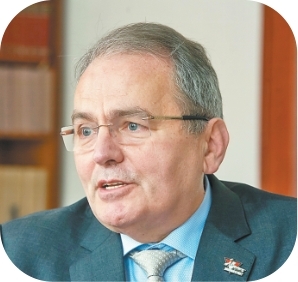
全球治理倡议带来合作新机遇(国际论坛)
Ren Min Ri Bao· 2025-11-30 22:01
Core Insights - The global governance initiative proposed by President Xi Jinping addresses the common concerns of developing countries and provides new cooperation opportunities for countries like Mongolia to participate in international affairs [2][3]. Group 1: Global Governance Initiative - The initiative's five core principles include upholding sovereign equality, adhering to international law, practicing multilateralism, advocating for a people-centered approach, and emphasizing action-oriented outcomes [2]. - The initiative responds to the shortcomings of the current global governance system, which lacks representation and voice for emerging market and developing countries, leading to a crisis of effectiveness in global governance [3]. Group 2: Mongolia's Engagement - Mongolia values its relationship with China and recognizes the alignment of the global governance initiative with its own development strategy and diplomatic philosophy [4]. - The principles of the initiative, such as sovereign equality, allow developing countries to express their positions and participate equally in international affairs, thereby better protecting their legitimate rights and interests [4]. Group 3: Future Cooperation - The initiative is expected to facilitate the construction of a more equitable and reasonable international order, with an emphasis on practical cooperation in areas like green development, digital economy, and infrastructure [5]. - Both Mongolia and China are encouraged to strengthen their strategic alignment and utilize multilateral platforms like the Shanghai Cooperation Organization to deepen collaboration for mutual benefit [5].

为应对时代挑战贡献更多上合方案(国际论坛)
Ren Min Ri Bao· 2025-11-28 22:00
Group 1 - The core viewpoint emphasizes the importance of deepening cooperation among Shanghai Cooperation Organization (SCO) member states to address global challenges and enhance South-South cooperation, guided by the "Shanghai Spirit" [1][3] - The 2025 SCO Tianjin Summit will see President Xi Jinping propose a global governance initiative, urging the SCO to take a leading role in promoting a fair and just international order [1] - Current global uncertainties, such as tariff disruptions and geopolitical conflicts, necessitate a commitment to building a community with a shared future within the SCO [1] Group 2 - Member states are enhancing security cooperation to combat "three forces," transnational organized crime, and drug trafficking, contributing to regional and global stability [2] - China advocates for an open world economy, opposing protectionism, and aims to promote inclusive development through industrial investment and financial cooperation [2] - In the first seven months of this year, China's trade with other SCO member states reached 2.11 trillion yuan, marking a historical high for the same period [2] Group 3 - Cultural cooperation is being strengthened through various forums and events, fostering a shared value consensus among SCO member states [3] - The establishment of mechanisms for think tank cooperation and increased cultural exchanges aim to enhance mutual understanding and support new international development cooperation [3]
《全球治理的开创性实践:构建中国—东盟命运共同体》在马来西亚发布
Huan Qiu Shi Bao· 2025-11-27 22:41
Core Insights - The report titled "Pioneering Practices in Global Governance: Building a China-ASEAN Community of Shared Future" was released, highlighting the significance of China-ASEAN relations in the context of global governance initiatives [1][2] - The report emphasizes the unique position of China-ASEAN cooperation as a model for international collaboration, particularly for developing countries [1] Group 1: Report Overview - The report is divided into three main sections: creating a new paradigm for regional cooperation, the driving forces behind the China-ASEAN community, and the global significance and value of China-ASEAN practices [1] - The report serves as a practical example for the international community to implement global governance initiatives and offers a fresh perspective for closer cooperation among Global South countries [1] Group 2: Event Details - The international academic seminar featured over 200 experts and scholars from various countries, including China, Malaysia, Vietnam, South Korea, Singapore, and the Philippines [2] - Keynote speeches were delivered by prominent figures such as the former Chinese ambassador to the U.S. and the former Indonesian foreign minister, showcasing the event's high-profile nature [2] Group 3: Strategic Collaboration - The report is a result of a strategic cooperation framework agreement signed between Global Times and the Diplomatic Academy, marking a new model of collaboration between think tanks and media [2] - The partnership aims to produce high-quality outcomes that focus on global issues, enhance public understanding, and strengthen international communication [2]