人工智能

Search documents
深耕实体数智赋能,建设银行2025年交出“质效双升”答卷
Sou Hu Cai Jing· 2026-03-30 03:45
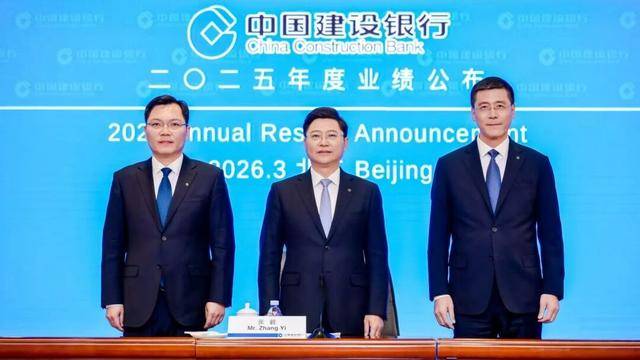
Core Viewpoint - China Construction Bank (CCB) demonstrated resilience and quality in its 2025 performance, achieving significant growth in assets, revenue, and net profit while maintaining a stable asset quality and enhancing customer service capabilities [1][6]. Financial Performance - As of the end of 2025, CCB's total assets reached 45.63 trillion yuan, an increase of 12.47% - Operating income was 740.87 billion yuan, up by 1.69% - Net profit stood at 339.79 billion yuan, with a growth of 1.04% - The non-performing loan (NPL) ratio was 1.31%, a decrease of 0.03 percentage points year-on-year [1][6]. Customer and Deposit Growth - CCB's deposit balance exceeded 30 trillion yuan, increasing by 2.12 trillion yuan, with a growth rate of 7.39% - The number of personal customers surpassed 785 million, indicating a strong customer base [8][9]. Credit and Loan Strategy - CCB focused on supporting the real economy, with significant growth in loans to key sectors: - Technology loans exceeded 5 trillion yuan, growing by 18.91% - Green loans reached 6 trillion yuan, with a growth of 20.54% - Inclusive loans amounted to 3.83 trillion yuan, increasing by 12.37% [8][9]. - The bank's retail loan balance reached 9 trillion yuan, maintaining a competitive edge in the market [9][15]. Digital Transformation and AI Integration - CCB advanced its digital transformation, with a 12.10% increase in total computing power of "CCB Cloud" - The bank implemented AI across 398 scenarios, enhancing customer service and operational efficiency [11][12]. - AI applications in risk management led to a double-digit growth in approval business volume and a reduction in processing time by over 30% [13]. Consumer Finance and Economic Support - CCB's personal consumer loan balance was approximately 683.2 billion yuan, with a year-on-year increase of 155.2 billion yuan - The bank actively participated in national consumption promotion activities, significantly boosting consumer spending [15][16]. - CCB plans to continue supporting consumption growth through targeted financial products and services [17]. Risk Management - CCB implemented effective risk management strategies, resulting in a controlled increase in the NPL ratio to 1.19%, with a year-on-year rise of only 0.11 percentage points [18]. - The bank aims to maintain stable asset quality while enhancing its risk management mechanisms [18].


中东地缘风险抑制股市风险偏好
Bao Cheng Qi Huo· 2026-03-30 03:31
Report Industry Investment Rating - Not provided in the content Core Viewpoints of the Report - In Q1, the price of the underlying assets showed a trend of rising first and then falling. In January and February, the positive policy expectations of the Two Sessions continued to ferment, and the stock indices oscillated and rose. Among them, CSI 500 and CSI 1000 related to small and medium - cap stocks had relatively large increases. In March, the Middle East geopolitical crisis broke out, the risk of global macro - economic recession increased, the risk appetite of the stock market weakened rapidly, and the stock indices were under full - pressure decline [5][10][35]. - Recently, the option position PCR has shown a bottom - up trend, indicating that market sentiment has improved, the worst situation of the geopolitical conflict has been gradually digested by the market, and the market sentiment remains at a low level. Currently, the at - the - money implied volatility of options is at a normal quantile level. From the perspective of volatility, the relative advantages of option buyers and sellers are not obvious, and the market sentiment tends to be stable [5][19][35]. - The disturbance of the Middle East geopolitical situation is the main factor affecting the short - term trend of the stock index. High - uncertainty risks suppress the risk appetite of the stock market. In the long - term, the continuous positive policy and the continuous inflow of funds into the stock market still constitute the core logic for the medium - and long - term upward movement of the stock index. It is expected that the stock index will maintain range - bound consolidation in the short - term. Considering that the long - term upward logic still exists, a bull spread portfolio can be used to deal with the difficulty of timing in the volatile market [5][33][35]. Summary According to the Directory 1 Market Review - There are 12 listed financial options in China's stock index financial derivatives market, including 9 ETF options and 3 stock index options, which are closely related to 7 indices. This report mainly analyzes options related to 4 broad - based indices [9]. - As of March 27, in Q1, the price of the underlying assets showed a trend of rising first and then falling. In January and February, due to positive policy expectations, the stock indices rose. In March, affected by the Middle East geopolitical crisis, the stock indices declined [10]. 2 Option Analysis Indicators 2.1 Position PCR Low - level Oscillation - The Put - Call - Ratio (PCR) is used to measure the long - short state of the market. The position PCR reflects the long - short sentiment contrast in the market. Since March, the position PCR of each option has rapidly declined and is now at a low historical quantile level, indicating that market sentiment has weakened rapidly. Recently, the position PCR has shown a bottom - up trend, indicating that market sentiment has improved [19]. 2.2 Implied Volatility Rising and Then Falling - Volatility is a key factor in option pricing and trading. In March, with the outbreak of the Middle East geopolitical crisis, the at - the - money implied volatility of options rose rapidly and then fell. Currently, it is at a normal quantile level, and the relative advantages of option buyers and sellers are not obvious, and the market sentiment tends to be stable [23]. 3 Underlying Asset Trend Analysis - The continuous positive policy and the continuous inflow of funds into the stock market constitute the core logic for the medium - and long - term upward movement of the stock index. The policy has clear expectations of supporting total demand and scientific and technological innovation. The government work report announced on March 5 proposed a series of fiscal policies to support demand, and policies to develop new industries, which support the relevant indices. The trend of incremental funds flowing into the stock market remains unchanged. As of March 5, A - share margin trading data showed that margin trading can boost the market, and new equity - biased funds in January and February were at a high level, indicating strong enthusiasm for "investing in the market through funds" [26][27][31]. - The Middle East geopolitical crisis is the main factor affecting the short - term trend of the stock index. After the crisis, global stock market risk appetite shrank due to uncertainty, energy shock, and liquidity tightening expectations. The information difference between the US and Iran on peace talks means high uncertainty, and the trading volume of the Shanghai and Shenzhen stock markets has shrunk, indicating cautious market sentiment [32]. 4 Option Portfolio Viewpoints - In the short - term, the stock index will maintain a range - bound trend. Considering the long - term upward logic, a bull spread portfolio can be used to deal with the difficulty of timing. A bull call spread portfolio can be selected, which involves buying low - strike - price call options and selling the same number of high - strike - price call options. It has limited risk and can design the expected profit - and - loss curve by selecting the strike prices [34]. 5 Summary - It summarizes the trend of the underlying asset price in Q1, the changes in option position PCR and implied volatility, the impact of the Middle East geopolitical situation on the short - term and long - term trends of the stock index, and suggests using a bull spread portfolio to deal with the volatile market [35].
国新证券每日晨报-20260330
Guoxin Securities Co., Ltd· 2026-03-30 03:24
Domestic Market Overview - The domestic market experienced a low opening followed by a rise, with the Shanghai Composite Index closing at 3913.72 points, up 0.63% [4][8] - The Shenzhen Component Index closed at 13760.37 points, up 1.13%, while the ChiNext Index rose by 0.71% [4][8] - A total of 25 out of 30 sectors in the CITIC industry classification saw gains, with significant increases in pharmaceuticals, basic chemicals, and non-ferrous metals [4][8] - The total trading volume of the A-share market was 186.38 billion yuan, continuing to decline from the previous day [4][8] Overseas Market Overview - The three major U.S. stock indices all closed lower, with the Dow Jones down 1.73%, the S&P 500 down 1.67%, and the Nasdaq down 2.15% [2][4] - Amazon's stock fell nearly 4%, leading the decline in the Dow [2][4] - The Nasdaq China Golden Dragon Index dropped by 1.90%, with notable declines in stocks like Pony.ai, which fell nearly 6% [2][4] Industry Insights - In the first two months of the year, the total profit of industrial enterprises above designated size reached 102.456 billion yuan, a year-on-year increase of 15.2%, accelerating by 14.6 percentage points compared to the previous year [9] - The revenue of these enterprises grew by 5.3% year-on-year, improving by 4.2 percentage points from the previous year, indicating favorable conditions for profit recovery [9] - Among 41 industrial categories, 26 saw profit growth accelerate or a reduction in decline, with over 60% of industries experiencing a rebound [9] News Highlights - Several small and medium-sized banks have lowered deposit rates, focusing on optimizing their deposit structures [10] - The Ministry of Ecology and Environment held a meeting to address air pollution prevention in the Yangtze River middle reaches urban agglomeration [11] - Two major aluminum plants in the Middle East were attacked, potentially impacting the global supply chain [13]
招商银行董事长缪建民:发展智能银行的投入是优化资源配置,对投入产出比影响不大
Xin Lang Cai Jing· 2026-03-30 03:18
Core Insights - The chairman of China Merchants Bank, Miao Jianmin, emphasized that the bank's investment in developing smart banking is aimed at optimizing resource allocation, which minimizes the impact on the input-output ratio compared to other companies that may suddenly increase capital expenditures [1][2] Group 1: Investment Strategy - China Merchants Bank has been consistently investing in artificial intelligence, which is not starting from scratch, thus the impact on input-output ratio is minimal [1] - The bank's approach to resource allocation allows for increased investment in AI without significant disruption [1] Group 2: Competitive Landscape - Miao Jianmin highlighted that the future differentiation in the banking industry will occur in two areas: operational and technological [2] - The bank has established a strong core competitiveness in the operational domain and aims to build a technological moat to maintain long-term competitiveness amid industry challenges [2]

2026二季报:地缘剧变下的宏观逆风与供需重构
Zhong Hui Qi Huo· 2026-03-30 03:15
1. Report Industry Investment Rating No relevant content provided. 2. Core Views of the Report - In Q2 2026, the weight of macro factors (Fed policy, geopolitics) will be significantly higher than the supply - demand fundamentals. The strong rebound of the US dollar index will suppress copper prices. [8] - The supply - demand mismatch has shifted from "overall tightness" to "structural differentiation". The mine supply remains tight, but the smelting output is lower than expected due to raw material shortages and by - product crises. The demand side shows the characteristics of "severe switching between old and new kinetic energy", with traditional real estate and home appliances under pressure, while new energy and power grid investment are the only bright spots, but they are difficult to fully hedge the shadow of macro - recession. [8] - The volatility will be significantly amplified. Under the resonance of geopolitical black swans and macro grey rhinos, market sentiment is prone to extremism. It is recommended that industrial customers use derivatives such as options to strengthen risk management, and investors should be vigilant against the stampede risk caused by sudden changes in liquidity. [8] - Q2 2026 is not the end of the copper bull market but a sharp "squat" in the middle of the bull market. This adjustment will squeeze out the previous bubble valuation and lay a foundation for the real uptrend in the second half of the year and 2027. In the short term, it is recommended to try long on dips, strictly set stop - profit and stop - loss, and control positions. Industrial customers should flexibly adjust the hedging ratio, lock in reasonable profits, and strictly manage positions to control risks. In the long term, copper is highly regarded as an important strategic resource and a substitute for precious metals, combined with the shortage of copper concentrates and the explosion of green copper demand. [3][8] 3. Summary According to the Directory 3.1 2026 Q2 Outlook - In Q2 2026, copper prices will show a significant "N" - shaped oscillation pattern with increased wide - range fluctuations. If the Middle East war expands, the global economy may fall into recession; if the situation eases, the commodity and stock markets may recover. [7] - The current deep correction of copper prices is the resonance of macro - headwinds and high - inventory weak reality. In the long - term, due to the shortage of copper concentrates and the explosion of green copper demand, the strategic security premium of copper in the Sino - US game will dominate, and copper prices will stabilize and oscillate in a new equilibrium range. [7] 3.2 Q1 2026 Market Review - The Q1 2026 copper market showed a roller - coaster trend divided into three stages: the first stage (January - February) was the "开门红 and expectation pre - run", with copper prices hitting historical highs and then falling back; the second stage (February - March) was the "high - level oscillation and increasing divergence", with copper prices in a narrow - range consolidation; the third stage (March - present) was the "geopolitical explosion and decline after reaching a high", with copper prices plummeting due to geopolitical events and high inventory. [10][11] - The core characteristics of the Q1 2026 market were "strong expectation, weak reality, and high volatility", exposing the fragility of market funds. [11] 3.3 Macro Analysis 3.3.1 Global Economic and Geopolitical Changes, Middle East War, and Energy Crisis - The Middle East war has led to an energy crisis, with the blockade of the Strait of Hormuz. If the war expands and prolongs, a global economic and financial crisis may break out in 2026. The global economic and trade growth expectations in 2026 will be significantly revised down. [15][16] - The high energy price has pushed up inflation, increased smelting and transportation costs, and suppressed demand. It has also disrupted the supply chain of copper, leading to a decline in global risk preference and a fall in copper prices. [19] - If the Taiwan Strait risk breaks out in 2026, copper prices may first fall and then rise due to supply security concerns and the explosion of military copper demand. [23] 3.3.2 Trump's Copper Tariff Ruled Illegal, but Tariff War 2.0 May Continue - Trump's previous copper tariffs were ruled illegal, but he may use the 301 investigation and other measures to start a new round of trade frictions. His policy has accelerated the regionalization of the copper supply chain and increased the uncertainty of the market. [24][26] - The US may impose selective tariffs on refined copper imports from some countries and build a global metal trading group to weaken China's influence in the mineral market, which may lead to China's counter - measures. [26] 3.3.3 The Myth of Copper Consumption in AI Data Centers Burst, and Geopolitical Changes Suppress the Technology Bubble - The claim that AI data centers need a large amount of copper was exaggerated. Although AI development depends on copper, the actual copper consumption in new fields is difficult to shake the traditional fields for now. [34] - The Middle East conflict has increased the operating cost of data centers, threatened the stability of chip production, and damaged the physical security of AI infrastructure, exposing the vulnerability of the AI industry's supply chain. [35][36] 3.3.4 The Fed's Hawkish Stance and the Shift of Global Monetary Policy Expectations - The Fed's interest rate cut expectations have decreased significantly in 2026 and 2027. The Fed is more focused on combating inflation. The high - interest - rate environment has a negative impact on the real economy and suppresses copper demand. [39] - The Fed's hawkish stance has forced other central banks to follow suit, which has weakened the global copper demand. [47] 3.3.5 The Disappointment of the "Two Sessions" Policy Expectations and the Increase of External Pressure - The actual implementation of policies after the "Two Sessions" in 2026 did not meet market expectations, and the external environment has deteriorated, making it difficult for domestic copper demand to recover. [49] - Trump's postponement of the visit to China has reignited market concerns about the "Tariff War 2.0". The government may take flexible measures to support copper demand in Q2. [50] 3.4 Supply Analysis 3.4.1 Intensified Global Competition for Copper Resources, Chinese Copper Enterprises' Overseas M&A Failure - Due to geopolitical risks and other factors, the long - term capital expenditure of global copper mines is insufficient, and the new supply is limited. The global leading copper mines are still dominated by European and American giants. [51][52] - Global copper mining giants are accelerating mergers, and some mining companies have lowered their 2026 copper production plans, increasing market concerns about supply shortages. [53] - The US plans to start a strategic key mineral reserve project and build a key mineral supply chain excluding China, which will affect the global copper supply pattern. [54] 3.4.2 Deep Inversion of Smelter Processing Fees, Industry Calls for Copper Concentrate Storage and Anti - Involution - The copper concentrate processing fees have reached a record low, and the smelting profit is under pressure. Some smelters have increased the purchase of blister copper, but the supply of blister copper is limited. [60][61] - The CSPT group plans to reduce the copper production capacity by more than 10% in 2026, and the industry association will promote copper resource reserve construction. [63] 3.4.3 Slowing Growth of Refined Copper Supply, Reverse Restriction of African Sulfur Shortage on Wet - Process Copper Capacity - Affected by raw material shortages and smelting maintenance, the growth of refined copper supply has slowed down. The shortage of sulfur in the Middle East has led to the reduction of African wet - process copper production. [67][68] - China's imports of unforged copper and copper products have decreased, and the domestic scrap copper market is affected by various factors. The overall supply of refined copper in 2026 is expected to grow at a slower pace. [69][70] 3.4.4 High Global Visible Inventory, the Tug - of - War between High Inventory and High Price - The copper market shows a paradox of high inventory and high price. The high - interest - rate policy has led to passive inventory accumulation, while some financial capital has hoarded copper as an anti - inflation asset. [74][75] - Although the current inventory is high, the market expects the inventory to decline rapidly after Q3 due to mine disruptions and smelting production cuts, which supports the near - term copper prices. [75] 3.5 Demand Analysis 3.5.1 The Fourth Industrial Revolution Triggers Electricity Demand, and "Token" Electricity Exports Provide a New Path - The fourth industrial revolution, including the development of new energy and AI, has increased the demand for electricity, which in turn drives the demand for copper. The power industry is the most important area for copper consumption. [79][80] - Overseas power market development and China's power exports will further increase the global copper demand in the power sector. China may explore the path of "RMB internationalization with electricity as the anchor". [81][83] - It is expected that the copper consumption in the domestic power industry in 2026 will increase by 6.78% year - on - year to 788 million tons, accounting for 47% of the total copper consumption. [87] 3.5.2 The Real Estate Market is at the Bottom, and the "Shanghai Seven Measures" Boost Confidence - The real estate market is still in a difficult situation, with over - inventory and weak demand. The "Shanghai Seven Measures" have boosted the confidence of the Shanghai real estate market, but the overall national real estate market needs more policy support. [90] - It is predicted that the copper consumption in the construction industry in 2026 will decline by 11.59% year - on - year to 2.9 million tons, accounting for 17% of the total copper consumption. [92] 3.5.3 Short - Term Pressure on Home Appliance Consumption, Long - Term Optimism - In the short term, the home appliance industry is under pressure, but in the long term, it is expected to recover with the improvement of the real estate market and the introduction of consumption - promotion policies. [95][99] - It is expected that the copper consumption in the home appliance industry in 2026 will be 2.32 million tons, a year - on - year increase of 6.42%, accounting for 14% of the total copper consumption. [99] 3.5.4 A Setback for New - Energy Vehicles, but the Energy Crisis Stimulates Electric Vehicle Consumption - In Q1 2026, the new - energy vehicle market was in an adjustment period, but the export performance was excellent. The energy crisis has increased the cost of fuel vehicles, making electric vehicles more competitive. [100][101] - It is expected that the copper consumption in the transportation industry in 2026 will be 2.3 million tons, a year - on - year increase of 4.07%, accounting for 14% of the total copper consumption. [101] 3.5.5 Considerable Growth in Industrial Machinery and Electronics, the Robot Industry Shines - The robot industry has a high demand for copper, and although its current contribution to global copper demand is small, it has great growth potential. [105][106] - It is expected that the copper consumption in the machinery and electronics industry in 2026 will be 1.4 million tons, a year - on - year increase of 7.69%, accounting for 8% of the total copper consumption. [107] 3.5.6 Cooling Speculative Enthusiasm, the Energy and Chemical Sector Siphons Funds from the Non - Ferrous Sector - Due to the cooling of the Fed's interest - rate cut expectations and the "off - season in the peak season" of downstream demand, the speculative enthusiasm in the copper market has decreased. The energy and chemical sector has siphoned funds from the non - ferrous sector. [110] 3.5.7 Forecast of the 2026 Refined Copper Supply - Demand Balance Sheet - In 2026, the global refined copper market is in a tight balance. The global refined copper supply is expected to be 28.65 million tons, with a growth rate of 0.53%, and the demand is expected to be 29 million tons, with a growth rate of 1.22%, resulting in a supply - demand gap of 350,000 tons. [114] - In China, the total supply of refined copper is expected to be 16.35 million tons, and the total demand is expected to be 16.6 million tons, with a supply - demand gap of 250,000 tons. [115]
招商银行缪建民:从投入产出角度讲,打造智能银行对招行影响不大
Xin Lang Cai Jing· 2026-03-30 03:14
招商银行董事长缪建民在该行2025年度业绩发布会上表示,对招行而言,打造智能银行是通过优化资源 配置来加大对人工智能的投入,不是从一张白纸开始。"和其他公司不同,他们可能以前没有投资,突 然间增加大量资本开支会影响盈利,而招行每年在金融科技方面都有大量投资,去年的规模达到129亿 元。所以从投入产出的角度来讲,对招行影响不大。" ...
三大因素压制全球股市,4月或仍承压
日经中文网· 2026-03-30 03:10
Group 1 - The global stock market is experiencing a significant downward trend, with the MSCI Global Index down 8% since the military strikes on Iran, marking the largest monthly decline since September 2022 [4] - The energy sector is the only one benefiting from rising oil prices, while other sectors, particularly materials like steel and non-ferrous metals, have seen declines of up to 13% [4][6] - Concerns about inflation and economic slowdown due to high oil prices are leading to fears of "stagflation," with WTI crude oil prices remaining around $100 per barrel [4][6] Group 2 - The capital goods sector has also faced a significant decline of 10%, with companies like GE Aerospace seeing a 17% drop in stock price [6] - The consumer sectors are not immune, with non-essential consumer goods down 10% and essential goods down 8%, reflecting fears of reduced consumer spending due to rising inflation [6] - AI-related stocks are under scrutiny for overheating, with the communication services sector down 10% and major players like Alphabet showing poor performance since 2026 [6][7] Group 3 - The financial sector has seen a 7% decline, with concerns about the quality of loans from non-bank institutions and funds, especially following the bankruptcy of Market Financial Solutions [9] - The Nikkei average has dropped significantly, with a 12% decline from its historical high, reflecting market concerns over the ongoing geopolitical tensions and their impact on corporate earnings [10] - Analysts are adjusting their outlooks, with UBS increasing the probability of oil prices exceeding $120 per barrel to 30%, indicating a potential shift in investment strategies [10]
“杭州六小龙第一股”要来了,毛利率升至82.1%
21世纪经济报道· 2026-03-30 03:07
Core Viewpoint - Manycore Tech Inc. is progressing towards its IPO on the Hong Kong Stock Exchange, marking a significant milestone as it aims to become the first global player in the space intelligence sector [1][2]. Group 1: IPO Progress - Manycore Tech Inc. has successfully passed the listing hearing on the Hong Kong Stock Exchange, with Morgan Stanley and CCB International acting as joint sponsors [1]. - If the IPO is completed, Manycore Tech will be the first company in the space intelligence sector to go public globally [2]. Group 2: Market Position and Financial Performance - Manycore Tech holds a 23.2% market share in China's space design software market, making it the largest provider in this sector as of 2024 [4]. - The company reported a revenue of approximately 829 million yuan in 2025, with a gross margin of 82.2%. It achieved an adjusted net profit of 57.1 million yuan, marking a transition from loss to profit [3][4]. - Subscription revenue from enterprise clients reached 669 million yuan, up 6.61% year-on-year, while individual client subscription revenue was 125 million yuan, growing by 15.92% [4]. Group 3: Technological Advancements - Manycore Tech has invested over 1 billion yuan in R&D from 2023 to 2025, leading to the launch of the Spatial Language Model (SpatialLM) and Spatial Generation Model (SpatialGen) in 2025 [4]. - The company has developed a business ecosystem that includes spatial editing tools, spatial data, and large spatial models, enhancing the intelligence of three-dimensional environments [4]. Group 4: Founding Team and Capital Structure - The founding team of Manycore Tech has strong academic backgrounds in computer science from prestigious universities and has accumulated significant R&D experience in top tech companies [5]. - Prior to the IPO, Manycore Tech completed 11 rounds of financing, with major institutional shareholders including IDG Capital (12.89%), Hillhouse Capital (12.60%), and GGV Capital (11.52%) [5].

金元证券每日晨报-20260330
Jinyuan Securities· 2026-03-30 03:04
Market Overview - The A-share market showed positive movement with the Shanghai Composite Index rising by 0.63% to 3,913.72 points, the Shenzhen Component Index increasing by 1.13% to 13,760.37 points, and the ChiNext Index up by 0.71% to 3,295.88 points [3][11] - The Hong Kong Hang Seng Index rose by 0.38% to 24,951.88 points, while the South Korean KOSPI Index fell by 0.40% to 5,763.22 points [11] - In the US market, the Dow Jones Industrial Average decreased by 1.73% to 45,166.64 points, and the Nasdaq Index dropped by 2.15% to 20,948.36 points [11] International News - The Houthis in Yemen have escalated military actions in response to regional tensions, targeting significant military objectives in Israel with ballistic missiles [7] - US President Trump claimed control over the Strait of Hormuz, indicating a potential reduction in US military presence in Iran after achieving military objectives [8] - Ongoing conflicts between the US, Israel, and Iran have intensified, with Iran threatening to strike military and political targets in retaliation for attacks on its territory [9] Domestic News - The Ministry of Ecology and Environment held a meeting in Wuhan to address air pollution in the Yangtze River middle reaches, emphasizing the need for green transformation in key industries [13] - Hong Kong's visitor numbers have increased by approximately 17% year-on-year, with expectations for retail sales to continue growing [14] - A report titled "2026 Industrial 4.0 Barometer" indicates that China's industrial digitalization level is leading globally, with a score of 72%, up 3 percentage points from the previous year [14] Company Announcements - Mingde Bio is advancing a major asset restructuring plan to acquire 100% of Wuhang Bikaier's equity [16] - Juchip Technology is projected to see a 91.95% year-on-year increase in net profit by 2025 [16] - United Optoelectronics is acquiring 92.62% of Changyi Optoelectronics and has received approval for fundraising from the Shenzhen Stock Exchange [16] - Fulian Precision has established a wholly-owned subsidiary to focus on humanoid robot smart joints [16]
又到“精挑细选”个股时!马年,如何找个“不一样”的基金管理人替你出赛?
华尔街见闻· 2026-03-30 02:57
Core Viewpoint - The investment landscape in the Year of the Horse is markedly different from previous years, with a focus on stability at the index level and increasing external interference, indicating a shift towards a structural era that tests fund managers' ability to select individual stocks [1] Group 1: Investment Strategy and Focus - Companies with strong long-term performance and robust research teams, such as ICBC Credit Suisse, are worth paying attention to, as they possess a well-established talent pool and effective organizational processes [2] - Fund manager Marina Ma has stood out in the past two years for her exceptional performance, characterized by a focused, forward-looking, and stable investment approach [2][3] Group 2: Background and Expertise of Fund Manager - Marina Ma's academic background in microelectronics and computer science from Peking University aligns well with her current focus on AI hardware and semiconductors [5] - Her career at ICBC Credit Suisse has been marked by a deep commitment to the TMT sector, where she has developed a solid understanding of the technology industry, particularly in semiconductors and AI [5][6] Group 3: Investment Philosophy and Performance - Ma's investment philosophy emphasizes a forward-looking perspective on industry cycles and the ability to translate macro trends into individual stock selections [7][8] - Her management of the ICBC Emerging Manufacturing Mixed Fund reflects a decisive shift towards AI and semiconductor holdings, demonstrating her proactive investment strategy [9][10] - The fund's performance has been impressive, with a reported return of 65.78% in 2025, ranking it among the top in its category [16] Group 4: Team and Platform Strength - The success of Marina Ma is supported by ICBC Credit Suisse's strong platform and research team, which consists of professionals with deep expertise in technology [18][19] - The firm has a robust investment research system that fosters collaboration and knowledge sharing among team members, enhancing the overall investment decision-making process [19] Group 5: Future Outlook - As the A-share market experiences volatility, investors are encouraged to seek trustworthy and knowledgeable fund managers to navigate the complexities of the market [21] - The increasing specialization in the technology sector suggests that having a dedicated and capable fund manager, like Marina Ma, is becoming a more rational choice for investors [22]