
全球发展倡议

Search documents
中国代表阐述在战略安全和军控问题上的立场和政策主张
Xin Hua She· 2025-10-10 02:35
Core Viewpoint - The Chinese delegation emphasizes the importance of multilateralism, international cooperation, and the need for reform in global governance to address the increasingly complex international security environment [1][2]. Group 1: International Security Environment - The current international security landscape is characterized by complexity and severity, with lingering Cold War mentalities, an ongoing arms race, and violations of fairness and justice [1]. - The Chinese representative calls for a firm defense of international fairness and justice, actively maintaining world peace, and opposing the jungle law of the strong preying on the weak [1]. Group 2: Nuclear Policy - China's nuclear policy is described as stable, continuous, and predictable, contributing to global strategic stability [2]. - China maintains a self-defense nuclear strategy, adheres to a no-first-use policy, and does not participate in arms races, keeping its nuclear capabilities at the minimum level necessary for national security [2]. - The country supports the foundational role of the Treaty on the Non-Proliferation of Nuclear Weapons and advocates for nuclear disarmament to proceed gradually while ensuring global strategic stability [2]. Group 3: Global Initiatives - China proposes the concept of a community with a shared future for mankind, along with global development, security, civilization, and governance initiatives to address global challenges [1]. - The Chinese representative emphasizes that China's modernization is rooted in peaceful development, positioning China as a force for peace, stability, and progress in the world [2].
从系统和全局把握践行全球治理倡议(深入学习贯彻习近平新时代中国特色社会主义思想·原创性概念标识性概念纵横谈)
Ren Min Wang· 2025-10-09 22:25
Core Points - The core message emphasizes the need for global cooperation to address increasing global challenges, advocating for a reform of the global governance system to enhance fairness and inclusivity [1][2][10]. Group 1: Global Governance Principles - Sovereign equality is highlighted as the primary premise for global governance, ensuring all countries participate equally regardless of size or wealth [3]. - The rule of international law is identified as the fundamental guarantee for global governance, advocating for equal application of international laws and norms [4]. - Multilateralism is presented as the essential path for global governance, opposing unilateralism and emphasizing the importance of the United Nations [5]. Group 2: Value Orientation and Action Principles - A people-centered approach is emphasized, ensuring that global governance benefits all nations and addresses pressing global issues like poverty and climate change [6][7]. - Action-oriented principles are stressed, advocating for coordinated global efforts to achieve tangible governance outcomes [8]. Group 3: Interconnected Global Initiatives - The global governance initiative is interconnected with the global development, security, and civilization initiatives, forming a comprehensive framework to tackle global challenges [9][11]. - The initiatives collectively address the "four deficits" of peace, development, security, and governance, providing a holistic approach to global issues [10][12]. Group 4: Implementation and Institutional Framework - The importance of institutional reform and strengthening multilateral platforms like the UN and WTO is underscored to enhance global governance effectiveness [16]. - Ensuring that global governance achieves new results is crucial, with a focus on meeting the expectations of developing countries and addressing their concerns [17].
世贸组织成员高度评价中方关于特殊和差别待遇问题的重大立场宣示
Yang Shi Xin Wen Ke Hu Duan· 2025-10-08 01:42
欧盟、瑞士、巴西、巴基斯坦、尼日利亚(代表非洲集团)等45方代表超100个世贸组织成员发言,对 中方重大举措予以高度评价。牙买加、塞内加尔盛赞中方立场宣示具有重大历史意义,展现了中方对多 边主义的坚定承诺,在当前挑战背景下有助于维护以规则为基础的多边贸易体制。巴基斯坦、埃及、巴 巴多斯等称赞中国立场展现了负责任发展中大国形象,维护了发展中国家团结,有助于推动世贸组织发 展议程取得成果。加纳、塞拉利昂等成员表示感谢中方在世贸组织特殊和差别待遇问题上一直以来的建 设性立场和领导力,期待与中方携手推动包容性发展。新加坡表示,中方此举展现了对自身发展进程的 信心和加强多边贸易体制的决心,对世贸组织具有重要意义。欧盟、澳大利亚、瑞士、挪威等对中方的 重要决定表示欢迎,认为将为世贸组织改革注入动力。(总台记者 杨春) 中国常驻世贸组织代表李詠箑表示,作为负责任的发展中大国,长期以来,中国一直尽己所能,为全球 发展贡献力量。就世贸组织而言,中方积极参与多边贸易谈判、支持促贸援助倡议,推动实现以贸易促 发展。中方关于世贸组织特殊和差别待遇问题的立场宣示,是中方坚定维护多边贸易体制,将发展问题 置于世贸组织工作中心位置的一项具 ...
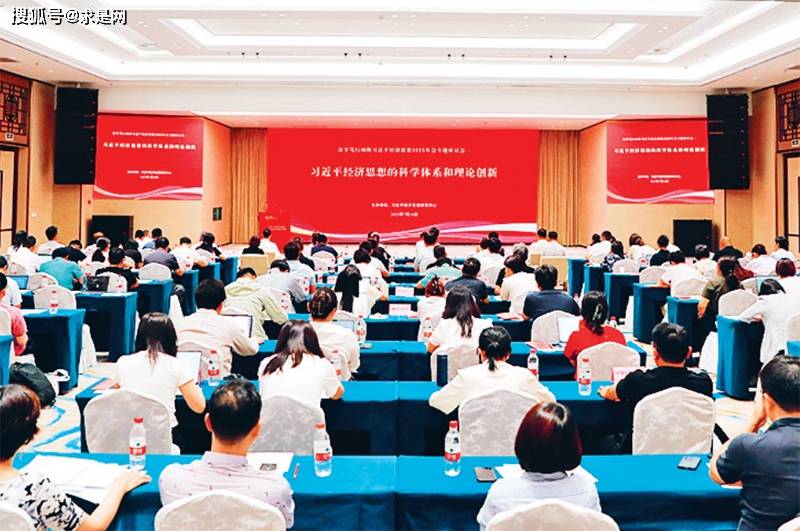
体系化学理化研究 | 构建21世纪政治经济学的几点思考
Sou Hu Cai Jing· 2025-10-06 09:18
Core Ideas - The article emphasizes the need to construct a 21st-century political economy that reflects China's unique experiences and offers solutions to global challenges, guided by Xi Jinping's economic thought [1][3][5] Group 1: Theoretical Framework - Xi Jinping's economic thought serves as a comprehensive theoretical summary for China's economic development, providing a foundation for the construction of a 21st-century political economy [3][4] - The historical context of political economy shows that significant theoretical advancements arise from profound reflections on transformative practices, indicating that China's reform and modernization can inspire new theories [4][5] Group 2: Global Context and Challenges - The world is undergoing unprecedented changes, with issues such as economic imbalance, widening wealth gaps, and ecological crises becoming increasingly complex, necessitating a return to classical political economy concerns [1][2] - The dominance of Western economic paradigms has limited China's academic discourse and global understanding, highlighting the importance of developing a political economy that reflects Chinese practices and engages in international dialogue [5][6] Group 3: Key Issues in Political Economy - The fundamental purpose of development should focus on ethical values and social equity, moving beyond the Western economic model that often leads to wealth polarization [6][7] - The dynamics of development must consider new drivers such as technological innovation and data factors, emphasizing the role of new productive forces in shaping economic growth [6][8] - The relationship between economy and politics is crucial, with a need to clarify the roles of political parties, government, and markets in economic governance [7][8] Group 4: Environmental and Global Governance - Addressing the relationship between development and the environment is essential, advocating for a green development model that harmonizes economic growth with ecological sustainability [11][12] - The article discusses the challenges of economic globalization and the need for a fairer global governance system, proposing that China's initiatives can contribute to a more inclusive global economic order [12][13]

和音:勇担大义 笃行大道
Ren Min Ri Bao· 2025-10-04 01:02
Group 1 - The core message emphasizes China's commitment to building a community with a shared future for mankind, advocating for multilateralism and global cooperation in response to contemporary challenges [1][2][3] - China's initiatives, including the Global Development Initiative, Global Security Initiative, Global Civilization Initiative, and Global Governance Initiative, are presented as systematic international public goods aimed at addressing global issues [3] - Over 130 countries and international organizations are participating in the implementation mechanisms of these initiatives, indicating broad international support and engagement [3] Group 2 - The speech by President Xi Jinping highlights China's role as a responsible major power, showcasing its dedication to peace, development, and international cooperation [1][2] - The recent activities, such as the establishment of international mediation institutions and the promotion of international law, reflect China's proactive approach to regional and global governance [2] - The initiatives are positioned as solutions to the global governance deficit, with a focus on sovereignty equality, adherence to international law, and action-oriented approaches [3]
新华时评:为人类和平与发展的崇高事业作出新贡献
Xin Hua She· 2025-10-04 01:02
Core Viewpoint - The 76th anniversary of the founding of New China is marked by a commitment to peace, development, and global cooperation, emphasizing China's role as a responsible major power in promoting human progress and world harmony [1][4]. Group 1: Historical Significance - The anniversary coincides with the 80th anniversary of China's victory in the Anti-Japanese War and the World Anti-Fascist War, highlighting China's historical contributions to global peace and civilization [1]. - The establishment of New China 76 years ago strengthened the forces advocating for world peace and justice [1]. Group 2: Global Initiatives - China promotes the values of humanity, true multilateralism, and global initiatives for development, security, civilization, and governance, aiming to build a community with a shared future for mankind [1][4]. - China has actively participated in international peacekeeping, being the second-largest contributor to UN peacekeeping operations and the largest troop contributor among permanent members of the UN Security Council [2]. Group 3: Economic Development - Over the past 76 years, China has transformed from a country unable to produce basic vehicles to a major manufacturer, producing over 80,000 cars and 3.4 million smartphones daily [3]. - China has lifted 800 million people out of poverty and is a key trading partner for over 150 countries, demonstrating its commitment to global development [3]. Group 4: International Cooperation - China has established the Belt and Road Initiative, engaging in high-quality cooperation with over 150 countries and mobilizing over $23 billion to support the development of the Global South [3]. - The country emphasizes the importance of global cooperation and mutual benefit, asserting that a prosperous world is essential for China's own prosperity [3].
为完善全球治理提供合作框架(国际论坛)
Ren Min Ri Bao· 2025-10-03 22:02
Core Viewpoint - The global governance initiative proposed by President Xi Jinping aims to create a fair, mutually beneficial, and sustainable framework for governance cooperation, particularly benefiting developing countries [2][3]. Group 1: Global Governance Initiative - The initiative responds to current global challenges by promoting five core principles: equality of sovereignty, adherence to international law, multilateralism, a people-centered approach, and action-oriented outcomes [2]. - It emphasizes the importance of multilateralism and the role of the United Nations as a core platform for effective global governance [3]. Group 2: Importance for Developing Countries - The initiative enhances the representation and voice of developing countries in the global governance system, countering unilateralism [3]. - China's cooperation initiatives, such as the Belt and Road Initiative, have led to significant progress in infrastructure, energy, and technology for many developing countries [3]. Group 3: Alignment with Cuba's Interests - The global governance initiative aligns with Cuba's long-standing opposition to unilateralism and strongman politics, providing new opportunities for cooperation with China [4]. - Under the Belt and Road framework, Cuba has engaged in collaboration with China in various sectors, including infrastructure and biotechnology [4].

天津峰会是上合组织发展的重要里程碑(国际论坛)
Ren Min Ri Bao· 2025-10-02 22:13
Group 1 - The Shanghai Cooperation Organization (SCO) Tianjin Summit marks a significant milestone in the organization's development, with member states signing the Tianjin Declaration and approving the SCO's development strategy for the next decade (2026-2035) [2][4] - President Xi Jinping proposed a global governance initiative during the summit, addressing the increasing global governance deficit and trade disputes, emphasizing principles such as sovereign equality, adherence to international law, and multilateralism [2][3] - The summit highlighted the importance of cooperation among member states with diverse cultural backgrounds and interests, promoting a shared vision for global governance and sustainable development [3][4] Group 2 - China announced the establishment of three cooperation platforms focused on energy, green industries, and digital economy, along with three centers for technological innovation, higher education, and vocational training during the summit [3] - These initiatives aim to enhance mutual trust and cooperation among SCO members, contributing to economic stability, environmental resilience, and technological advancement across the region [3][4] - The SCO has evolved into the world's largest regional organization, enhancing its collective capacity to address complex regional and global challenges, thereby contributing to peace and prosperity [4]

新华时评丨为人类和平与发展的崇高事业作出新贡献
Xin Hua She· 2025-10-02 12:54
Core Viewpoint - The 76th anniversary of the founding of New China is marked by a commitment to peace, development, and global cooperation, emphasizing China's role as a responsible major power in promoting human progress and world harmony [1][4]. Group 1: Historical Significance - The anniversary coincides with the 80th anniversary of China's victory in the Anti-Japanese War and the World Anti-Fascist War, highlighting China's historical sacrifices for global peace [1]. - The establishment of New China 76 years ago strengthened the forces advocating for world peace and justice [1]. Group 2: China's Global Role - China is the second-largest contributor to UN peacekeeping operations and the largest troop-contributing country among permanent members of the UN Security Council, actively engaging in conflict resolution in regions like Ukraine and the Middle East [2]. - The country has established international mediation institutions with over 30 nations, showcasing its commitment to peace and cooperation [2]. Group 3: Economic Development - Over the past 76 years, China has transformed from a nation unable to produce basic vehicles to one that manufactures over 80,000 cars and 3.4 million smartphones daily, achieving significant poverty alleviation [3]. - China is a key trading partner for over 150 countries and regions, with initiatives like the Belt and Road Initiative enhancing global trade and development [3]. Group 4: Global Initiatives - President Xi Jinping has proposed several global initiatives, including the Global Development Initiative and Global Security Initiative, aimed at addressing global challenges and promoting cooperation [4]. - China's contributions to global governance and cooperation are increasingly recognized, with international media highlighting its role in providing a comprehensive public goods system [4].
勇担大义 笃行大道(和音)
Ren Min Ri Bao· 2025-10-01 22:11
Core Viewpoint - China is committed to promoting a community with a shared future for mankind, emphasizing multilateralism and cooperation to address global challenges and enhance international moral authority and leadership [1][2][3] Group 1: Global Initiatives - China has proposed several global initiatives, including the Global Development Initiative, Global Security Initiative, Global Civilization Initiative, and Global Governance Initiative, which aim to provide systematic international public goods [3] - Over 130 countries and international organizations are participating in the implementation mechanisms of the Global Development Initiative, and the Global Security Initiative has received support from over 130 countries and regional organizations [3] Group 2: International Cooperation - China is actively engaging in international cooperation, having established international mediation institutions with over 30 countries and promoting innovations in international law [2] - The Shanghai Cooperation Organization's Tianjin Summit marked a new milestone in cooperation within the organization, showcasing China's role in fostering regional stability and collaboration [2] Group 3: Historical Context and Achievements - The 76th anniversary of the founding of the People's Republic of China highlighted the achievements of the Chinese Communist Party in leading the nation towards modernization and self-reliance [1] - Recent commemorative events, such as the 80th anniversary of the victory in the Chinese People's War of Resistance Against Japanese Aggression, reflect China's commitment to peace and development on the global stage [1]