
农业现代化

Search documents
10亿亩、1.4万亿斤、18万亿元……多维度“数”览农业农村发展新成就
Yang Shi Wang· 2025-09-16 07:07
央视网消息:9月16日上午,国务院新闻办公室举行新闻发布会。农业农村部介绍,"十四五"时期,我国累计建成高标准农田超过 10亿亩,粮食产量迈上新台阶。与此同时,乡村产业蓬勃发展,农民收入保持较快增长。 "十四五"期间,乡村产业蓬勃发展,全国规模以上农产品加工业企业营业收入近18万亿元。农村人居环境明显改善。 农业现代化取得重要进展,累计建成高标准农田超过10亿亩,农业科技进步贡献率达到63.2%。农作物耕种收综合机械化率超过 75%,农作物良种覆盖率超过96%。 农业农村部部长韩俊介绍,大力培育新型农业经营主体,已经累计培育农民合作社超过200万家、家庭农场超过400万家。 "十四五"以来,我国农业农村发展保持稳中有进、稳中提质的好势头。粮食产量迈上新台阶,2024年首次突破1.4万亿斤,人均粮食 占有量达到500公斤。做到了谷物基本自给、口粮绝对安全。 与此同时,农民收入保持较快增长。2024年,农村居民人均可支配收入达到23119元。 ...

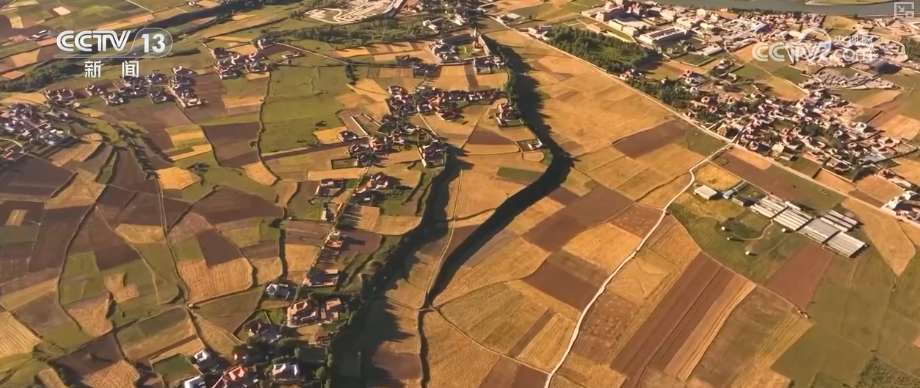
农业农村部:去年全国粮食产量首次突破1.4万亿斤 比2020年增产740亿斤
Qi Huo Ri Bao· 2025-09-16 05:47
Group 1 - The core achievement of China's agricultural development during the "14th Five-Year Plan" is the significant increase in grain production, reaching over 1.4 trillion jin in 2022, an increase of 74 billion jin from 2020, ensuring food security for the population [1] - The success of poverty alleviation efforts is highlighted, with over 6 million individuals identified and assisted to eliminate the risk of returning to poverty, maintaining a stable employment scale of over 30 million for the formerly impoverished population [1] - Important progress in agricultural modernization is noted, with over 1 billion mu of high-standard farmland established and a mechanization rate exceeding 75% for crop farming [1] Group 2 - The construction of livable and workable beautiful villages has seen new achievements, with the revenue of large-scale agricultural processing enterprises reaching approximately 1.8 trillion yuan, and the average coverage rate of sanitary toilets in rural areas reaching about 76% [2] - Farmers' income levels have continued to rise, with rural residents' per capita disposable income reaching 23,119 yuan, and the urban-rural income ratio decreasing from 2.56:1 in 2020 to 2.34:1 [2] - Rural development vitality is being revitalized through deepening rural reforms, with over 2 million farmer cooperatives and nearly 4 million family farms cultivated, alongside over 1.1 million operational service entities [2]
2024年我国粮食产量首次突破1.4万亿斤 目前已累计建成高标准农田超过10亿亩
Xin Hua She· 2025-09-16 05:28
(文章来源:新华社) 新华财经北京9月16日电农业农村部部长韩俊9月16日在国新办举行的"高质量完成'十四五'规划"系列主 题新闻发布会上介绍,"十四五"时期我国粮食产量迈上新台阶,2024年首次突破1.4万亿斤,比2020年 增产740亿斤。"十四五"时期农业现代化取得重要进展。目前我国已累计建成高标准农田超过10亿亩, 农业科技进步贡献率达到63.2%。"十四五"期间我国农民收入保持较快增长,2024年农村居民人均可支 配收入达到23119元。 ...
非凡“十四五”丨“农业强国”建设,取得这些新进展!
Xin Hua She· 2025-09-16 05:12
Group 1 - The Ministry of Agriculture and Rural Affairs aims to build a strong agricultural nation during the "14th Five-Year Plan" period, focusing on rural revitalization and maintaining stable agricultural development [1] - Significant achievements in poverty alleviation include identifying and assisting over 6 million monitoring subjects, with stable employment for around 30 million people in recent years [3] - Agricultural modernization has made important progress, with over 1 billion mu of high-standard farmland established and a mechanization rate exceeding 75% for crop farming [6] Group 2 - The revenue of large-scale agricultural processing enterprises reached approximately 1.8 trillion yuan, indicating a notable improvement in rural living conditions [8] - The per capita disposable income of rural residents is projected to reach 23,119 yuan in 2024, with a decreasing income gap between urban and rural residents [10] - The vitality of rural development is being enhanced through the extension of land contracts and the establishment of over 2 million farmer cooperatives and 4 million family farms [12]
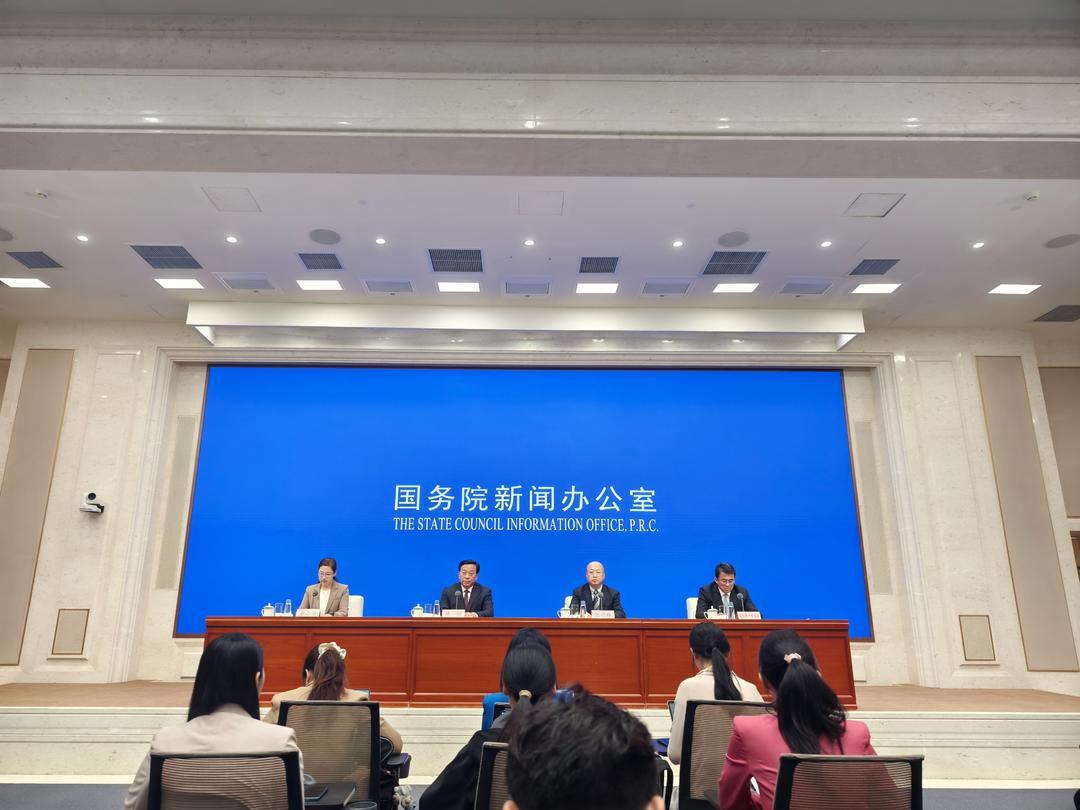
国新办举行新闻发布会 介绍“十四五”时期农业农村发展成就(文字实录)
2 1 Shi Ji Jing Ji Bao Dao· 2025-09-16 04:32
Core Viewpoint - The press conference highlighted the achievements of China's agricultural and rural development during the "14th Five-Year Plan" period, emphasizing food security, poverty alleviation, agricultural modernization, and rural revitalization as key areas of progress [2][3][4]. Group 1: Food Security - China's grain production reached a new high, surpassing 1.4 trillion jin in 2024, an increase of 74 billion jin compared to 2020, with per capita grain availability reaching 500 kg [2][3]. - The country has maintained a stable supply of various agricultural products, ensuring a diverse and rich diet for the population [2]. Group 2: Poverty Alleviation - The successful completion of the poverty alleviation campaign in 2020 has been followed by efforts to consolidate and expand these achievements, with over 6 million individuals identified for assistance to prevent a return to poverty [3][4]. - The income growth rate of farmers in poverty-stricken areas has outpaced the national average, with over 30 million people employed in various sectors [3]. Group 3: Agricultural Modernization - Significant advancements in agricultural modernization have been made, with over 100 million acres of high-standard farmland established and a mechanization rate exceeding 75% [4][5]. - The contribution rate of agricultural science and technology reached 63.2%, indicating a strong focus on modernizing agricultural practices [4]. Group 4: Rural Revitalization - The construction of livable and workable rural areas has progressed, with improvements in rural infrastructure and public services, including a 76% sanitation toilet coverage rate [4][5]. - The income of rural residents has seen rapid growth, with per capita disposable income reaching 23,119 yuan, and the urban-rural income gap narrowing from 2.56:1 in 2020 to 2.34:1 [5]. Group 5: Agricultural Reform and Development - The government has deepened rural reforms, extending land contracts for an additional 30 years and promoting the establishment of over 2 million farmer cooperatives [5]. - The agricultural social service system has been strengthened, with over 1.1 million operational service entities covering more than 2.29 billion acres [5]. Group 6: Agricultural Technology Innovation - The agricultural technology innovation system has been enhanced, with over 800 research institutions and 120,000 researchers contributing to advancements in agricultural practices [31][32]. - Key breakthroughs in agricultural technology have been achieved, including the development of high-yield crop varieties and advanced agricultural machinery [32][33]. Group 7: Food Safety and Quality - The national agricultural product quality safety monitoring rate has remained stable at over 97.5%, ensuring food safety for consumers [36][37]. - New regulations and monitoring systems have been implemented to enhance the safety and quality of agricultural products [36]. Group 8: Green Development - Efforts to promote green agricultural practices have led to a reduction in fertilizer and pesticide usage, with a 5% decrease in fertilizer application compared to 2020 [41][42]. - The recycling and utilization of agricultural waste have improved, with a significant increase in the rates of straw and manure recycling [42].
“十四五”时期我国农业农村发展解锁哪些新成就?发布会详解
Yang Shi Xin Wen· 2025-09-16 04:15
Core Insights - The Chinese government is committed to achieving high-quality agricultural development during the "14th Five-Year Plan" period, focusing on rural revitalization and ensuring food security for its 1.4 billion population [1][3]. Agricultural Production - Grain production is set to exceed 1.4 trillion jin (approximately 700 million tons) in 2024, an increase of 74 billion jin (37 million tons) compared to 2020, with per capita grain availability reaching 500 kg [3]. - The production of cotton, oil, sugar, fruits, vegetables, meat, eggs, milk, and aquatic products has been consistently increasing, leading to a more diverse food supply for consumers [3]. Agricultural Modernization - Over 100 million acres of high-standard farmland have been established, with agricultural technology contributing 63.2% to productivity, and the mechanization rate for crop farming exceeding 75% [3]. - The coverage rate of quality seeds for crops has surpassed 96%, indicating significant advancements in agricultural practices [3]. Poverty Alleviation and Income Growth - More than 6.9 million individuals have been identified and assisted to eliminate the risk of returning to poverty, with stable employment for over 30 million people in recent years [5]. - Rural residents' per capita disposable income is projected to reach 23,119 yuan in 2024, with the urban-rural income ratio decreasing from 2.56:1 in 2020 to 2.34:1 [5]. Rural Development and Infrastructure - The rural environment has improved significantly, with a 76% penetration rate of sanitary toilets and over 90% of administrative villages maintaining effective waste management [7]. - The total length of rural roads has exceeded 4.64 million kilometers, and the access rate of tap water in rural areas has reached 94% [7]. Agricultural Diversification - The development of modern livestock and aquaculture has seen significant growth, with total meat, egg, and milk production reaching 17.5 million tons in 2023, an 18.8% increase since 2020 [10]. - The total aquatic product output has reached 7.358 million tons in 2024, marking a 12.3% increase since 2020, maintaining China's position as the world's largest producer of aquatic products for 36 consecutive years [11]. Nutritional Improvement - The nutritional intake of urban and rural residents is approaching that of developed countries, with balanced consumption of protein, fats, and carbohydrates [11].
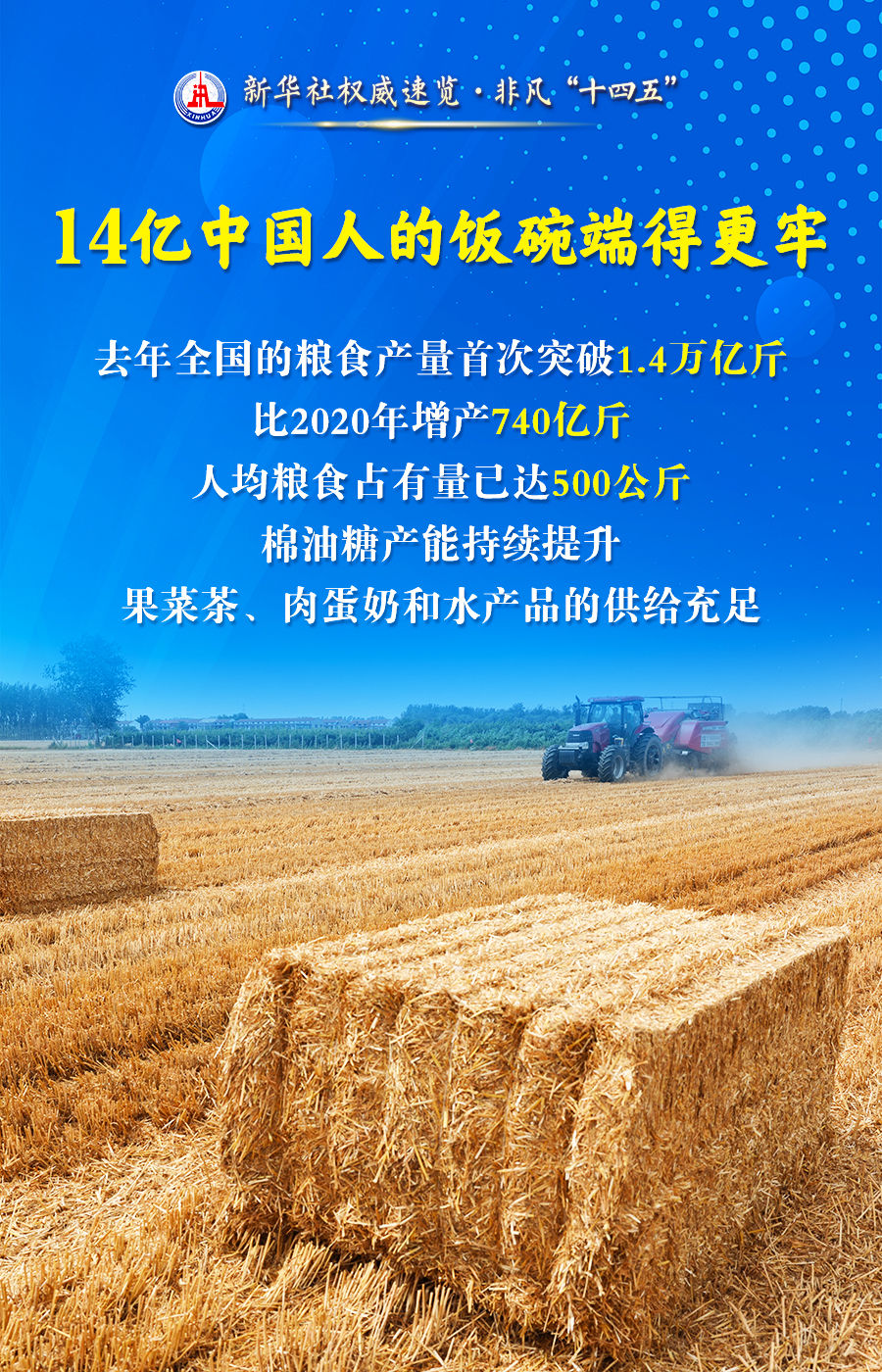
14亿中国人的饭碗端得更牢 我国人均粮食占有量达到500公斤
Da Zhong Ri Bao· 2025-09-16 03:09
Core Viewpoint - The press conference highlighted the achievements in agricultural and rural development during the "14th Five-Year Plan" period, emphasizing the stability and progress in these sectors, which have significantly supported the high-quality development of the overall economy and society [1]. Group 1: Food Security - China's grain production has reached a new level, with a record of over 1.4 trillion jin in 2022, an increase of 74 billion jin compared to 2020, ensuring basic self-sufficiency in grains and absolute safety in staple food [3]. - The per capita grain availability has reached 500 kg, with continuous improvements in the production capacity of cotton, oil, sugar, fruits, vegetables, meat, eggs, milk, and aquatic products [3]. Group 2: Poverty Alleviation - The country achieved its goal of eradicating poverty in 2020 and has since focused on consolidating and expanding the results of poverty alleviation as a fundamental task for rural revitalization [4]. - Over 6 million monitoring subjects have been identified and assisted to eliminate the risk of returning to poverty, with more than 30 million people from impoverished backgrounds maintaining stable employment [4]. Group 3: Agricultural Modernization - Significant progress has been made in agricultural modernization, with over 100 million acres of high-standard farmland established and a contribution rate of agricultural science and technology reaching 63.2% [5]. - The comprehensive mechanization rate for crop farming has exceeded 75%, and the coverage rate of quality seeds has surpassed 96% [5]. Group 4: Rural Development - The construction of livable and workable beautiful villages has seen new achievements, with the revenue of large-scale agricultural processing enterprises reaching approximately 1.8 trillion yuan [6]. - The average coverage rate of sanitary toilets in rural areas has reached about 76%, and public services in education, healthcare, and elderly care have been continuously improved [6]. Group 5: Income Growth - Rural residents' disposable income has seen rapid growth, reaching 23,119 yuan in 2022, with the income gap between urban and rural residents narrowing from 2.56:1 in 2020 to 2.34:1 [6]. Group 6: Rural Vitality - The country has deepened rural reforms, extending the second round of land contracts for another 30 years and promoting the management of rural homesteads and collective land [6]. - Over 2 million farmer cooperatives and more than 4 million family farms have been cultivated, with over 1.1 million operational service entities providing agricultural social services [6].
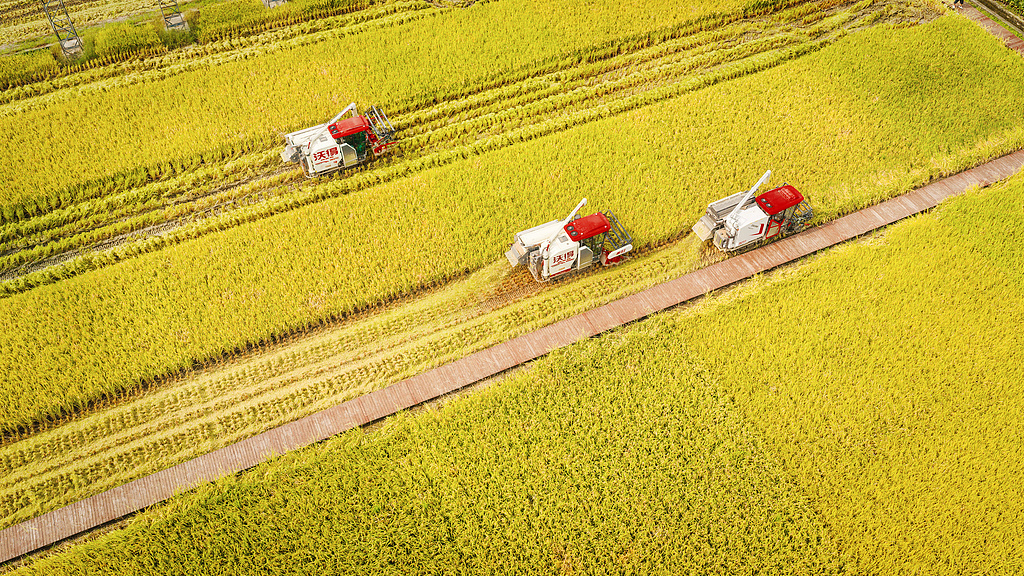
我国已累计建成高标准农田超过10亿亩
Bei Jing Shang Bao· 2025-09-16 02:32
北京商报讯(记者 和岳)9月16日,农业农村部部长韩俊在国新办举行的"高质量完成'十四五'规划"系 列主题新闻发布会上介绍,"十四五"时期农业现代化取得重要进展。目前,我国已累计建成高标准农田 超过10亿亩,农业科技进步贡献率达63.2%。 ...
新华社快讯:目前我国已累计建成高标准农田超过10亿亩
Xin Hua She· 2025-09-16 02:29
新华社快讯:农业农村部部长韩俊9月16日在国新办举行的"高质量完成'十四五'规划"系列主题新 闻发布会上介绍,"十四五"时期农业现代化取得重要进展。目前我国已累计建成高标准农田超过10亿 亩,农业科技进步贡献率达到63.2%。 ...
我国累计建成高标准农田超10亿亩
Yang Shi Wang· 2025-09-16 02:24
农村发展活力不断焕发。进一步深化农村改革,第二轮土地承包到期后再延长30年整省试点扎实开 展,农村宅基地规范管理、集体建设用地和集体产权制度改革等稳步推进。新型农业经营主体高质量发 展,累计培育农民合作社超过200万家、家庭农场近400万个,大力发展农业社会化服务,110多万个经 营性主体年服务面积超过22.9亿亩次。 发布会上介绍,"十四五"时期我国农业现代化取得重要进展。坚持用现代设施装备武装农业,用现 代科学技术服务农业,推动现代化水平不断提高。累计建成高标准农田超过10亿亩,农业科技进步贡献 率达到63.2%,农作物耕种收综合机械化率超过75%,农作物良种覆盖率超过96%。 央视网消息:国务院新闻办9月16日上午举行新闻发布会,农业农村部负责人介绍了"十四五"时期 农业农村高质量发展有关情况。 ...