
稳定币

Search documents
大行评级丨美银:上调Visa评级至“买入” 风险报酬比已转趋具吸引力
Ge Long Hui· 2025-12-12 06:49
Core Viewpoint - Bank of America upgraded Visa's rating from "Neutral" to "Buy" and raised the target price to $382, believing that concerns over stablecoin impacts and regulatory risks are overstated, as stablecoins could actually strengthen Visa's position, particularly in the cross-border B2B payment sector [1] Group 1 - Visa has facilitated over $140 billion in cryptocurrency-related transactions, which Bank of America attributes to the company's efforts in establishing new payment infrastructure [1] - The forward P/E ratio for Visa is approximately 22 times, which is about 113% of the S&P 500 valuation and close to a ten-year low, indicating that the market is undervaluing a strong company [1] - Bank of America describes the current risk-reward ratio for Visa as increasingly attractive, supported by its valuation and robust profitability [1]

OSL集团(00863)发布美元稳定币USDGO,强化全球合规支付网络
智通财经网· 2025-12-12 03:29
Core Viewpoint - OSL Group has announced the launch of USDGO, a USD-pegged stablecoin, which aims to enhance its global compliance payment network and provide efficient payment solutions for various sectors [1][2]. Group 1: USDGO Overview - USDGO is designed to be a fully regulated stablecoin, pegged 1:1 to the US dollar, and will undergo strict third-party audits to comply with anti-money laundering (AML) and know your customer (KYC) standards [1][3]. - The stablecoin is set to be launched in Q1 2026 and will serve as a reliable medium for cross-border payments and settlements in e-commerce, gaming, and trade [1]. Group 2: Strategic Partnerships - Anchorage Digital Bank, the first federally regulated crypto bank in the US, will issue USDGO, bringing US banking-level regulatory oversight to a global stablecoin [2]. - OSL Group will handle the branding and distribution of USDGO, ensuring compliance with regulatory standards in its operations [3]. Group 3: Technological Aspects - USDGO will adopt a multi-chain strategy to maximize accessibility and interoperability across major blockchain ecosystems, starting with deployment on the Solana blockchain [2].
OSL集团(863.HK)发布美元稳定币USDGO,强化全球合规支付网络
Ge Long Hui· 2025-12-11 23:10
Core Viewpoint - The launch of USDGO, a USD-backed stablecoin by OSL Group and Anchorage Digital, aims to enhance global compliance in payment networks and provide efficient payment solutions for various sectors, including e-commerce and gaming [1][2]. Group 1: USDGO Overview - USDGO is set to officially launch in the first quarter of 2026 and will be fully regulated, pegged 1:1 to the US dollar, and subject to strict third-party audits [1][3]. - The stablecoin will adhere to the highest standards of anti-money laundering (AML) and know your customer (KYC) requirements [1]. Group 2: Strategic Importance - The introduction of USDGO reflects OSL Group's commitment to strategically upgrade its payment segment while maintaining global regulatory and security standards [1]. - USDGO is designed to serve as a bridge between fiat and digital currencies, enhancing transaction efficiency and liquidity management for partners [1]. Group 3: Technological and Operational Aspects - Anchorage Digital will issue USDGO, bringing US banking-level regulatory oversight to a global stablecoin, which is crucial for institutional use in real-world payments [2]. - USDGO will adopt a multi-chain strategy to maximize accessibility and interoperability across major blockchain ecosystems, starting with deployment on the Solana blockchain [2].
Visa Stock Scores Bull Note on Stablecoin Prospects
Schaeffers Investment Research· 2025-12-11 15:46
Core Viewpoint - Visa Inc is experiencing a significant stock increase following an upgrade to "buy" from "neutral" by BofA Global Research, highlighting its attractive return potential and manageable risks [1] Group 1: Stock Performance - Visa's stock is up 3.2%, trading at $335.98, marking its best day since April [1] - The stock is poised to end a three-day losing streak, with the largest single-day percentage gain since April 22 [2] - The 12-month consensus target price for Visa is $397.29, representing an 18.6% premium over current levels [2] Group 2: Analyst Sentiment - A majority of analysts, 29 out of 36, have a "buy" or better rating on Visa, indicating strong bullish sentiment [2] - The company has maintained a slim 6% lead for 2025 projections [2] Group 3: Options Activity - There is notable bullish activity in options trading, with 4,386 calls exchanged, which is double the typical volume, compared to 1,527 puts [3] - The most popular options contracts include the weekly 12/26 330-strike call and the January 16, 2026 350-strike call [3] Group 4: Volatility and Options Strategy - The current Schaeffer's Volatility Index (SVI) for Visa is 20%, indicating that options are affordably priced compared to historical levels [4] - The Schaeffer's Volatility Scorecard (SVS) is at 6 out of 100, suggesting that Visa has consistently realized lower volatility than what its options pricing indicates, making a premium-selling strategy potentially advantageous for options traders [4]


4大关键词,奏响2025 Cryoto四季歌
3 6 Ke· 2025-12-11 09:38
Core Insights - The year 2025 marked a significant period for the cryptocurrency industry, characterized by both opportunities and challenges, influenced heavily by political events and regulatory developments [1][2]. Group 1: Trump Effect and Market Dynamics - The inauguration of Trump as President of the United States in January 2025 reignited bullish sentiment in the crypto market, with Bitcoin (BTC) prices approaching $100,000 [3][5]. - The launch of the "Trump official Meme coin" saw its market cap surge from approximately $4 billion to over $80 billion, creating substantial wealth for many investors [4]. - Trump's influence on crypto regulation became evident as he appointed pro-crypto officials and pushed for clearer regulatory frameworks, including the establishment of a Bitcoin strategic reserve [6][10]. Group 2: Market Volatility and Economic Impact - The onset of a global trade war initiated by Trump in April led to significant market corrections, with BTC dropping to around $77,000 and Ethereum (ETH) hitting a low of $1,540 [10]. - The total market capitalization of cryptocurrencies fell to $2.6 trillion, reflecting a daily decline of over 9% [10]. - Despite the downturn, ETH began to recover, eventually surpassing its previous all-time high of $4,800, driven by the emergence of ETH treasury companies [11][14]. Group 3: Innovations in Financial Products - The second quarter saw the rise of stock tokenization platforms, with major exchanges like Kraken and Bybit launching services for trading tokenized stocks [17][20]. - The introduction of stablecoins gained traction, with companies like Circle going public, further integrating stablecoins into mainstream finance [10][17]. - The emergence of decentralized exchanges (DEXs) and prediction markets like Polymarket and Kalshi gained prominence, with valuations reaching $110 billion and $120-150 billion, respectively [24][25]. Group 4: Market Corrections and Future Outlook - A significant market crash occurred on October 11, 2025, with BTC dropping to $101,516 and ETH to $3,400, resulting in estimated losses of $30-40 billion [22][23]. - The aftermath of the crash led to a slow recovery in the market, with a shift in focus towards prediction markets as a new trading venue [24][25]. - The ongoing evolution of the cryptocurrency landscape continues to be shaped by regulatory developments and traditional financial market dynamics, indicating a complex future ahead for investors [25].
专访管涛:美国政府经济贸易政策正逐渐动摇美元本位国际货币体系,利多因素下人民币汇率有可能破7
Mei Ri Jing Ji Xin Wen· 2025-12-11 09:32
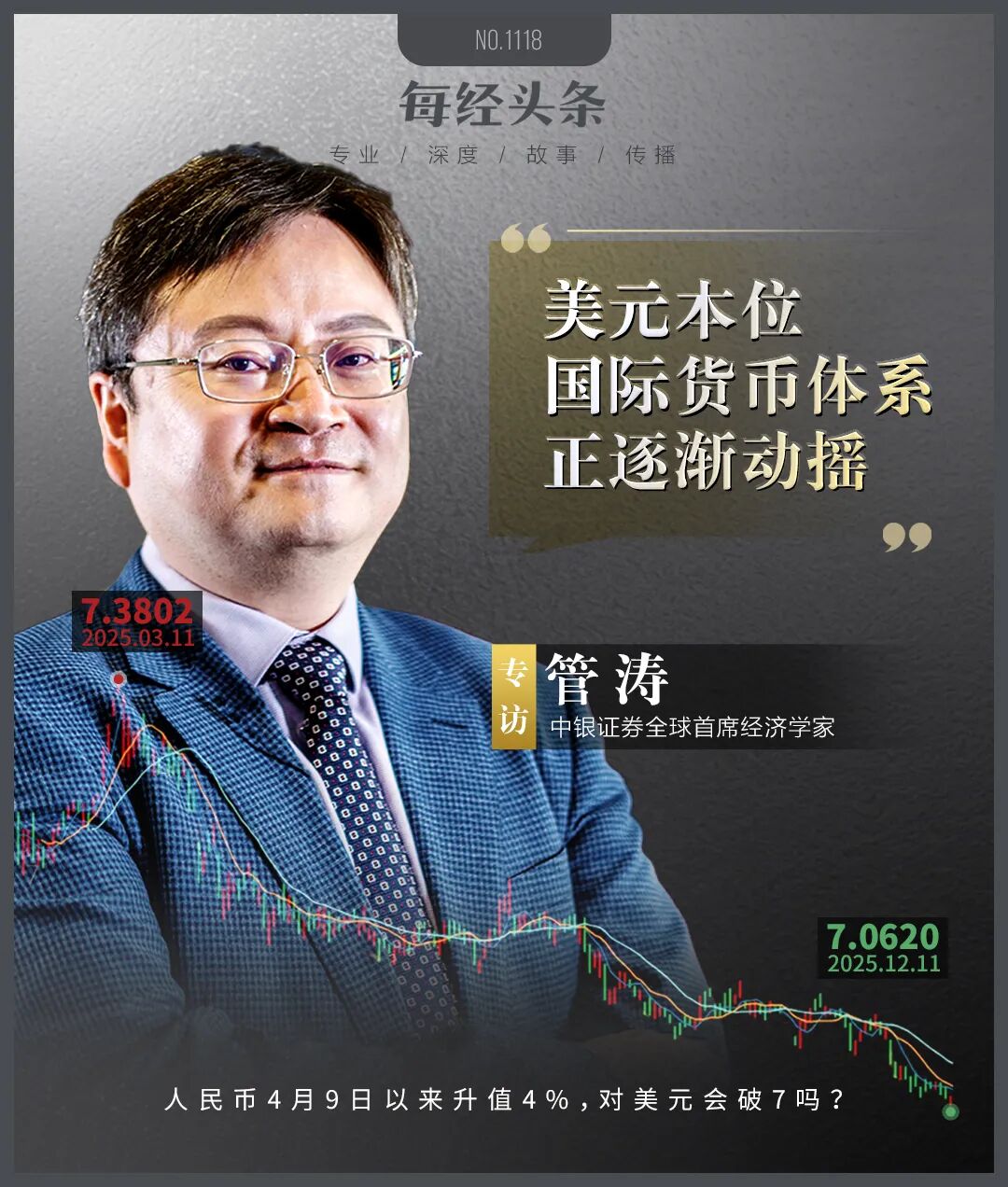
Core Viewpoint - The Federal Reserve has lowered the federal funds rate target range by 25 basis points to 3.5% to 3.75%, marking the third rate cut of the year, which has contributed to the appreciation of the Renminbi against the US dollar [2] Group 1: Renminbi Exchange Rate Dynamics - The Renminbi has appreciated significantly against the US dollar, reaching a peak of 7.0550, with an overall increase of 4.02% since April 9 of this year [2] - The Renminbi's appreciation this year has exceeded 3%, achieving the highest annual increase in nearly five years [2] - The cross-border Renminbi index has shown a consistent upward trend since 2017, indicating an increasing level of Renminbi internationalization [2] Group 2: Factors Influencing Renminbi Appreciation - Three main factors have driven the recent acceleration in Renminbi appreciation: the anticipation of Fed rate cuts, a positive dialogue between US and Chinese leaders, and market speculation regarding the Fed chairmanship [4] - The Fed's rate cuts are expected to weaken the US dollar further, especially if the US economy shows signs of recession [7] - The stability of US-China economic relations and China's economic growth strategies are also seen as supportive of the Renminbi's strength [8] Group 3: Challenges and Uncertainties - Despite the positive outlook, the Renminbi faces uncertainties due to domestic economic challenges and external trade dynamics [9] - The WTO has warned that US tariff policies could severely disrupt the international trade system, potentially impacting China's export-driven growth [12] - The dollar index may not weaken as anticipated, as the Fed's decisions will still be influenced by US economic data [13] Group 4: Future Outlook for Renminbi Internationalization - The current geopolitical landscape presents an opportunity for non-US currencies, including the Renminbi, to expand their international usage [19] - The Chinese government aims to enhance domestic economic resilience and governance, which will support the Renminbi's internationalization efforts [20] - Successful implementation of key reforms outlined in the 14th Five-Year Plan is crucial for the long-term stability and internationalization of the Renminbi [20]
意大利Bancomat计划推出欧元锚定稳定币 助力提升数字支付规模
Jin Rong Jie· 2025-12-11 09:25
Group 1 - Bancomat, an Italian payment network operator, is collaborating with major lending institutions and the Ministry of Economy and Finance to launch a euro-pegged stablecoin, which will be open to other issuers in the future [1][2] - The stablecoin is designed to maintain value stability by being anchored to traditional fiat currencies, primarily for transferring funds in cryptocurrency form [1] - Bancomat plans to launch the stablecoin in 2026 and aims for widespread adoption across Italy and other European regulated entities [1] Group 2 - The European Banking Authority reported that the global stablecoin market has grown from nearly zero in 2014 to an estimated $300 billion by 2025, urging lending institutions to manage risks associated with stablecoin interactions [2] - As of now, 27 stablecoins have been registered under the EU's Markets in Crypto-Assets Regulation (MiCA), issued by 17 institutions across 10 European countries [2] - The market capitalization of euro-pegged stablecoins has doubled to approximately $500 million since the MiCA rules took effect in mid-2024, with monthly transaction volumes surging tenfold to $3.83 billion [2] Group 3 - To counter the dominance of the US in the global payments sector, ten European banks have formed a company to launch a euro-pegged stablecoin in the second half of 2026 [3] - Société Générale became the first European bank to issue a euro-pegged stablecoin, EUR CoinVertible, under MiCA regulations, although its circulation is currently limited to €64.7 million [3]
美元反击稳定币
3 6 Ke· 2025-12-11 03:46
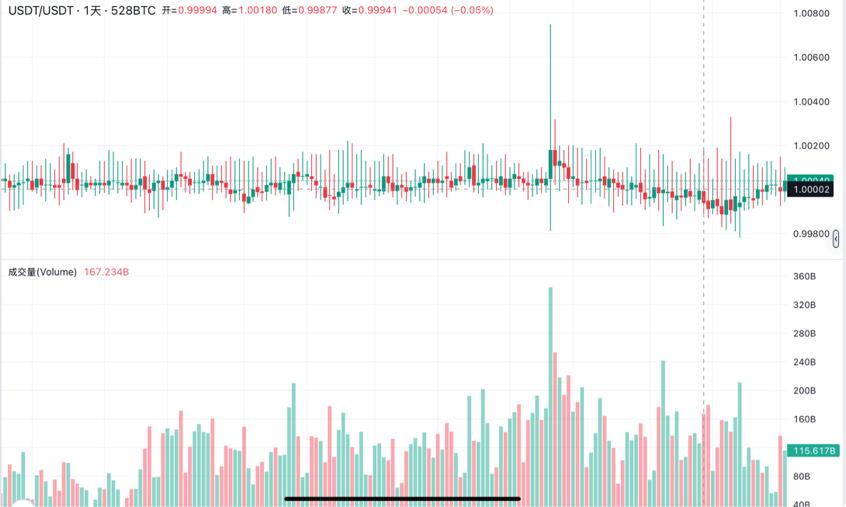
Core Viewpoint - The stability of stablecoins, particularly Tether (USDT), is under scrutiny as S&P downgraded its rating from "4 (restricted)" to "5 (weak)", the lowest level in its rating system, due to increased high-risk asset exposure and ongoing information disclosure gaps [1][2][6]. Group 1: Rating Downgrade and Market Impact - S&P's downgrade of Tether's rating highlights rising high-risk assets in its reserves, including Bitcoin and gold, which could undermine USDT's asset coverage during market volatility [3][4][6]. - Despite the downgrade, USDT maintained a stable price around $1, indicating resilience in market confidence, with a total market capitalization of $185.3 billion and nearly 60% of the stablecoin market share [8][11]. - The stable price of USDT reflects a complex reality in the cryptocurrency market, where its status as a "hard currency" remains intact despite the downgrade [11][12]. Group 2: Regulatory Environment and Risks - The People's Bank of China defined stablecoins as a form of virtual currency, marking related activities as illegal financial operations, which could impact USDT's operations in China [2][18]. - The regulatory stance is influenced by concerns over money laundering and the potential for stablecoins to undermine the status of national currencies [18][19]. - Future developments may see a shift towards digital yuan as the primary focus in the domestic digital currency landscape, potentially sidelining stablecoins [19]. Group 3: Asset Composition and Transparency Issues - Tether's reserves include a significant portion of high-risk assets, with Bitcoin making up 5.6% of its total USDT circulation, raising concerns about liquidity during market stress [3][5][12]. - The lack of transparency in Tether's reserve assets has been a long-standing concern, with limited disclosure on the quality and structure of its holdings compared to competitors like USDC [16][17]. - Tether's asset composition, which includes a substantial amount of commercial paper and other high-risk securities, contrasts sharply with USDC's more secure asset base, leading to increased scrutiny from rating agencies [16][17].
U.S. Bancorp (NYSE:USB) Conference Transcript
2025-12-10 15:22
Summary of U.S. Bancorp Conference Call (December 10, 2025) Company Overview - **Company**: U.S. Bancorp (NYSE: USB) - **Key Speakers**: Gunjan Kedia (President and CEO), John Stern (CFO) Strategic Priorities - **Focus Areas**: - Expenses management - Organic growth - Payments transformation - **Progress**: - Expenses have remained flat for eight quarters, contributing positively to operating leverage and efficiency ratios [3][4] - Achieved mid-single-digit fee growth targets, with strong performance in fees [3][4] - Mixed results in net interest income (NII) with a focus on consumer and operational deposits [3][4] Economic Insights - **Consumer Trends**: - Strong delinquencies and healthy spending observed, despite bleak sentiment [6][7] - **Corporate Sentiment**: - Improved sentiment compared to earlier in the year, with cautious optimism in M&A-driven loan appetite [6][7] - **Impact of Tariffs**: - Clients report tariffs are not significantly impacting their operations [8] Financial Performance - **Fourth Quarter Expectations**: - NII expected to remain stable with potential upside; fees projected around $3 billion [10][11] - Continued growth in capital markets and impact finance areas [10][11] - **Fee Income**: - Strong growth in trust and investment fees, capital markets, and payments expected to drive revenue [12][14] - Consumer fees anticipated to be a smaller part of revenue due to regulatory pressures [15] Payments Business - **Strategic Importance**: - Payments transformation is a key focus, with initiatives in embedded payments and differentiated distribution [17][18] - **Growth Expectations**: - Anticipated steady growth in the payments sector, with inflection points expected in 2027 and beyond [22][23] Loan Growth and Balance Sheet - **Loan Demand**: - Strong growth in commercial and card loans; slight growth expected in commercial real estate [25][26] - **Balance Sheet Repositioning**: - Focus on operational deposits and strategic portfolio sales to enhance NII growth [31][33] - **Net Interest Margin Target**: - Aiming for a 3% net interest margin by 2027, with ongoing adjustments to the balance sheet [31][33] Competitive Environment - **Deposit Competition**: - Competitive landscape remains challenging, with a focus on unique value propositions to attract deposits [36][38] - **Investment in Technology**: - Maintaining a $2.5 billion investment budget for technology to enhance operational efficiency [40][42] Cryptocurrency and Digital Assets - **Emerging Opportunities**: - Establishing a unit for Digital Assets and Money Movement to explore cryptocurrency and tokenization [46][47] - **Client Interest**: - Growing curiosity among clients regarding cryptocurrency, with ongoing pilots and experiments [48][50] Credit Quality - **Delinquency Trends**: - Credit quality remains stable, with expected seasonal patterns in consumer credit [52] - **NDFI Monitoring**: - No significant stress observed in C&I portfolios; strong credit underwriting practices in place [52][54] Capital Management - **CET1 Ratio**: - Current CET1 ratio at 10.9%, with a target of approximately 10% [54][56] - **Buyback Strategy**: - Plans to increase buybacks as capital levels improve [56] M&A Strategy - **Acquisition Focus**: - Interest in bolt-on acquisitions primarily in payments and institutional sectors [58][59] Medium-Term Targets - **Performance Goals**: - Aiming for high teens return on tangible common equity (ROTCE) and efficiency ratio in the high 50s [60][61] - **Execution Confidence**: - Confidence in achieving targets through consistent execution of strategic priorities [62]

一年财富暴涨5倍,特朗普长子靠的不是房地产
3 6 Ke· 2025-12-10 10:27
Core Insights - Donald Trump Jr.'s wealth has significantly increased, primarily due to investments in cryptocurrency, with his net worth rising from approximately $50 million to around $300 million in one year, largely attributed to the success of World Liberty Financial [1][2]. Cryptocurrency Investments - World Liberty Financial has sold tokens worth approximately $1.4 billion, contributing to the Trump family's wealth, with Donald Trump Jr. estimated to have received around $80 million from this venture [2]. - The launch of a stablecoin by World Liberty Financial has added an estimated $19 million to Donald Trump Jr.'s wealth, alongside an additional $34 million in unliquidated World Liberty tokens [2]. - His stake in American Bitcoin, a cryptocurrency mining company he co-founded, could potentially add another $8 million to his wealth, although the exact percentage of his holdings remains unclear [3]. Non-Cryptocurrency Ventures - Donald Trump Jr. has also seen success in non-cryptocurrency investments, including a significant increase in wealth from shares in New America Acquisition I Corp, which recently went public [4]. - He holds stakes in several politically connected companies, valued at approximately $10 million, including Dominari Holdings and Trump Media and Technology Group [4]. - Real estate investments have appreciated, with properties in New York and Florida valued at around $12 million, and new agreements in the UAE, Saudi Arabia, and Vietnam expected to generate additional income [5]. Future Prospects - As the Executive Vice President of the Trump Organization, Donald Trump Jr. has considerable potential for further financial growth, especially with his recent partnership with 1789 Capital, which manages $1 billion in assets [6]. - The family's foray into cryptocurrency was driven by necessity after being shut out of traditional financial avenues, indicating a strategic pivot towards digital assets [6].