
乡愁

Search documents
味蕾深处的乡愁
Xin Lang Cai Jing· 2026-01-31 20:31
Core Viewpoint - The article highlights the publication of a book titled "Northeast Jiangxi: The Time of Taste Buds," which explores the cultural and historical significance of local cuisine in Northeast Jiangxi, particularly focusing on the author's hometown and its culinary traditions [1][2]. Group 1: Cultural Significance of Cuisine - The author delves into nearly 40 local dishes, revealing the poetic and aesthetic landscapes of rural Northeast Jiangxi [1]. - The book goes beyond mere food descriptions, aiming to uncover the cultural connotations and historical roots embedded in these culinary practices [1][2]. - The narrative reflects the daily lives and spirit of local residents, emphasizing their labor and creativity in the context of their environment [1]. Group 2: Personal Connection and Background - The author draws from personal experiences of agricultural labor, which enriches the authenticity and vividness of the writing [2]. - The concept of "hometown" serves as a spiritual home for the author, similar to other renowned writers who depict their own roots in their works [2]. - The author has consistently focused on the local customs and culture of the Jiangxi region in previous works, showcasing a deep attachment to his homeland [2]. Group 3: Emotional Resonance and Community - The book evokes nostalgia and warmth, reminding readers of shared experiences and connections to their roots [3]. - The author’s journey and achievements are celebrated as a source of pride for the local community, reflecting a collective identity [3]. - The narrative captures the enduring bond between the author and his hometown, highlighting the significance of shared memories and aspirations among the local populace [3].
二舅家的刨猪汤
Xin Lang Cai Jing· 2026-01-29 18:46
Core Viewpoint - The article highlights the cultural significance of the traditional practice of eating "刨猪汤" (braised pig soup) in rural Chongqing, emphasizing its role in family gatherings and the preservation of local customs during the winter solstice [1][2]. Group 1: Cultural Significance - The act of eating "刨猪汤" is described as a warm and meaningful tradition that brings families together, reflecting deep-rooted customs and the essence of rural life in Chongqing [1]. - The gathering for this meal is portrayed as more than just a feast; it symbolizes familial bonds, shared memories, and the hope for a prosperous future [2]. Group 2: Culinary Experience - The article details the variety of dishes served during the meal, including red-braised pig blood, radish bone soup, and spicy stir-fried pork, showcasing the rich flavors and culinary heritage of the region [2]. - The meal is characterized by its vibrant and aromatic dishes, which not only satisfy the palate but also evoke a sense of nostalgia and connection to one's roots [2].
他长成了故乡的一棵植物
Xin Lang Cai Jing· 2026-01-29 16:40
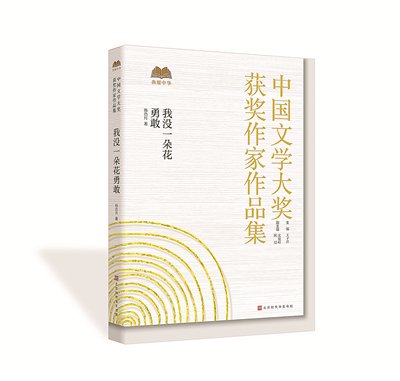
转自:贵州日报 读这本书,它会洗掉奔走在城市里的你一身的疲累和风霜,使你重回自我,认识自我。回到故乡,重走 故乡,呼吸故乡清新的空气,感受故乡的气息,一种感恩、回归、向往、愉悦的情感会紧紧包裹了你, 使你血脉偾张,心情激荡,依然是那个曾经的少年。 胡忠伟 作为"北漂"人,韩浩月离开故乡多年,站在异乡的土地上,韩浩月时时回望故乡,在远处审视、谛听、 观察着故乡。贯穿其作品的一个鲜明主题,那就是对乡愁的持续而深入地书写。这也是他的新书《我没 有一朵花勇敢》的显著特点。 (《他长成了故乡的一棵植物》由贵阳日报为您提供,转载请注明来源,未经书面授权许可,不得转载 或镜像。) 故乡作为一个作家的精神原乡与成长出发地,有着无可比拟的经验优先性与情感聚焦性。所以,韩浩月 之于故乡,就有了更为用力的表达。关于乡愁,作者在不同的年龄段有过不同的认识。他十分认同一个 观点,所谓乡愁就是你离开某个地方后会不停地想念它。在北京居住20多年后,他反而觉得故乡到处都 是风景,所以常常有事没事总想往回跑。这种对故乡的思念,对乡愁的感同身受,在本书四个分辑中的 每一篇文章中,都能找到对应,找到契合点。作者对故乡的书写,其实就是在后工业时代, ...

夜读|奔赴同一场团圆
Xin Lang Cai Jing· 2026-01-28 13:38
年味的内核,或许既不是红纸包裹的压岁钱,也不是爆竹炸响的喧嚣,而是镌刻在生命基因里,对归乡 与团圆的永恒追寻。 儿时的年,每一处细节都在岁月里绽放光芒。灶台上滋滋冒油的肥肉,箱底被摩挲得发皱的新衣,还有 梦里沉甸甸的压岁钱……这些细碎美好,如同散落的珍珠,串起记忆里最浓郁的年味画卷。 然而,父亲离世后,过年成了我心头难以卸下的重负。母亲固执地守着老屋,儿子抗拒冷清的老家,我 只能年复一年,在通往空山老屋的积雪山路上踽踽独行。 儿子兴奋地把蓝雀关进用铁丝灯笼改制的鸟笼,还挂上丰盛的食物,将笼子高高悬在屋檐下。笼中的蓝 雀发出凄厉的鸣叫,那声音像是一把利刃,划破空气。令人震撼的一幕上演了:五六只蓝雀仿佛收到了 紧急求救信号,围着鸟笼疯狂地盘旋、猛烈地撞击!尖锐的嘶鸣刺破小院的宁静,鸟笼在撞击下剧烈摇 晃,仿佛随时都会散架。 母亲闻声赶来,眼神中满是不容置疑的严肃,命令我立刻放生。当蓝雀重获自由的那一刻,鸟群欢鸣着 簇拥在周围,随即一起振翅冲向天际。只留下儿子委屈的哭声,在空旷的院落里久久回荡,诉说着不解 与失落。 十几年后的一天,我偶然刷到儿子的朋友圈。他救下了一只奄奄一息的灰喜鹊雏鸟,和同学接力照顾了 一天一夜 ...
郫县豆瓣的乡愁
Xin Lang Cai Jing· 2026-01-26 21:05
Core Viewpoint - The article emphasizes the cultural significance of "Pixian Douban" as a symbol of nostalgia for Sichuan people living away from home, highlighting its essential role in Sichuan cuisine and its emotional connection to home-cooked meals [1][2]. Group 1: Cultural Significance - "Pixian Douban" is described as the "soul of Sichuan cuisine," essential for achieving the unique flavors that characterize the region's dishes [1]. - The phrase "eating in Sichuan, tasting in Chengdu, and the soul in Pixian" reflects the deep-rooted culinary traditions and the importance of local ingredients in Sichuan cooking [1]. Group 2: Culinary Experience - The article illustrates the vibrant street food culture in Pixian District, where numerous small restaurants serve home-style dishes that evoke a sense of community and comfort [1][2]. - The emotional connection to food is highlighted through personal anecdotes, such as a student abroad missing the taste of home-cooked meals made with "Pixian Douban" [2]. Group 3: Consumer Demographics - The primary consumers of these street food establishments are young people, particularly students and young women, indicating a trend towards casual dining experiences among this demographic [2]. - The popularity of these small eateries is attributed to their ability to create a lively atmosphere where people gather to enjoy food and socialize [2].
腊八粥里的乡愁
Xin Lang Cai Jing· 2026-01-25 19:17
这些步骤,她做了几十年,每个动作都带着一种仪式般的虔诚。我曾问她为何如此不嫌麻烦,超市里就 有配好的八宝米。母亲只是笑笑:"咱老百姓过日子,要清楚每种食材的脾气,得亲手挑过、摸过,它 们才会在锅里和谐相处。" 我记得那些清晨,厨房被氤氲的蒸汽填满。母亲将食材依次入锅,红豆最先,因为它最难软烂;糯米稍 晚,要保持一定的口感;红枣、桂圆最后,免得煮得没了形。火候的掌控是母亲的独门秘方。母亲先用 大火将粥煮沸,再转文火慢炖,母亲站在灶台前,手持长勺,一圈一圈缓缓搅动。锅里的粥从清汤寡水 逐渐变得浓稠,各种食材的颜色交融在一起,形成一种温暖的琥珀色。 (来源:沈阳晚报) 转自:沈阳晚报 □杨锐 工位上的指尖还沾着窗外飘来的湿冷,同事随口一句"今天腊八,食堂煮了腊八粥",瞬间勾得我心尖发 颤。餐盒里的粥黏糯黏稠,红豆、薏米、桂圆的颗粒清晰可见,可汤匙舀起时,却总觉得少了些什么。 记忆里的腊八,总以天蒙蒙亮时的星光为序章。母亲在凌晨四点就悄悄起身,她轻手轻脚,怕吵醒还在 梦中的我们,但厨房里细微的动静,总会透过门缝钻进我的耳朵,成为节日的第一声问候。 米缸掀开时低沉的摩擦声,是序曲的第一个音符。母亲会先取出前一夜已经浸泡 ...
儿时的腊八粥
Xin Lang Cai Jing· 2026-01-23 16:48
Core Viewpoint - The article reflects on the cultural significance and nostalgic value of "Laba Congee," a traditional dish associated with the Laba Festival, marking the beginning of the Chinese New Year celebrations. It emphasizes the emotional connections and memories tied to the preparation and consumption of this dish, highlighting its role in family and community bonding. Group 1: Cultural Significance - Laba is considered the first important festival before the Spring Festival, with the saying "after Laba, it's New Year" [1] - Families prepare Laba Congee using a mix of grains, red dates, peanuts, and other ingredients, creating a festive atmosphere in the village [2] - The story of Laba Congee's origin, linked to Emperor Zhu Yuanzhang, adds historical depth to its cultural importance [2] Group 2: Personal and Emotional Connections - The preparation of Laba Congee involves family participation, with children eagerly helping and waiting for the dish to be ready [3] - The taste of Laba Congee is associated with childhood memories and emotional ties to family and community, transcending mere food [3] - The article expresses a longing for the past, where Laba Congee symbolizes not just a meal but a connection to roots, family, and simpler times [3]
城市文旅为何要撩动乡愁
He Nan Ri Bao· 2026-01-23 06:31
Core Viewpoint - The event of inviting people to participate in the traditional pig soup preparation has transformed from a local plea into a nationwide emotional celebration, highlighting the deep-rooted nostalgia and community spirit among participants [1][3]. Group 1: Community Engagement - Over 2,000 people attended the pig soup event, with more than 100,000 online viewers, showcasing a strong community response [1]. - Participants brought their own tools and collaborated without hesitation, reflecting a genuine willingness to help and connect with strangers [1]. - The event illustrates how traditional customs can evoke emotional resonance across different regions, emphasizing the importance of interpersonal relationships in contemporary society [1]. Group 2: Cultural and Tourism Impact - Local authorities effectively leveraged the event's popularity by promoting local tourism resources and maintaining traffic order, which contributed to a cultural and tourism synergy [2]. - The integration of local specialties from surrounding areas into the event created a broader cultural experience, enhancing the overall impact of the celebration [2]. - The event serves as a reminder that the essence of nostalgia and festive spirit is often found in local interactions and traditions rather than distant attractions [2]. Group 3: Emotional and Cultural Significance - The pig soup gathering represents a dual pursuit of emotional needs and urban warmth, emphasizing the importance of genuine emotional connections and cultural heritage [3]. - The success of the event is attributed to respecting real emotions, maintaining cultural roots, and responding to community needs, which fosters a warm and touching atmosphere during festive occasions [3].
年货上线,山亭大集已调至“春节档”
Qi Lu Wan Bao· 2026-01-22 23:22
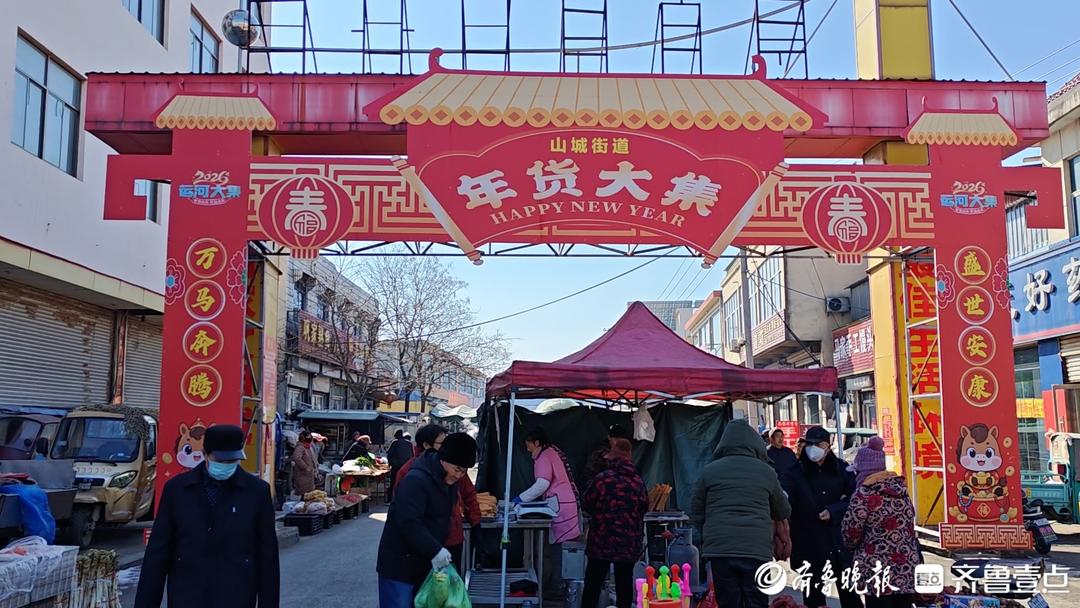
Core Viewpoint - The article highlights the vibrant atmosphere and cultural significance of the Shanting Rural Market in Zaozhuang, which attracts thousands of visitors and serves as a cultural landmark, blending traditional practices with modern influences [1][11]. Group 1: Market Dynamics - The Shanting Rural Market, held on specific lunar calendar dates, spans over 50 acres with more than 400 stalls, attracting an average of over 10,000 visitors daily and nearly 30,000 during peak times [1]. - The market has evolved from a small riverside trading spot to a well-organized cultural hub, serving not only local villages but also drawing visitors from nearby cities like Jining and Linyi [1][11]. Group 2: Traditional Crafts and Vendors - Local vendors, such as Qin Jingli and Wang Yuyan, maintain traditional methods in their products, like the "Old Locust Tree" sesame oil, which has been made using ancient techniques for over a century [3]. - Blacksmith Liang Xuexian continues a family tradition of over a hundred years, producing essential farming tools and kitchenware, indicating the enduring demand for traditional craftsmanship [5]. Group 3: Cultural Significance - The market serves as a platform for cultural expression, featuring performances of intangible cultural heritage such as clay sculpture and traditional arts, enhancing community engagement [7]. - Local authorities have invested over 3.2 million yuan in upgrading the market's infrastructure, including improved facilities and safety measures, to preserve its traditional charm while enhancing visitor experience [11].
雪漫武陵染乡愁
Xin Lang Cai Jing· 2026-01-22 18:09
Core Viewpoint - The first snowfall of 2026 in the Wuling Mountains of southeastern Chongqing is depicted as a beautiful and nostalgic event, symbolizing both the natural beauty of the region and the warmth of homecoming during the New Year celebrations [1][5]. Group 1: Natural Beauty and Environment - The snowfall transforms the landscape into a serene winter wonderland, with snow-covered peaks and a quiet, magical atmosphere [1][2]. - The forest, blanketed in snow, is described as a vital ecosystem, nurturing valuable medicinal herbs and flowing streams beneath the ice [2][3]. Group 2: Cultural Significance and Community Life - The snowfall enhances the festive atmosphere in local villages, where traditional activities such as pig slaughtering and tofu making take place, reflecting the rich cultural heritage of the Tujia people [2][3]. - The local market becomes lively with villagers gathering to purchase New Year goods, showcasing a sense of community and shared anticipation for the upcoming year [3][4]. Group 3: Family and Tradition - Evening gatherings around the fire highlight the warmth of family and the sharing of traditional foods, reinforcing the bonds of community and the passing down of stories and legends [4][5]. - The snowfall serves as a reminder of home and the deep emotional connections to the land, evoking feelings of nostalgia and belonging for those who have moved away [5].