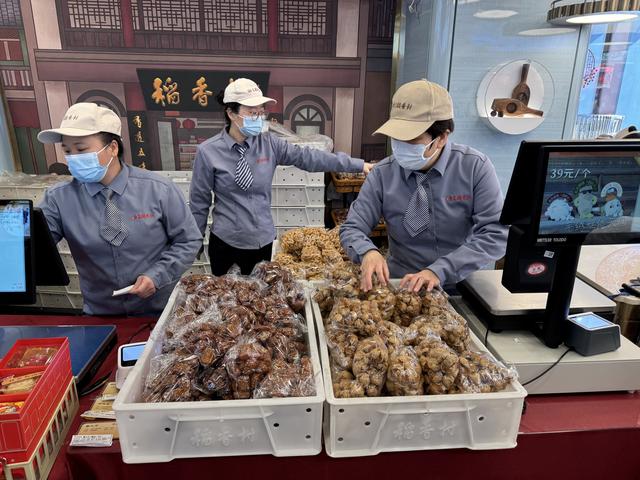
蜜三刀

Search documents
新春走基层丨烟火升腾处 古都气象新——春节假期北京文旅市场热力十足
Xin Hua She· 2026-02-23 08:59
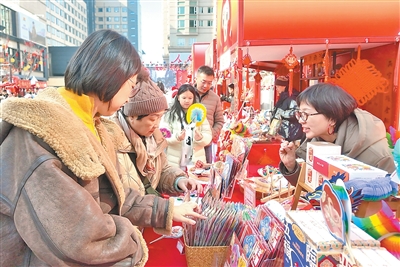
Core Insights - The Beijing cultural and tourism market experienced a significant surge during the Spring Festival, blending traditional customs with modern trends, creating a vibrant atmosphere for both locals and tourists [1] Group 1: Cultural and Tourism Activities - The Longfu Temple area saw a notable increase in foot traffic, with visitor numbers reaching two to three times the usual levels during the holiday [3] - Popular items included traditional snacks like "honey three knives," "cream-flavored fried dough," and "flower-shaped dates," which became the top-selling products of the festival [3] - The "Rabbit God" figurines attracted many young visitors, highlighting the intersection of cultural heritage and contemporary interests [3] Group 2: Technological Integration - The Dadu Spring Festival Fair featured advanced technology, including performances by intelligent robots and a "cyber lion dance," showcasing a modern twist on traditional celebrations [5] - Events like the "潮朝阳·潮庙会" incorporated various popular cultural IPs and innovative experiences, enhancing the festive atmosphere with a futuristic touch [5] Group 3: International Tourism - Beijing's cultural and tourism bureau introduced five must-visit lists and ten premium travel routes for inbound tourists, emphasizing experiences related to intangible cultural heritage and traditional festivities [6] - The city aims to attract 5.48 million inbound tourists by 2025, with a projected tourism expenditure of 50.56 billion yuan, indicating a dual growth in visitor numbers and spending [6] - The year 2026 is identified as a pivotal year for Beijing to establish itself as a global tourism destination, focusing on product quality, international service, and diverse promotion strategies [6]

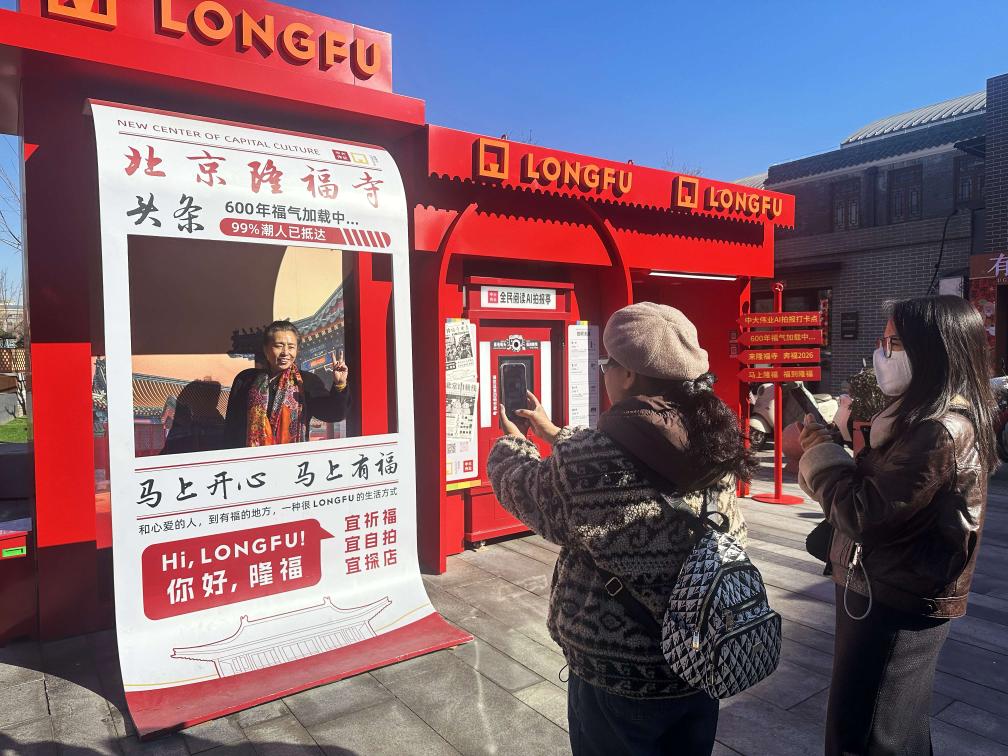
观速讯丨新春走基层·一线直击|打卡北京隆福寺:一篮年货 喜乐相伴
Xin Hua She· 2026-02-22 12:37
Core Viewpoint - The traditional food market during the Spring Festival in Beijing, particularly at the Dongcheng District's Longfu Temple, showcases a vibrant cultural scene, with old brands like Beijing Daoxiangcun and Liubiju attracting significant consumer interest and sales growth. Group 1: Sales Performance - Beijing Daoxiangcun's sales of its popular three-piece set reached approximately three tons per day during the festival, with customer traffic increasing two to three times compared to regular days [3]. - The Longfu Temple market saw a doubling of sales for various products, with vendors like Fengnian Sausage selling around 1,000 pounds daily [5]. - Sales of soy sauce and vinegar at Liubiju were reported to have doubled, with products selling out within hours [5]. Group 2: Consumer Engagement - The market atmosphere reflects a blend of traditional flavors and modern consumer preferences, with younger generations actively seeking out these cultural experiences [3]. - Creative pastries inspired by classic Chinese literature, such as "Tang Seng Guo Guo" and "Da Sheng Guo Guo," are designed to resonate with cultural narratives, enhancing consumer engagement [4]. - Vendors are adapting to health trends by modifying recipes, such as reducing sugar in traditional snacks like Shaqima [5]. Group 3: Cultural Significance - The Longfu Temple market is part of a cultural triangle that includes the Forbidden City and Wangfujing, revitalizing traditional customs and enhancing the festive atmosphere [5]. - The presence of established brands and their innovative approaches not only attract crowds but also contribute to the preservation of Beijing's cultural heritage [5].

新春走基层 | 打卡北京隆福寺:一篮年货,喜乐相伴
Xin Lang Cai Jing· 2026-02-20 15:34
Core Insights - The article highlights the vibrant atmosphere of the traditional Chinese New Year market in Dongcheng District, Beijing, showcasing popular old brands like Beijing Daoxiangcun and Fengnian Sausage, which have become top destinations for visitors during the holiday season [1][3]. Group 1: Market Dynamics - The foot traffic at Beijing Daoxiangcun's zero store during the holiday period is reported to be two to three times higher than usual, with peak sales reaching approximately three tons of the three popular snack items per day [3]. - The market has implemented queue management to handle the influx of visitors, indicating a significant increase in consumer interest and demand for traditional snacks [3]. Group 2: Product Offerings - The article describes innovative snack offerings inspired by classic Chinese literature, such as the "Tang Seng Fruit" and "Pigsy Fruit," which reflect cultural themes and are designed to attract younger consumers [3]. - Sales of traditional products like sausages and condiments have doubled compared to regular days, with specific items like soy sauce and vinegar selling out quickly due to high demand [5]. Group 3: Cultural Significance - The market serves as a vital cultural hub, preserving the essence of old Beijing's customs and traditions while also adapting to modern consumer preferences, thus enhancing the festive atmosphere and boosting sales [5].
“谁懂啊,在北京过了个潮年!”
Xin Lang Cai Jing· 2026-02-18 11:08
Core Insights - The article emphasizes the importance of integrating traditional culture with modern elements in Beijing's urban renewal efforts, particularly in the context of the Longfu Temple area and the Chaoyang district [1][22]. Group 1: Longfu Temple Area - Xi Jinping highlighted the historical significance of Longfu Temple, comparing it to the Confucius Temple in the south, and stressed the need to preserve and promote its cultural heritage [1]. - The Longfu Temple area is experiencing a vibrant revival, with a New Year market featuring over 30 traditional brands, blending traditional snacks with modern innovations like herbal coffee and cocktail robots [9][18]. - The Longfu Temple's historical significance spans 600 years, and its ongoing renovation aims to create a space that honors its past while introducing new cultural experiences [13][20]. Group 2: Chaoyang District - The Chaoyang district showcases a different approach to urban renewal, focusing on creating interactive public spaces that attract younger demographics, with over 25 million visitors in two years, 70% of whom are aged 15 to 29 [11][14]. - The district has transformed old shopping centers into modern hubs, such as THE BOX, which features art displays and trendy pop-up shops, appealing to the youth culture [11][14]. - The first youth-themed temple fair in the Chaoyang district combines traditional elements with contemporary attractions, including large-scale art installations and popular cultural icons like pandas [11][22]. Group 3: Economic Impact and Investment - The Bank of China has provided 1.45 billion yuan in loans for the renovation of the Longfu cultural district, part of a broader commitment to support urban renewal projects totaling approximately 52 billion yuan [14]. - The integration of traditional and modern elements in both Longfu Temple and Chaoyang district aims to create a more livable and engaging urban environment, enhancing the overall quality of life for residents [22].
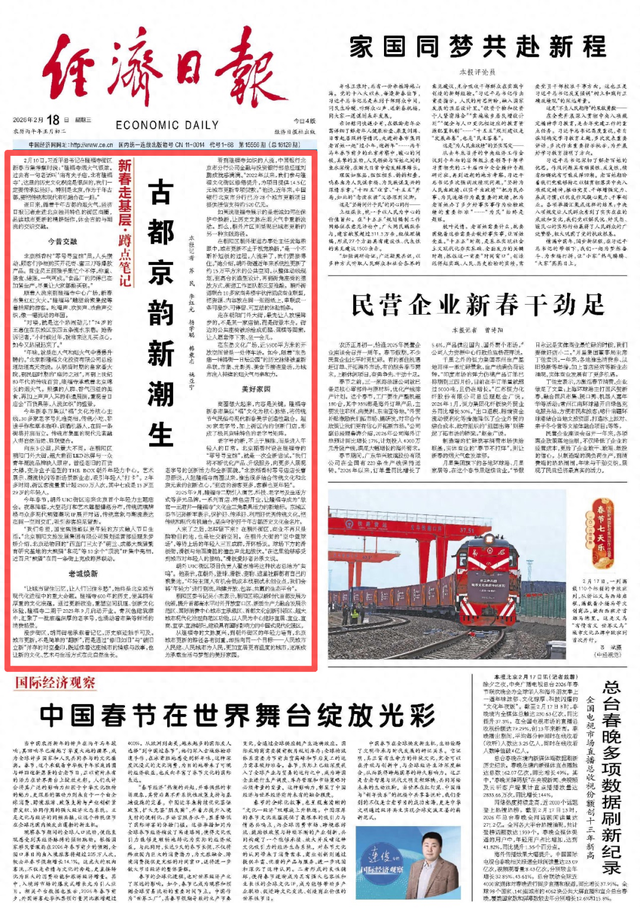
古都京韵新潮生
Jing Ji Ri Bao· 2026-02-17 22:27
Core Insights - The article emphasizes the integration of traditional culture and modern elements in Beijing's urban renewal, particularly in the context of the Longfu Temple area and the Chaoyang district [1][4][5] Group 1: Longfu Temple Area - Longfu Temple is highlighted as a cultural hub with a rich history, aiming to blend traditional and modern experiences through urban renewal projects [4][6] - The New Year market at Longfu Temple features over 30 time-honored brands, showcasing a mix of traditional snacks and modern innovations, attracting a younger demographic [2][6] - The second phase of the Longfu Temple project is set to open in September 2025, introducing diverse brands and experiences, reinforcing its status as a cultural landmark [6][4] Group 2: Chaoyang District - The Chaoyang district represents a different approach to urban renewal, focusing on creating social spaces that cater to younger populations, with attractions like the "sky basketball court" and skateboarding areas [5][7] - The district has seen systematic updates to public spaces, enhancing the overall experience for visitors and residents alike [5][7] - Chaoyang aims to become a model for modern urban governance and cultural innovation, fostering an inclusive environment for various social activities [7][5] Group 3: Economic Impact - The Beijing branch of the Bank of China has provided significant financial support for urban renewal projects, with 14.5 billion yuan allocated for the Longfu cultural district alone [4] - The article notes that the revitalization efforts have led to increased foot traffic, with the Longfu Temple area experiencing a resurgence in popularity reminiscent of its historical significance [2][4]
隆福寺里探年味(新春走基层)
Ren Min Ri Bao· 2026-02-13 00:34
Group 1 - The article highlights the revival of traditional food and cultural practices in Beijing, particularly during the Lunar New Year celebrations, showcasing the popularity of local delicacies like pastries and sausages [1][2] - The Beijing Daoxiangcun pastry shop and Fengnian sausage shop are experiencing increased sales, with the latter reportedly selling up to 300 kilograms daily as demand rises during the festive season [1] - The New Spring Market at Longfu Temple features numerous traditional brands and cultural products, attracting a younger audience through innovative designs that blend traditional craftsmanship with modern trends [2][4] Group 2 - The market includes various cultural performances and activities, emphasizing the "Fu" (blessing) culture, aiming to create a joyful atmosphere for visitors [5] - The Longfu Temple area has undergone significant renovations to enhance public spaces while preserving historical architecture, contributing to its status as a cultural landmark in Beijing [5]
习近平总书记春节前夕在北京看望慰问基层干部群众纪实
Xin Hua She· 2026-02-11 22:52
Group 1 - The article highlights President Xi Jinping's visit to grassroots cadres and the public in Beijing before the Spring Festival, emphasizing the importance of ensuring a joyful and prosperous celebration for the people [3][24] - Xi Jinping visited various locations, including a technology innovation park and a senior care service area, to understand the implementation of public welfare measures and the supply situation for the festive market [3][4][5] - The focus on technological innovation is underscored by the establishment of the National Trust Innovation Park, which showcases a full-chain industrial cluster from hardware to applications, reflecting a robust development trend in China's AI sector [4][5][6] Group 2 - The article discusses the strategic positioning of Beijing as a technology innovation center, with Xi Jinping emphasizing the need for collaboration with Tianjin and Hebei to enhance innovation and industrial cooperation [7][8] - Beijing's educational and technological resources are highlighted, with over 90 universities and thousands of high-tech enterprises contributing to the city's development as a hub for strategic emerging industries [8][9] - The article mentions the importance of sustainable urban governance and public service facilities, with initiatives like the 12345 government hotline achieving high satisfaction rates among citizens [18][9] Group 3 - The article details the improvements in elderly care services in Beijing, showcasing community initiatives that cater to diverse needs, including meal services for seniors and the integration of modern facilities [11][12][13] - Xi Jinping's visit to a senior care facility emphasizes the government's commitment to the well-being of the elderly, highlighting the importance of respect and care for older generations as a societal responsibility [17][15] - The article also notes the cultural significance of traditional markets and local businesses, with Xi Jinping encouraging the preservation and promotion of Beijing's historical and cultural heritage [20][21][22]

“确保广大人民群众开开心心、欢欢乐乐过好年”
Xin Lang Cai Jing· 2026-02-11 18:46
Core Viewpoint - The article emphasizes the importance of technological innovation and collaboration in Beijing's development strategy, highlighting the need for a coordinated approach to enhance the city's role as a national technology innovation center [2][3]. Group 1: Technological Innovation and Development - Beijing is positioned as a national technology innovation center, with a focus on leveraging its resources to achieve strategic goals [2]. - The central economic work conference proposed the establishment of international technology innovation centers in Beijing, Shanghai, and the Guangdong-Hong Kong-Macau Greater Bay Area, aiming to accelerate original innovation [2]. - The city has over 90 universities, thousands of research institutions, and more than 30,000 national high-tech enterprises, contributing to a strong R&D investment intensity of 6% [3]. Group 2: Urban Development and Governance - The article discusses the ongoing efforts to optimize Beijing's capital functions, including the relocation of non-capital functions to promote coordinated development in the Beijing-Tianjin-Hebei region [4]. - The importance of a correct performance view among government officials is highlighted, emphasizing the need for effective governance and quality development [4]. - Beijing's urban governance has seen improvements, with initiatives like the 12345 government hotline achieving a resolution and satisfaction rate of over 97% [12]. Group 3: Community and Social Services - The article mentions the establishment of community services that cater to the elderly and young, emphasizing the need for a comprehensive social support system [5][11]. - The integration of traditional culture and modern services is showcased through local businesses, such as the revitalization of historical areas and the promotion of traditional food [14][15]. - The article highlights the importance of ensuring a harmonious living environment for all citizens, with a focus on community engagement and cultural heritage [12][13].
“确保广大人民群众开开心心、欢欢乐乐过好年”——习近平总书记春节前夕在北京看望慰问基层干部群众纪实
Xin Hua She· 2026-02-11 14:43
Core Viewpoint - The article highlights President Xi Jinping's visit to grassroots communities in Beijing before the Lunar New Year, emphasizing the importance of technological innovation, social welfare, and cultural heritage in enhancing the quality of life for citizens. Group 1: Technological Innovation - The National Xinchuang Park in Beijing showcases a full-chain industrial cluster from hardware to applications, reflecting a robust development in technology innovation [1][2] - President Xi has consistently emphasized the significance of artificial intelligence and robotics, noting the rapid advancements in these fields and their potential to enhance productivity and quality of life [2][3] - Beijing aims to strengthen its position as a global technology innovation center, leveraging its educational and research resources to drive original innovation and address key technological challenges [3][4] Group 2: Social Welfare - The city has made strides in improving elderly care services, with initiatives like the "Wulao·Xinjie" community center providing diverse services for seniors [5][7] - President Xi highlighted the importance of sustainable community services, particularly for the elderly and new employment groups, ensuring their needs are met effectively [9][11] - The government is focused on enhancing public services and optimizing urban functions to support the well-being of all citizens [5][13] Group 3: Cultural Heritage - The article discusses the revitalization of historical areas like the Longfu Temple Street, blending traditional culture with modern experiences to attract visitors [15][16] - President Xi expressed the need to preserve the essence of traditional brands while adapting to contemporary market demands, ensuring cultural continuity [17] - The festive atmosphere in Beijing during the Lunar New Year reflects the city's rich cultural heritage and community spirit, with various traditional activities and celebrations [18]
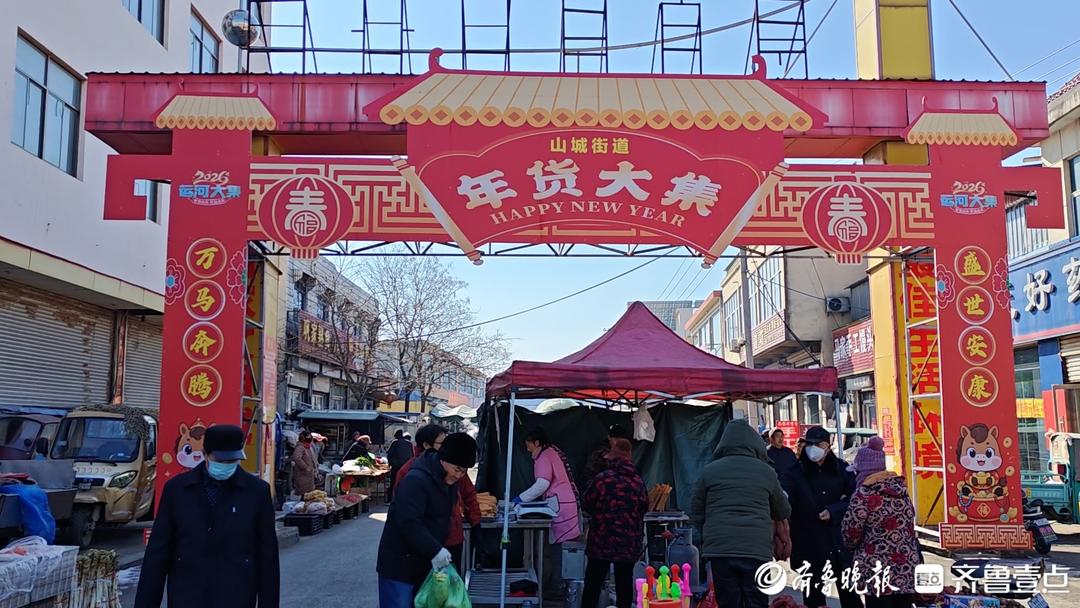
年货上线,山亭大集已调至“春节档”
Qi Lu Wan Bao· 2026-01-22 23:22
Core Viewpoint - The article highlights the vibrant atmosphere and cultural significance of the Shanting Rural Market in Zaozhuang, which attracts thousands of visitors and serves as a cultural landmark, blending traditional practices with modern influences [1][11]. Group 1: Market Dynamics - The Shanting Rural Market, held on specific lunar calendar dates, spans over 50 acres with more than 400 stalls, attracting an average of over 10,000 visitors daily and nearly 30,000 during peak times [1]. - The market has evolved from a small riverside trading spot to a well-organized cultural hub, serving not only local villages but also drawing visitors from nearby cities like Jining and Linyi [1][11]. Group 2: Traditional Crafts and Vendors - Local vendors, such as Qin Jingli and Wang Yuyan, maintain traditional methods in their products, like the "Old Locust Tree" sesame oil, which has been made using ancient techniques for over a century [3]. - Blacksmith Liang Xuexian continues a family tradition of over a hundred years, producing essential farming tools and kitchenware, indicating the enduring demand for traditional craftsmanship [5]. Group 3: Cultural Significance - The market serves as a platform for cultural expression, featuring performances of intangible cultural heritage such as clay sculpture and traditional arts, enhancing community engagement [7]. - Local authorities have invested over 3.2 million yuan in upgrading the market's infrastructure, including improved facilities and safety measures, to preserve its traditional charm while enhancing visitor experience [11].