
企业战略调整

Search documents
红豆股份控股股东再陷司法风险
Jing Ji Guan Cha Wang· 2025-09-19 04:05
Core Viewpoint - Jiangsu Hongdou Industrial Co., Ltd. (600400.SH) experienced a significant stock price surge, reaching a closing price of 3.03 yuan with a 10.18% increase, followed by a further rise to 3.33 yuan with a 9.90% increase, despite the announcement of judicial marking and freezing of shares held by its controlling shareholder, Hongdou Group [1][2] Shareholder Actions - On September 17, the Wuxi District Court implemented judicial marking on 83.5 million shares and a pending freeze on 164.5 million shares of Hongdou Group, totaling 18.33% of its holdings and 10.82% of the company's total shares [2] - The judicial measures are linked to a debt claim and execution costs amounting to 62.24 million yuan, reflecting potential legal disputes [2][3] Financial Performance - Hongdou's financial performance in the first half of 2025 showed a decline, with revenue of 868 million yuan, down 19.73% year-on-year, and a net loss of 109 million yuan compared to a profit of 44.22 million yuan in the same period last year [3] - The company's total assets decreased by 10.70% to 3.909 billion yuan, while its cash flow from operating activities improved to 22.47 million yuan, although still insufficient [3] Strategic Adjustments - Hongdou Group has exited its stake in Wuxi Xishang Bank, transferring 500 million shares to Wuxi Guolian, marking a strategic shift to focus on core business areas [4][5] - The exit from the banking sector may indicate a strategy to streamline operations and reduce management complexity, while also enhancing shareholder stability and capital strength for the bank [5] Market Implications - The cumulative effect of 33.30% of Hongdou Group's shares being judicially marked or frozen suggests a growing legal risk for the controlling shareholder, which could impact investor confidence and corporate governance [3][5] - The current economic environment is prompting traditional private enterprises to reassess their diversified expansion strategies, as seen in Hongdou's gradual exit from peripheral sectors [6]

百时美施贵宝(BMY.US)出售首家中美合资药企60%股权
智通财经网· 2025-09-17 10:43
Core Viewpoint - Bristol-Myers Squibb (BMY.US) has signed an agreement to sell 60% of its stake in a Chinese pharmaceutical joint venture, aligning with its long-term strategic goals to integrate resources and adapt to changing global business needs [1][1][1] Company Summary - The company has entered into an agreement to divest its 60% stake in Shanghai Squibb Pharmaceutical Co., Ltd. (SASS), which was established in 1982 and is recognized as the first Sino-American joint venture pharmaceutical company following China's reform and opening-up [1][1] - SASS operates a manufacturing facility in Shanghai that is one of the first modern pharmaceutical bases in China and has played a crucial role in introducing new technological expertise to the country [1][1] - The joint venture has supplied various medications, including Metformin Hydrochloride Tablets and Acetaminophen Oral Solution, contributing to the pharmaceutical landscape in China [1][1] Industry Summary - The divestment reflects a broader trend in the pharmaceutical industry where companies are reassessing their global operations and partnerships to better align with evolving market demands [1][1] - The move may indicate a shift in focus for Bristol-Myers Squibb towards consolidating its resources and enhancing operational efficiency in response to competitive pressures in the global pharmaceutical market [1][1]

星巴克中国出售业务进入倒计时
3 6 Ke· 2025-09-15 10:34
Group 1 - Starbucks is in the final stages of selling its China business, with potential buyers including Boyu Capital, Carlyle Group, EQT, and Sequoia China, and the deal is expected to be finalized by the end of October [1] - The initial interest in the sale attracted dozens of bidders, including Hillhouse, Bain, KKR, Tencent, China Resources, and Meituan, with the final candidates selected after a bidding round that ended on August 27 [1] - The estimated valuation for Starbucks China during the bidding process was between $5 billion and $6 billion (approximately RMB 35.6 billion to RMB 42.7 billion) [1] Group 2 - The shortlisted bidders have strong backgrounds in consumer investment, with Boyu Capital recently completing a high-end retail acquisition, Carlyle Group known for its successful investment in McDonald's China, EQT having significant financial strength, and Sequoia China actively investing in consumer sectors [2] - Springhill Capital also entered the picture due to its previous investment in Yum China, showcasing its experience in digital transformation and operational optimization [3] - The absence of strategic capital from Tencent and JD reflects Starbucks' cautious approach in selecting partners, preferring private equity firms focused on financial returns over those seeking strategic control [3] Group 3 - Starbucks is focused on preserving its corporate culture and management style during the sale process, requiring bidders to provide information on these aspects [6] - The company aims to expand its store count in China from 8,000 to 20,000, indicating that bidders who can support this growth will have a competitive advantage [7] - Starbucks' attitude towards the sale has evolved, initially denying plans for divestment but later expressing openness to strategic partnerships and partial equity sales due to stagnating revenue growth in China [8] Group 4 - Starbucks implemented its first price reduction in 25 years in June 2025, reflecting competitive pressures in the market [9] - The company plans to retain a 30% stake in the China business while selling the remaining 70% to multiple buyers, ensuring some control over the brand [9] - The third-quarter financial report for 2025 showed a 4% increase in consolidated net revenue to $9.5 billion, with China market revenue at $790 million, growing 8% year-over-year [10]

康惠制药:子公司陕西友帮持续亏损、调整产品生产均不顺利,决定停产
Cai Jing Wang· 2025-09-05 03:28
Core Viewpoint - Kanghui Pharmaceutical announced the suspension of production at its subsidiary Shaanxi Youbang Biopharmaceutical Technology Co., Ltd. to reduce losses and protect shareholder interests [1][2] Group 1: Production Suspension - Shaanxi Youbang has suspended production in workshops 1, 2, and 3 due to ongoing losses and challenges in product adjustments and production processes [1] - The decision to suspend production aligns with the company's strategic direction to lower operational costs and mitigate further financial losses [1] Group 2: Financial Impact - In 2024, Shaanxi Youbang's total assets accounted for 16.91% of the company's latest audited total assets, while its revenue represented 1.42% of the consolidated revenue [2] - The net profit for Shaanxi Youbang in 2024 is projected to be -52.51 million, impacting the company's net profit attributable to shareholders by -26.78 million, which is 29.88% of the total [2] Group 3: Future Plans - The company will decide on the resumption of production based on market conditions and is actively seeking collaboration opportunities to maximize the asset value of Shaanxi Youbang [2]

时隔一年 雀巢再换帅
Bei Jing Shang Bao· 2025-09-02 16:30
Core Points - Nestlé Group announced the appointment of Philipp Navratil as CEO, replacing Laurent Freixe, effective immediately [1] - Freixe's departure was due to a violation of Nestlé's Code of Business Conduct related to an undisclosed romantic relationship with a subordinate [1] - The board emphasized the importance of corporate governance and values in making this decision [1] Company Strategy - Freixe aimed to unlock existing business potential rather than pursuing growth through mergers and acquisitions, focusing on three key areas: operational excellence, maximizing product portfolio potential, and strengthening foundational capabilities [2] - Under Freixe, Nestlé streamlined its geographical market structure from five regions to three, reintegrating the Greater China Region into the Asia, Oceania, and Africa region [2] New CEO Profile - Philipp Navratil joined Nestlé in 2001 and has held various roles, including leading the coffee and beverage business in Mexico and overseeing Nespresso's growth [3] - Navratil expressed full support for the company's strategic direction and performance improvement plans, aiming to accelerate execution and value creation [3] Market Impact - The rapid CEO change reflects a clash between corporate governance standards and personal conduct, highlighting the need for brands to maintain a "zero tolerance" approach to individual behavior that could harm corporate reputation [3][4] - Navratil's experience in global management and coffee innovation may enhance Nestlé's positioning in high-growth areas like premium coffee and digital channels in China [4]

最高跌14.8%,7家化妆品原料巨头下滑
3 6 Ke· 2025-08-25 02:45
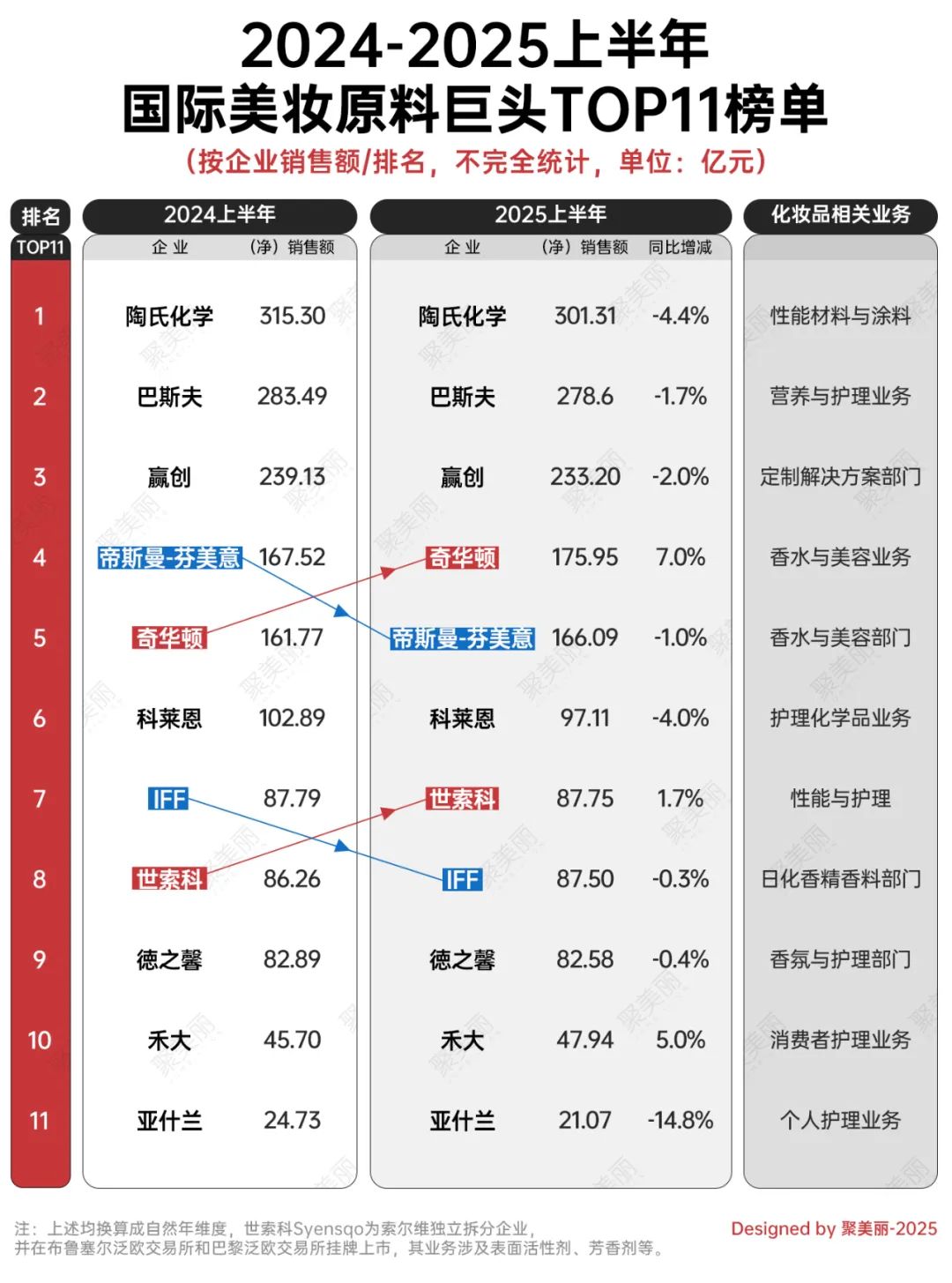
Core Insights - The global cosmetics raw materials market is experiencing intensified competition, with domestic companies beginning to change their historically weak positions [1] Group 1: Market Dynamics - International giants are responding to challenges such as the pandemic, tariff policies, and rising transportation costs through mergers, splits, and price increases [2] - The merger of DSM and Firmenich, along with Solvay's split of its cosmetics business to form Scentys, has reshuffled the rankings of the top 11 international cosmetics raw material suppliers [2][3] - Dow Chemical leads the market with a net sales of 31.53 billion yuan, followed by BASF and Evonik, with only these three companies surpassing the 20 billion yuan mark [3] Group 2: Performance Analysis - Among the top 11 suppliers, only three companies—Givaudan, DSM-Firmenich, and IFF—reported sales growth, while IFF's performance slightly declined by 0.3% [3][20] - Givaudan's fragrance and beauty segment saw a sales increase of 7% and an EBITDA rise of 5%, indicating strong performance in high-end fragrances and consumer products [7][8] - In contrast, DSM-Firmenich's fragrance and beauty segment experienced a sales drop of 1% and a significant EBITDA decline of 4%, marking the first decline since the merger [10][12] Group 3: Challenges and Strategic Adjustments - The cosmetics raw materials giants are facing a downturn in performance due to various factors, including geopolitical tensions, macroeconomic uncertainties, and increased compliance costs [43][44] - Companies are implementing strategic adjustments such as optimizing business portfolios, workforce reductions, and restructuring to enhance operational efficiency [38][40] - The market is witnessing a shift where reliance on scale-based cost advantages is becoming less sustainable, necessitating differentiation through regulatory compliance and supply chain resilience [43][44]

盒马CEO严筱磊商人一年多大刀阔斧改革 财务出身的她行吗?
Sou Hu Cai Jing· 2025-08-19 06:02
Core Insights - Hema announced the closure of its last X membership store in Shanghai by August 31, 2025, marking its exit from the warehouse-style membership store market [1][3] - The decision is part of CEO Yan Xiaolei's strategy to focus resources on core businesses, Hema Fresh and Hema NB [3] Business Strategy - The X membership stores contributed less than 10% to overall sales, with individual store annual rent exceeding 50 million yuan, making it difficult to achieve breakeven [3] - Yan Xiaolei plans to open nearly 100 new Hema Fresh stores in the new fiscal year, expanding into over 50 cities, and accelerate the growth of Hema NB discount stores with a target of reaching 1,000 locations [4] Leadership Changes - The previous CEO, Hou Yi, had high hopes for the X membership stores, aiming to open 50 locations within three years to compete with Sam's Club and Costco [3] - Yan Xiaolei, who took over after Hou Yi's retirement, has shifted the company's development strategy [3][4]
娃哈哈天猫旗舰店改名换运营主体,宗馥莉接手实控权
Xi Niu Cai Jing· 2025-08-19 03:42
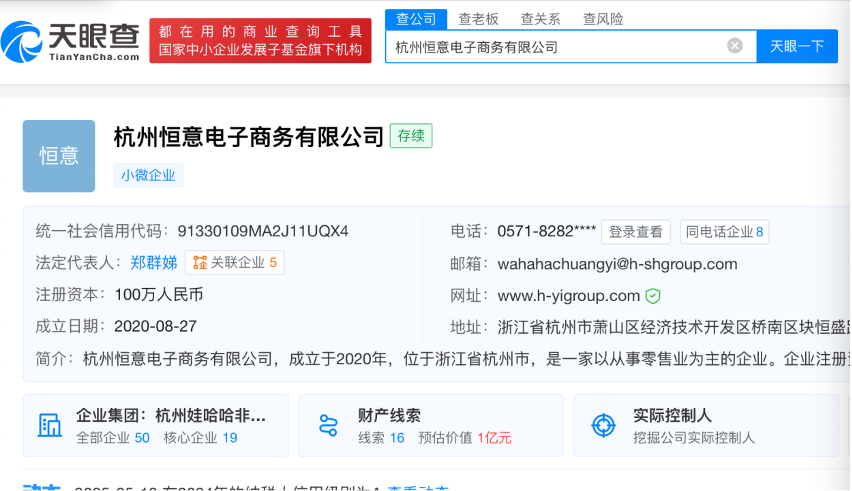
Group 1 - The original Tmall "Wahaha Flagship Store" has been renamed to "Tongyuan Kang Food Specialty Store," sparking discussions about the change in operational rights [1] - "Tongyuan Kang Food Specialty Store" is registered under Tongyuan Kang E-commerce (Hangzhou) Co., Ltd., a company that has been operating for 7 years and is 75% controlled by Sanjie Investment Group Co., Ltd., which is predominantly owned by Du Jianying [3] - As of August 13, customer service from the new store confirmed that the store was previously the Tmall flagship store for Wahaha but is now operating independently after ending its partnership earlier this year. The new Wahaha flagship store is now managed by Hangzhou Hengyi E-commerce Co., Ltd., controlled by Zong Fuli through Hangzhou Hongchen Marketing Co., Ltd. [5]
6050亿营收创新高,宝洁为何选择此时交棒?
FBeauty未来迹· 2025-07-29 15:45
Core Viewpoint - Procter & Gamble (P&G) announced the appointment of Shailesh G. Jejurikar as the new CEO, effective January 1, 2026, marking the first time an Indian has held this position in the company's history [2][10]. Financial Performance - For the fiscal year 2025, P&G reported revenue of $84.284 billion (approximately 604.982 billion RMB), a year-on-year growth of 0.29%, indicating stagnation in growth [4]. - Despite the revenue stagnation, P&G achieved a record high in revenue over the past decade, with operating profit soaring by 10.28% to $20.451 billion (approximately 146.793 billion RMB) and net income rising by 7.29% to $16.065 billion [5][6]. Leadership Transition - The leadership change is perceived as a strategic move rather than a reaction to poor performance, as the transition occurs during a period of record revenue and profit [5][10]. - Jon R. Moelle's tenure is praised for maintaining strong growth and value creation despite global economic challenges, with P&G's stock price increasing by approximately 13% during his four years as CEO [8][11]. Market Stability and Growth - P&G's performance across various sectors has shown stability, with the company proactively adjusting its strategies for future growth rather than reacting to declines [14][16]. - The Chinese market has emerged as a key growth driver for P&G, with significant contributions from brands like SK-II, which saw a 13.29% increase in online sales [18][22]. Strategic Adjustments - P&G has implemented various reforms in the Chinese market, including changes in distribution channels and consumer communication strategies, which have proven effective and are expected to influence global strategies [26][28]. - The company anticipates a sales growth of 1% to 5% for the fiscal year 2026, with organic sales growth projected between 0% to 4% despite some adverse factors [28].

每经热评︱胖东来关闭多家门店,于东来在下一盘怎样的棋?
Mei Ri Jing Ji Xin Wen· 2025-06-23 13:13
Core Viewpoint - The decision by Pang Donglai to close several well-performing stores reflects a commitment to quality over short-term profits, emphasizing the importance of maintaining high standards in the retail industry [1][2]. Group 1: Store Closures - Pang Donglai announced the closure of multiple stores, including those in Yichang and Renmin Road, despite their good performance, with the Yichang store generating over 800 million yuan in sales by June 22, 2025 [1]. - The closures are attributed to the inability of older stores to meet current quality standards, indicating a strategic shift towards enhancing customer experience [2]. Group 2: Strategic Implications - The closures are seen as a self-innovation strategy, allowing the company to consolidate resources and invest in new store development or upgrades of existing high-quality stores [2]. - By reallocating resources, Pang Donglai aims to introduce advanced retail technologies and optimize supply chain management, enhancing product freshness and variety [2]. Group 3: Employee Welfare - Pang Donglai is known for high employee compensation, with an average post-tax monthly income of around 9,000 yuan for over 8,000 employees, and an estimated net profit of 1.5 billion yuan [3]. - The company plans to limit employee work hours to a maximum of 36 hours per week and provide at least 40 days of annual leave, exceeding industry averages [3]. - Properly managing employee transitions during store closures is crucial for maintaining morale and enhancing company cohesion [3]. Group 4: Industry Insights - The store closures serve as a reminder to the retail industry about the importance of prioritizing quality over mere expansion and speed [3]. - The move encourages other companies to embrace strategic adjustments and transformations to meet evolving market demands [3][4].