
企业战略调整

Search documents
三大养殖业巨头开年动作频频,释放啥信号?
Xin Lang Cai Jing· 2026-02-27 10:31
Group 1 - The core action of Muyuan is changing its name from "Muyuan Food Co., Ltd." to "Muyuan Food Group Co., Ltd." to reflect its expanded business scope and management structure [2][5][18] - This name change signals that Muyuan is no longer just a pig farming company but a comprehensive food industry group, indicating potential for more collaboration in various sectors such as feed and technical services [5][18] Group 2 - Wens plans to repurchase its shares with an investment of between 800 million and 1.2 billion yuan, indicating confidence in its stock valuation and financial health [5][19] - The share buyback is aimed at employee stock ownership and incentives, suggesting a strategy to stabilize its workforce and enhance operational efficiency [19] Group 3 - Longda Meishi has appointed a new general manager, Liu Jing, born in 1988, indicating a shift towards a younger leadership style that may bring new ideas and efficiency to the company [10][23] - Liu Jing's diverse background in government and corporate roles positions her well to lead Longda's transition from traditional slaughtering to a more food-oriented business model [23] Group 4 - The simultaneous actions of Muyuan, Wens, and Longda reflect a broader industry trend of companies preparing for competitive challenges by streamlining operations and enhancing management structures [11][24] - These developments suggest that the industry is becoming more regulated and that partnerships with large enterprises will require careful consideration of their management stability [24]

宗馥莉名下注册资本2亿元的电商公司拟注销,此前已注销多家娃哈哈系企业
Xin Lang Cai Jing· 2026-02-09 07:53
Core Viewpoint - The recent announcement of the planned dissolution of Hangzhou Wahaha E-commerce Co., Ltd. indicates a strategic shift within the Wahaha Group, led by Zong Fuli, as the company continues to streamline its operations by dissolving underperforming subsidiaries [1][5]. Group 1: Company Dissolutions - Hangzhou Wahaha E-commerce Co., Ltd. has filed for dissolution, with the announcement period set from February 5 to March 21, 2026, due to a resolution to dissolve [1][5]. - Since July 2025, Zong Fuli has been progressively dissolving several Wahaha-related companies, including Zhejiang Hongzhen Intelligent Chip Co., Ltd., which was dissolved on July 28, 2025, with a registered capital of 10 million RMB [1][7]. - Zhejiang Wahaha Health Management Co., Ltd. and Jiangshan Wahaha Hongzhen Drinking Water Co., Ltd. entered the dissolution process at the end of August 2025, with the former established in 2021 and the latter in 2015, having registered capitals of 10 million RMB and 25 million RMB respectively [1][7]. Group 2: Management Changes - Zong Fuli has officially stepped down as the chairman of Wahaha Group, with the legal representative changing from Zong Fuli to Xu Simin on November 26, 2022 [3][7]. - The management restructuring includes the appointment of Xu Simin as chairman, while other key positions have also seen changes, indicating a significant shift in leadership within the company [3][7]. Group 3: Business Strategy - Wahaha Group is reportedly eliminating distributors with annual sales below 3 million RMB, integrating some into larger distributors as part of its strategic realignment [7].
凯捷因美国移民和海关执法局合作剥离美国子公司
Xin Lang Cai Jing· 2026-02-02 15:41
Core Viewpoint - Capgemini, a European consulting firm, announced the decision to sell its U.S. subsidiary after reviewing contracts related to supporting the U.S. Immigration and Customs Enforcement (ICE) activities, stating that these contracts do not align with the group's objectives [1][2]. Group 1 - Capgemini is divesting its U.S. subsidiary due to misalignment with the company's strategic goals [1][2]. - The review of contracts supporting ICE activities prompted the decision to sell the subsidiary [1][2].
解读2025年全球裁员潮:AI还不是关键因素
Jing Ji Guan Cha Wang· 2026-01-25 17:56
Group 1 - The core point of the article is that the global wave of layoffs in 2025 is driven by multiple factors, including economic slowdown, cost pressures, strategic restructuring, and the impact of AI, rather than solely by AI replacing jobs [2][6][8] - In the United States, 2025 saw a significant increase in layoffs, with approximately 1.17 million layoffs reported by the end of November, marking the highest level since the COVID-19 pandemic [2][3] - AI has been cited as a factor in about 54,000 to 55,000 layoffs, accounting for only 4% to 5% of total layoffs, indicating that while AI is changing workforce structures, it is not the primary driver of the layoffs [3][8] Group 2 - In Europe, companies are announcing layoffs primarily for cost control, profit pressure, and business restructuring, with the automotive and manufacturing sectors being particularly affected [3][6] - In China, layoffs are largely attributed to macroeconomic and structural adjustments, with youth unemployment rates remaining high, particularly among those aged 16-24 [4][6] - Major Chinese companies like Alibaba and Baidu are undergoing workforce reductions not solely due to layoffs but also due to strategic focus and asset divestitures [5][6] Group 3 - AI is reshaping job structures, particularly in roles such as customer service and administrative support, but the overall impact on employment is more complex, with economic conditions being a more significant factor [7][8] - The introduction of AI and automation often leads to job restructuring rather than outright layoffs, with a focus on efficiency and productivity improvements [11][12] - The long-term effects of AI on employment will depend on the adaptability of the workforce and the diversity of local industry structures [9][10] Group 4 - Companies are increasingly recognizing the need for reskilling and upskilling their workforce rather than relying solely on layoffs, as this approach can enhance long-term productivity and employee trust [22][24] - Leading firms are investing in employee training programs to adapt to technological changes, with examples including Amazon's "2025 Skills Enhancement Program" [24][25] - The future workforce will require a combination of technical skills and soft skills, with a growing emphasis on the ability to integrate AI into business processes [18][19]



NCC Group to sell Escode in $369m deal with TDR affiliates
Yahoo Finance· 2026-01-22 10:51
Core Insights - UK-based cybersecurity firm NCC Group has agreed to sell its Escode business to TDR Capital for an enterprise value of £275m ($369.2m) [1] - The divestment aligns with NCC's strategy to streamline operations and focus on core cybersecurity services [2] Financial Details - The agreed gross consideration for the Escode deal is £309.1m, with net proceeds expected to be approximately £262.4m after completion adjustments and transaction costs projected at around £10m [5] - Cumulative enterprise value from the sale of Escode and previous non-core divisions is expected to be approximately £349m [3] Strategic Focus - The sale of Escode allows NCC to concentrate on accelerating growth in its core cybersecurity resilience business [4] - NCC plans to consult with shareholders on returning a significant portion of the proceeds from the sale [6]
西班牙媒体:从星巴克调整中国战略看时代变迁
Huan Qiu Wang· 2026-01-18 22:53
Core Viewpoint - The article discusses the shift in the competitive landscape for Starbucks in China, highlighting the rise of local competitors and the strategic adjustments made by Starbucks in response to changing consumer preferences and market dynamics [1][2]. Group 1: Market Dynamics - In the 1980s and 1990s, foreign chains like Starbucks symbolized China's economic opening, with Starbucks opening its first store in Beijing in 1999, introducing a new coffee culture to a tea-dominated society [1]. - Currently, local Chinese competitors have gained significant market share by adapting their products to meet the demands of consumers who prefer takeout and are increasingly price-sensitive [1]. Group 2: Strategic Adjustments - Starbucks has sold 60% of its stake in its China operations to Boyu Capital for a valuation of $4 billion, indicating a strategic shift in its approach to the Chinese market [2]. - This decision reflects a recognition that the growth model that served Starbucks well in China for decades is no longer competitive, emphasizing the need for flexibility and adaptability in the current market [2]. Group 3: Competitive Pressure - A report from the Shanghai American Chamber of Commerce highlights that increasing competition from local Chinese companies is a major challenge for American firms operating in China [2]. - Analysts note that over the past decade, local brands have rapidly developed, while Western brands like Starbucks face challenges due to their more cumbersome organizational structures and higher cost models, leading to slower responses to market changes [2].

海底捞创始人张勇时隔四年重任CEO 孵化14个餐饮品牌打造第二增长曲线
Chang Jiang Shang Bao· 2026-01-14 09:05
Group 1 - The core point of the news is that Zhang Yong has returned as CEO of Haidilao after a four-year hiatus, with significant changes in the board of directors and management team to support the company's strategic development [1][3] - The announcement details the resignation of several key executives, including Gou Yiqun as CEO and Song Qing as an executive director, while they will continue to hold important management roles within the group [1][2] - Four new executive directors have been appointed, all of whom have extensive experience within the Haidilao system, indicating the company's commitment to nurturing internal talent for management roles [3] Group 2 - Haidilao is actively seeking a second growth curve and has incubated multiple restaurant brands, operating 14 different brands beyond its core hotpot offering as of June 30, 2025 [4] - A new dining concept, "Haidilao Dapaidang Hotpot," is set to open its first trial operation in Wuhan before New Year's Day 2026, integrating local culinary culture and consumer habits into a new dining experience [4]

22亿交易传闻 上海活力城整售背后的万科、复地选择
Sou Hu Cai Jing· 2026-01-13 19:26
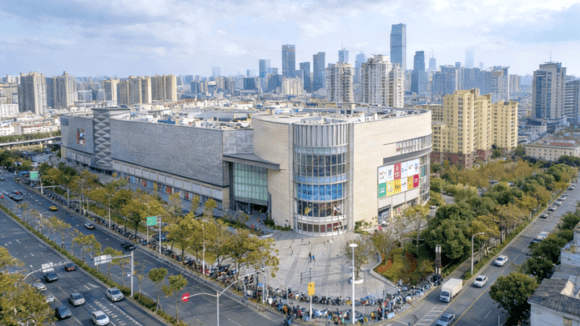
Core Viewpoint - Shanghai Vanke and Fuxing Group are reportedly looking to sell the Shanghai Vitality City shopping center for 2.2 billion yuan, indicating a significant shift in the commercial real estate landscape in Shanghai [2][8]. Group 1: Project Overview - Shanghai Vitality City is a six-story commercial complex with a total area of approximately 109,200 square meters and a rental area of 57,800 square meters, achieving a rental rate of 97% [6][7]. - The project is strategically located at the intersection of three towns in Pudong, with direct access to Metro Line 11 and 18, and is surrounded by over 100,000 households within a three-kilometer radius [7]. - Since its opening in December 2019, the center has positioned itself as a "city family living room," attracting over 1.424 million visitors annually and generating sales of 1.525 billion yuan in 2023 [7]. Group 2: Company Strategies - Vanke is under significant debt pressure, leading to a strategy of asset divestment, including the sale of multiple large shopping centers across various cities [9][10]. - Fuxing Group's decision to sell is part of a broader strategic shift, focusing on core businesses like jewelry and fashion while divesting non-core assets due to declining performance in the real estate sector [12][13]. - The sale of Shanghai Vitality City reflects both companies' need to adapt to changing market conditions and financial pressures, marking a pivotal moment in their operational strategies [13].

「大窑」最后也没坚持住…
Sou Hu Cai Jing· 2025-12-29 01:39
Core Viewpoint - The recent leadership change at Dayao, with founder Wang Qingdong stepping down and Dai Cheng taking over, signals a significant shift towards capitalizing the company, likely involving a deal with KKR, a major US private equity firm [1][3][4]. Company Dynamics - Wang Qingdong, the founder, previously stated a firm refusal to accept foreign investment, emphasizing Dayao's independence [3]. - KKR is reported to have acquired 85% of the shares in Yuanjing International, which is likely the overseas holding entity for Dayao, indicating a strategic move towards international investment [4]. - Dai Cheng, who has a background in international private equity, is expected to play a crucial role in the company's management, although his exact relationship with Dayao remains somewhat unclear [5]. Financial Performance - Dayao's sales for 2023 reached 3.2 billion yuan, significantly outperforming competitors like Beibingyang and Bingfeng, with projections to exceed 5 billion yuan in 2024 [9]. - The company boasts a high profit margin, with a gross profit of over 3 yuan per bottle, which is notably higher than international brands like Coca-Cola [9]. Market Position and Strategy - Dayao's sales are primarily driven by the food and beverage sector, with 70%-80% of sales coming from barbecue stalls, hot pot restaurants, and street vendors, creating a strong customer loyalty with an 80% repurchase rate [9]. - Despite its stronghold in northern markets, Dayao faces challenges in expanding into southern markets, indicating a need for strategic adjustments to support nationwide growth [9][11]. - The entry of external capital and management expertise is seen as a necessary step to address the company's limitations in market expansion and operational management [11].
海尔印度出售49%股权是当前形势下最好的选择
Jin Tou Wang· 2025-12-25 08:03
Core Viewpoint - Haier's sale of 49% stake in its Indian subsidiary has sparked market interest, with opinions divided on whether it is a strategic move for long-term growth or a forced concession to local and foreign capital [1] Group 1: Investment Environment - India's market demand exceeds $30 billion, making it the third-largest home appliance market globally, following the US and China [2] - The Indian investment environment is characterized by a complex legal system that increases compliance costs and operational risks for foreign companies [2] - The Indian government frequently changes regulations regarding tariffs, foreign ownership, and environmental standards, creating instability for investors [2] Group 2: Attitude Towards Chinese Enterprises - India has shown a clear reluctance to welcome foreign "dominators," as evidenced by the asset freezes of companies like Vivo and Xiaomi, and the forced exit of TikTok [2] - Despite Haier's 20 years of presence in India, it has struggled to penetrate local channels and secure project approvals due to a lack of local partnerships [2] Group 3: Strategic Implications of Stake Sale - Selling the stake is seen as a necessary step for Haier India to navigate local regulations and secure project opportunities, as foreign companies need local backing for IPOs and project approvals [3] - Haier's decision to sell equity is viewed as a strategic move to integrate into the local business ecosystem rather than a sign of defeat [4] Group 4: Operational Strength and Market Position - Haier retains a 49% stake and remains the largest single shareholder, maintaining control over core operations while incentivizing local management [5] - The company has a strong market presence, holding a 14% share in the refrigerator market and is expected to see a 36% revenue increase in 2024 [5] - Haier's ability to localize production, including manufacturing compressors in India, enhances its competitive edge against brands like Samsung and LG [5] Group 5: Lessons for Other Companies - Haier's approach serves as a lesson for other Chinese companies struggling in India, highlighting the importance of local partnerships and navigating the complex business environment [6] - The competitive landscape in India is shifting, with local brands seeking alliances to strengthen their market positions [6]
