
企业风险管理

Search documents
南华期货硅产业链企业风险管理日报-20250905
Nan Hua Qi Huo· 2025-09-05 01:52
Report Summary 1. Industry Investment Rating No industry investment rating is provided in the report. 2. Core Views Industrial Silicon - Supply - The end of the low - electricity - price period in Southwest China during the wet season will slow down and potentially decrease the growth rate of the ore - heating furnace operating rate. The furnace - opening growth rate in Xinjiang is also slower than expected. Overall, the future operating rate of industrial silicon may peak, reducing the risk of inventory accumulation and supply - side pressure [4]. - Demand - The demand from the organic silicon industry is limited, while the demand from the recycled aluminum alloy remains stable. The demand from the polysilicon sector is expected to increase steadily in the next two months as enterprise profits improve and production schedules are raised. If supply decreases and polysilicon demand increases, the oversupply situation may ease, and the industry may reach a price bottom - reversal point [4]. - Factors Affecting Price - Positive factors include the "anti - involution" policy boosting market sentiment, limited downward space for costs, and strong demand. Negative factors include potential weakening of demand due to industrial integration or production cuts in the polysilicon industry [7][8]. Polysilicon - Supply - The production schedule of polysilicon enterprises in September is expected to increase, exacerbating the supply - side surplus. The increasing number of daily warehouse receipts also pressures the futures market [10]. - Demand - The production pace of silicon wafers and battery cells continues to slow. Terminal demand lags, and high inventory restricts the demand for polysilicon [10]. - Long - term Outlook - If major enterprises reach effective integration agreements, the current "over - capacity and price involution" situation may improve, fundamentally repairing the supply - demand pattern [10]. 3. Section Summaries Industrial Silicon - **Risk Management Strategy** - Price Forecast - The strong support level of the industrial silicon main contract is 8200 yuan/ton, with a current 20 - day rolling volatility of 27.6% and a 3 - year historical percentile of 77.6% [2]. - Procurement Management - For products with no price correlation, 60% of the corresponding futures contracts can be bought at 7900 - 8400 yuan/ton, and 40% of put options (SI2511 - P - 8200) can be sold. For products with price correlation, 20% of the main futures contracts can be sold according to the procurement progress, and 40% of put - call option combinations can be bought according to the procurement cost [2]. - Sales Management - 20% of the corresponding futures contracts can be sold according to the production plan, and 40% of put - call option combinations can be bought according to the sales profit [2]. - Inventory Management - 10% - 20% of the main futures contracts can be sold at 9000 - 9500 yuan/ton, and 20% - 40% of call options (SI2511 - C - 9200) can be sold [2]. - **Futures Data** - The closing price of the industrial silicon main contract is 8515 yuan/ton, with a weekly increase of 1.49%. The trading volume is 371805 lots, with a weekly increase of 9.69%. The open interest is 277305 lots, with a weekly decrease of 5.17% [12]. - The number of industrial silicon warehouse receipts is 50072 lots, with a weekly decrease of 1.15% [13]. - **Spot Data** - The prices of 99 and 553 industrial silicon in different regions are mostly stable, while the prices of 421 in some regions have decreased by about 100 yuan/ton in a week [18]. - The price of trichlorosilane is 3375 yuan/kg, the N - type polysilicon price index is 51.13 yuan/kg, the price of DMC is 10650 yuan/ton, and the price of alloy ADC12 is 20750 yuan/ton [18][20]. - **Basis and Warehouse Receipts** - The total number of industrial silicon warehouse receipts is 50072 lots, a decrease of 276 lots from the previous period [35]. - The basis of the main contract of 553 and 421 industrial silicon in different regions shows seasonal characteristics [29][30][31]. Polysilicon - **Futures Data** - The closing price of the polysilicon main contract is 52195 yuan/ton, with a weekly increase of 5.09%. The trading volume is 268080 lots, with a weekly decrease of 28.76%. The open interest is 145950 lots, with a weekly increase of 1.42% [36]. - The number of polysilicon futures warehouse receipts is 6870 lots, with a weekly decrease of 0.15% [36]. - **Spot Data** - The prices of N - type polysilicon products such as N - type re - feedstock, N - type dense material, etc., have increased by about 2 - 2.5 yuan/kg in a week. The prices of silicon wafers, battery cells, and components in the photovoltaic industry have also changed slightly [41]. - **Basis and Warehouse Receipts Data** - The basis of the polysilicon main contract is - 1065 yuan/ton, with a weekly increase of 16.39% [53]. - The total number of polysilicon warehouse receipts is 6870 lots, unchanged from the previous day [53].

从期货到场外期权套保:一家纸浆贸易商的风险管理进阶之路
Qi Huo Ri Bao Wang· 2025-08-29 01:47
Core Viewpoint - In 2024, the pulp industry in China is undergoing a deep adjustment and transformation amid complex internal and external environments, with significant price fluctuations impacting companies' operations [1] Group 1: Market Trends - In the first half of 2024, pulp prices showed a clear upward trend, leading to optimistic market expectations [1] - However, after high-level purchases of pulp by Company X, prices fell, resulting in inventory losses and increased storage costs [2] Group 2: Company Strategy - Company X, established in early 2020, began forming a pulp trading team by the end of 2021, achieving an annual trading volume of 340,000 tons and a trading value of 1.7 billion yuan [1] - The company engaged with Huazhong Futures to develop risk management strategies, leading to the establishment of a professional futures team and a strict hedging system [1][2] Group 3: Risk Management - Company X's hedging volume increased from approximately 18,000 tons in 2021 to 36,000 tons in 2023, demonstrating effective risk management through futures and options [2] - In response to market downturns, the company sold its existing inventory at market price to recover funds and mitigate further losses [3] Group 4: Derivative Tools Utilization - The company utilized options to hedge risks, converting inventory into option positions to avoid storage costs while generating premium income to offset previous losses [3][4] - Company X adopted a dual strategy of selling both put and call options to manage its positions effectively, thereby reducing holding costs and protecting against price fluctuations [4] Group 5: Future Plans - Looking ahead, Company X plans to expand its risk management toolbox by integrating futures, options, and basis trading, aiming to build a hedging alliance within the pulp industry [5] - The company seeks to enhance its risk management capabilities, transforming them into competitive advantages in the industry, and contributing to high-quality development in the pulp sector [5]
郑商所:构建“点链面”矩阵 为企业避险提供“稳定锚”和“推进器”
Sou Hu Cai Jing· 2025-08-20 03:15
Group 1 - The 2025 China (Zhengzhou) International Futures Forum commenced on August 19, focusing on "Innovation in Futures Markets and Risk Management for Industrial Enterprises" [1] - The China Listed Companies Association indicated that listed companies are increasingly utilizing futures and derivatives for risk management amid complex economic conditions and significant commodity price fluctuations [1] - Manufacturing companies are the primary users of hedging, particularly in the chemical and agricultural processing sectors, facilitating industrial upgrades and overseas expansion [1] Group 2 - Zhengzhou Commodity Exchange (ZCE) emphasizes the importance of a "safe, standardized, transparent, open, vibrant, and resilient" futures market as a stabilizing anchor and a driving force for industrial enterprises [2] - ZCE has listed 47 products, creating a comprehensive toolset for industries to hedge against risks, including polyester, coal chemicals, and agricultural products [2] - The exchange adopts a service-oriented approach to address the pain points of industrial enterprises in participating in the futures market, enhancing service quality and efficiency [2] Group 3 - Multinational commodity trading companies face various risks in their operations and increasingly rely on derivatives as effective risk management tools [3] - There is a growing trend among commodity trading firms to use futures and options to manage risk exposure, stabilize profits, and ensure operational control [3] - A roundtable discussion highlighted key points on risk prevention for industrial enterprises participating in the futures market [3]
约3.4万亿元,A股上市公司去年套保总额出炉!风险管理能力从企业“加分项”升为“生存项”
Qi Huo Ri Bao· 2025-08-19 23:58
Core Viewpoint - The restructuring of global supply chains and the volatility of commodity prices have made risk management crucial for the survival and development of enterprises, as well as for the stability of the national economy [1] Group 1: Risk Management Trends - There is an increasing awareness among Chinese listed companies regarding risk management, particularly in the context of complex economic conditions and significant commodity price fluctuations [2] - Manufacturing companies are the main participants in the futures market for hedging, particularly in sectors like chemicals and agricultural products [2] - The trend towards systematic, refined, and globalized risk management is becoming more pronounced among listed companies [2][4] Group 2: Tools and Strategies - Futures and derivatives are becoming indispensable tools for risk management, with both on-exchange and off-exchange markets complementing each other [5] - The total hedging amount announced by A-share listed companies in 2024 is approximately 34 trillion yuan, with commodity hedging amounting to about 289 billion yuan [3] - The use of options is increasing, with off-exchange options offering advantages in terms of variety and flexibility compared to on-exchange options [5] Group 3: Compliance and Internal Control - Compliance is essential for risk management, serving as a "safety barrier" for enterprises [6] - Effective internal control systems are necessary for managing futures and derivatives trading, ensuring that risk management aligns with the core business objectives [7] - Companies should establish a comprehensive internal control system to enhance their risk management capabilities and ensure the smooth execution of hedging transactions [6][7]



产业新格局下 风险管理能力从企业“加分项”变为“生存项”
Sou Hu Cai Jing· 2025-08-19 13:35
Group 1 - The core viewpoint of the article emphasizes the importance of futures markets in helping industrial enterprises manage risks and enhance competitiveness in a complex economic environment [1][2]. - The China Listed Companies Association indicates that listed companies are increasingly utilizing derivatives for risk management, with manufacturing companies leading the way, particularly in sectors like chemicals and agricultural processing [1][2]. - There is a noticeable trend towards systematic, refined, and globalized risk management practices among listed companies, with a growing awareness of proactive hedging [1][2]. Group 2 - Zhengzhou Commodity Exchange (ZCE) has listed 47 varieties, creating a comprehensive toolset for industrial enterprises to hedge against risks [2]. - ZCE is committed to enhancing market services and maintaining a stable environment for enterprises by addressing participation barriers and employing strict regulatory measures [2]. - The ability to manage risks has shifted from being an added advantage to a necessity for survival in the increasingly complex market landscape [2][3]. Group 3 - Multinational commodity trading companies face various risks in their operations and are increasingly turning to derivatives as effective risk management tools [3]. - The use of futures and options is on the rise among commodity trading firms to manage risk exposure, stabilize profits, and ensure operational control [3]. - Discussions at the forum highlighted key points on risk prevention for industrial enterprises participating in the futures market [3].
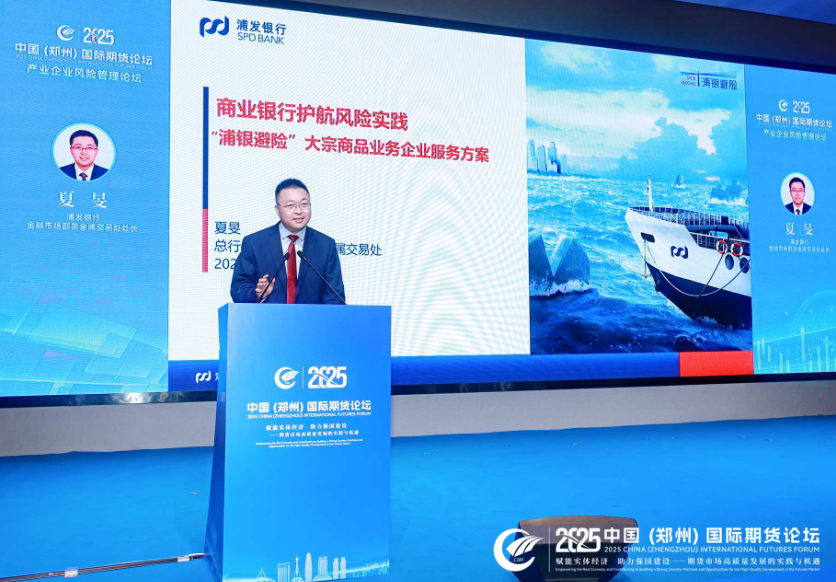
浦发银行金融市场部贵金属交易处处长夏旻:依托仓单平台 服务企业风险管理
Qi Huo Ri Bao Wang· 2025-08-19 10:01
Group 1 - The core viewpoint of the article highlights the role of commercial banks in assisting commodity enterprises with risk management through various service models [1] - Banks can participate in commodity trading via exchange warehouse receipt trading platforms, helping enterprises reduce capital costs and operate with lighter assets [1] - In the entrusted sales model, banks address supply-demand mismatches in the industry chain, supporting liquidity at minimal costs while converting inventory into cash assets [1] Group 2 - In the entrusted supply model, banks can help enterprises lock in raw material procurement costs with minimal capital outlay [1] - Banks can integrate into the production and operation chain of clients, providing transitional liquidity support for large-scale procurement [1]

嘉吉恒瑞前高级顾问高杰:期货和衍生品成为企业风险管理不可或缺的工具
Qi Huo Ri Bao· 2025-08-19 08:00
Core Viewpoint - The use of derivatives is essential for multinational commodity trading companies to manage various risks effectively, including market, exchange rate, credit, and logistics risks [2][3] Group 1: Risk Management in Multinational Companies - Multinational commodity trading companies face multiple risks that can directly impact profits and long-term operations [3] - There is an increasing need for companies to utilize tools to manage and mitigate these risks [3] Group 2: Role of Derivatives - Derivatives, such as futures and options, are becoming indispensable tools for risk management in enterprises [3] - The complementary development of on-exchange and off-exchange markets meets the standardized and customized risk management needs of companies [3] - Innovations in structured derivatives are driving the development of rights-based trade, enabling precise risk management and cost optimization [3] - The use of derivatives enhances companies' adaptability and competitiveness in complex market environments [3]
胶版印刷纸期货等5个品种9月10日上市
Qi Huo Ri Bao· 2025-08-18 17:02
Core Viewpoint - The Shanghai Futures Exchange announced the launch of futures and options for coated printing paper, fuel oil, asphalt, and pulp on September 10, 2025, aiming to provide risk management tools for the cultural paper market and enhance China's position in the global cultural paper industry [1][2]. Group 1: Market Development - The introduction of coated printing paper futures and options will fill a gap in domestic cultural paper derivatives and provide precise tools for managing price volatility for industry chain enterprises [1][2]. - The futures and options will help establish a fair and objective pricing system, leveraging China's status as the largest producer and consumer of cultural paper [2][3]. Group 2: Risk Management - The current lack of a unified pricing benchmark in the spot market creates challenges for enterprises facing price volatility; the new futures and options are expected to improve risk management systems [2][3]. - The "warehouse + factory" physical delivery model will effectively reduce delivery costs and meet the customized needs of enterprises, ensuring smooth delivery and market stability [3][4]. Group 3: Contract Specifications - The trading unit for coated printing paper futures is set at 40 tons per contract, aligning with current purchasing habits and transportation methods in the industry [4]. - The minimum price fluctuation for coated printing paper options is established at 1 yuan per ton, reflecting the typical trading behavior of option traders [5]. Group 4: Regulatory Measures - The Shanghai Futures Exchange emphasizes strong regulation and risk prevention measures to ensure the smooth operation of the new products, including early identification and monitoring of potential risks [5]. - The exchange plans to conduct market promotion, discussions, training, and investor education to enhance the functionality of futures and options and support high-quality development of the real economy [5].
桂林三金:公司将密切关注并积极应对国家政策变化
Zheng Quan Ri Bao Wang· 2025-08-12 11:44
Core Viewpoint - The company will closely monitor and actively respond to changes in national policies, enhancing its analysis of significant and sensitive industry information to adapt to trends in industry development [1] Group 1: Company Strategy - The company emphasizes the importance of risk management and will strengthen its internal management practices, including production, quality, and safety [1] - The company plans to adjust its product structure and marketing strategies in response to policy impacts [1] - The company aims to improve its overall competitiveness by establishing comprehensive regulations and enhancing internal management systems [1]

聚焦产业企业如何驭“风”前行 国际期货论坛特设风险管理分论坛
Zheng Quan Ri Bao Zhi Sheng· 2025-08-12 04:13
Core Viewpoint - The upcoming 2025 China (Zhengzhou) International Futures Forum will focus on "Innovation in Futures Market and Risk Management for Industrial Enterprises," highlighting the increasing importance of risk management in the context of volatile commodity markets [1] Group 1: Market Trends and Challenges - The volatility of commodity prices has increased due to multiple uncontrollable factors, leading to a significant rise in risk management awareness among enterprises [1] - The average hedging ratio for enterprises has increased from 35% to 62%, with the usage of dynamic hedging strategies growing by 200% in 2024 [1][2] - Small and medium-sized enterprises (SMEs) are shifting their focus from "whether to engage" in risk management to "how to do it" and "how much to do" [2] Group 2: Drivers of Change - Two main factors driving SMEs' shift in risk management approach are: 1. Geopolitical conflicts and supply chain restructuring causing significant raw material price fluctuations, creating urgent hedging needs [2] 2. Ongoing market activities by exchanges and local financial departments aimed at stabilizing enterprises and supporting agriculture [2] Group 3: Risk Management Practices - The forum will address key issues in risk management, including sharing risk management models and case studies, the current status and outlook of listed companies, and the construction of internal control systems [3] - There are two notable trends in risk management practices: 1. Transition from fragmented to standardized and compliant risk management systems [2] 2. Upgrading from basic hedging to refined strategies, with a focus on the widespread adoption of rights-based trading [2] Group 4: Future Directions - The future of risk management in industrial enterprises is expected to be characterized by three core trends: intelligence, ecology, and globalization [3] - Companies need to engage deeply in upstream and downstream risk management across the entire supply chain, from raw material design to cost hedging [3] - Developing non-standard hedging tools and mechanisms will be a key focus, along with the cultivation of professionals who understand both industry and financial derivatives [3][4]
