公转铁

Search documents
三部门:推进联运组织一体协同,加快提升全链条效能
Xin Lang Cai Jing· 2025-09-24 07:03
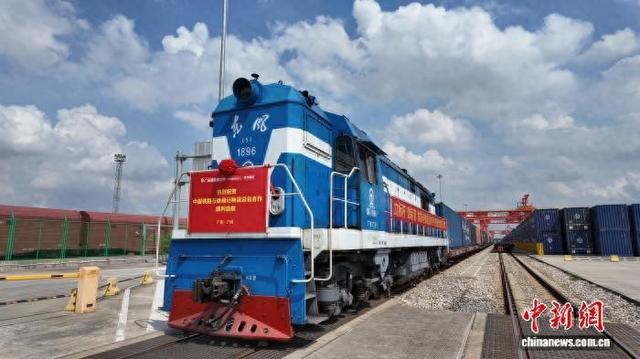
Core Viewpoint - The Ministry of Transport, National Railway Administration, and China National Railway Group have issued an action plan for the deep integration of container rail-water intermodal transport from 2025 to 2027, emphasizing the promotion of intermodal operation and collaboration among transportation enterprises [1] Group 1: Intermodal Operation Enhancement - The plan aims to strengthen the coordination of port-rail operations at qualified ports like Qingdao, supporting integrated management of railway and port operations [1] - It encourages the use of digital and intelligent methods to achieve rapid customs clearance and efficient loading and unloading, thereby reducing "short-distance" transport [1] - The quality and efficiency of intermodal products will be enhanced, with a focus on quality assessment of intermodal trains [1] Group 2: Development of Intermodal Products - The action plan includes the establishment of fixed train routes and the promotion of passenger train-like operations to create a "train + ship" intermodal network [1] - By 2027, the goal is to have a nationwide network of container rail-water intermodal fast lines covering major intermodal ports [1] - Key coastal regions and the Yangtze River trunk line will cultivate premium long-distance and short-distance intermodal products [1] Group 3: Support for "Road to Rail" and "Bulk to Container" Transport - The plan promotes collaboration between various ports and railways to expand the transportation of goods such as grain, fertilizers, and cement through "road to rail" initiatives [1] - It encourages innovation in unloading operations and facilities at inland stations and qualified factories to increase the scale of "bulk to container" transport [1] - The development of automobile transport via intermodal rail-water services is also highlighted [1] Group 4: Optimization of International Intermodal Connections - Ports like Dalian, Tianjin, and Guangzhou are tasked with enhancing the integration of sea routes with international rail services such as the China-Europe Railway Express [1] - The plan aims to improve customs inspection processes and enhance the timeliness of international container rail-water intermodal transport [1]


钢铁动脉奔腾不息,乌将铁路助力疆煤外运展新图
Zhong Guo Xin Wen Wang· 2025-09-19 00:51
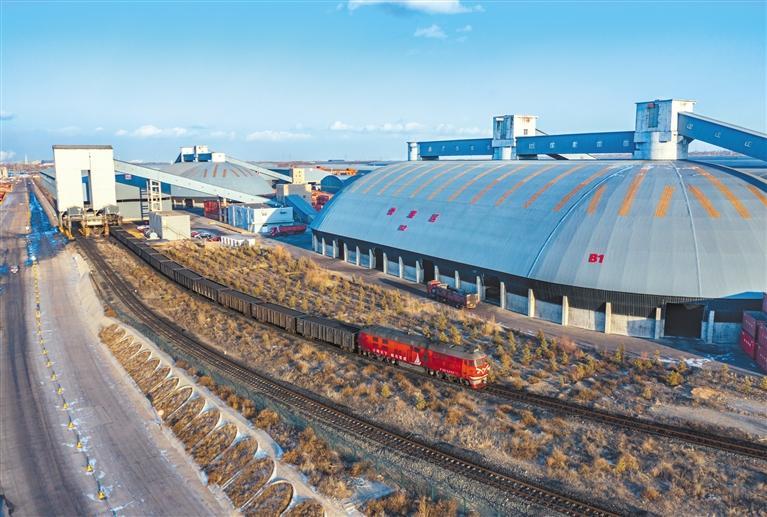
Core Insights - The article highlights the significant transformation and efficiency improvements in the transportation of coal via the Wujian Railway in Xinjiang, which has become a crucial channel for coal supply both within the region and to other parts of China [1][2][3]. Group 1: Infrastructure and Capacity - The Wujian Railway has been upgraded from a single-line to a double-line electrified railway, increasing the daily train frequency from over 20 pairs to more than 80 pairs, with a maximum capacity of 100 pairs, equating to over 290,000 tons of coal transported daily [2]. - The annual freight volume of the Wujian Railway has surged from 56.48 million tons to 108 million tons, with a cumulative shipment of 67.1556 million tons as of August, including 19.4237 million tons of coal exported from Xinjiang [2][3]. Group 2: Operational Efficiency - The coal loading process has been optimized, reducing loading time for large trains from 4-5 hours to under 2 hours, and for smaller trains from 2 hours to under 1 hour, significantly enhancing operational efficiency [2]. - The Wujian Railway has achieved a coal dispatch volume of 62.3419 million tons this year, accounting for 92% of the total dispatch volume, indicating a continuous increase in transportation efficiency [3]. Group 3: Strategic Initiatives - The Xinjiang Railway Department has implemented market-oriented reforms and established the "Tianshan Snow Lotus" service brand, creating a flexible logistics service system that collaborates with over 30 major enterprises annually to ensure capacity supply [4]. - The railway has adopted diverse transportation methods for bulk commodities, such as grouping scattered goods and operating dedicated trains, which has significantly improved the supply capacity for key materials like coal and grain [4]. Group 4: Economic Impact - The Wujian Railway serves as a vital economic corridor, supporting regional economic development and energy security, while facilitating deeper exchanges and high-quality development in Xinjiang [5].
全国首个“矿—路—港”联合体物流总包项目落地陕西
Shan Xi Ri Bao· 2025-09-08 00:39
Core Insights - The launch of the "mine-rail-port" logistics package project marks a significant development in coal transportation efficiency in Northern Shaanxi, China [2][4] - The project aims to create a new logistics channel that is "coordinated, cost-effective, and time-stable" for coal transportation from the Dahuize coal mine to the Shandong Rizhao Port [2][4] Group 1: Project Overview - The project is a collaboration between China Railway Xi'an Bureau Group Co., China Coal Mengshan Energy Sales Co., and Shandong Port Rizhao Port Group Co. [2] - It is the first "mine-rail-port" logistics package project in the country, designed to enhance coal transportation from the Northern Shaanxi energy base [2][4] Group 2: Operational Details - The logistics solution encompasses a closed-loop service system covering the entire coal transportation process [3] - The front-end collection is managed by China Railway Express, which handles an 87-kilometer truck transport task, ensuring seamless connection from the Dahuize coal mine to the Yulin Xiangdao logistics dedicated line [3] - The mid-end quality control is facilitated by the Yulin Xiangdao logistics dedicated line, providing integrated services such as storage, precise measurement, dust suppression, and specialized loading [3] Group 3: Strategic Importance - The project is a key incremental initiative under the national "public transport to rail" strategy, aimed at breaking the sales bottleneck of the Dahuize coal mine [4] - It is expected to optimize the transportation structure in Northern Shaanxi, contributing to the sustainable development of the coal industry in the region [4]


大湾区又添“公转铁”绿色物流新通道
Zhong Guo Xin Wen Wang· 2025-09-05 11:33
Core Viewpoint - The launch of a full logistics package project between China Railway Guangzhou Bureau Group Co., Ltd. and a well-known food enterprise marks the establishment of an efficient and convenient "railway to road" green logistics channel in the Greater Bay Area [1][2]. Group 1 - The project utilizes a customized contract template tailored to enterprise clients, representing a significant step towards the market-oriented and refined transformation of railway services [1][2]. - The logistics center has actively engaged with a leading candy manufacturer in Dongguan, which has an annual sales volume of approximately 160,000 tons, previously relying mainly on road transport [2]. - The collaboration aims to achieve a "door-to-door" one-stop railway logistics service, promoting the shift from road to rail transport and expanding green low-carbon logistics pathways [2]. Group 2 - The logistics center has implemented an innovative "add-on existing train" method to enhance transportation efficiency, establishing stable train services to various regions including Beijing, Sichuan, Chongqing, Zhejiang, Shanghai, Anhui, and Hunan [2]. - The project includes comprehensive insurance coverage for all container types to mitigate potential cargo loss risks, addressing the high value and strict quality control of the goods [2]. - The logistics package model has helped reduce logistics costs by 500 yuan per vehicle for the partner enterprise, with plans for ongoing optimization of the service chain to lower overall social logistics costs [2].
长三角铁路2025年暑运发送旅客1.84亿人次
Zhong Guo Jing Ji Wang· 2025-09-04 07:48
Core Insights - The summer transportation period from July 1 to August 31, 2025, saw a record high of 184 million passengers transported in the Yangtze River Delta, an increase of over 6 million passengers year-on-year, representing a growth of 3.4% [1] - The freight transport during the same period reached 8.8 million tons, marking a year-on-year increase of 9.4% [1] - The introduction of special services for events, such as the "Soochow Super" league, significantly boosted passenger flow, with over 24,000 fans transported via dedicated trains [1] Passenger Transport - The Yangtze River Delta experienced a surge in passenger flow, particularly to major cities like Beijing, Chengdu, and Guangzhou, with over 40.81 million direct passengers [1] - The internal passenger flow within the region also saw a notable increase, with over 143 million passengers transported [1] - The railway department implemented a "one day, one map" strategy to optimize train schedules based on passenger demand and potential extreme weather conditions, adding 4,226 passenger trains and expanding 10,642 high-speed trains during the summer period [2] Service Enhancements - The railway department focused on improving passenger experience by enhancing safety, guidance services, and optimizing boarding processes, especially for vulnerable groups [2] - A variety of children's meal options were introduced, expanding to eight different choices for families traveling with children [2] Freight Transport - The Yangtze River Delta railway facilitated the transportation of 3.45 million tons of coal during the summer, reflecting a year-on-year growth of over 7.1% [3] - The region's railway network supported the operation of 578 China-Europe freight trains, sending over 60,000 standard containers [3] - The promotion of intermodal transport and the "public transport to rail" initiative contributed to an increase in sea-rail intermodal business, achieving a volume of 574,000 standard containers, up by 8.7% year-on-year [3]
长三角铁路2025年暑期62天发送旅客1.84亿人次
Yang Shi Xin Wen· 2025-09-01 11:00
Core Insights - The summer transportation period for the Yangtze River Delta Railway saw a record high of 184 million passengers, an increase of over 6 million passengers year-on-year, representing a growth of 3.4% [1] - The freight transport also experienced significant growth, with 880,000 cargo trains dispatched, totaling 36.92 million tons, marking a year-on-year increase of 9.4% [1] Passenger Flow Trends - The passenger flow during the summer transportation period peaked, with daily passenger volumes exceeding 2.7 million in August, and a record single-day passenger count of 3.758 million on August 16 [2] - Events such as concerts and sports competitions, particularly the "Su Super" league, have significantly contributed to passenger traffic, with 27 special trains for fans transporting over 24,000 attendees during the summer period [2] Operational Adjustments - The railway department optimized train schedules based on passenger flow changes and potential extreme weather, implementing a "one map per day" strategy for capacity allocation [3] - The capacity was adjusted in real-time according to ticket sales and demand, ensuring that train services met passenger needs effectively [3] Enhancements in Passenger Experience - The railway authorities focused on improving passenger experience by enhancing safety, guidance services, and optimizing boarding processes for vulnerable groups [4] - Information sharing mechanisms were established between railway and local authorities to support urban transport during peak times, with various stations optimizing entry and exit flows [4] Freight Transport Initiatives - The company has actively expanded freight train services to reduce costs and ensure supply chain stability, adapting to changes in freight structure and demand [5] - During the summer period, 578 China-Europe freight trains were dispatched, sending over 60,000 standard containers, while the sea-rail intermodal transport volume increased by 8.7% year-on-year [5]
长三角铁路2025年暑运收官 62天发送旅客1.84亿人次
Zhong Guo Xin Wen Wang· 2025-09-01 10:58
Core Insights - The 2025 summer transportation period for the Yangtze River Delta Railway concluded with a record passenger volume of 184 million over 62 days, marking the highest number of travelers in history [1][3] - The railway transported 880,000 freight cars, totaling 36.92 million tons of goods during the same period [1] Passenger Traffic - Continuous peak passenger flow was observed, with over 40.81 million direct passengers traveling to major cities such as Beijing, Chengdu, Guangzhou, and Shenzhen [3] - Intra-region travel saw a significant increase, with over 143 million passengers traveling within the Yangtze River Delta [3] - Daily passenger volume exceeded 2.7 million in August, with a peak of 3.758 million on August 16, setting a new single-day record for summer transportation [3] Special Services and Events - The railway capitalized on cultural and sporting events, launching 27 special trains for the "Su Super" league, transporting over 24,000 fans during the summer period [3] - The integration of high-speed rail and bus services provided seamless transportation for event attendees [3] Operational Enhancements - A total of 4,226 additional passenger trains were added, with 10,642 expansions of high-speed trains and 5,033 additional regular passenger cars [5] - Enhanced passenger experience through improved safety measures, catering services, and optimized boarding processes for vulnerable groups [5] Freight Operations - The Shanghai Railway Group optimized freight operations by adjusting train routes and increasing freight train services, contributing to reduced transportation times and costs [7] - During the summer period, 3.45 million tons of coal were shipped, with 4 million tons of coal available for power plants in the region [7] - A total of 578 China-Europe freight trains were operated, sending over 60,000 standard containers, while intermodal transport services were expanded [7]
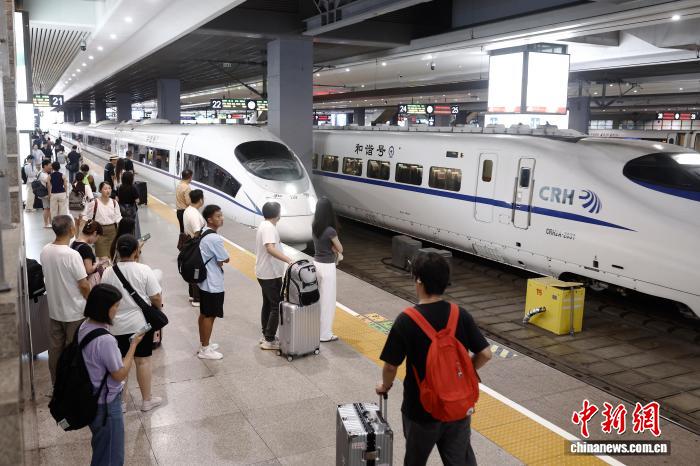
客运发送量创历史新高,国铁集团上半年盈利15.5亿元
Hua Xia Shi Bao· 2025-08-29 14:30
Core Viewpoint - The China National Railway Group (China Railway) reported a steady improvement in operational performance, with a focus on high-quality development and market-oriented reforms, leading to increased passenger and freight volumes [2][3]. Financial Performance - In the first half of 2025, China Railway achieved a total revenue of 586 billion yuan and a net profit of 1.55 billion yuan, indicating a steady improvement in operational quality and efficiency [2]. - The asset-liability ratio at the end of June 2025 was 62.91%, a decrease of 0.6 percentage points compared to the end of the previous year, reflecting enhanced operational quality [2]. Passenger Transport - The railway passenger volume reached a historical high, with a daily average of 11,183 passenger trains operated, a year-on-year increase of 7.5% [6]. - The total number of passengers sent was 2.24 billion, marking a 6.7% increase year-on-year, with a peak of 23.12 million passengers on May 1, setting a new single-day record [6]. - The introduction of specialized tourist trains, such as the "Silver Travel Train," aims to enhance travel experiences for senior citizens, with over 2,000 special trains expected to operate this year [5]. Freight Transport - The railway sector has made significant progress in modern logistics, with a total freight volume of 1.98 billion tons in the first half of 2025, reflecting a year-on-year increase of 3.0% [7]. - The railway has actively promoted the "shift from road to rail" strategy, with a total of 12.3 billion tons in logistics contracts and a significant increase in intermodal container shipments [7]. - The number of China-Europe and Central Asia freight trains operated reached 17,000, with a total of 1.53 million TEUs shipped, representing year-on-year growth of 8% and 5%, respectively [7]. Infrastructure Development - In the first half of 2025, fixed asset investment in railways reached 355.9 billion yuan, a year-on-year increase of 5.5%, with 301 kilometers of new lines put into operation [9]. - Key projects such as the Chongqing to Yichang high-speed rail and the Zhengzhou to Kaifeng intercity railway have made significant progress, contributing to the overall infrastructure development [8][9]. - The establishment of a new railway company with a registered capital of 95 billion yuan is expected to bring new momentum to railway construction [9].
秦港股份上半年稳健经营:吞吐量稳步增长,核心业务韧性凸显
Zheng Quan Shi Bao Wang· 2025-08-29 07:45
Core Viewpoint - Qin Port Co., Ltd. reported a slight decline in revenue and net profit for the first half of 2025, but showed resilience in core business operations with a notable increase in cargo throughput [1][2]. Financial Performance - The company achieved a revenue of 3.451 billion yuan, a year-on-year decrease of 0.30% - Net profit attributable to shareholders was 988 million yuan, down 2.22% - Non-recurring net profit increased by 4.08% to 982 million yuan - Basic earnings per share stood at 0.18 yuan [1]. Cargo Throughput - Total cargo throughput reached 208.38 million tons, an increase of 6.22 million tons or 3.08% compared to the same period in 2024 - Key port areas showed differentiated growth: - Qinhuangdao Port: 89.42 million tons, a slight increase of 0.31% - Caofeidian Port: 68.04 million tons, up 4.07% - Huanghua Port: 50.92 million tons, a significant increase of 6.88% [1][2]. Cargo Structure - Core cargo types showed stable growth, with emerging businesses experiencing significant increases: - Coal throughput: 106.46 million tons, up 3.92% - Metal ore throughput: 76.43 million tons, a slight increase of 0.50% - Oil and liquid chemicals: 0.87 million tons, up 10.13% - Container throughput: 8.73 million tons, with a box volume increase of 20.75% - General cargo: 15.89 million tons, up 1.53% [2]. Competitive Advantage - The company continues to strengthen its industry position through resource integration and strategic partnerships - The controlling shareholder, Hebei Port Group, coordinates port resources to avoid disorderly competition - Long-term cooperation with major clients like China Coal Group and State Energy Investment Group supports business stability [3]. Future Outlook - For the second half of 2025, the company plans to focus on developing new cargo sources, expanding metal ore business, and enhancing service efficiency - The company aims for steady annual performance growth by leveraging market changes and national economic policies [3].

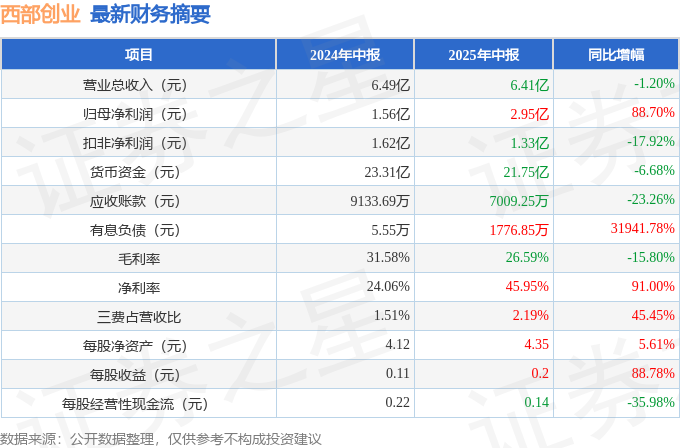
西部创业(000557)2025年中报简析:净利润同比增长88.7%
Zheng Quan Zhi Xing· 2025-08-28 14:20
Core Viewpoint - The recent financial report of Xibu Chuangye (000557) shows a significant increase in net profit by 88.7% year-on-year, despite a slight decline in total revenue by 1.2% [1] Financial Performance Summary - Total revenue for the first half of 2025 is 641 million yuan, down 1.2% from 649 million yuan in 2024 [1] - Net profit attributable to shareholders reached 295.67 million yuan, up 88.7% from 156 million yuan in the previous year [1] - The second quarter revenue was 323 million yuan, an increase of 0.67% year-on-year, while net profit for the same period surged by 218.75% to 229 million yuan [1] - Gross margin decreased to 26.59%, down 15.8% year-on-year, while net margin increased to 45.95%, up 91% [1] - Total expenses (selling, administrative, and financial) amounted to 14.07 million yuan, representing 2.19% of revenue, an increase of 45.45% [1] - Earnings per share rose to 0.20 yuan, an increase of 88.78% from 0.11 yuan [1] Cash Flow and Investment Summary - Net cash flow from investment activities decreased by 159.90% due to increased investments in electrification and external power projects by Ningdong Railway [3] - Net increase in cash and cash equivalents fell by 106.88% due to reduced cash inflow from operating activities and increased project investments [3] - Cash flow from operating activities decreased by 35.98%, attributed to the suspension of supply chain trade business [3] Business Evaluation - The company's return on invested capital (ROIC) was 3.47%, indicating historically weak capital returns, with a median ROIC of 2.96% over the past decade [4] - The net profit margin was reported at 19.55%, suggesting high value-added products or services [4] - The company has experienced eight years of losses since its listing, indicating a generally poor financial performance history [4] Strategic Positioning and Future Plans - The company aims to become a leading modern logistics enterprise with strong regional competitiveness, leveraging its strategic location and transportation infrastructure [5] - Future plans include enhancing railway transportation networks, optimizing logistics services, and integrating multi-modal transport solutions [6] - The company is also focusing on the wine sector, aiming to streamline operations and enhance its core business [7]