养老金改革

Search documents
英国央行行长贝利:养老金改革对于提升英国的投资水平至关重要。
news flash· 2025-07-22 10:21
Core Viewpoint - The Governor of the Bank of England, Andrew Bailey, emphasized that pension reform is crucial for enhancing investment levels in the UK [1] Group 1 - Pension reform is identified as a key factor for improving the UK's investment landscape [1] - The statement highlights the importance of aligning pension systems with investment needs to stimulate economic growth [1]
据英国金融时报:英国财政大臣里夫斯预计将于7月15日在官邸发表演讲,宣布英国养老金改革计划,包括审查企业及其员工的退休准备金。
news flash· 2025-07-04 04:10
Core Insights - The UK Chancellor of the Exchequer, Reeves, is expected to announce a pension reform plan on July 15, which will include a review of retirement preparations for both companies and their employees [1] Group 1 - The announcement will take place at the Chancellor's official residence [1] - The pension reform plan aims to address the retirement readiness of the workforce [1]
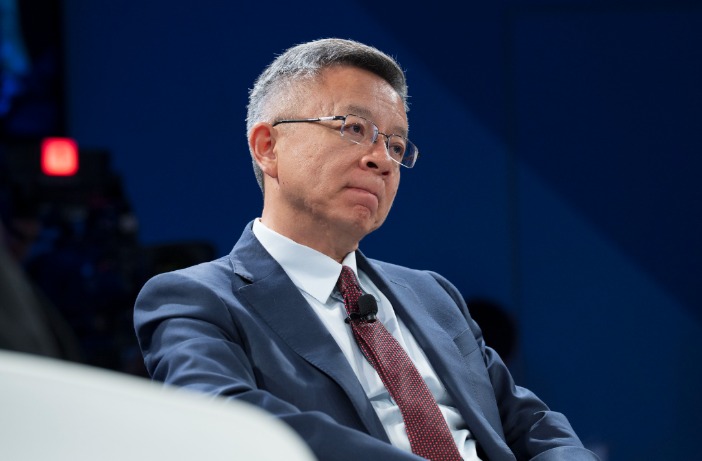
2025夏季达沃斯热议AI机遇!IMF副总裁李波:AI可助发展中国家“弯道超车”,但还需考虑基础设施、技术积累等因素
Mei Ri Jing Ji Xin Wen· 2025-06-25 14:32
Group 1 - The core viewpoint of the discussion is that artificial intelligence (AI) may provide developing countries with an opportunity to "leapfrog" over developed nations in economic development due to their lack of historical burdens and faster adoption of new technologies [1][2][4] - IMF Vice President Li Bo highlighted that the adoption of new technologies, such as digital payments, has been significantly faster in developing regions like China and Africa compared to developed economies like the United States, which face path dependency issues [2][4] - Li emphasized that developing countries may have a relative advantage in AI development as they can start directly with AI without needing to transition from outdated systems, unlike developed countries that must navigate existing ecosystems [2][4] Group 2 - In the context of financial systems, Li pointed out that pension funds are crucial for diversifying financial systems and supporting innovation and startups, as traditional bank financing has limitations [6] - He noted that pension reform is essential for capital market development, as it can provide long-term investment capital that supports the growth of capital markets [6] - The diversification of financial systems should also include a variety of savings tools for residents, moving beyond traditional bank deposits and real estate investments to include pensions as a new savings avenue [6]

英镑有望连续四个月上涨;英国房价今年将上涨3.5%;
Sou Hu Cai Jing· 2025-06-01 04:48
Group 1: Real Estate Market Outlook - A recent poll of real estate experts indicates that the outlook for UK house prices has remained stable over the past three months due to expectations of declining borrowing costs [1] - Nationwide, house prices are expected to rise by 3.5% this year, consistent with predictions made in February [1] - In London, house prices are projected to increase by 3.0% this year, 4.0% next year, and 3.8% by 2027 [1] Group 2: Rental Market Dynamics - Urban rental prices are rising faster than house prices, making it more difficult for new buyers to save for necessary mortgages [3] - Nationwide, urban rents are expected to increase by 4.3% this year, while London rents are projected to rise by 3.7% [3] - The upcoming "Renters' Rights Bill" will impose additional conditions and tax changes on landlords, potentially driving some out of the market and contributing to a supply shortage in the rental sector [3] Group 3: Currency and Trade Implications - The British pound has strengthened against the US dollar, rising by 0.12% to 1.347, although it remains slightly below the peak of 1.359 reached earlier [5] - The pound's recent performance is attributed to investor reactions to uncertain US trade policies and expectations that the Bank of England will reduce the pace of interest rate cuts [8] - A recent court ruling has blocked certain tariffs imposed by former President Trump, which has positively impacted market sentiment and may alleviate ongoing tariff volatility [12] Group 4: Pension Fund Reforms - The UK government aims to merge multiple pension plans into a "super fund" with assets of at least £250 billion ($340 billion) by 2030, as part of a broader initiative to boost domestic investment [10] - The consolidation of pension plans is expected to facilitate investments in a wider range of assets, including private markets such as infrastructure and real estate [10] - The government is also implementing reforms to ensure that pension plans meet established allocation targets for non-liquid assets, similar to pension systems in Australia and Canada [10]

周小川谈年轻人缴养老金积极性低:要扩大第三支柱,对未来养老做出预期和计划
凤凰网财经· 2025-03-26 13:30
周小川表示,"我自己干活挣的钱好多都交了(养老金),我自己养老还得自己再预筹一部分。所以最后算下来,我干一份工作可支配收入实在太少,容易 影响个人的积极性。"他指出,要考虑从劳动者个人来讲,养老金制度对他有什么影响,如果这个影响负面的东西太多的话,就加大了养老金改革的压力。 点击在 看 持续关注↓↓↓ 他提到扩大第三支柱,个人能够有一个大致做计划的预期,现有的国家统筹部分,和现有的企业年金,加起来可以做一个估算,退休时候的替代率可能达 到40%-50%。所以要想过得好一点,达到国际上的平均水平,其实还得再补充做自己个人的养老金,所以就去参加保险、参加第三支柱的供款,选择投 资,使投资回报更高一些。这些都是现在的年轻人需要对未来养老做出的预期和计划。 3月25日至28日,博鳌亚洲论坛2025年年会在海南博鳌举行。在"人口老龄化与养老金改革"讨论环节,博鳌亚洲论坛副理事长、十二届全国政协副主 席、中国人民银行原行长周小川解释了养老金改革的必要性,强调要扩大第三支柱,年轻人需要对未来的养老做出预期和计划。 周小川表示,养老金改革有三个支柱,其实还有一些外围的因素对养老金会产生不可忽视的影响。这些因素也会压着养老金制 ...
2025博鳌亚洲论坛|周小川:养老金改革是系统性工程,并非简单“资金填补”
Bei Jing Shang Bao· 2025-03-26 08:24
Group 1 - The core issue of pension reform is the sustainability of the system, facing severe challenges due to a mismatch between income and expenditure in some provinces, leading to depletion of accumulated funds [1][2] - The pension reform is influenced by various external factors, including the burden on enterprises, as evidenced by the reduction of the enterprise pension contribution rate from 20% to 16% in 2019, which was a response to domestic economic pressures and international competition [1] - The current pension replacement rate of approximately 40%-50% is insufficient for retirement needs, and to reach the international average of 70%, reliance on a "third pillar" for supplementary income is necessary [2] Group 2 - The relationship between central and local finances is a critical variable in pension reform, with significant disparities in pension levels across regions due to provincial-level management, exacerbated by local fiscal conflicts [2] - The complexity of population aging and pension reform is highlighted as a systemic issue that is interconnected with overall economic and social stability, rather than a simple financial shortfall that can be addressed by increasing funds [2]
周小川:养老金改革要注意到企业竞争力的需求、个人对劳动的积极性等
Peng Pai Xin Wen· 2025-03-26 07:05
Group 1 - The core viewpoint is that pension reform in China has made significant achievements, but sustainability remains a critical issue, with various pressures and dissatisfaction still present [3][4] - Pension reform is a complex system project influenced by multiple factors, including enterprise competitiveness, individual labor motivation, and the relationship between central and local finances [4][5] Group 2 - The first factor is enterprise competitiveness, which is closely related to the pension system. Increased international competition or domestic economic downturns can heighten pressure on pension reforms [5] - The second factor is individual labor motivation, which can be affected by issues such as retirement for homemakers and the financial burden on young workers, potentially leading to decreased work incentives [5][6] - The third factor involves the relationship between central and local finances, highlighting the need for a clear understanding of pension funding mechanisms and the importance of fiscal discipline at the provincial level [7]

从老龄化到深度老龄化:美国72年,日本25年,中国仅21年
Bei Jing Ri Bao Ke Hu Duan· 2025-03-25 09:52
Core Viewpoint - The aging population is a significant global issue, with Asia experiencing rapid aging compared to other regions, necessitating reforms in pension systems and the development of the elderly care industry [1][3][4]. Group 1: Aging Population Statistics - As of 2023, 14.2% of the population in Asia, including China, is aged 60 and above, marking the entry into an aging society [3]. - Predictions indicate that by 2050, the number of individuals aged 60 and above in the Asia-Pacific region will reach 1.3 billion [3]. - The transition from an aging society to a deep aging society is notably rapid in China, taking only 21 years from 2001 to 2021, compared to longer durations in Western countries [3]. Group 2: Policy Responses and Reforms - Countries in Asia are focusing on maintaining pension sustainability and fostering the elderly care industry as key policy priorities [4]. - Measures being implemented include delaying retirement age, increasing pension benefits, and promoting private pension development [4]. - Specific examples of reforms include Japan's approach of delaying retirement age and adjusting pension growth rates, while South Korea has increased pension contribution rates from 9% to 13% [4]. - China is also advancing reforms such as nationwide pension coordination and the establishment of a third pillar for pensions, alongside the implementation of a delayed retirement system starting January 2023 [4].