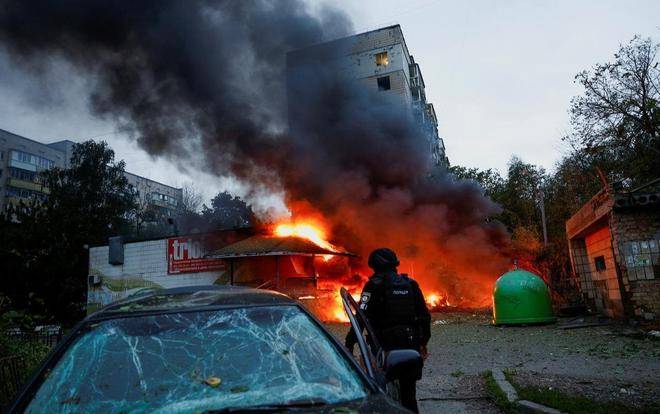
北约东扩

Search documents
视频丨俄外长:北约直接威胁俄罗斯是俄乌冲突根源
Yang Shi Xin Wen Ke Hu Duan· 2025-10-27 23:29
Core Viewpoint - The Russian Foreign Minister Lavrov claims that Europe's call for an "immediate ceasefire" is a tactic to replenish Ukraine's weapon supplies, indicating that Europe's stance fluctuates based on the situation on the front lines [1][3]. Group 1: European Stance - Europe previously adopted a strategy of "strategic defeat" against Russia, refusing any negotiations [3]. - Currently, Europe is both pleading and threatening for an immediate ceasefire without any preconditions, as Ukraine's weapon supplies are nearing depletion [3]. Group 2: Russian Objectives - The primary goal of Russia's special military operation remains unchanged, which is to counter NATO's attempts to absorb Ukraine and establish military bases in Crimea and along the Sea of Azov, posing a direct threat to Russia's borders [5][7].


普京:若北约未接近俄边境 乌克兰冲突本可避免
Yang Shi Xin Wen· 2025-10-02 16:33
Core Points - President Putin emphasized that Western countries are unwilling to relinquish their hegemony and are tempted by "absolute power" [1] - He stated that all attempts by the West to issue commands to other nations have ended in failure [1] - Putin argued that the exclusion of Russia from the international system would undermine global balance, asserting that Russia will never show weakness or hesitation in the face of changing circumstances [1] - He claimed that the conflict in Ukraine could have been avoided if NATO had not approached Russia's borders, and he expressed that the West does not empathize with the Ukrainian people [1]
欧洲政客承认收受俄罗斯的贿赂!从事反乌克兰活动
Sou Hu Cai Jing· 2025-09-30 09:55
Group 1 - The core issue revolves around the acknowledgment of bribery by Nathan Gill, a prominent UK politician, revealing Moscow's covert influence in European politics [3][5] - Gill admitted to receiving Russian funds through a former pro-Russian Ukrainian MP and spreading pro-Russian sentiments in the European Parliament from 2014 to 2020 [3] - The case may trigger a domino effect, potentially implicating more individuals involved in similar activities [5] Group 2 - Military tensions in Northern Europe are escalating, with Denmark enhancing radar systems at Copenhagen Airport to counter Russian military aircraft incursions [6] - NATO has increased military deployments in the region, with Sweden's elite Norrbotten Brigade set to deploy in Finland, equipped with advanced artillery systems [6] - Smaller Baltic states, like Estonia, are actively supporting Ukraine, with Estonia allocating €10 million for weapon procurement, while Poland has issued evacuation warnings for its citizens in Belarus [8]

英美指责“鲁莽行为”,俄方回击“荒唐闹剧”,安理会激辩北约遭俄“侵犯”事件
Huan Qiu Shi Bao· 2025-09-23 23:02
Core Points - The article discusses the recent tensions between NATO and Russia regarding airspace violations, particularly involving Estonia and Poland, with NATO officials expressing readiness to defend member territories [1][3][6] - The situation escalated with Estonia's request for an emergency UN Security Council meeting, marking a significant diplomatic move since its UN membership [3] - NATO Secretary General and various officials emphasized the defensive nature of NATO while warning Russia against further provocations [3][4][6] Summary by Sections NATO's Response - NATO has condemned Russia's actions as reckless and a potential trigger for direct military conflict, asserting its commitment to defend every inch of its territory [3][4] - The North Atlantic Council convened to address the airspace violations, highlighting the seriousness of the situation and the potential for escalation [6] Russia's Position - Russian representatives dismissed the allegations of airspace violations as baseless and accused European nations of fostering anti-Russian sentiment [3][4] - Russia's Defense Ministry claimed adherence to international flight rules and criticized the lack of credible evidence from Estonia [4][5] Regional Implications - Poland's government indicated a willingness to take decisive action against any threats to its airspace, reflecting heightened military readiness [5] - Estonia expressed openness to receiving advanced military aircraft, such as the UK’s F-35A, which could escalate tensions further with Russia [5][6] EU's Strategic Discussions - The European Union is planning discussions on establishing a "drone wall" along its eastern borders, indicating a proactive approach to regional security [6]
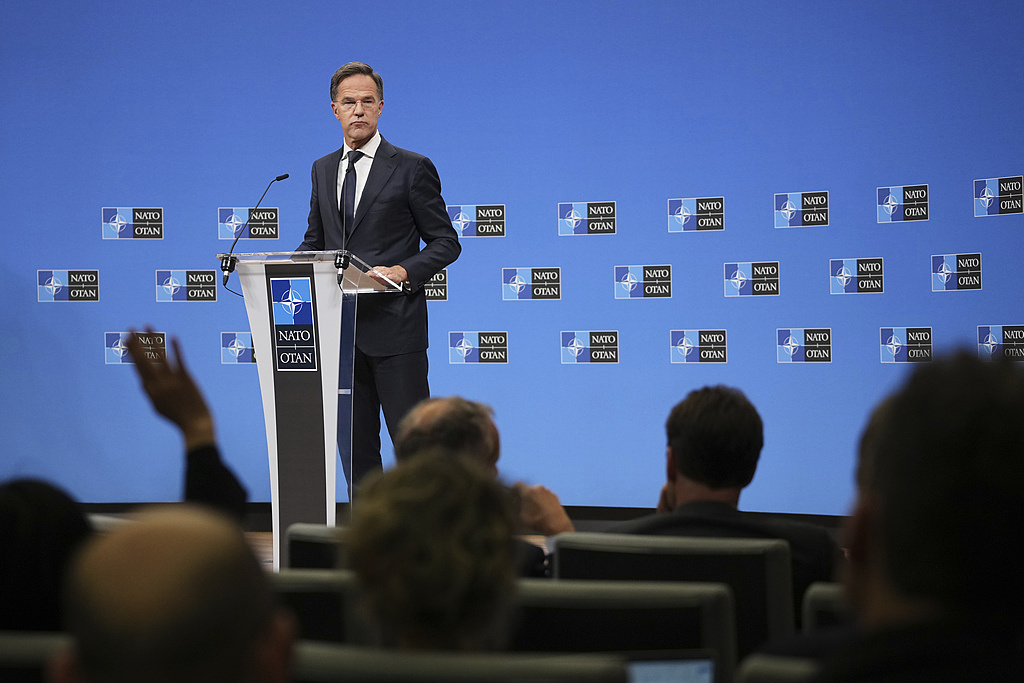
特朗普交权,欧洲上场!冯德莱恩大笔一挥,要榨干欧洲最后一滴血
Sou Hu Cai Jing· 2025-09-22 04:14
Core Points - The European Commission plans to use frozen Russian assets as collateral to provide loan support to Ukraine, as part of the 19th round of sanctions against Russia [1] - Hungary's cooperation with the EU's sanctions is uncertain, as it may not easily comply until funds are actually received, indicating a political transaction worth €550 million [3][4] Sanctions Measures - 118 vessels suspected of transporting Russian oil will face new sanctions, along with 45 Russian and third-country companies [5] - Stricter export control measures will be implemented against third-country companies assisting Russia [5] - Financial sanctions will be imposed on banks conducting business with Russia [5] - A clear timeline has been set to completely stop importing Russian liquefied natural gas by January 1, 2027 [5] Military Developments - Russia has intensified its military actions, launching 40 missiles and approximately 580 drones at Ukraine, targeting multiple regions [7] - The Russian Pacific Fleet successfully test-fired cruise missiles from two nuclear submarines, hitting targets 250 kilometers away [7] Geopolitical Context - Russia is employing a "salami slicing" tactic to test Western limits, potentially leading to more aggressive actions if the U.S. remains indifferent to European security threats [10] - The U.S. is reducing its interest in European affairs, shifting focus to domestic defense and leaving more responsibility to European allies [11] - The Pentagon has confirmed a shortage of certain weapon stocks, leading to the rejection of multiple military sales requests, indicating a reluctance to bear excessive risks in the Ukraine crisis [11]
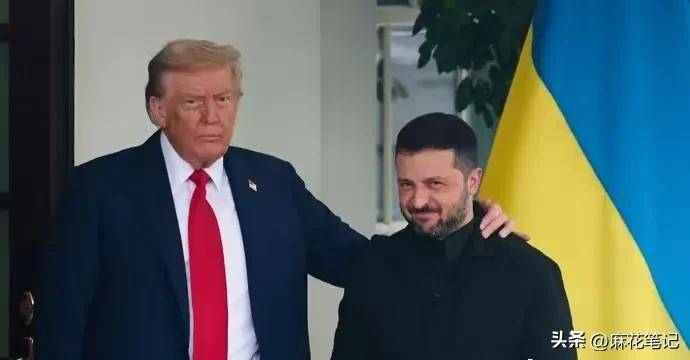
欧洲的安全靠什么?——要打垮俄罗斯的想法和做法是自取其祸
Sou Hu Cai Jing· 2025-09-17 04:20
Group 1 - The core argument is that the ongoing Ukraine war is a result of Europe's inability to confront a powerful Russia, which will not tolerate provocations from European nations after resolving the Ukraine issue [1][3] - The article suggests that the Ukraine war is fundamentally a confrontation between the US and Russia, with European countries merely supporting the US, leading to a breakdown of strategic balance in Europe [3][4] - Historical context indicates that Europe has been a source of global conflict for over 200 years, and the current geopolitical landscape is a result of European nations' own actions [3][4] Group 2 - The article argues that the safest period for Europe was during the US-Soviet standoff from 1945 to 1991, which was maintained by US intervention, not out of affection for Europe [4][5] - NATO's eastward expansion is portrayed as a strategy by the US to maintain control over Europe by creating insecurity, rather than enhancing European safety [4][5] - Russia's desire for peaceful coexistence has been ignored, leading to its resurgence as a major power willing to confront the US [5][6] Group 3 - The article categorizes European countries into five groups based on their historical ambitions and current geopolitical interests, highlighting the complexity of European unity [6][7][8] - Countries like Germany and France are seen as having ambitions for a unified Europe, while others like Poland and the Baltic states seek to regain lost territories [7][8] - Smaller nations tend to prioritize self-preservation and may not have the capacity to challenge Russia independently [8][9] Group 4 - The article critiques the notion that European unity can be achieved through current alliances, suggesting that the EU's decision-making process favors smaller nations' interests, hindering collective security [9][10] - It posits that the perception of Russia as a threat is largely a construct of US interests, rather than a reflection of historical realities [10][11] - The article concludes that Europe's best security strategy would be to pursue peaceful coexistence with Russia rather than relying on US protection [11][12]
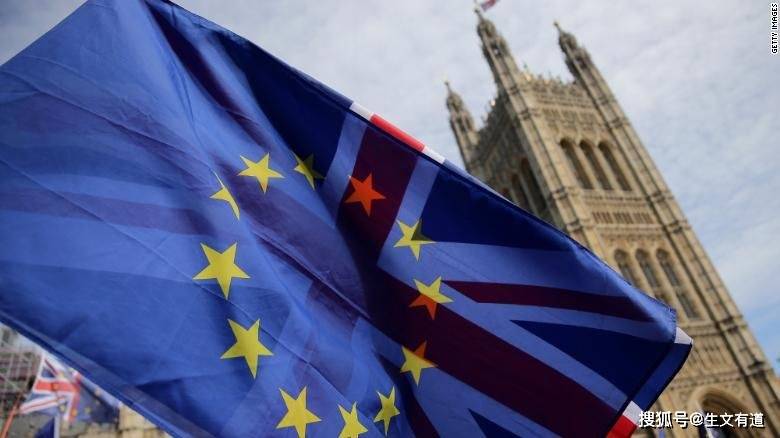
无人机事件持续发酵,俄媒体质疑欧洲做局,波兰同意北约军队进驻
Huan Qiu Shi Bao· 2025-09-15 23:01
Core Points - The situation in Eastern Europe has escalated following reports of Russian drones entering NATO airspace, with Poland and Romania both taking action to intercept these incursions [1][3] - NATO has initiated the "Eastern Sentinel" military operation, which involves the deployment of troops from member countries to Poland [4][5] - The Russian government has denied the allegations of airspace violations and claims that NATO's actions are provocative [4][6] Group 1: Incidents and Responses - Poland reported that NATO and Polish aircraft were scrambled to intercept a Russian drone that entered its airspace [1] - Romania's Foreign Ministry summoned the Russian ambassador to protest against the drone incursion, labeling it an unacceptable violation of sovereignty [3] - The UK government also summoned the Russian ambassador, expressing solidarity with Poland, Romania, and other NATO allies in condemning Russia's actions [3] Group 2: NATO's Military Actions - NATO's "Eastern Sentinel" operation includes the deployment of various military assets, such as Danish F-16s, French Rafales, and German Eurofighters [5] - Additional military support is being provided by other NATO members, including Czech attack helicopters and Dutch Patriot missile systems [5] - The operation is seen as a response to perceived threats from Russia, with leaders from Estonia and Lithuania welcoming the increased military presence [4][6] Group 3: Political Implications - The drone incidents have raised concerns about NATO's readiness and the political will to respond to Russian aggression [6][8] - There is a growing perception that the U.S. may be less committed to European security, as indicated by its cautious response to the incidents [8] - The situation may lead to a reassessment of NATO's strategic posture in Eastern Europe, potentially triggering new deployments or adjustments in deterrence strategies [8]
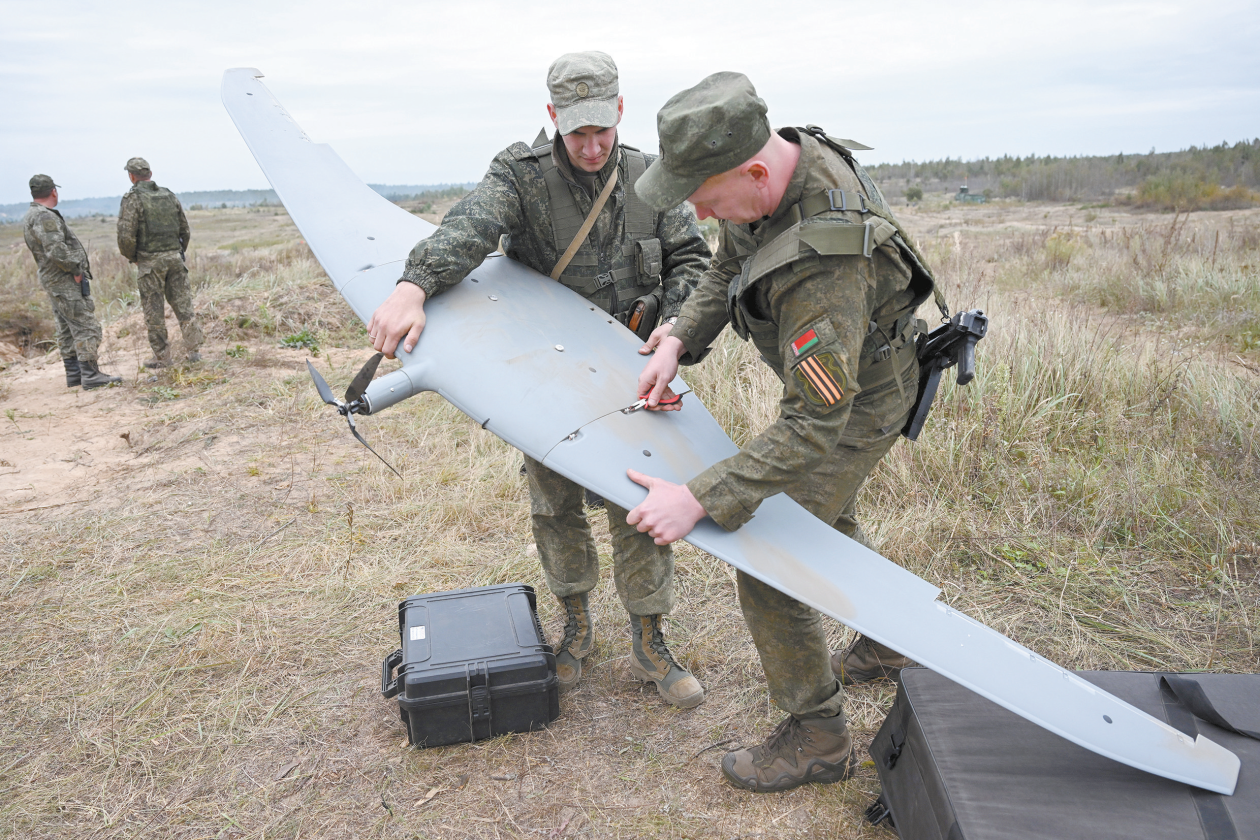
波兰关闭边境口岸,北约加强东翼防御,欧洲紧盯俄白联合战略演习
Huan Qiu Shi Bao· 2025-09-14 22:52
Group 1 - The "West-2025" joint military exercise between Russia and Belarus is ongoing from December 12 to 16, 2025, aimed at enhancing military coordination and operational capabilities [1][2] - The exercise includes the use of Su-34 and Su-57 aircraft for simulated strikes and missile tests in the Barents Sea, indicating a focus on advanced military technology [1] - The exercise is perceived as a response to recent tensions, particularly following an incident involving Russian drones entering Polish airspace, which has raised concerns among NATO members [2][3] Group 2 - Poland has initiated its own military exercises, including the "Flame Storm" exercise, as a countermeasure to the Russian-Belarusian drills, involving approximately 30,000 troops [3] - NATO is increasing its defensive posture in Eastern Europe, with multiple countries participating in operations like "Eastern Sentinel" to bolster regional security [3] - The situation has led to heightened military readiness and deployments along the Polish-Belarusian border, with Poland announcing the closure of border crossings due to the exercises [2][3]
不许中国购买俄罗斯石油!特朗普下达最后通牒,关键时刻,26国叫嚣要派兵去乌克兰
Sou Hu Cai Jing· 2025-09-06 05:09
Group 1 - The core viewpoint of the article highlights the escalating tensions between Europe and Russia, with Europe planning to send troops to Ukraine under the guise of "peacekeeping" while facing pressure from the U.S. to cut off Russian oil imports [1][3][5] - The European troop deployment is seen as a form of NATO's eastward expansion, which Russia firmly opposes, indicating that any military presence in Ukraine will not be tolerated [3][5] - Trump's demand for Europe to stop purchasing Russian oil is underscored by the fact that, despite claims of sanctions, Europe still generated €1.1 billion in fuel revenue for Russia in 2023, revealing a disconnect between rhetoric and action [3][5][7] Group 2 - The U.S. strategy appears to aim at severing Europe's energy ties with Russia, even at the cost of significant economic disruption for Europe, which has deep-rooted dependencies on Russian energy [5][7] - Trump's call for Europe to unite against China suggests a broader geopolitical strategy, pushing European nations to consider secondary sanctions against China, despite their economic ties [7][8] - China's response emphasizes its commitment to dialogue and negotiation regarding the Ukraine crisis, rejecting unilateral sanctions and asserting that its energy cooperation with Russia is not aimed at third parties [8]
为什么说俄罗斯不能赢,乌克兰也不能败?
Sou Hu Cai Jing· 2025-09-05 04:17
Group 1 - The ongoing Russia-Ukraine conflict has lasted for three years, with both sides engaged in a fierce ideological battle, but the ideal outcome may be a strategic balance where neither side achieves a decisive victory [1][3] - The historical context reveals that NATO's eastward expansion has significantly threatened Russia's strategic space, prompting a defensive response from Putin [3][5] - From China's strategic perspective, a prolonged stalemate in the Russia-Ukraine conflict is beneficial as it diverts Western attention and resources away from China [3][8] Group 2 - Russia is a crucial strategic resource for China, providing significant energy and raw materials, with trade between the two countries exceeding $240 billion in 2023 [5][6] - However, the relationship is not a military alliance, and a complete Russian victory could pose long-term risks for China, including increased European military spending and potential sanctions [5][6] - The fear of Russian expansion could lead to NATO's continued growth and increased military expenditures in Europe, negatively impacting China's export industries [6][8] Group 3 - A complete failure of Ukraine would represent a crisis for China rather than an opportunity, as it could lead to a more aggressive Western stance against China [8] - The ideal scenario for China is to maintain the current situation where Russia does not collapse but also does not achieve total victory, allowing for a strategic advantage in the long run [8]